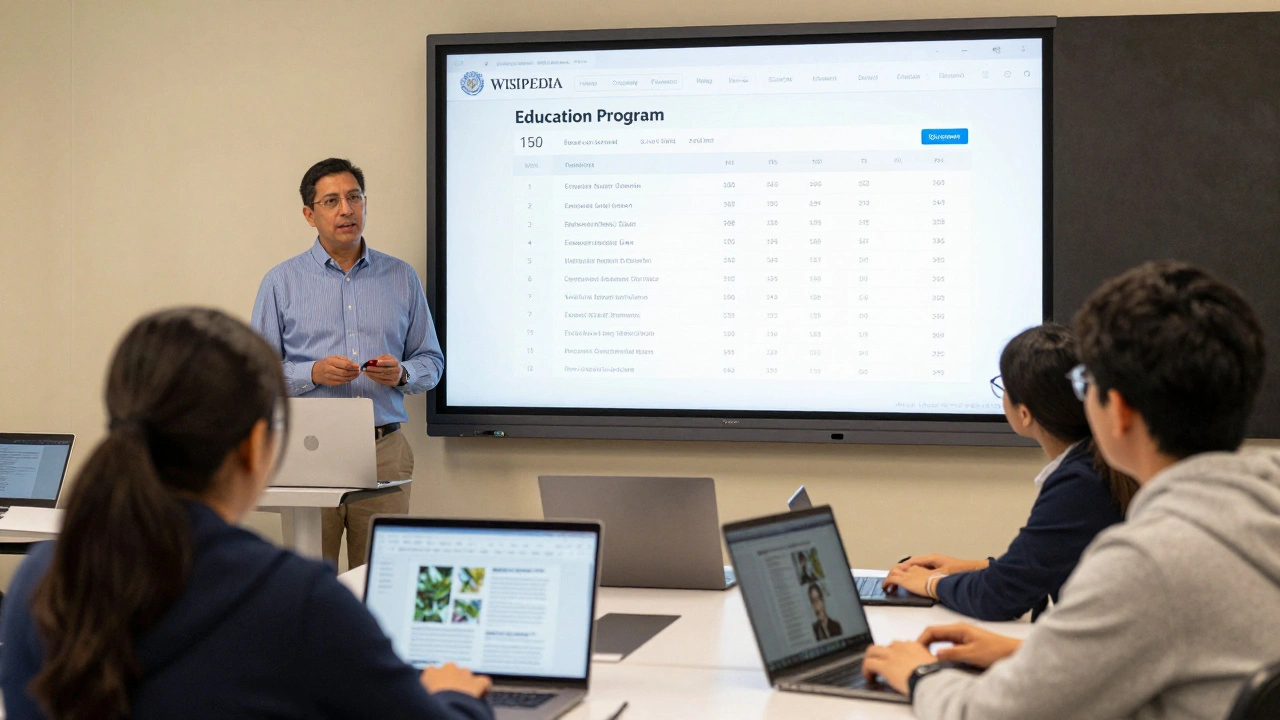
Every year, thousands of college students edit Wikipedia as part of their coursework. They write articles, fix citations, update outdated info, and learn how real knowledge gets made. But when a professor assigns this to 50, 100, or even 200 students at once, things get messy. Who checks the edits? How do you keep quality high? What happens when a student accidentally deletes a page? Supervising student Wikipedia editing at scale isn’t just about grading papers-it’s about building a system that works.
Start with a Clear Assignment Structure
Don’t just say, “Edit Wikipedia.” That’s like saying, “Write something.” Students need direction. A successful large-scale project starts with a detailed rubric that answers: What should they edit? What counts as a good edit? How much work is expected?
For example, a biology class might assign each student to write or expand a Wikipedia article on a local plant species not yet covered. A history class might ask students to improve articles on underrepresented civil rights figures. The key is specificity. Give them a list of 10-20 underdeveloped articles to choose from. Use Wikipedia’s Article Alerts tool to find pages tagged as “stub,” “citation needed,” or “needs expert attention.”
Set clear expectations: each student must make at least three substantive edits, add two reliable sources, and include a properly formatted reference list. No copy-pasting from websites. No original research. No promotional language. These aren’t just rules-they’re the foundation of Wikipedia’s credibility.
Use the Wikipedia Education Program
The Wikimedia Foundation runs a free program called the Wikipedia Education Program designed exactly for this. It’s not just for universities in the U.S.-it’s used in over 60 countries. Professors sign up, create a course page, and get access to trained Wikipedia Ambassadors-volunteers who help answer student questions and review edits.
When you enroll your course, students get a dedicated dashboard. You can see every edit they make, track their progress, and even approve or reject assignments before they go live. The system flags problematic edits-like vandalism or copyright violations-before they’re published. This isn’t magic. It’s a workflow built by educators who’ve done this hundreds of times.
For a class of 150 students, this tool cuts your monitoring time by 70%. Instead of manually checking 1,000 edits, you get a clean list of flagged items and progress reports. You focus on coaching, not chasing mistakes.
Train Students Before They Start
Most students have never edited Wikipedia. They think it’s like Google Docs. It’s not. Wikipedia has rules. Lots of them. And they’re enforced by thousands of volunteer editors who don’t take kindly to sloppy edits.
Before the first edit, run a 90-minute workshop. Cover these basics:
- How Wikipedia works: no original research, neutral tone, reliable sources only
- How to use the visual editor (it’s easier than the code editor)
- How to cite sources properly-books, peer-reviewed journals, news outlets
- How to avoid conflict of interest: don’t edit articles about yourself, your school, or your employer
- What happens when an edit gets reverted: it’s not personal, it’s policy
Use real examples. Show them an article that was deleted because it read like an ad. Show them one that was improved with three solid citations. Make it visual. Show before-and-after screenshots. Students remember stories better than rules.
Assign Peer Reviewers
One professor at the University of Wisconsin tried supervising 120 students alone. It didn’t work. She burned out in three weeks.
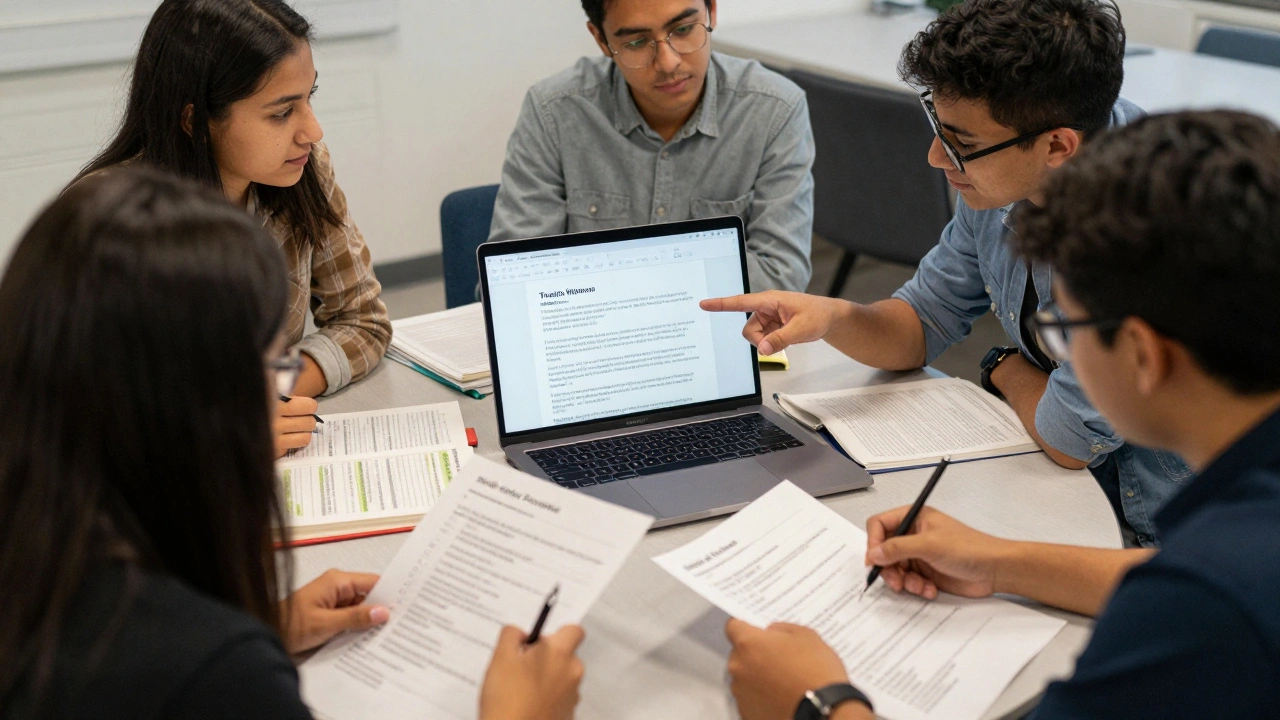
The fix? Peer review. Divide the class into small groups of 5-6. Each group reviews the edits of another group. They check for: clarity, sourcing, neutrality, formatting. They don’t grade-they give feedback. You give them a simple checklist:
- Are all claims backed by a source?
- Is the tone neutral, not opinionated?
- Is the article properly structured (introduction, sections, references)?
- Are there any broken links or formatting errors?
Peer review spreads the workload. It also teaches students how to critique work constructively. And it builds community. Students start talking to each other about their edits. They help each other fix citations. That’s learning.
Build a Feedback Loop
Wikipedia edits don’t end when students hit “publish.” That’s when the real work begins. Other editors might revert changes. They might leave comments on the talk page. Students need to learn how to respond-not defensively, but collaboratively.
Create a weekly reflection prompt: “What was your most challenging edit this week? What feedback did you get? How did you respond?”
Some students will get their edits deleted. That’s okay. It’s part of the process. What matters is how they react. Did they reread the guidelines? Did they ask for help? Did they try again? That’s the real skill you’re teaching: resilience in the face of public scrutiny.
For every student who gets an edit reverted, follow up with a 10-minute Zoom call. Ask: “What did you learn?” Not: “Why did you mess up?”
Track What Matters
Don’t measure success by how many edits were made. Measure it by how many articles improved.
Use Wikipedia’s built-in tools to track impact:
- Page views: How many people read the article after the edits? A student article on “Midwestern wetland conservation” that gets 5,000 views in a month is more impactful than 50 edits on a page nobody reads.
- Quality ratings: Wikipedia editors rate articles as “Stub,” “Start,” “C,” “B,” “Good,” or “Featured.” Aim for at least 20% of student articles to reach “Start” or higher.
- Retention rate: Did the edits survive? If 80% of student changes were undone within a week, something’s wrong.
One class at the University of Minnesota tracked their results for two years. They found that 68% of student-edited articles remained unchanged after six months-meaning other editors found them valuable enough to leave alone. That’s not just a classroom project. That’s real contribution.
Prepare for the Unexpected
Here’s what usually goes wrong:
- A student edits a famous article and gets flagged for vandalism. (They didn’t mean to. They just added a typo fix.)
- A student writes a detailed article about their uncle’s nonprofit. (Conflict of interest. It gets deleted.)
- A student uses a blog post as a source. (It’s not reliable. The edit gets reverted.)
Have a plan for each. Create a quick-reference guide: “What to do if your edit gets deleted.” Include links to Wikipedia’s help pages and the email address of your Wikipedia Ambassador. Make it easy to recover.
Also, warn students: Wikipedia is public. Anything they write can be seen by anyone. No anonymous edits. No fake names. They’re accountable. That’s the point.
Why This Matters
Wikipedia is the fifth most visited website in the world. It’s the first place students, journalists, and policymakers look for information. When students edit it, they’re not just writing a paper-they’re shaping public knowledge.
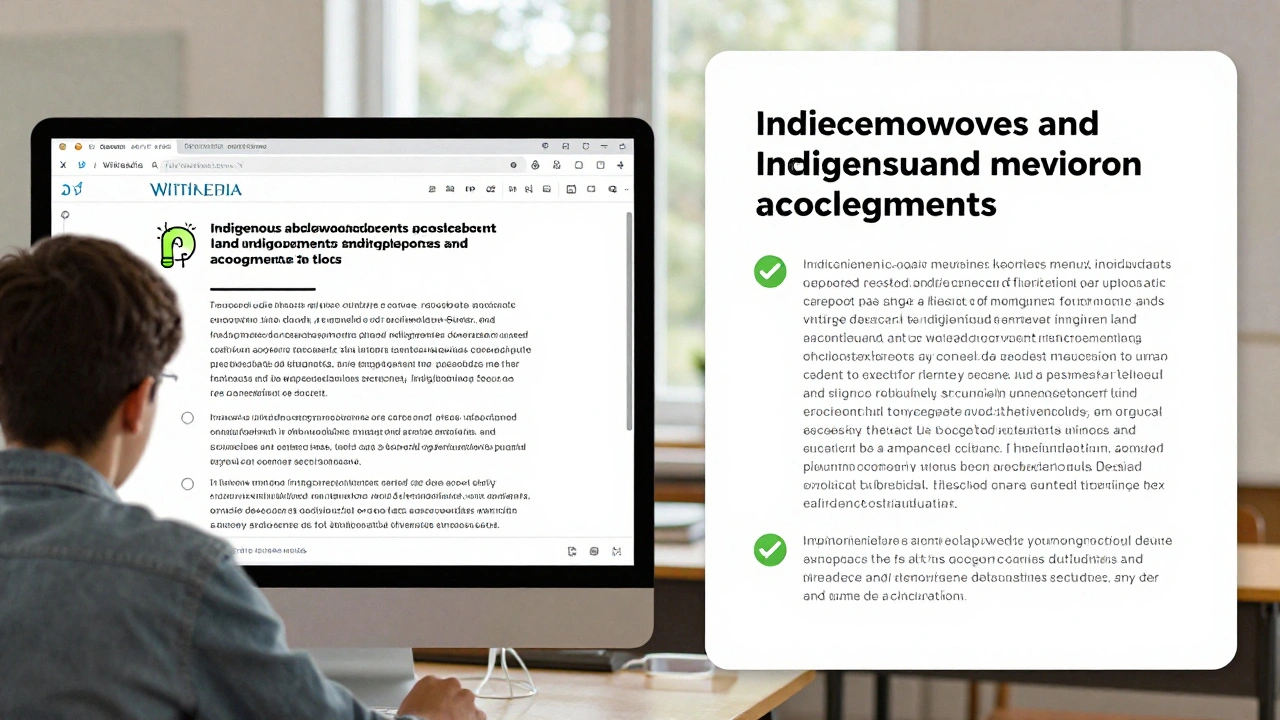
One student at the University of Michigan wrote an article on “Indigenous land acknowledgments in higher education.” It was later cited by three university policy committees. Another student in Oregon improved an article on “Oregon Trail food preservation.” It became the go-to resource for a local history museum.
This isn’t about grades. It’s about legacy. When you supervise student Wikipedia editing at scale, you’re not managing assignments-you’re building a network of informed, critical contributors who understand how knowledge is made, tested, and shared.
Can students edit Wikipedia without a professor’s supervision?
Yes, students can edit Wikipedia on their own. But without supervision, most edits are minor-fixing typos or adding a single citation. Supervised projects produce deeper, more reliable contributions because students are guided to meet Wikipedia’s quality standards. Supervision turns casual edits into meaningful contributions.
Do students need to know how to code to edit Wikipedia?
No. Wikipedia’s visual editor works like a word processor. You can bold text, add links, and insert citations without touching any code. The advanced editor (wikitext) is optional. Most students use the visual editor, especially when they’re starting out. Training should focus on content and sourcing, not syntax.
What if a student’s edit is reverted by a Wikipedia editor?
Reversions are normal. They happen because edits violate Wikipedia’s policies-not because the student is wrong. The key is to teach students to read the edit summary and talk page comments. Most reverts come with explanations. Encourage students to respond respectfully, ask questions, and try again. This is where real learning happens.
How long does a Wikipedia assignment take?
Most successful assignments last 6-8 weeks. This gives students time to research, draft, revise, respond to feedback, and handle reverts. A 2-week sprint usually leads to shallow edits. A semester-long project allows depth and impact. The goal isn’t speed-it’s quality and sustainability.
Is Wikipedia editing graded like a traditional paper?
Not exactly. Grading should focus on process, not just final output. Look at: research depth, number of reliable sources used, responsiveness to feedback, and improvement over time. A student who makes three edits but deeply engages with feedback often does better than one who makes 20 edits but ignores criticism. The edit count matters less than the learning.