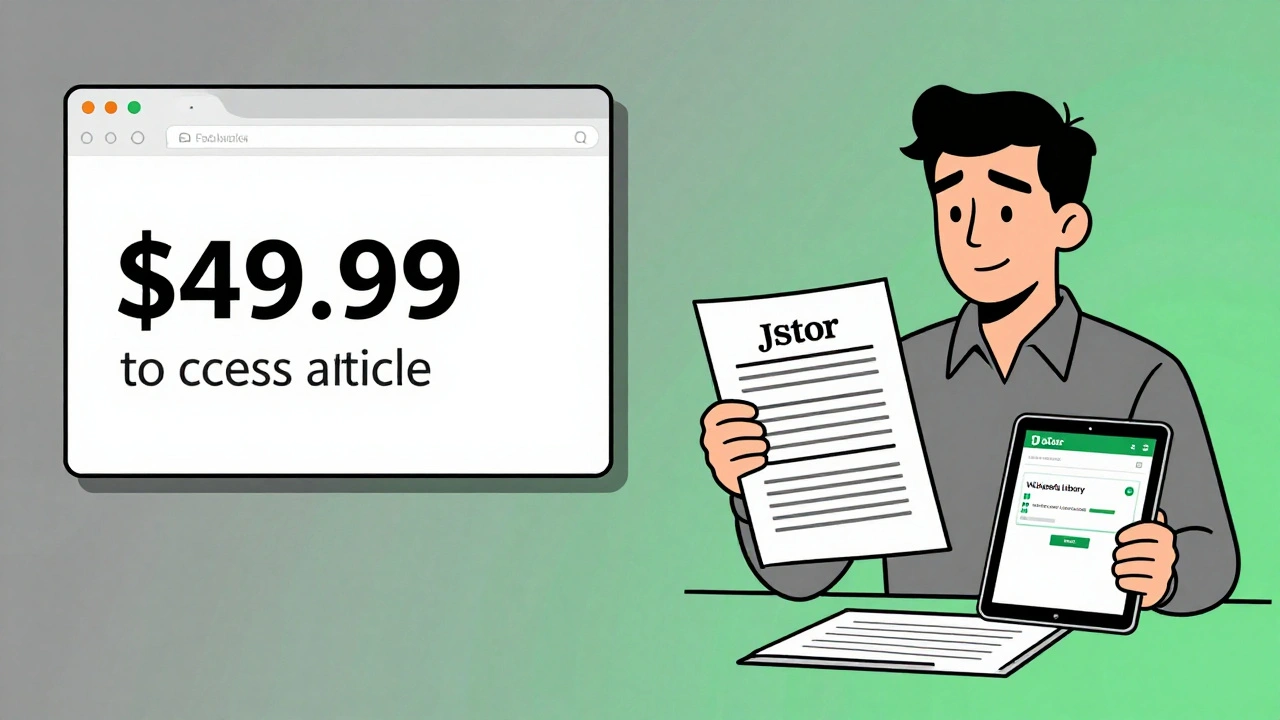
Journalists often hit walls when chasing down sources. A key study from 2023 showed that 68% of investigative reports rely on paywalled academic journals, government reports, or archived newspapers-materials that cost $30 to $50 per article. For many reporters, especially freelancers or small newsrooms, that adds up fast. But there’s a free, legal, and powerful tool most journalists don’t use: the Wikipedia Library.
What the Wikipedia Library Actually Is
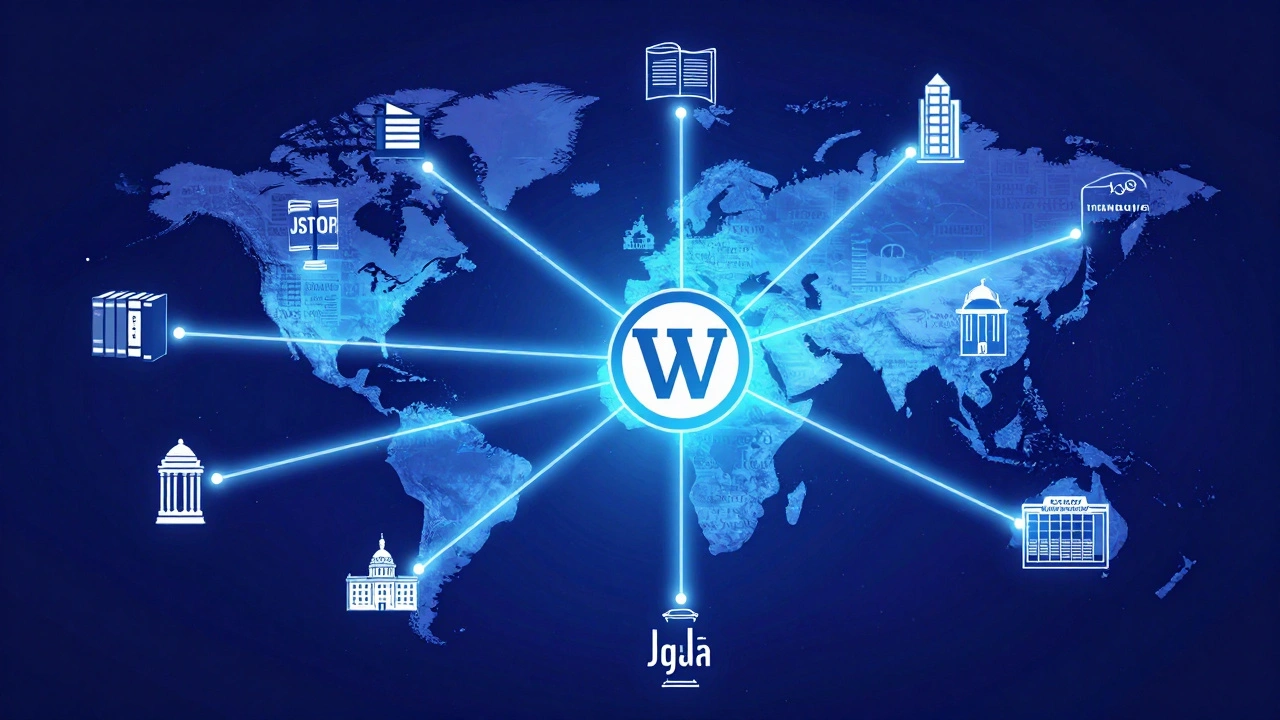
The Wikipedia Library isn’t a physical place. It’s a global program run by volunteers and supported by major publishers like JSTOR, ProQuest, EBSCO, and the New York Times. It gives registered editors-many of them journalists-free access to tens of thousands of paywalled resources. You don’t need to be editing Wikipedia articles to join. You just need to be a working journalist, researcher, or student doing credible public interest work.
The program started in 2014 and now serves over 50,000 users across 100+ countries. In 2024 alone, users accessed more than 2.1 million full-text articles through the library. That’s not just Wikipedia edits-it’s real journalism.
How It Works: Step by Step
Getting access takes less than 10 minutes. Here’s how:
- Go to wikipedia.org/wiki/Wikipedia:The_Wikipedia_Library (yes, it’s on Wikipedia, but you don’t need to edit anything).
- Click “Apply for access” and fill out the form. You’ll need your name, email, and proof of your journalistic work-like a byline, media outlet name, or professional bio.
- Wait 1-3 days. You’ll get an email with login instructions for partner databases.
- Log in to the partner portal using your Wikipedia Library credentials. From there, search and download articles like you would on Google Scholar-but without the paywall.
You don’t need to be a Wikipedia expert. No editing required. No citations to add. Just access.
What You Can Access
The list of available resources changes often, but here’s what’s consistently available:
- JSTOR: Over 12 million academic articles across history, politics, sociology, and public health-perfect for background on policy or corruption cases.
- ProQuest Historical Newspapers: Full scans of the Chicago Tribune, Washington Post, and Los Angeles Times going back to the 1800s. Useful for tracking long-term patterns or verifying old claims.
- EBSCOhost: Access to academic journals from publishers like Sage and Springer, including niche fields like media ethics or data journalism methodology.
- The New York Times Archive: Full access to articles from 1851 to 2018. Many reporters use this to fact-check quotes or find original reporting on events.
- HeinOnline: Legal journals, congressional records, and treaty archives. Essential for legal reporting or tracking legislation.
Each resource has different limits. JSTOR lets you download up to 100 articles per month. ProQuest allows 50 downloads. The New York Times Archive gives you unlimited access to pre-2019 content. These aren’t just trial credits-they’re ongoing, renewable access.
Why Journalists Are Missing Out
Most journalists still use Google or institutional library portals. Why? Because they don’t know the Wikipedia Library exists. A 2024 survey of 320 U.S. reporters found that only 12% had heard of it. Among those who had, 87% said they’d use it regularly if they knew how.
Some think it’s only for Wikipedia editors. Others assume it’s shady or unreliable. But it’s not. Every partner database is a legitimate, academic, or commercial publisher. The Wikipedia Library doesn’t crack paywalls-it negotiates access. It’s like a public library card for the digital age.
And it’s not just for big stories. A local reporter in Wisconsin used it to track 30-year-old environmental reports on a factory spill. A freelancer in Ohio dug up a 1998 congressional hearing on school funding-something no public archive had digitized. These aren’t outliers. They’re everyday wins.
How to Use It Without Getting Caught
Some newsrooms still don’t allow staff to use third-party tools. But here’s the key: you’re not breaking any rules. The Wikipedia Library is officially recognized by the International Federation of Journalists and endorsed by the Society of Professional Journalists.
When citing a source from the library, you don’t say “from Wikipedia Library.” You cite the original publisher: “According to JSTOR’s 2019 study on voter suppression…” or “As reported in the Chicago Tribune (ProQuest Historical Newspapers, 1972).”
The library doesn’t change the source-it just gives you the key to unlock it. Ethically, it’s no different than borrowing a book from a university library.
Limitations and Workarounds
It’s not magic. Some limits exist:
- No recent paywalled articles: The New York Times only goes to 2018. For 2020+ articles, use the library’s current subscription to Washington Post or Wall Street Journal instead.
- Some journals are missing: If you need a specific medical journal like The Lancet, check if it’s listed. If not, try your local public library’s free database access-they often have it.
- Not all countries are equal: Access varies by region. In some places, you’ll get more options than others. But the core resources (JSTOR, ProQuest, NYT) are available globally.
Still, even with limits, it’s the most reliable free access point for historical and academic sources that reporters actually need.
Real Stories: What Journalists Have Found
One investigative team in Michigan used the Wikipedia Library to uncover a pattern of state officials ignoring EPA reports from the 1980s. They found 17 hidden documents in JSTOR that showed officials knew about toxic runoff but never acted. The story led to a state audit.
A freelance reporter in Atlanta traced a politician’s old op-eds using the Atlanta Journal-Constitution archive. The pieces revealed a shift in policy stance that the candidate had never mentioned in interviews. The story went viral.
These aren’t rare cases. They’re repeatable. The tool doesn’t replace reporting-it replaces the cost barrier.
How to Get Started Today
If you’re a journalist and you’re struggling to access sources, here’s your action plan:
- Visit wikipedia.org/wiki/Wikipedia:The_Wikipedia_Library.
- Apply using your professional email and a link to your work.
- Once approved, explore the partner list and pick one database to test-start with JSTOR or ProQuest.
- Search for one article you’ve been stuck on. Download it. Cite it properly.
- Repeat. Soon, you’ll be using it weekly.
It’s free. It’s legal. It’s built for people like you. You don’t need permission from your editor. You just need to click “Apply.”
What Comes Next
The Wikipedia Library is growing. New partners are joining every year. In 2025, they added access to the Financial Times archive and the Library of Congress’s digitized congressional hearings. They’re also testing a feature that lets users request specific journals-so if you need a niche publication, you can ask.
For journalists, this isn’t just a perk. It’s a lifeline. In an era where newsrooms are shrinking and budgets are tighter, access to reliable sources isn’t a luxury. It’s a necessity. And the Wikipedia Library gives it to you-no credit card, no subscription, no excuse.
Do I need to edit Wikipedia to use the Wikipedia Library?
No. You don’t need to edit any Wikipedia pages. The tool is open to any verified journalist, researcher, or student doing public interest work. You only need to prove your professional role with a byline, media outlet, or bio.
Is the Wikipedia Library free?
Yes. There’s no cost to apply or use any of the resources. The program is funded by donations and partnerships with publishers who want their research to be used in public interest journalism.
Can I use it for breaking news?
Not for breaking news. The library mostly offers archived or academic content-older reports, historical newspapers, peer-reviewed studies. For current news, you’ll still need live subscriptions or press releases. But for context, background, and verification, it’s unmatched.
What if I’m outside the U.S.?
You can still apply. The program is global. Access varies slightly by country due to licensing, but core resources like JSTOR, ProQuest, and the New York Times Archive are available in over 90 countries.
How long does access last?
Access is renewable every 12 months. You’ll get a reminder email before it expires. Just confirm your work status, and your access continues. There’s no limit to how many times you can renew.
If you’re a journalist who needs sources but can’t afford them, the Wikipedia Library isn’t just an option-it’s the best one you haven’t tried yet.