Writing a neutral lead section on a contentious Wikipedia article isn’t about avoiding controversy-it’s about presenting facts so clearly that even people who disagree on the topic can agree the summary is fair. The lead section is the first thing readers see. It sets the tone. If it’s biased, emotional, or one-sided, the whole article loses credibility-even if the rest of it is perfectly balanced.
Start with what everyone agrees on
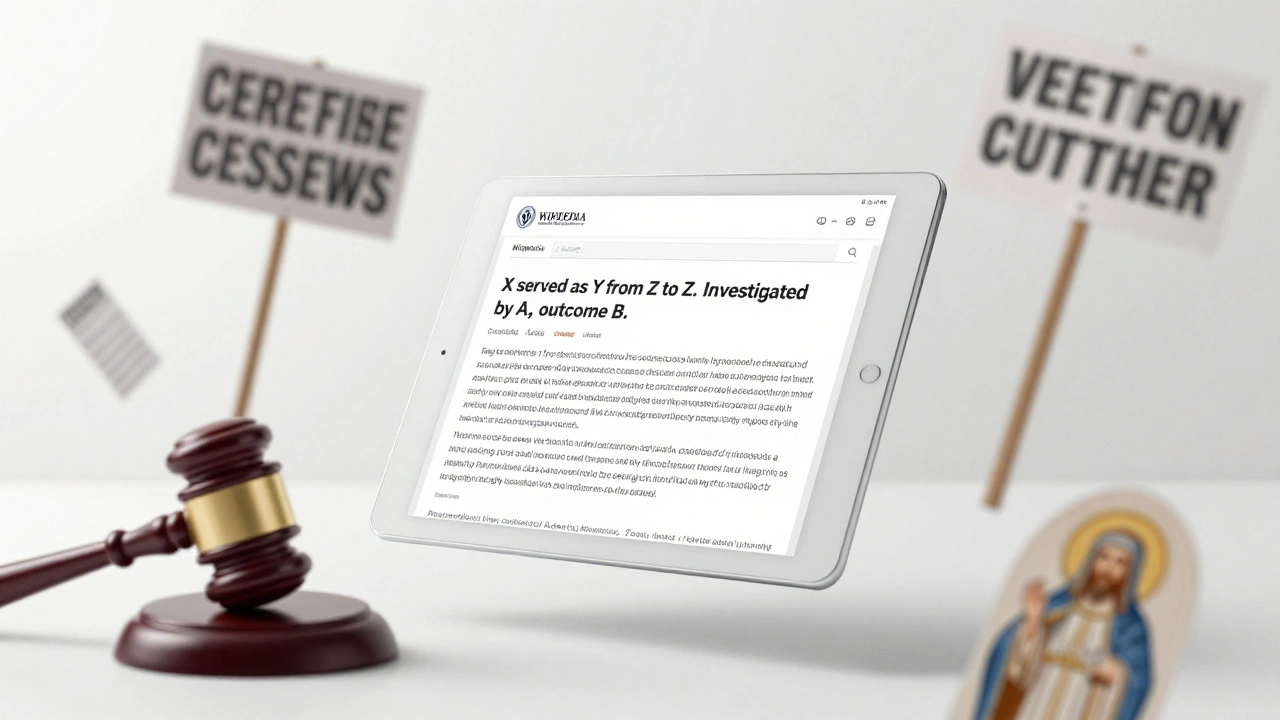
Before you write a single word, ask: what facts about this topic are documented, uncontested, and verifiable? For example, if you’re writing about a political figure accused of corruption, the lead shouldn’t say "a corrupt politician" or "a falsely accused reformer." Instead, it should say: "[Name] is a politician who served as [position] from [year] to [year]. They have been investigated by [agency] in connection with [allegation], and [outcome]."Stick to what’s in reliable sources. If multiple credible sources agree that someone held a certain office, that’s your anchor. If sources conflict on whether an event caused a specific outcome, don’t pick a side. Say: "Some sources attribute [effect] to [cause], while others cite [alternative cause]."
Use passive voice only when necessary
Many editors think passive voice makes writing sound neutral. It doesn’t. Passive voice often hides responsibility or makes statements vague. "Mistakes were made" is not neutral-it’s evasive.Instead, use active voice with clear attribution: "The [organization] reported that..." or "According to [source], [fact]." This keeps the focus on evidence, not opinion. Neutral doesn’t mean faceless. It means accountable.
Don’t lead with controversy
It’s tempting to open with the most dramatic part of a topic-especially if it’s what made the article popular. But that’s not neutral. A lead section should summarize the topic’s significance, not its drama.For example, don’t write: "The most divisive religious leader in modern history..." That’s a value judgment. Instead: "[Name] is a religious figure whose teachings have sparked widespread debate since [year]." Then follow with context: where they’re recognized, how many followers they have, what institutions they’re associated with, and what legal or social controversies have arisen.
The lead should answer: Who is this? What is their role? Why are they notable? What are the main points of dispute? Not: Why are they bad? Why are they good?
Balance is not symmetry
A common mistake is trying to give equal weight to all sides, even when one side has far more evidence. If 90% of peer-reviewed studies support a scientific consensus, and 10% are fringe theories, your lead should reflect that. Saying "some scientists believe X, others believe Y" when X is the overwhelming consensus misleads readers.Use qualifiers: "The majority of experts agree that..." or "While a minority view holds that..., most authoritative sources state..." This isn’t bias-it’s proportionality. Wikipedia’s NPOV policy requires accuracy, not false equivalence.
Check the talk page and edit history
Before writing a lead for a contentious article, read the article’s talk page. Look for long-running disputes. Who’s been banned? What sources have been challenged? What phrases keep getting reverted?Often, the most neutral version of the lead has already been tried and tested. Don’t reinvent the wheel. Look for edits that survived multiple rounds of dispute. Those are your best clues.
If you’re unsure, check the article’s history for edits that were accepted without dispute. Sometimes the most boring version is the most neutral one.
Avoid loaded language
Words like "alleged," "so-called," "radical," "extremist," "fraud," or "hero" carry emotional weight. Even if they’re technically true, they’re not neutral.Instead of "the so-called whistleblower," say "the individual who disclosed..."
Instead of "the radical activist," say "the activist who organized..."
Instead of "the fraudulent study," say "the study that has been widely criticized for..."
Let the facts speak. Let the sources define the terms. Your job is to report, not to judge.
Use the "in a nutshell" test
Imagine explaining the article to someone who knows nothing about the topic. Can you summarize it in one sentence without taking sides? That’s your lead.Example: "The 2023 Supreme Court case X v. Y addressed whether state laws restricting abortion access violate constitutional protections. The Court ruled 6-3 in favor of the state, overturning a prior precedent. The decision has led to legal challenges in multiple states and sparked public protests on both sides."
That’s neutral. It states who, what, when, and the consequences. No labels. No opinions. Just what happened and why it matters.
Update the lead when the article changes
A lead section isn’t set in stone. If new major events happen-like a conviction, a retrial, a new report, or a policy reversal-the lead must be updated. Don’t wait for someone else to fix it.But don’t update it for minor changes. Only revise the lead when the article’s core facts or significance shift. A single new source doesn’t change the lead. A court ruling, a major investigation, or a shift in public policy does.
When you update the lead, explain your change on the talk page. Say: "Updated lead to reflect the June 2025 ruling by [court], which changed the legal status of [topic]." That builds trust and transparency.
When in doubt, defer to policy
Wikipedia’s Neutral Point of View (NPOV) policy isn’t a suggestion-it’s a rule. It says: "The encyclopedia must not take sides. All significant views must be represented fairly, proportionately, and without editorial bias."That means:
- Don’t imply guilt or innocence without legal findings.
- Don’t use emotionally charged adjectives.
- Don’t imply causation without evidence.
- Don’t omit key facts just because they’re uncomfortable.
If you’re unsure whether something is neutral, ask: "Would someone who disagrees with this summary still accept it as accurate?" If the answer is no, rewrite it.
Real examples from real disputes
Take the article on climate change. The lead doesn’t say "climate change is a hoax" or "climate change is the greatest threat ever." It says: "Climate change refers to long-term shifts in temperatures and weather patterns, primarily caused by human activities such as fossil fuel burning. The Intergovernmental Panel on Climate Change, representing over 195 countries, states with high confidence that human influence is the dominant cause of observed warming since the mid-20th century."That’s neutral because it’s sourced, proportional, and factual.
Another example: the article on gender identity. The lead doesn’t say "gender is a social construct" or "gender is biological." It says: "Gender identity refers to a person’s internal sense of their own gender, which may or may not correspond with the sex assigned at birth. Views on gender identity vary across cultures and disciplines, with medical, psychological, and legal communities offering differing frameworks for understanding it."
Again-no judgment. Just context.
What happens when you get it wrong
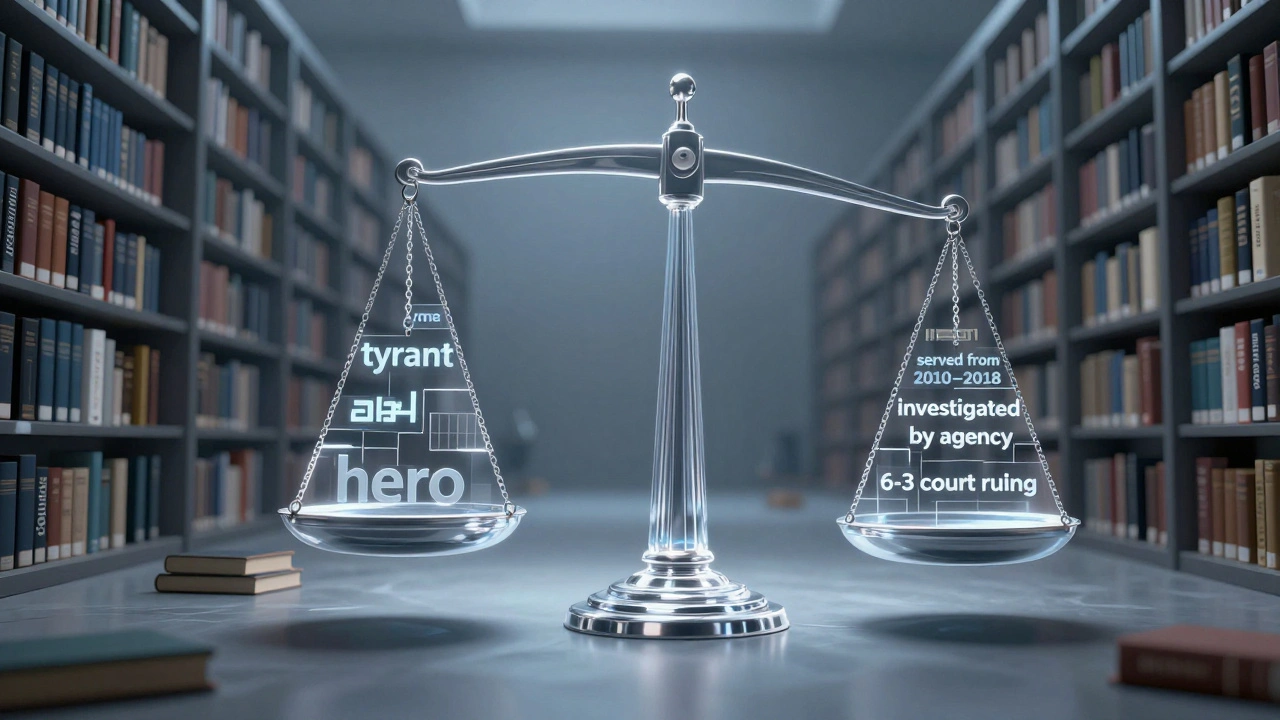
A poorly written lead can trigger edit wars, user blocks, and even article protection. In 2024, the article on a controversial historical figure was locked for six months after editors repeatedly inserted phrases like "tyrant" and "hero" into the lead. The fix? A simple rewrite that used only verified facts: "[Name] led [country] from [year] to [year]. Their administration implemented [policy], which resulted in [outcome]. They are remembered differently in [region A] and [region B]."That version stayed unchanged for over a year. No disputes. No reverts. No complaints.
Final checklist for a neutral lead
Before saving your edit, ask yourself:- Does every claim have a reliable source?
- Are all major viewpoints represented in proportion to their support?
- Are there any emotionally charged words? Replace them.
- Would someone who strongly opposes this topic still agree this is accurate?
- Does it answer: Who? What? When? Why? Without adding opinion?
If you can answer yes to all five, you’ve done it right.
Can I use the word 'alleged' in a Wikipedia lead section?
Use 'alleged' only when referring to unproven claims in legal or official contexts. For example: 'The individual was accused of fraud, but no charges were filed.' Avoid using 'alleged' to undermine facts that are well-documented by reliable sources. If a court has ruled on a matter, state the ruling directly.
What if sources contradict each other in the lead?
Acknowledge the conflict. Say: 'While [Source A] states X, [Source B] reports Y.' Then explain why the discrepancy exists-different methodologies, time frames, or biases. Don’t pick a winner. Let readers know the disagreement exists and why.
How long should a lead section be?
A lead section should be concise but complete. Most are between 100 and 250 words. It should summarize the entire article without going into detail. If your lead is longer than 300 words, you’re likely including too much. Move supporting details into the main body.
Can I cite Wikipedia itself as a source in the lead?
No. Wikipedia cannot be used as a source for any factual claim, including in the lead. Always cite independent, reliable sources like peer-reviewed journals, books from academic presses, major news outlets, or official government reports.
What if I’m not an expert on the topic?
You don’t need to be an expert. You need to be careful. Stick to what reliable sources say. Avoid interpreting, guessing, or adding your own views. If you’re unsure, look at how other well-established articles on similar topics handle their leads. Use those as templates.
Next steps
Start by picking one contentious article you’ve noticed has a biased or vague lead. Rewrite it using the checklist above. Then post your version on the article’s talk page with a note: "Proposed neutral lead based on NPOV guidelines. Please review." You might get feedback. You might get edits. But you’ll also be helping make Wikipedia more trustworthy.Neutral writing isn’t boring. It’s powerful. It’s the kind of writing that survives scrutiny, outlasts outrage, and earns respect-even from people who hate the topic.