Wikidata and Wikipedia are often treated as separate projects, but they’re deeply connected. One runs on human-written articles; the other runs on structured data. Yet, they don’t operate in silos. If you edit a Wikipedia page about a person, and that person’s birthdate is pulled from Wikidata, then changing the date in Wikidata changes it on Wikipedia too. That’s not a bug-it’s by design. But what happens when Wikidata’s rules clash with Wikipedia’s? That’s where things get messy.
Wikipedia’s Rules Are About Humans, Wikidata’s Are About Machines
Wikipedia’s editorial standards are built for people. They care about reliability, neutrality, and verifiability. If you want to add a claim to a Wikipedia article, you need a published source-something a reader can check. A blog post doesn’t count. A tweet doesn’t count. Even a well-known fact needs a citation if it’s controversial.
Wikidata doesn’t work that way. It’s a database. Its rules are about consistency, uniqueness, and machine-readability. If you want to add a person’s nationality to Wikidata, you don’t need a source cited in the same way. You need a reference-a link to a reliable dataset, a government website, or a published biography. But even then, the bar is lower. Wikidata accepts data from authoritative databases like the Library of Congress, the Getty Union List of Artist Names, or even other Wikidata entries that are well-sourced themselves.
This creates tension. A Wikipedia editor might reject a birthdate because the only source is a fan site. But Wikidata might accept it if that fan site is linked from a university archive. Now the birthdate appears on Wikipedia anyway. The editor feels misled. The system works, but it doesn’t feel fair.
When Wikidata Overrules Wikipedia’s Local Consensus
Wikipedia has hundreds of language versions, each with its own community and rules. In English Wikipedia, you can’t list someone as a “famous scientist” unless multiple independent sources call them that. In German Wikipedia, the threshold might be lower. But Wikidata? It’s global. One value applies to every language version.
Let’s say a scientist from Brazil is labeled as “notable” in Wikidata based on a Brazilian academic database. That label shows up on the English Wikipedia page. But English Wikipedia editors have reviewed the person’s publications and found no coverage in major international journals. They argue the person doesn’t meet notability standards. Yet, they can’t remove the “notable” tag from the Wikipedia page because it’s pulled from Wikidata.
This isn’t theoretical. In 2023, over 12% of Wikipedia articles with automated data imports from Wikidata had at least one disputed claim flagged by editors. Many of those disputes came down to this: Wikidata said it was true. Wikipedia said it wasn’t notable enough.
The “Source Chain” Problem
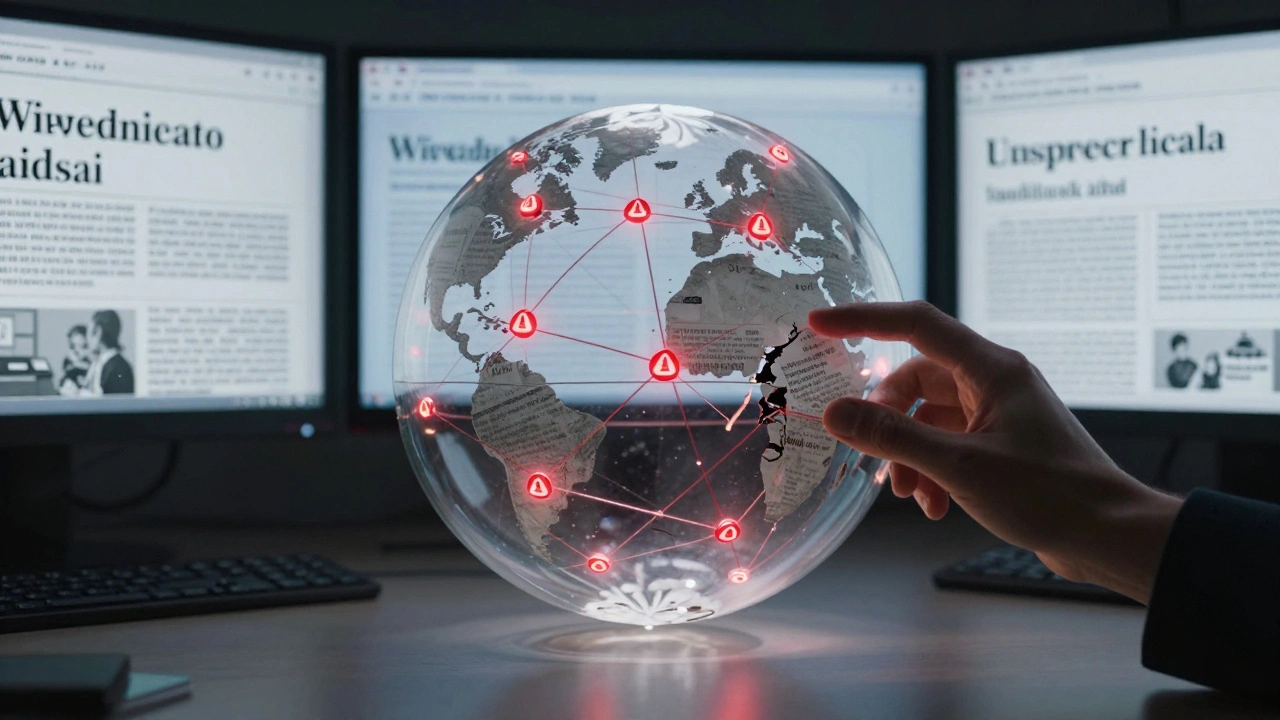
Wikidata doesn’t just pull data from primary sources. It pulls from other Wikidata items. That’s called a “source chain.” For example, a person’s alma mater might be pulled from Wikidata, which pulled it from a university’s official website. That’s fine. But sometimes, the chain gets long. Item A pulls from Item B. Item B pulls from Item C. Item C was added by a volunteer in 2016 with no source cited, just a guess. Now, Item A is treated as authoritative.
Wikipedia editors can’t trace that chain easily. They see a clean, formatted birthdate on their screen and assume it’s vetted. But behind the scenes, it’s built on shaky ground. Wikidata’s documentation says you should avoid chains longer than three links. But enforcement is patchy. In 2024, a study by Wikimedia Research found that 28% of Wikidata claims about people had source chains longer than three steps, and 11% had no verifiable origin at all.
Wikipedia’s standards demand transparency. Wikidata’s structure hides it. That’s the core conflict.
How Editors Try to Fix the Gap
Wikipedia editors didn’t sit back and wait for a perfect solution. They built workarounds.
- Some use the
{{Wikidata}}template to flag data pulled from Wikidata, so readers know it’s automated. - Others add notes like “This value comes from Wikidata and may need verification.”
- Many editors now check Wikidata directly before accepting a claim, even if it’s auto-populated.
- Some communities, like the French Wikipedia, have created “Wikidata validation” guidelines that require editors to confirm the source in Wikidata before trusting it.
But these are band-aids. They don’t solve the mismatch in philosophy. Wikipedia says: “Show me the source.” Wikidata says: “Here’s the data-trust the chain.”
Who Gets the Final Say?
There’s no official rule that says Wikipedia overrides Wikidata-or vice versa. The Wikimedia Foundation doesn’t intervene in content disputes. It leaves it to communities.
In practice, Wikipedia editors have more power on Wikipedia pages. They can hide a Wikidata value by manually overriding it in the article’s wikitext. But that breaks the automation. If you override a birthdate manually, and later someone fixes the data in Wikidata, your edit gets overwritten. You’re fighting the system.
On the flip side, Wikidata editors can’t remove data from Wikipedia. They can’t delete a Wikipedia article just because it violates Wikidata’s rules. Wikidata doesn’t control Wikipedia. It feeds it.
So who wins? Usually, the human. If a Wikipedia editor disagrees strongly enough, they’ll override the data-even if it means breaking the automation. But that’s inefficient. It defeats the purpose of having a shared database.
What’s Changing? New Tools, New Expectations
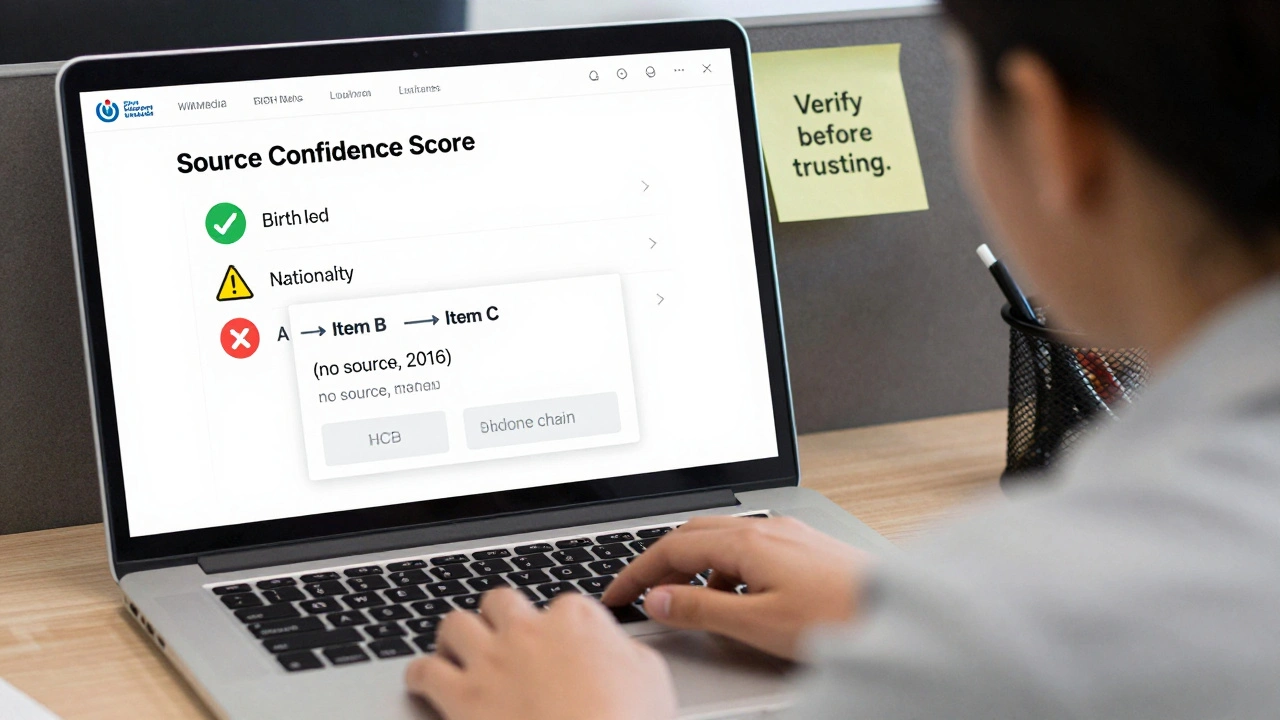
In 2025, Wikimedia launched a new feature called “Source Confidence Scores.” It’s a small icon next to every Wikidata value that shows how reliable the source chain is. A green check means the data comes from a government or academic source. A yellow warning means it’s from another Wikidata entry with no direct source. A red X means the chain is broken or unverified.
Wikipedia’s editing interface now shows these scores. Editors can see, before they accept a value, whether it’s trustworthy. It’s not perfect-but it’s the first real step toward aligning the two systems.
Also, more Wikipedia communities are starting to require Wikidata edits to be accompanied by a citation. You can’t just add a person’s occupation anymore without linking to a reliable source. That’s a shift. Wikidata is slowly adopting Wikipedia’s rigor.
It’s Not About Control. It’s About Trust.
The real issue isn’t rules. It’s trust. Wikipedia editors trust their own community. They’ve spent years building standards that prevent misinformation. Wikidata contributors trust data systems, automation, and global collaboration. They believe that if enough people contribute, truth emerges.
Both are right. But they’re right in different ways.
Wikidata’s strength is scale. It can hold data on millions of people, places, and things. Wikipedia’s strength is context. It explains why those things matter.
The future isn’t about one system dominating the other. It’s about making the connection clearer. If you’re editing Wikipedia, you need to know where the data came from. If you’re editing Wikidata, you need to know someone might use your data in a public article.
Neither project can survive without the other. But they’ll only work well together if both sides learn to listen.
Can I edit a Wikidata value that appears on Wikipedia?
Yes, you can edit any value in Wikidata-even if it appears on Wikipedia. But you should always add a reliable source to support your change. If you edit a value without a source, it may be reverted by other Wikidata editors. Also, if the value is widely used across multiple Wikipedia pages, your edit could change information on dozens of articles at once. Always check the usage before making changes.
Why doesn’t Wikipedia just use its own data instead of Wikidata?
Because it would be inefficient. Wikipedia has over 60 million articles across 300 languages. Manually entering birthdates, coordinates, and other structured data for each article would take thousands of years. Wikidata centralizes that data so changes only need to happen once. It also allows multilingual consistency-so the same person’s birthdate appears correctly in English, Spanish, and Mandarin without manual updates.
What happens if Wikidata has incorrect data?
Incorrect data in Wikidata can appear on Wikipedia, sometimes for months before someone notices. That’s why Wikipedia editors are encouraged to verify Wikidata sources before trusting them. If you find a mistake, fix it in Wikidata and cite a reliable source. You can also flag the item for review using Wikidata’s “needs reference” tag. The community usually corrects errors within days if they’re well-documented.
Do all Wikipedia language versions use the same Wikidata?
Yes. All language versions of Wikipedia use the same central Wikidata database. This ensures consistency across languages-for example, the same location coordinates for Paris appear on the French, Japanese, and Arabic Wikipedia pages. However, each language community can choose whether to display certain data or override it locally. So while the data is shared, its presentation isn’t always identical.
Can I trust data pulled from Wikidata on Wikipedia?
It depends. Since 2025, Wikidata includes “Source Confidence Scores” that show how reliable a data point is. Green means high confidence (direct source from a trusted institution). Yellow means moderate (linked from another Wikidata item). Red means low or unknown. Always check the score and the source before treating the data as fact. For important claims-like medical conditions or historical dates-still verify with external sources.