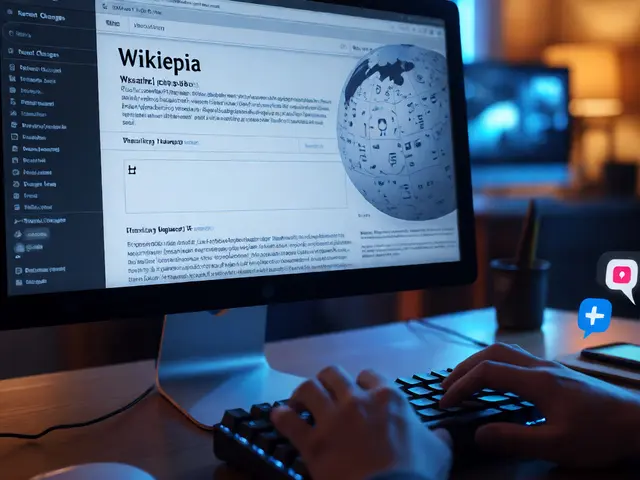
Imagine a major political election happening in Brazil while a hurricane makes landfall in the Philippines and a tech giant announces a new AI model in Silicon Valley. All three events are breaking news, all require immediate updates on Wikipedia is a free online encyclopedia that relies on volunteer editors to maintain neutral, cited articles. The challenge isn't just writing the text; it's ensuring that an editor in São Paulo doesn't accidentally overwrite the work of an editor in Manila who is verifying facts from local sources. This is where the real magic of collaborative knowledge management happens.
The Problem of Synchronous Chaos
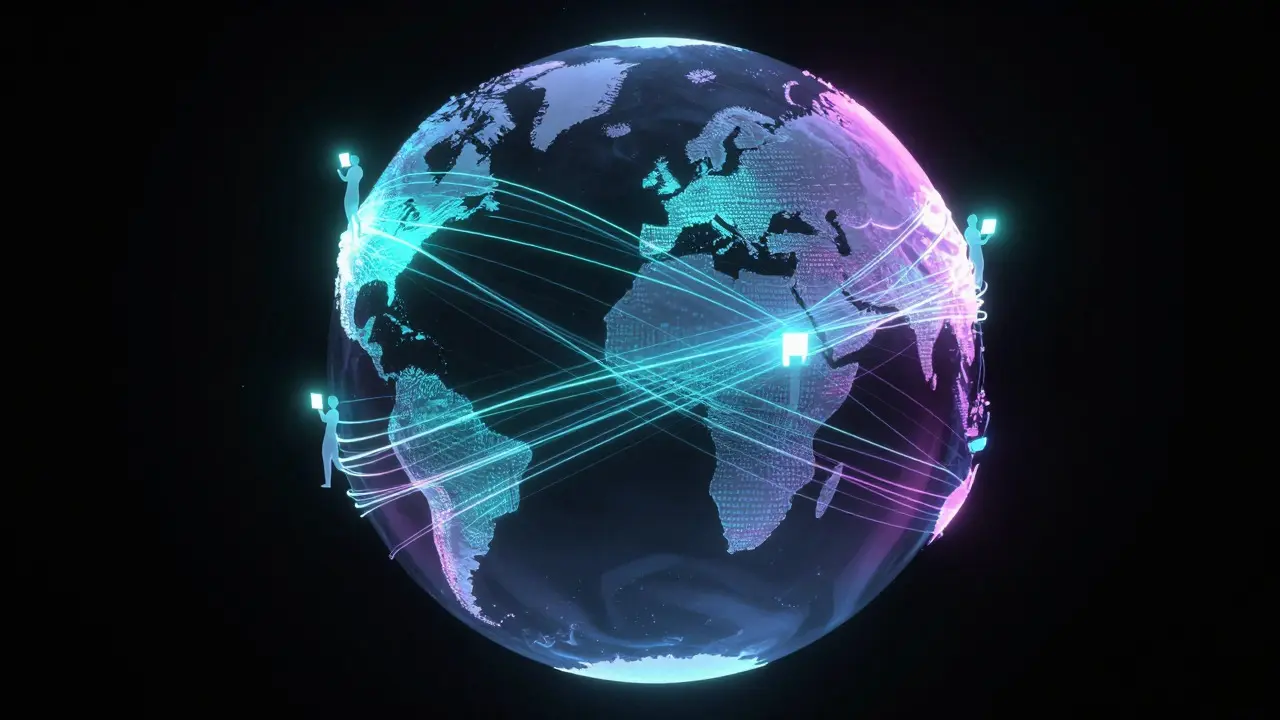
Global events create a rush of information that often contradicts itself in the first few hours. One source says the candidate won; another says the results are pending. If every editor reacts instantly based on their local feed, the article becomes a mess of conflicting claims. To prevent this, the community relies on a mix of informal norms and specific technical tools. The core issue is latency. News travels fast, but verification takes time. An editor in New York might see a headline at 9:00 AM EST, but the corresponding event in London happens at 2:00 PM BST. By the time the London editor sees the update, the context may have shifted entirely.
This temporal gap creates what editors call "edit wars" or "revert loops." Without coordination, these conflicts can freeze an article for days. The solution involves a structured approach to how changes are proposed and accepted during high-traffic periods. It’s not about stopping edits; it’s about slowing down the pace just enough to allow consensus to form across different parts of the world.
Role of Talk Pages in Cross-Time-Zone Dialogue
The primary tool for this coordination is the Talk Page is a dedicated space adjacent to each Wikipedia article where editors discuss content changes before making them. During normal times, talk pages are quiet. During global events, they become bustling forums. Editors leave notes explaining why they made a change, citing specific sources. Crucially, these notes are visible to everyone, regardless of their location.
Here is how it works in practice:
- Flagging Disputes: If an editor disagrees with a change, they don't just revert it silently. They add a template like {{disputed}} or {{fact}} to signal that the information needs more scrutiny.
- Sourcing Standards: Contributors must cite reliable sources. For global events, this often means using wire services like Reuters or AP rather than local blogs, which helps standardize the narrative across time zones.
- Time-Stamped Comments: Every comment includes a timestamp. An editor in Tokyo knows exactly when a user in Berlin posted a query, allowing them to plan their response for the next active window.
Leveraging User Time Zone Settings
Every Wikipedia account has a setting for the user's preferred time zone. This small feature has a massive impact on coordination. When you view a user's profile, you can see their local time. This allows other editors to predict when they will be active. For example, if a dispute arises at 10:00 AM UTC, an editor in Los Angeles (UTC-7) is currently at 3:00 AM. They are likely asleep. An editor in Mumbai (UTC+5:30) is at 3:30 PM. They are fully awake and working. By checking the time zone settings, the Los Angeles editor knows they can leave a detailed explanation and expect a response by the time they wake up. This mental map of global activity windows helps distribute the workload naturally.
| Region | Local Peak Activity (Approx.) | UTC Equivalent Window | Common Role in Coordination |
|---|---|---|---|
| North America (East) | 8:00 AM - 6:00 PM | 13:00 - 23:00 UTC | Initial fact-checking, US-centric sourcing |
| Europe | 9:00 AM - 7:00 PM | 09:00 - 19:00 UTC | Bridging US and Asia, international law context |
| Asia-Pacific | 9:00 AM - 9:00 PM | 00:00 - 12:00 UTC | Closing the loop, finalizing consensus overnight |
Templates and Bots: Automating Consensus
Human communication is slow. To speed things up, Wikipedia uses automated tools. Templates are pre-formatted boxes that appear on the article page. A common one is the {{In progress}} tag. When placed, it tells readers that the article is being actively worked on and discourages minor cosmetic edits that might conflict with substantive changes. Bots also play a role. While they don't make editorial decisions, they monitor for rapid reverts. If two editors keep undoing each other's work within a short timeframe, a bot might flag the article for attention from experienced mediators. This objective data helps break deadlocks without requiring emotional debate.
Case Study: The 2024 Election Cycle
Consider the recent presidential elections in various countries. In the United States, the night of the election saw thousands of edits per hour. However, the most contentious moments occurred not during the voting, but in the early morning hours when results were finalized. At this point, US editors were exhausted or offline. Meanwhile, European editors were waking up. They took over the task of verifying final numbers against official state websites. Because the US editors had left clear citations on the Talk Page, the Europeans could verify the data without starting from scratch. This handover process, facilitated by clear documentation and time zone awareness, prevented the article from reverting to outdated projections.

Best Practices for Editors Working Globally
If you are editing during a global event, here are some practical tips to ensure your contributions help rather than hinder:
- Check the Talk Page First: Always read the discussion before making a large edit. Someone might already be addressing the exact issue you found.
- Use Neutral Tone: Avoid phrases like "obviously" or "clearly." Use "according to [Source]." This reduces friction between editors with different perspectives.
- Cite Primary Sources: For breaking news, link directly to government announcements or major news wires. Avoid aggregators that might delay accuracy.
- Respect the "Cooling Off" Period: If a dispute seems stuck, wait 24 hours. Often, the next day brings fresh eyes and calmer minds from different time zones.
- Update Your Time Zone Setting: Ensure your profile reflects your actual current time zone. If you travel, update it. This helps others gauge your availability.
Challenges and Limitations
Despite these systems, challenges remain. Language barriers still exist. An editor fluent in Japanese and English may struggle to verify a claim sourced only in Mandarin. Additionally, "notability bias" can creep in. Events that dominate headlines in one country might seem trivial to editors elsewhere, leading to under-documentation of regional impacts. Finally, burnout is real. Coordinating across time zones means some editors are always working late nights or early mornings. The community relies on volunteers, so sustainable pacing is crucial to keeping the project healthy.
Frequently Asked Questions
Do Wikipedia editors meet in real-time to coordinate?
Rarely. Most coordination happens asynchronously via Talk Pages. While some communities use IRC channels or Discord servers for live chat, the vast majority of global event coordination relies on written comments that persist and can be read at any time.
What happens if two editors in different time zones disagree on a fact?
They typically escalate the issue to the Talk Page. If no resolution is reached after several days, the article may be tagged with a dispute template. Experienced editors known as "mediators" may then step in to review the sources and propose a compromise.
How do bots help with time zone coordination?
Bots primarily detect patterns of conflict, such as rapid reverts. They don't understand time zones themselves, but by flagging unstable articles, they alert human mediators who can check the activity logs and see which time zones are involved in the conflict.
Is there a central team managing global events?
No. Wikipedia is decentralized. There is no single team. Instead, ad-hoc groups of interested editors self-organize around specific topics. Projects like "WikiProject Current Events" provide guidelines and templates, but enforcement is voluntary.
Why is the Talk Page so important for global events?
The Talk Page serves as the shared memory of the article. Since editors cannot always be online simultaneously, the Talk Page records the logic behind changes. This allows an editor joining eight hours later to understand the context and build upon previous work rather than repeating mistakes.