
Ever tried adding a fact to a Wikipedia article only to have it reverted with the note "Original Research"? It’s a frustrating experience that confuses many new editors. You found the data, you did the math, and you’re sure it’s correct. So why is it wrong for Wikipedia?
The answer lies in how Wikipedia defines its role as an encyclopedia rather than a research journal. The core rule, known as Original Research (OR), dictates that articles should not contain new analysis, synthesis, or conclusions that haven't already been published in reliable, independent sources. If you can’t find a published source saying exactly what you want to write, you probably shouldn’t write it on Wikipedia-yet.
Why Wikipedia Bans Original Research
To understand the policy, you have to understand the goal. Wikipedia aims to be a compendium of knowledge, not a generator of it. When editors publish their own interpretations, the encyclopedia becomes a platform for personal opinions disguised as facts. This leads to edit wars where two editors with different analytical frameworks fight over which interpretation is "correct."
The Verifiability principle is the backbone here. For a claim to stay in an article, it must be verifiable by readers. If a reader has to download a raw dataset, run a regression model, and check your arithmetic to verify a statement, the bar for verification is too high. By requiring Tertiary Sources, Wikipedia ensures that experts outside the community have already vetted the information. It shifts the burden of proof from the editor to the established academic or journalistic record.

What Counts as Original Research?
Many people think OR only applies to scientific studies. In reality, it covers almost any form of new insight. Here are the most common types of content flagged as original research:
- New Synthesis: Combining facts from multiple sources to create a new conclusion. For example, if Source A says Company X lost money in Q1 and Source B says they cut staff in Q2, concluding that "Company X is failing due to poor management" is original research unless a third source explicitly makes that connection.
- Statistical Analysis: Calculating averages, percentages, or trends from raw data tables provided in a source. If the source doesn’t state the average, calculating it yourself is OR.
- Interpretation of Intent: Speculating on why a historical figure made a decision, based on letters or diaries, without a historian having published that specific interpretation.
- Comparative Rankings: Creating lists like "Top 5 Best Performing Stocks" based on your own criteria for performance. Unless a reputable financial outlet published that exact list, it’s your opinion, not established fact.
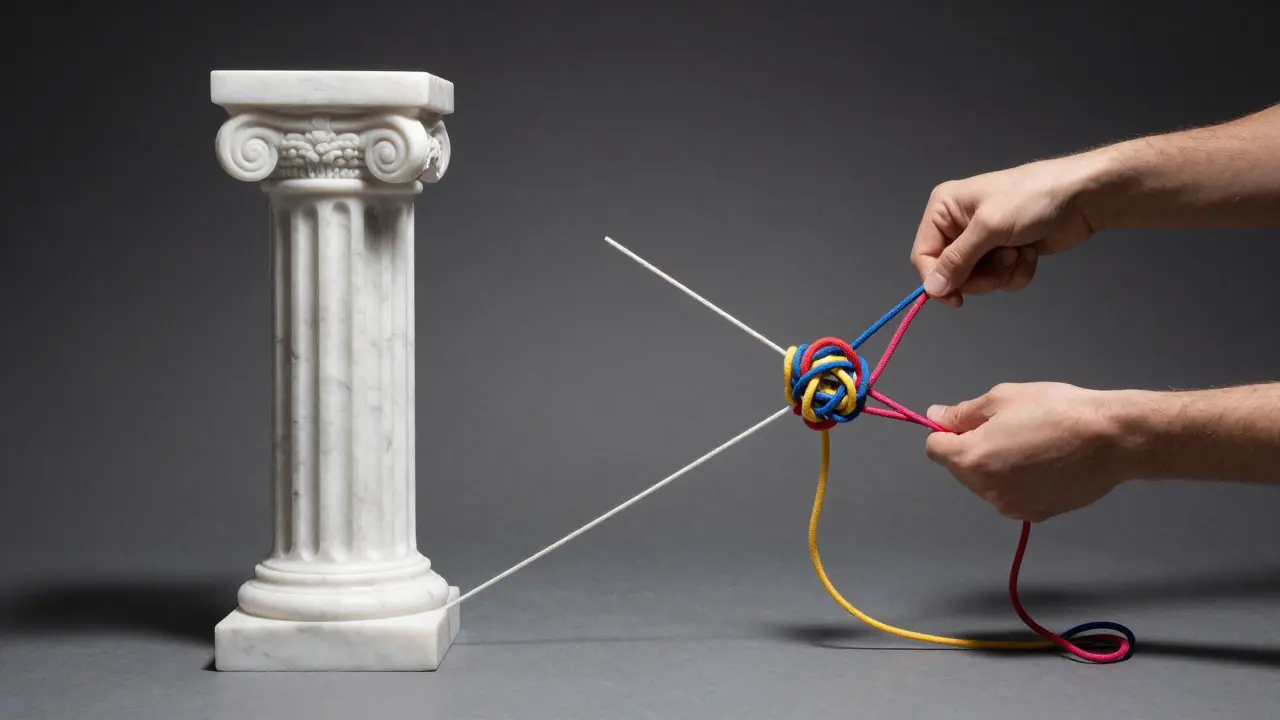
The key distinction is between fact and insight. Facts are discrete, observable events. Insights require mental processing to connect those events. Wikipedia wants the former; it rejects the latter unless a secondary source has already done the connecting work.
The Role of Tertiary Sources
This is where the concept of Tertiary Sources comes into play. In academic circles, a tertiary source summarizes primary and secondary sources (like encyclopedias or textbooks). On Wikipedia, this hierarchy is slightly adjusted but serves the same purpose.
Ideal citations for Wikipedia are usually secondary sources (news reports, peer-reviewed papers) or tertiary sources (encyclopedic entries, comprehensive books). These sources act as filters. They take complex primary data (court records, lab results, interviews) and distill them into digestible, agreed-upon narratives. When you cite a news article that says "The study found a correlation," you are relying on the journalist’s and editor’s verification. When you read the raw PDF of the study and decide the correlation is "weak" or "significant" on your own, you are engaging in original research.
| Content Type | Example | Status on Wikipedia |
|---|---|---|
| Direct Quote/Fact | "The building was completed in 1990." | Acceptable (with citation) |
| New Calculation |
recent posts© 2026. All rights reserved. |