Imagine scrolling through your feed and seeing a headline that stops you cold. It’s shocking, it’s fast, and it feels urgent. Before you share it, do you check the source? Most people don’t. They look at the timestamp, maybe glance at the image, and hit "share." But behind the scenes of these viral moments, there is often a silent engine keeping the story consistent: Wikipedia is a free online encyclopedia that serves as the primary reference point for journalists, fact-checkers, and social media users during breaking news events. It is not just a library; it is the backbone of how we verify reality in the age of instant information.
The Speed Gap Between Breaking News and Verification
In traditional journalism, there was a buffer zone between an event happening and it being reported. Editors checked facts, lawyers reviewed libel risks, and photographers confirmed images. Today, that buffer has collapsed. Social media moves at the speed of light. If a celebrity scandal breaks at 9:00 AM, by 9:05 AM, half the internet knows about it. The other half is waiting for confirmation. This is where Wikipedia steps in. It acts as the first stable anchor in a sea of speculation.
When a new story goes viral, editors rush to update relevant pages. These updates are not always perfect, but they provide a baseline. For instance, if a politician resigns, the Wikipedia page changes from "Current Office" to "Former Office" within minutes. This small change signals to the world that the event is real. It transforms a rumor into a record. Without this immediate documentation, social media would be a chaotic mess of conflicting narratives with no central point of truth.
How Journalists Use Wikipedia as a First Draft
Many people think professional journalists never use Wikipedia. That is a myth. In the heat of a deadline, reporters use Wikipedia to get basic context quickly. They need to know who the person is, what their previous roles were, and what major controversies they have faced. Wikipedia provides this in seconds. While it is not a primary source, it is an efficient index of primary sources.
However, this creates a feedback loop. Journalists cite Wikipedia, which cites news articles, which are then summarized back into Wikipedia. This cycle can sometimes reinforce errors. If one major outlet makes a mistake, it gets copied to Wikipedia, then picked up by smaller outlets, and finally circulates on social media as established fact. This phenomenon is known as the "citation loop." It highlights why critical thinking is essential when consuming news that has been heavily recycled through encyclopedic platforms.
The Role of Social Media in Shaping Encyclopedic Content
The relationship isn't one-way. Social media trends directly influence what gets covered on Wikipedia. When a topic trends on Twitter or TikTok, traffic to related Wikipedia pages spikes. This increased visibility attracts more editors, leading to faster updates and more detailed sections. Conversely, if a story dies down quickly on social media, the Wikipedia page might remain sparse or even revert to a neutral state if consensus isn't reached among editors.
This dynamic means that social media virality dictates the depth of encyclopedic coverage. A minor local incident might never make it to Wikipedia unless it gains national traction online. Meanwhile, a global celebrity breakup can generate thousands of edits in a single night. The encyclopedia becomes a mirror of public interest, reflecting what the digital crowd finds most compelling at any given moment.
Fighting Misinformation with Collaborative Editing
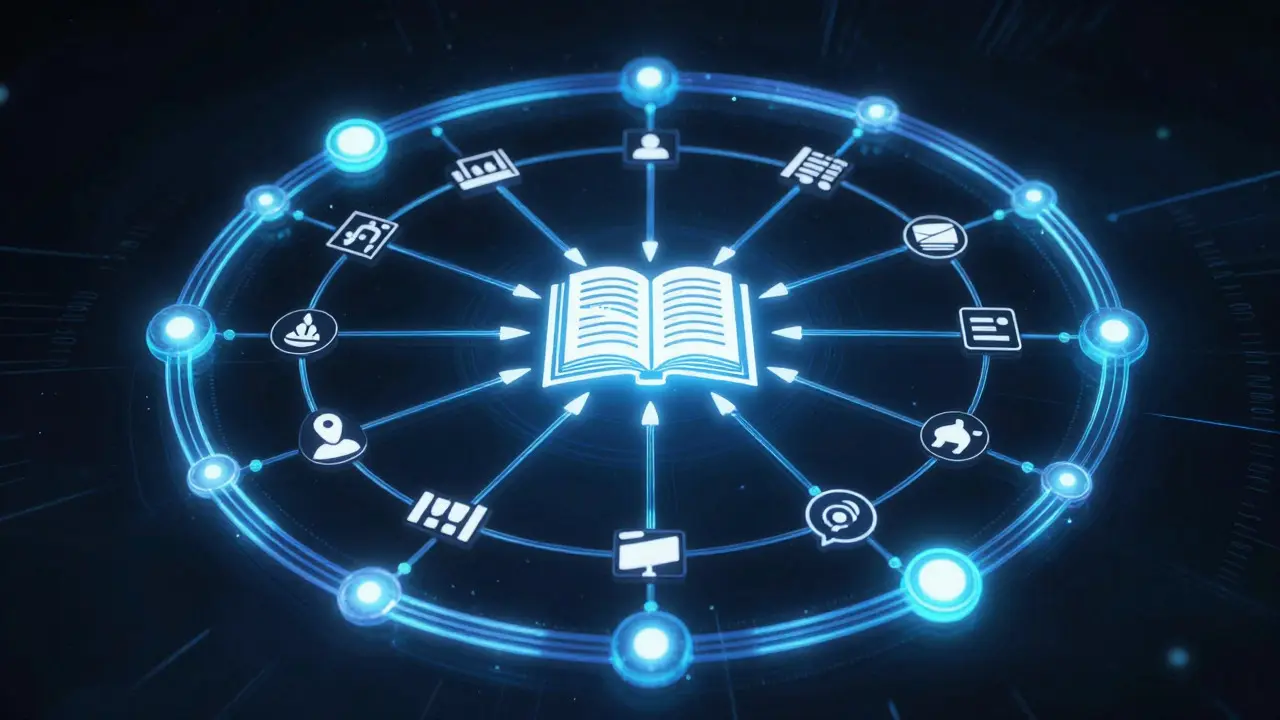
One of the biggest challenges in modern news cycles is misinformation. False stories spread six times faster than true ones on social networks, according to research from MIT. Wikipedia offers a unique defense mechanism: collaborative correction. Unlike a newspaper article, which stands alone until a correction is printed, a Wikipedia page is constantly watched. If someone adds a false claim, another editor likely spots it and reverts it. This self-correcting nature helps filter out obvious lies before they become entrenched in the public consciousness.
However, this system relies on active participation. During major crises, such as elections or natural disasters, volunteer editors work around the clock to ensure accuracy. Their efforts keep the information landscape relatively stable compared to the volatility of individual social media posts. Yet, bias can still creep in, especially in topics involving politics or culture, where passionate communities may fight over wording and framing.
Case Study: The Impact of Viral Scandals
Consider the case of high-profile legal trials. As verdicts are announced, social media explodes with reactions. Some are celebratory, others angry. Within hours, Wikipedia pages for the defendants and judges are updated with the outcome. These pages serve as the definitive summary for anyone trying to understand the basics of the case without reading hundreds of pages of court transcripts. For the average user, the Wikipedia entry is often the only "news" they consume. It distills complex legal proceedings into accessible bullet points, making the law understandable to the general public.
This accessibility has both benefits and drawbacks. On one hand, it democratizes knowledge. On the other, it simplifies nuance. Complex legal arguments are reduced to short paragraphs, potentially missing key details that could change the interpretation of justice. Users must remember that Wikipedia is a starting point, not the final word.

Best Practices for Navigating the Cycle
To navigate this ecosystem effectively, readers should adopt a few simple habits. First, always check the edit history of a Wikipedia page during breaking news. Seeing who made changes and when can reveal if the information is still being debated. Second, cross-reference with at least two independent news sources. If Wikipedia and a major newspaper agree, the likelihood of accuracy increases significantly. Third, be aware of the "notability" threshold. Just because something is on Wikipedia doesn't mean it is universally accepted as significant; it just means it met the criteria for inclusion at that time.
| Source Type | Speed of Update | Verification Level | Primary Risk |
|---|---|---|---|
| Social Media Posts | Instant | Low (User-generated) | Misinformation, Rumors |
| Traditional News Outlets | Minutes to Hours | High (Editorial Review) | Slow Reaction, Bias |
| Wikipedia | Minutes | Medium (Community Consensus) | Recency Bias, Edit Wars |
The Future of Encyclopedic Journalism
As artificial intelligence begins to automate editing processes, the role of human editors on Wikipedia may shift toward curation rather than creation. AI tools can already summarize news articles and suggest updates to encyclopedia pages. This technology could speed up the synchronization between viral news and encyclopedic records, reducing the gap between event and documentation. However, it also raises questions about accountability. Who is responsible if an AI introduces a subtle error into a widely cited page?
Despite these technological shifts, the core function remains the same: providing a shared, editable space where society agrees on what happened. In a fragmented media landscape, that shared agreement is more valuable than ever. Whether you are a journalist verifying a fact or a citizen trying to understand the world, understanding how Wikipedia interacts with social media news cycles is crucial for staying informed.
Is Wikipedia a reliable source for breaking news?
Wikipedia is highly reliable for established facts and historical context, but for breaking news, it is best used as a secondary source. Always cross-check with primary news reports to ensure accuracy, as Wikipedia entries can contain temporary inaccuracies while editors reach consensus.
How does social media influence Wikipedia content?
Social media drives traffic to specific topics, prompting editors to create or update pages rapidly. Virality determines which stories gain encyclopedic attention, meaning that topics trending online are more likely to receive detailed coverage and frequent updates on Wikipedia.
What is a citation loop in journalism?
A citation loop occurs when news outlets cite Wikipedia, which cites those same news outlets, creating a circular dependency. This can reinforce errors or biases if no independent primary source is verified, leading to the spread of unverified information across multiple platforms.
Why do Wikipedia pages change so quickly during scandals?
During scandals, public interest spikes, attracting many volunteers to edit pages. This rapid collaboration allows for quick updates but can also lead to edit wars, where different groups argue over how to phrase facts. The goal is to reach a neutral, consensus-based description of the event.
Should students cite Wikipedia in academic papers?
Generally, no. Most academic institutions discourage citing Wikipedia directly because it is a tertiary source. Instead, students should use the references listed on the Wikipedia page to find primary or secondary sources, such as peer-reviewed journals or official government documents.