Ever tried to fix a citation on Wikipedia and got stuck because someone challenged your source? You’re not alone. The Reliable Sources Noticeboard (RSN) is where Wikipedia editors go to settle these kinds of arguments - not with shouting, but with policy, evidence, and calm discussion. It’s not a forum for opinions. It’s a place where editors use Wikipedia’s own rules to decide what counts as a trustworthy source.
What Is the Reliable Sources Noticeboard?
The Reliable Sources Noticeboard is a discussion page on Wikipedia where editors ask for help determining whether a source is reliable enough to use in articles. It’s not about whether the source is biased - it’s about whether it meets Wikipedia’s standards for credibility. You might see a post like: "Is The Daily Mail reliable for reporting on climate science?" or "Can I use a blog post by a university professor as a source?"
Wikipedia doesn’t trust any source by default. Even major newspapers, academic journals, or government websites can be questioned if they’ve shown poor fact-checking in the past. The RSN helps editors figure out what’s acceptable - and what isn’t - based on how consistently a source has performed over time.
How Does the Process Work?
If you’re unsure about a source, you don’t just edit the article and hope for the best. You go to the RSN and post a clear, specific question. Here’s how it usually goes:
- You post the source you’re asking about - include the URL, title, and context (e.g., "This article from The Guardian cites a 2023 study on air pollution."
- You explain why you’re unsure. Was it flagged? Did someone revert your edit? Are you confused about the source’s reputation?
- Other editors review the source using Wikipedia’s guidelines. They look at things like editorial oversight, fact-checking practices, and whether the source has a history of accuracy.
- After a few days, a consensus forms. Someone summarizes the discussion and says whether the source is acceptable for Wikipedia use.
This isn’t a vote. It’s not about popularity. It’s about whether the source meets the criteria laid out in Wikipedia’s Reliable Sources policy. The most common reasons a source gets rejected are: lack of editorial control, frequent errors, or being a self-published platform with no peer review.
What Makes a Source "Reliable"?
Wikipedia doesn’t have a fixed list of approved sources. Instead, it uses a set of criteria to judge each one. Here’s what matters:
- Editorial oversight - Does someone fact-check this before it’s published? Major newspapers, academic journals, and government reports usually do.
- Reputation for accuracy - Has the source made serious errors in the past? A publication that repeatedly publishes false claims loses credibility.
- Independence - Is the source owned by the subject it’s covering? A company blog about its own products isn’t reliable for claims about its safety or effectiveness.
- Expertise - Is the author qualified to write on the topic? A medical journal written by doctors is more reliable than a personal blog by someone with no medical training.
For example, The New York Times is generally considered reliable because it has editors, fact-checkers, and a long record of accurate reporting. But a personal blog on WordPress, even if written by a PhD, is not automatically reliable - unless it’s been peer-reviewed or cited by other reliable sources.
Common Sources That Cause Disputes
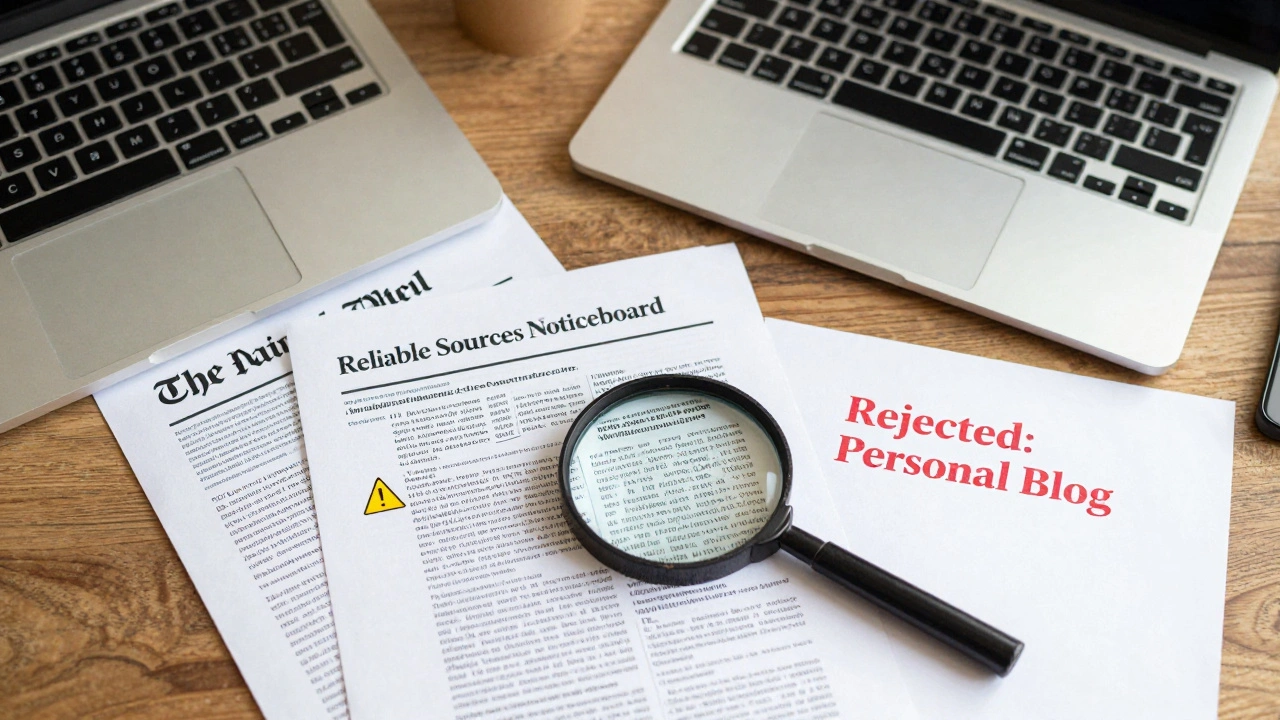
Some sources come up again and again on the RSN. Here are the most common ones editors argue about:
| Source | Status | Why |
|---|---|---|
| The Daily Mail | Not reliable for factual claims | Frequent sensationalism, poor sourcing, and errors in science reporting. |
| Wikipedia itself | Not reliable | It’s a secondary source - you can’t cite Wikipedia to prove something is true. |
| Academia.edu / ResearchGate | Not reliable | These are hosting platforms, not peer-reviewed journals. Anyone can upload anything. |
| Peer-reviewed journals | Generally reliable | Reviewed by experts, published by academic institutions. |
| Government websites (.gov, .gov.uk) | Reliable for official data | Authoritative for statistics, laws, and public records. |
| Personal blogs | Not reliable | No editorial oversight. Even experts’ blogs don’t count unless published in a peer-reviewed venue. |
These aren’t hard rules. Sometimes a blog post by a well-known scientist gets cited because it’s the only place where they explain their research clearly. But even then, editors will look for corroboration from other reliable sources before accepting it.
What Happens After a Decision?
Once the RSN reaches a consensus, the result is recorded. It doesn’t change the policy - but it creates a precedent. Other editors can refer to that discussion later if they face the same issue.
For example, if the RSN decides that The Guardian is reliable for climate science, then any future editor who wants to cite The Guardian on that topic can point to the archived discussion. It saves time and reduces arguments.
These decisions are archived permanently. You can search for past discussions using the RSN’s archive page. Many of these cases have become part of Wikipedia’s unofficial guidance - even if they’re not written into policy.

Why This Matters
Wikipedia’s credibility depends on its sources. If you read that "the Earth is flat" on Wikipedia and it’s cited to a YouTube video, you’d be right to distrust it. The RSN exists to prevent that.
It’s not about censorship. It’s about ensuring that readers can trust what they read. A 15-year-old student writing a paper should be able to cite Wikipedia and know that the sources behind it have been vetted by hundreds of experienced editors.
The RSN is one of the quietest, most important parts of Wikipedia. You won’t see headlines about it. But every time you read a well-sourced paragraph about vaccines, history, or economics - there’s a good chance the RSN helped make sure it was accurate.
How to Use It
If you’re editing Wikipedia and you’re unsure about a source, here’s what to do:
- Go to Wikipedia:Reliable_sources/Noticeboard.
- Use the search box to check if someone already asked about that source.
- If not, post your question clearly: include the source, the context, and why you’re unsure.
- Wait a few days. Someone will respond. Read their reasoning.
- If the source is approved, use it. If not, find a better one.
Don’t argue. Don’t assume you’re right. Just ask. The system works because editors respect the process - not because they’re forced to.
What Not to Do
Many new editors make these mistakes:
- Trying to push a source because they "like it." That’s not how this works.
- Using Reddit, Twitter, or YouTube as sources. These almost never qualify.
- Claiming "everyone uses this" - popularity doesn’t equal reliability.
- Ignoring past RSN decisions. If it was already decided, don’t reopen the debate.
Wikipedia’s strength isn’t in having the most sources - it’s in having the right sources. The RSN keeps that standard alive.