When a major disaster strikes or a political scandal breaks, the world doesn't wait for the morning newspaper. Within minutes, thousands of people are rushing to update Wikipedia is a free, web-based collaborative project that aims to compile all human knowledge into an online encyclopedia. The challenge? How do you coordinate hundreds of anonymous volunteers to write an accurate, neutral, and stable article while the facts are still changing? It’s not magic; it’s a complex dance of trust, rules, and rapid communication.
The Speed vs. Accuracy Dilemma
In traditional media, there is a clear hierarchy: reporters file stories, editors check them, and then they go live. On Wikipedia, there is no single editor-in-chief. This creates a unique tension between speed and accuracy. During breaking news, the temptation to "be first" is high. But being first often means being wrong. A common pitfall is adding unverified details from social media, only to have them reverted ten minutes later when a reliable source contradicts them. This back-and-forth can make an article look chaotic to casual readers. To manage this, experienced editors often adopt a "wait and see" approach for the initial hours, focusing on establishing the core facts that are indisputable, such as the time, location, and immediate casualties, rather than speculating on causes or long-term impacts.
The Role of Talk Pages and Consensus
If you’ve ever looked at a Wikipedia article, you might have noticed a small "Talk" tab next to the main text. This is where the real coordination happens. Think of the talk page as a digital watercooler or a command center. When a major event occurs, this page becomes active with discussions about what to include, which sources to use, and how to phrase things neutrally. There is no formal voting system for most edits; instead, editors rely on consensus. If three or four senior editors agree that a certain detail should be removed because it lacks a strong source, it usually gets removed. This informal but powerful mechanism prevents any single person from dominating the narrative. For example, during the 2011 Tōhoku earthquake and tsunami, talk pages were flooded with debates over how to describe the nuclear crisis at Fukushima. The final text reflected a compromise that satisfied multiple viewpoints, ensuring neutrality despite intense disagreement.
Reliable Sources: The Golden Rule
Coordination isn't just about talking; it's about agreeing on what counts as truth. In Wikipedia terms, this means adhering to the policy of "Verifiability." Every claim must be backed by a reliable source. During breaking news, this is the biggest point of contention. Is a tweet from a politician reliable? Usually, yes, if they are speaking in their official capacity. Is a blog post by an eyewitness reliable? Often, no, unless it's corroborated by a major outlet like the Associated Press or Reuters. Editors quickly learn to prioritize wire services and established newspapers. This shared standard allows strangers across the globe to work together without knowing each other. They don't need to trust each other personally; they just need to trust the source. This reduces friction significantly. If you cite a reputable source, your edit is likely to stick. If you don't, expect a revert.
Specialized Teams and Task Forces
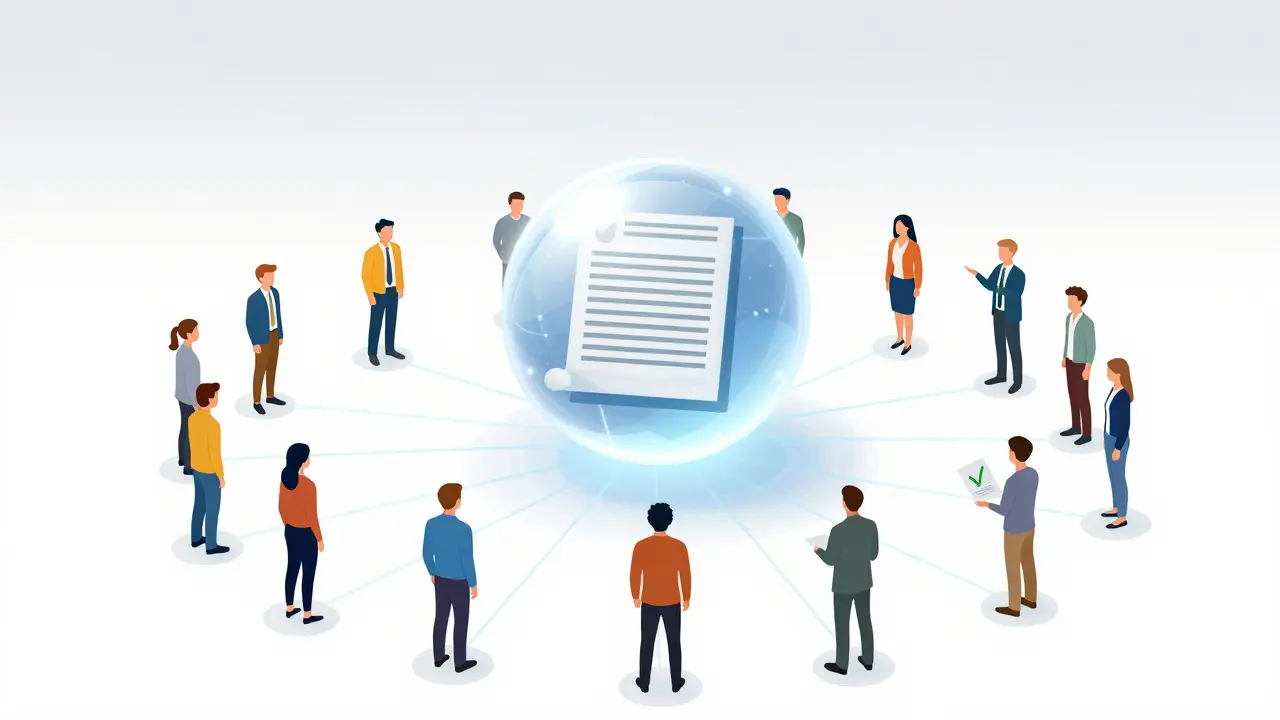
For very large events, ad-hoc teams often form. These aren't official departments, but groups of users who identify themselves in the talk page or on specific project pages. For instance, during the Arab Spring, a group called "WikiProject Middle East" became highly active. Members would divide the labor: one person monitored Arabic-language sources, another checked English coverage, and a third focused on formatting and categorization. This division of labor ensures that no single aspect of the story is neglected. Similarly, during natural disasters, meteorology experts might jump in to correct technical details about storm categories or wind speeds. These specialized interventions bring professional-grade accuracy to a crowd-sourced platform. It turns a chaotic swarm of editors into a structured, albeit informal, newsroom.
Dealing with Bias and Edit Wars
No matter how well-coordinated the process is, bias will find its way in. Some editors may have strong political opinions or personal connections to the event. This can lead to "edit wars," where two users keep reverting each other's changes. To stop this, the community uses tools like "protecting" an article. An administrator can lock the article so that only experienced editors can change it, or even lock it completely for a set period. This gives the community time to cool down and reach a consensus on the talk page. It’s a temporary pause button that prevents the article from becoming a battleground. Once the dust settles, the protection is lifted, and normal editing resumes. This mechanism is crucial for maintaining stability during high-stakes moments.
The Impact on Public Knowledge
Why does this coordination matter? Because Wikipedia is often the first place people look for context. Students, journalists, and curious citizens read these articles to understand what is happening. If the coordination fails, the public gets confused or misled. If it works, Wikipedia provides a remarkably balanced and up-to-date snapshot of global events. It acts as a mirror of society's collective understanding, filtered through a rigorous, if imperfect, process of peer review. The result is a resource that is both dynamic and stable, capable of handling the chaos of breaking news while maintaining the dignity of an encyclopedia.
Frequently Asked Questions
Who decides what goes on Wikipedia during breaking news?
There is no single decision-maker. Instead, a consensus forms among the editors involved, guided by community policies on verifiability and neutral point of view. Administrators may intervene to protect articles if disagreements become destructive.
Can anyone edit a Wikipedia article during a major event?
Generally, yes. However, if an article becomes unstable due to frequent reverts or vandalism, administrators can apply "protection," restricting edits to only registered or experienced users for a limited time.
What is the difference between a talk page and the main article?
The main article contains the factual content for readers. The talk page is a separate space where editors discuss changes, debate sources, and plan edits. It is not visible to general readers unless they specifically click the "Talk" tab.
How do editors avoid letting personal bias influence the article?
They rely on the Neutral Point of View (NPOV) policy. This requires presenting significant viewpoints fairly and proportionately, based on reliable sources rather than personal opinion. Disagreements are resolved through discussion on the talk page.
Are Wikipedia articles always accurate during breaking news?
Not always. While the coordination systems are robust, errors can slip in, especially in the first few hours. However, the self-correcting nature of the platform means that inaccuracies are often identified and fixed quickly by other editors monitoring the page.