Key Takeaways for Understanding the Process
- Speed is secondary to verifiability; nothing goes live without a source.
- The community uses temporary locks to prevent "edit wars" during volatile events.
- Reliable sources are prioritized over eyewitness accounts to maintain neutrality.
- Automated bots handle the tedious parts of cleanup, while humans manage the nuance.
The Race Between Speed and Accuracy
When a major news event breaks, the first instinct for many is to update the page immediately. However, experienced editors know that the first report is often wrong. You'll see this with death tolls in disasters or the initial names given to suspects in a crime. If an editor adds a detail from a tweet, and that tweet turns out to be a lie, the encyclopedia loses trust. To combat this, the community follows a strict rule: verifiability. This means that an editor isn't just saying something is true; they are saying it can be verified by a reliable source. For example, if a politician resigns, an editor won't just write "He resigned." They will find a report from a reputable news organization like the Associated Press or Reuters, link to it, and then write the sentence. This creates a trail of evidence that anyone can check.Managing the Chaos with Page Protection
During a crisis, a page can become a battlefield. This is called an "edit war," where two or more people repeatedly change the same sentence to reflect different viewpoints. To stop this, administrators use Page Protection is a feature that limits who can edit a specific page, ranging from requiring an account to restricting edits to administrators only . If a page is "semi-protected," only users with accounts older than four days can edit. If things get really ugly, it goes into "full protection," meaning only admins can touch it. This doesn't happen to silence people, but to give the community a breathing room to find a consensus on what the facts actually are. It's like putting a "do not touch" sign on a wet painting until it dries.| Source Type | Reliability Level | Use Case in Editing | Risk Factor |
|---|---|---|---|
| Official Govt Press Releases | High | Confirming dates, names, and laws | Potential for bias/propaganda |
| Major News Agencies (AP, Reuters) | Very High | Core facts and event timelines | Initial reports can be updated |
| Social Media (X, TikTok) | Very Low | Identifying that an event is happening | High rate of misinformation |
| Eye-witness Blogs | Low | Adding local color or sentiment | Lack of professional fact-checking |
The Role of the "Watchlist" and Bots
You might wonder how editors know exactly when to jump in. They use a tool called the Watchlist is a personalized list of pages that a user monitors for changes, notifying them when an edit occurs . When a high-profile person or a critical event page is updated, dozens of veteran editors get a notification instantly. But humans can't do everything. That's where Wikipedia Bots are automated scripts designed to perform repetitive tasks, such as fixing typos or reverting obvious vandalism come in. If someone changes a page to say a world leader has died when they haven't, a bot can often detect the pattern of "vandalism" and revert the change in milliseconds. This leaves the humans to do the harder work: deciding which nuanced perspective should be included in the lead paragraph.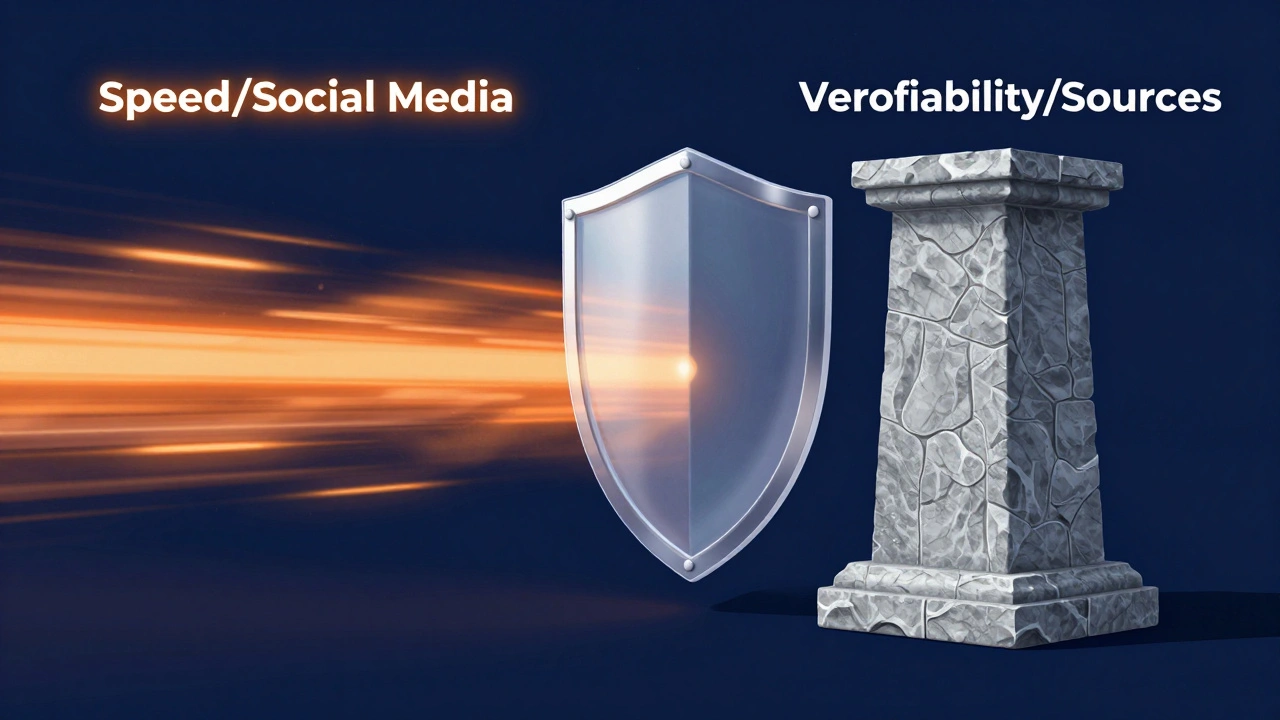
Defining the "Neutral Point of View"
One of the hardest parts of covering a news event is staying neutral. This is the Neutral Point of View (NPOV) is the fundamental policy that requires articles to be written in a fair, balanced, and non-judgmental tone . During a conflict, you'll have editors from both sides of the issue trying to shape the narrative. The goal isn't to find the "truth" in a philosophical sense, but to represent the documented views of reliable sources. If the BBC says one thing and Al Jazeera says another, the editor doesn't pick the "right" one. Instead, they write: "The BBC reported X, while Al Jazeera reported Y." This removes the editor's personal opinion from the equation and places the burden of truth on the cited sources.The Lifecycle of a Breaking News Page
A page usually goes through three phases during a major event. First is the Flash Phase. This is the first hour where the page is a mess of tiny updates, broken links, and rapid-fire changes. It's the most volatile time. Next is the Consolidation Phase. This lasts from a few hours to a few days. Here, the "skeleton" of the event is built. The lead section is cleaned up, and a chronological list of events is established. This is where the heavy lifting of sourcing happens. Finally, there is the Archival Phase. This happens weeks or months later. Editors go back and remove phrases like "currently" or "is expected to." They replace temporary news reports with more permanent sources, like academic papers or official government reports, turning a news story into a piece of historical record.
Common Pitfalls in Crisis Editing
Even the best editors make mistakes. One common trap is "Original Research." This happens when an editor knows something to be true because they were actually there, but they can't find a source for it. In any other part of life, being an eye-witness makes you a primary source. On Wikipedia, it makes you a liability. You cannot add information just because you know it; you must find someone else who wrote it down in a reliable format. Another issue is "Recentism." This is the tendency to give way too much space to a news event that happened yesterday while ignoring the long-term context. Editors fight this by constantly trimming the "breaking news" sections to ensure they don't overshadow the permanent historical significance of the subject.Can anyone really edit Wikipedia during a news event?
Yes, by default, anyone can. However, during major events, administrators often lock pages. If a page is protected, you might need an account that is a few days old or even be an administrator to make changes. This prevents mass vandalism during high-traffic moments.
What happens if an editor adds a fake news story?
The change is usually reverted very quickly. Because thousands of people watch high-profile pages, a fake claim without a strong source is typically spotted and removed within minutes by other editors or automated bots.
Why does it take so long for some facts to appear?
It's a deliberate choice. Editors wait for a "reliable source" to confirm a fact. If they post a rumor that turns out to be false, it damages the site's credibility. They prefer to be slightly late and correct rather than first and wrong.
What is a "reliable source" exactly?
Generally, it's a source with a track record of fact-checking and editorial oversight. This includes major newspapers, peer-reviewed journals, and official government records. Personal blogs and social media posts are almost never considered reliable for core facts.
Do Wikipedia editors get paid to cover news?
No. The vast majority of editors are volunteers. They do it for the love of knowledge, a desire to keep the internet accurate, or simply because they are obsessed with a particular topic.