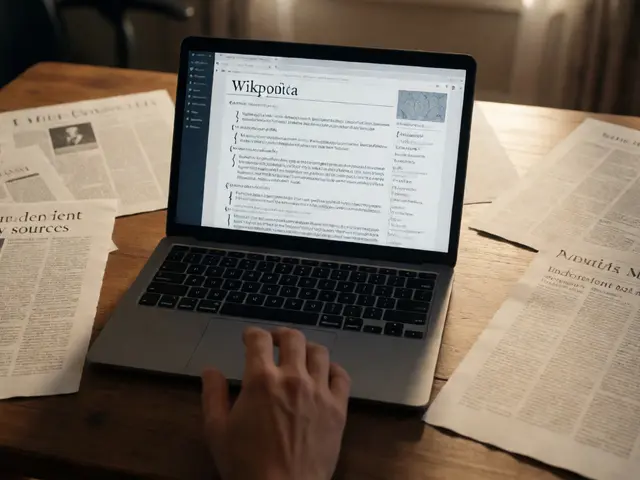
Wikipedia doesn’t write news. It doesn’t break stories. It doesn’t chase leaks or dig through secret documents. But millions of people turn to it every day for facts - including facts that came from investigative journalism or official press releases. So how does Wikipedia decide which sources to trust when the two couldn’t be more different?
Official statements are easy to find - but not always true
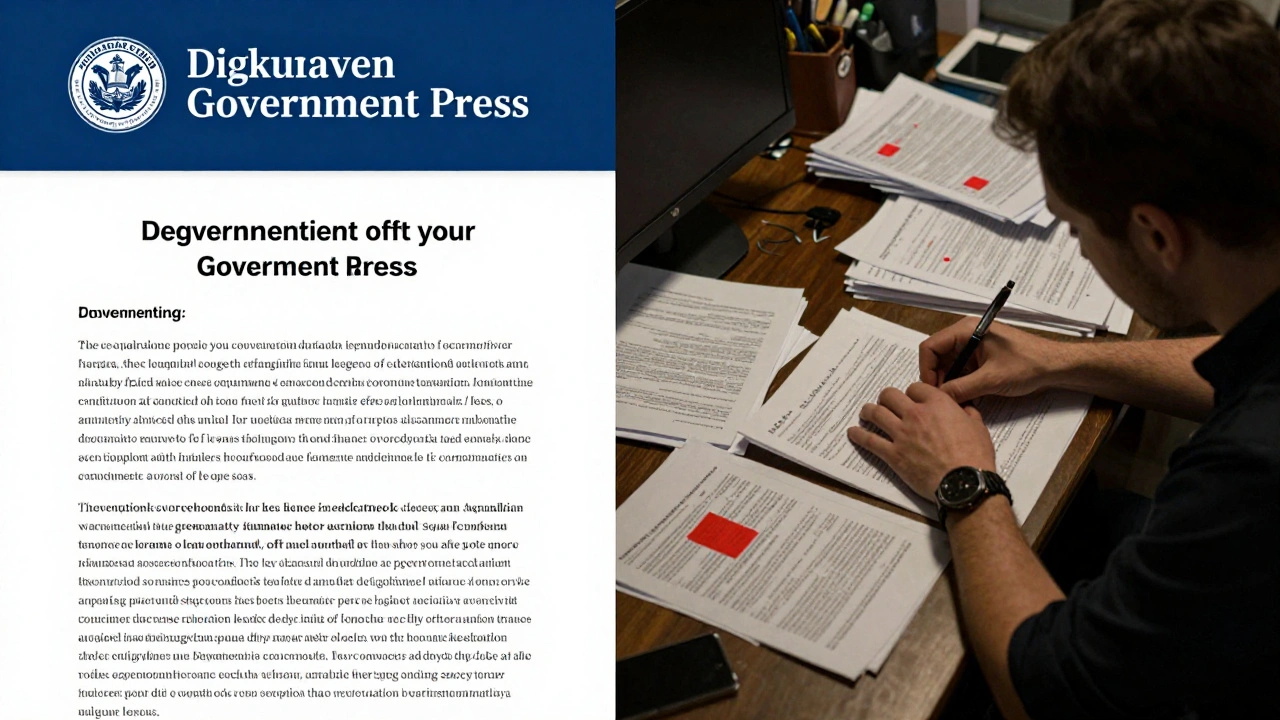
Government agencies, corporations, and public figures love issuing official statements. They’re clear, polished, and easy to link. A press release from the White House, a statement from Apple about a product recall, or a tweet from a politician with a verified badge - these all look like solid sources. And on Wikipedia, they are often used.
But here’s the catch: official statements are designed to control the narrative. They’re not meant to be neutral. They omit inconvenient details, soften failures, and sometimes outright lie. Wikipedia’s policy says sources must be reliable, not just authoritative. A press release from a company denying environmental violations doesn’t count as proof it didn’t happen - especially if independent reporters have documented pollution.
Wikipedia editors treat official statements like witness testimony: useful, but subject to cross-examination. If a company says it reduced emissions by 30%, but the Environmental Protection Agency’s own data shows a 5% drop, Wikipedia will note both - and cite the government data as the more trustworthy source.
Investigative reporting is messy - but often more accurate
Investigative journalism is the opposite of polished. It’s slow. It’s risky. It relies on anonymous sources, leaked documents, and months - sometimes years - of digging. Think of the Panama Papers, the Pentagon Papers, or ProPublica’s exposés on hospital billing fraud.
Wikipedia loves these. Not because they’re dramatic, but because they’re deeply sourced. Investigative reports usually include: multiple independent witnesses, internal emails, financial records, and expert analysis. These are exactly the kind of evidence Wikipedia’s guidelines demand.
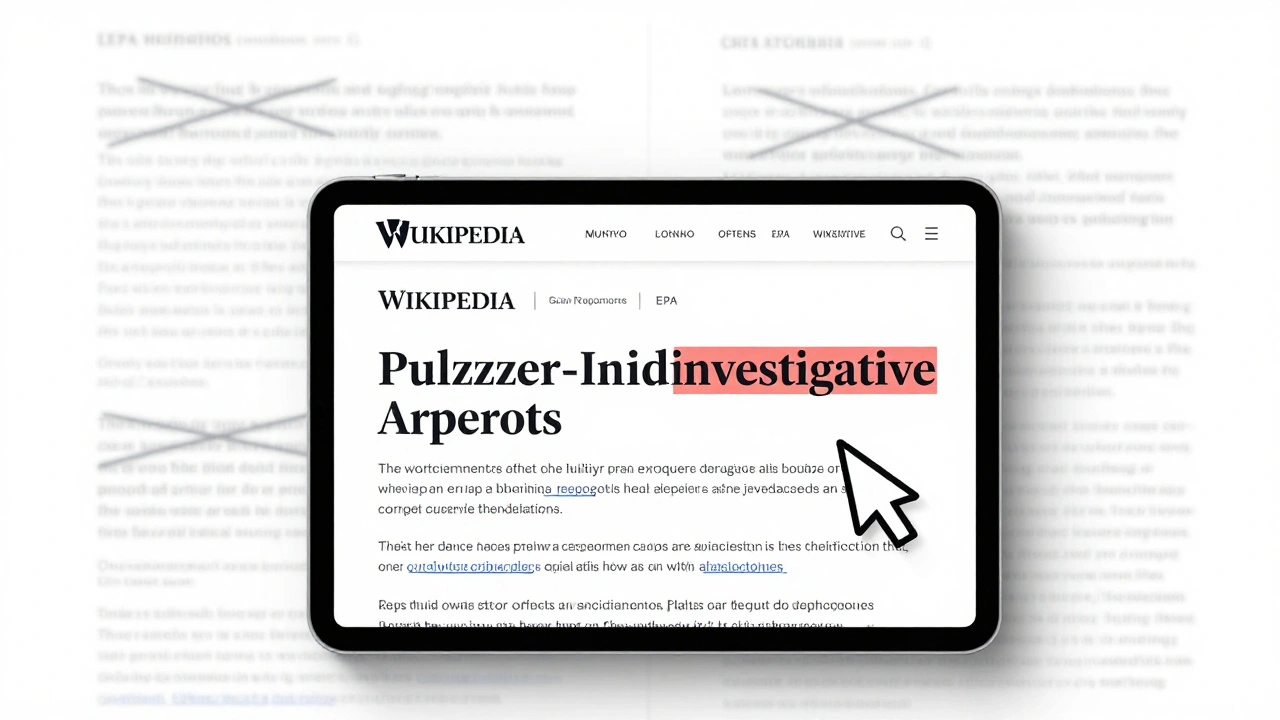
But there’s a problem. Investigative stories often come from a single outlet. Wikipedia doesn’t want to base a major claim on one reporter’s work - even if it’s Pulitzer-winning. That’s why editors require corroboration. If The Guardian breaks a story about a politician taking bribes, Wikipedia won’t add it until another major outlet like The New York Times or BBC confirms it. Or until official investigations, court filings, or leaked documents back it up.
Wikipedia’s sourcing hierarchy isn’t a ladder - it’s a web
There’s no official ranking that says, “Press releases = level 1, investigative journalism = level 5.” Instead, Wikipedia uses a flexible system based on three rules:
- Reliability - Is the source known for accuracy and editorial standards?
- Independence - Does the source have a reason to distort the truth?
- Reproducibility - Can the claim be verified by other evidence?
A government report on vaccine safety? Reliable, independent, and backed by data - high trust. A corporate blog post claiming its product is “100% safe”? Not independent - it’s the company selling the product. Low trust. An investigative piece from a respected outlet with leaked documents and multiple sources? High trust - if confirmed elsewhere.
Wikipedia editors don’t pick sides between official and investigative sources. They look at the evidence behind each. If a politician says “crime is down,” but local police data and independent researchers show it’s up, Wikipedia will cite the data - not the statement.

What happens when official sources contradict investigative ones?
This is where Wikipedia gets really interesting. When a government denies a scandal that journalists have documented, Wikipedia doesn’t pick one. It presents both sides - but with clear context.
For example, in the case of the 2020 U.S. election fraud claims: official election officials in every state certified the results. But some politicians and media outlets repeated unproven allegations. Wikipedia’s article on the topic didn’t say “fraud was proven” or “fraud was fake.” It said: “Multiple state election officials and federal agencies confirmed the election was secure. However, some public figures promoted claims of fraud without evidence.” Then it cited the official certifications and the investigative reports that debunked the claims.
That’s the key: Wikipedia doesn’t decide truth. It reports what reliable sources say - and flags when claims lack support.
Why investigative sources often win - even when they’re unpopular
Investigative journalism doesn’t always win. Sometimes, a well-connected official statement gets repeated across Wikipedia articles because it’s easier to cite. But over time, the truth usually surfaces.
Take the case of the tobacco industry. In the 1990s, tobacco companies issued official statements claiming smoking wasn’t linked to cancer. Wikipedia used those statements - until investigative reporters uncovered internal documents showing executives knew otherwise. Once those documents were published by The Washington Post and confirmed by the CDC, Wikipedia updated every relevant article. The official statements stayed, but they were now framed as false or misleading.
This is how Wikipedia evolves. It doesn’t rush. It waits for multiple reliable sources to agree. And when investigative reporting finally breaks through, it doesn’t get ignored - it gets elevated.
What you should know before citing Wikipedia
If you’re using Wikipedia for research, here’s what matters:
- Don’t trust a claim just because it’s on Wikipedia. Check the references.
- If a claim comes from a press release, look for independent reporting that backs it up.
- If a claim comes from an investigative piece, see if other outlets or official records confirm it.
- Wikipedia’s talk pages often explain why a source was accepted or rejected - read them if you’re unsure.
Wikipedia is not a source. It’s a guide to sources. And it’s built by people who know the difference between what someone says - and what they’ve proven.
Wikipedia’s real strength isn’t in being right - it’s in being transparent
Wikipedia doesn’t claim to be the final word. It shows you who said what, where, and why. That’s why it’s more trustworthy than most news sites - even the good ones.
When you read a Wikipedia article, you’re not just seeing a summary. You’re seeing the evidence trail. You can click every link. You can see who edited what. You can read the debate that happened before the sentence was written.
That transparency is rare. And it’s what makes Wikipedia a unique tool for understanding how truth is built - not handed down.
Can Wikipedia use press releases as primary sources?
Yes, but only for basic facts like dates, names, or official positions - and only if they’re not disputed. Press releases can’t be used to prove controversial claims, like financial misconduct or scientific claims, unless backed by independent reporting or data.
Why doesn’t Wikipedia just use the most recent source?
Because recency doesn’t equal reliability. A tweet from a politician today is not more trustworthy than a 2018 investigative report with leaked documents. Wikipedia prioritizes evidence quality over speed. If a new claim contradicts older, well-sourced facts, editors demand proof - not just a new headline.
Are investigative reports from small outlets acceptable?
Only if they meet Wikipedia’s reliability standards. A small local paper with a strong track record of accurate reporting can be trusted. But a blog with no editorial oversight or anonymous authors won’t be accepted - even if it breaks a big story. The key is the process, not the size.
Can Wikipedia articles be changed if new investigative reporting comes out?
Yes - and they often are. Wikipedia is updated constantly. When major outlets like The New York Times, Reuters, or ProPublica publish new findings, editors update articles within hours. The article’s history page shows every change, so you can track how the story evolved.
Do Wikipedia editors have training in journalism?
Not formally. But many editors are journalists, researchers, or academics. More importantly, they follow strict sourcing guidelines developed over 20 years by thousands of volunteers. The rules are public, and every edit is reviewed. You don’t need a journalism degree - you just need to cite your sources.