When a well-known person dies, Wikipedia doesn’t wait for news outlets to catch up. Within minutes, editors across the globe jump into action. The page updates. The infobox changes color. The lead paragraph is rewritten. And it all happens without a single official announcement from Wikipedia’s headquarters. This isn’t chaos-it’s a carefully built system designed to balance speed, accuracy, and neutrality.
What Makes Someone ‘Notable’ Enough for a Wikipedia Page?
Not every death gets a Wikipedia page. The person must have met Wikipedia’s notability guidelines before they died. That means they had to have received significant coverage in independent, reliable sources-like major newspapers, academic journals, or books-not just social media posts or blog mentions.
For example, a local mayor who passed away might not qualify unless they were covered by The New York Times, BBC, or similar outlets over multiple years. But a Nobel Prize winner, a popular musician with chart-topping albums, or a long-serving politician? Those pages already exist. When death occurs, editors don’t create new pages-they update existing ones.
This filter keeps Wikipedia from becoming a graveyard of minor figures. It’s not about fame-it’s about documented impact.
The First 10 Minutes: How the Update Starts
Most updates begin with a single alert. An editor sees a breaking news headline on a trusted outlet like Reuters, AP, or The Guardian. They check the person’s Wikipedia page. If it exists, they head straight to the talk page or the Notability discussion logs to confirm there’s no dispute over the person’s eligibility.
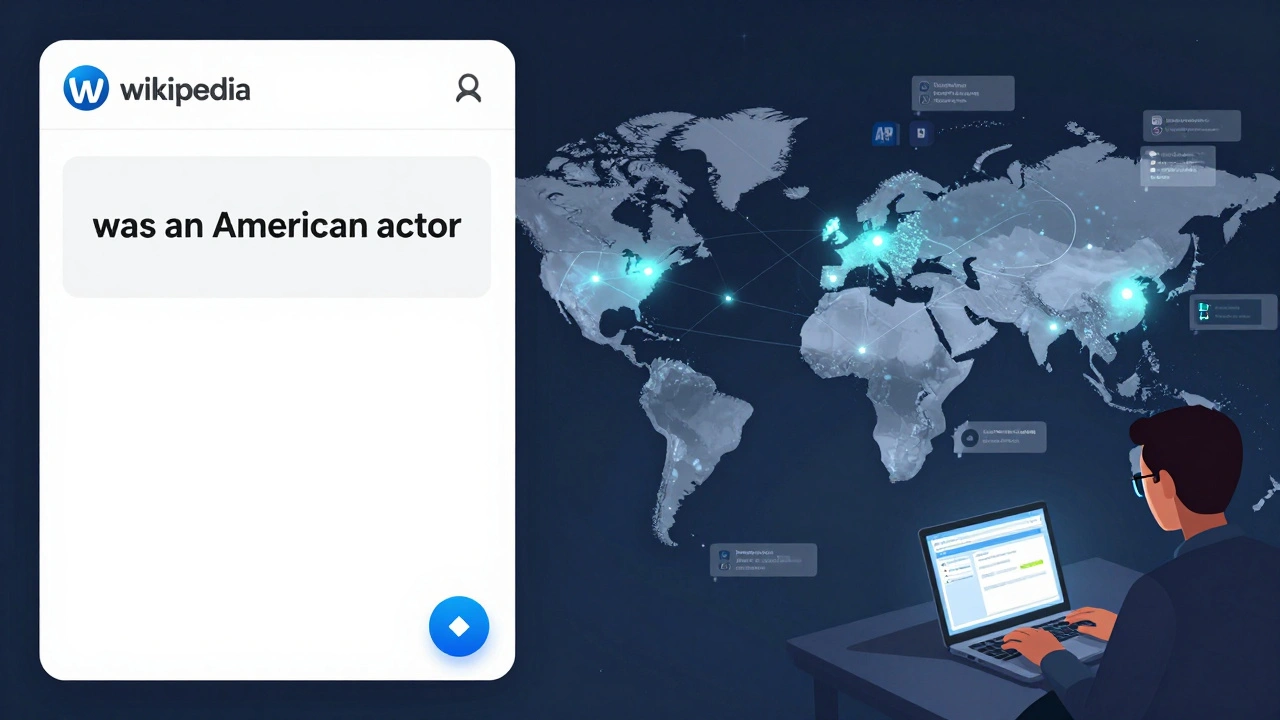
Then, they make the edit. The first change is usually to the lead section. The phrase “is an American actor” becomes “was an American actor.” The birth date stays. The death date gets added. The cause of death? Only if it’s publicly confirmed and reported by multiple reliable sources. Speculation-like “died after a long illness”-is blocked unless it’s cited from a family statement or official release.
Next, the infobox at the top of the page changes from a white background to gray. This visual cue tells readers the person has died. It’s subtle, but it’s been tested in user studies. People notice it faster than text changes.
Who Gets to Edit? The Volunteer Network
Wikipedia doesn’t have a death team. No staff member is assigned to update celebrity obituaries. Instead, it’s a network of thousands of volunteers-many of whom monitor death-related feeds daily. Some track obituaries from major news agencies. Others follow Twitter lists of verified journalists. A few even use automated tools that flag when a high-profile name appears in news headlines.
There’s no hierarchy. Anyone with a Wikipedia account can edit. But experienced editors watch for mistakes. If someone adds “died of a heart attack” without a source, another editor will revert it within minutes. If a rumor spreads-like a politician being assassinated when they’re actually in the hospital-the page gets semi-protected. Only trusted users can edit it until the truth is confirmed.
That’s why, during the death of Prince in 2016, the page was locked for 48 hours. False reports had flooded social media. Wikipedia’s system didn’t stop updates-it stopped misinformation.
What Happens If the News Is Wrong?
It happens. Sometimes, a major outlet reports a death incorrectly. In 2012, CNN mistakenly reported that actor Gene Wilder had died. Wikipedia’s page updated within 11 minutes. When the correction came hours later, editors reverted the changes and added a note in the edit summary: “Retracted report from CNN. Person is alive.”
Wikipedia doesn’t delete the error. It archives it. The edit history shows every change. That’s not a flaw-it’s a feature. Readers can see how the information evolved. It’s transparency in action.
For controversial deaths-like those involving political figures or public scandals-the community leans heavily on sourcing. If a death is reported by one tabloid and denied by family, the page stays unchanged until a second reliable source confirms it. No rush. No bias. Just evidence.
How Wikipedia Handles Sensitive or Controversial Deaths
Not all deaths are straightforward. What if the person was accused of crimes? What if their death sparked protests? What if family members ask for privacy?
Wikipedia doesn’t censor. But it does follow strict sourcing rules. Even in emotionally charged cases-like the death of George Floyd or Queen Elizabeth II-the page sticks to facts. It reports the cause of death only if it’s officially released. It mentions protests or reactions only if they’re covered by major news outlets.
Family requests for removal or alteration are ignored. Wikipedia isn’t a memorial site. It’s an encyclopedia. If the person met notability standards, their life and death are part of the historical record. That includes uncomfortable truths. The page for Jeffrey Epstein, for example, details his crimes, his death, and the conspiracy theories around it-all with citations.
There’s no emotional filter. Just policy.
What You See Isn’t Always What Happened
When you visit a Wikipedia page after a death, you see a clean, updated article. But behind the scenes, it’s a storm of edits, debates, and reversions. Sometimes, dozens of editors work on the same page at once. The page might go through 20 changes in the first hour.
Most of those edits are minor: fixing punctuation, adding a citation, correcting a date. But occasionally, someone tries to insert bias-downplaying a person’s achievements or exaggerating their flaws. That’s when the community steps in. Experienced editors patrol the recent changes feed. They use bots to flag edits that violate neutrality. They revert vandalism. They lock pages when needed.
The result? A page that’s accurate, balanced, and updated faster than almost any other source.
Why This System Works
Wikipedia’s death protocols work because they’re not about speed alone. They’re about trust. Trust in sources. Trust in the community. Trust in the process.
Compare it to a news website. A news site might rush to publish a headline. Later, they issue a correction. But the original headline stays in headlines, social feeds, and search results. Wikipedia doesn’t have that problem. Every version is preserved. Every edit is traceable. Every claim is backed by a source.
That’s why journalists, researchers, and students often turn to Wikipedia for breaking obituaries. It’s not because it’s perfect. It’s because it’s the most reliable public record available.
What Happens After the Update?
After the initial flurry, the page settles. But it doesn’t stop changing. Over the next days and weeks, editors add more context: details about memorial services, tributes from peers, the impact of their work, and sometimes, new scholarship that re-evaluates their legacy.
For example, after the death of Ruth Bader Ginsburg in 2020, her page was updated with new sections on her legal legacy, quotes from colleagues, and links to her major court rulings. The page evolved from an obituary into a living tribute.
Wikipedia doesn’t treat death as an endpoint. It treats it as a milestone in a person’s documented life.
How to Spot a Fake Wikipedia Death Page
If you’re unsure whether a Wikipedia death page is legitimate, check three things:
- Is the person’s page already established? If it was created yesterday, it’s likely fake or premature.
- Does the lead paragraph cite reliable sources? Look for links to AP, Reuters, BBC, or major newspapers.
- Is the background of the infobox gray? If it’s still white, the death hasn’t been confirmed.
Also, check the edit history. If the first edit was made by a new user with no prior edits, be cautious. Trusted editors have hundreds or thousands of edits. They know the rules.
What You Can Do
If you spot a death that hasn’t been updated on Wikipedia and you’re confident it’s true, don’t just edit. First, verify the news with at least two independent sources. Then, go to the talk page of the article and leave a note: “Confirmed death via [source 1] and [source 2]. Please update.”
Wikipedia thrives on collaboration. You don’t need to be an expert. You just need to be careful.
How quickly does Wikipedia update after a notable person dies?
Wikipedia updates within minutes if the death is confirmed by multiple reliable sources like AP, Reuters, or The New York Times. The fastest updates happen within 5 to 15 minutes. If the news is unverified or controversial, the page may be locked until confirmation comes from a second trusted outlet.
Can anyone edit a Wikipedia page after someone dies?
Yes, anyone with a Wikipedia account can edit. But experienced editors monitor these pages closely. If an edit lacks a source or appears biased, it’s quickly reverted. For high-profile deaths, pages are often semi-protected so only established users can make changes.
Why does Wikipedia use a gray background for deceased people?
The gray background in the infobox is a visual cue designed to help readers quickly identify that the person has died. It was introduced after user testing showed people noticed it faster than text changes. It’s not used for living people, so it acts as a clear, silent signal.
What if a family asks Wikipedia to remove or change a death page?
Wikipedia does not remove or alter pages based on family requests. The site follows neutrality and notability guidelines, not emotional appeals. If the person met the criteria for inclusion before death, their life and death remain documented. Sources must be reliable, not personal.
Are rumors or unconfirmed reports ever added to Wikipedia?
No. Wikipedia’s policy strictly prohibits adding unconfirmed information. Rumors, speculation, or claims without reliable sourcing are reverted immediately. Even if a major news outlet initially reports incorrectly, Wikipedia waits for confirmation from a second source before updating.