Wikipedia doesn’t have a team of AI engineers. It doesn’t sell ads or track users. But in 2025, it’s one of the most important battlegrounds against AI-generated lies. Every day, thousands of AI tools scrape Wikipedia to train their models. Then those same tools spit back distorted facts, fake citations, and made-up history-often with perfect grammar and zero accountability. Wikipedia’s response isn’t flashy. It’s quiet. It’s stubborn. And it’s working.
AI Is Eating Wikipedia’s Content
By 2024, over 70% of AI training data came from publicly available sources-and Wikipedia was the biggest single source. That’s not because it’s perfect. It’s because it’s free, structured, and surprisingly reliable. But here’s the problem: AI models don’t understand context. They don’t know the difference between a well-sourced paragraph and a poorly edited stub. They copy everything. And they get it wrong.
Take the case of the Wikipedia article on the 1996 U.S. presidential election. In early 2024, multiple AI systems started generating summaries that claimed a third-party candidate won over 20% of the vote. That’s false. The actual number was 4.5%. But the AI didn’t check. It just reused a line from an old, unverified edit that had been reverted years ago. That false claim appeared in news summaries, chatbots, and even a college textbook. Wikipedia didn’t cause it. But it was the seed.
Wikipedia’s First Rule: No Original Research
Wikipedia’s core policy-no original research-was written in 2001. It means editors can’t make up facts, even if they sound true. That rule was designed to stop amateur editors from turning the site into a blog. Now, it’s the only thing standing between AI and chaos.
AI models don’t care about that rule. They’re trained to predict what comes next, not to verify truth. So when an AI writes a paragraph about the history of the Panama Canal, it doesn’t ask: "Is this cited?" It asks: "What do most texts say?" And if most texts are wrong, the AI gets it wrong too.
Wikipedia’s response? Double down on sourcing. Every claim must be tied to a reliable, published source. Not a blog. Not a YouTube video. Not a press release. A peer-reviewed journal, a government report, or a major news outlet with a clear editorial process. If it can’t be cited, it doesn’t go in.
Automated Tools Are Now Part of the Team
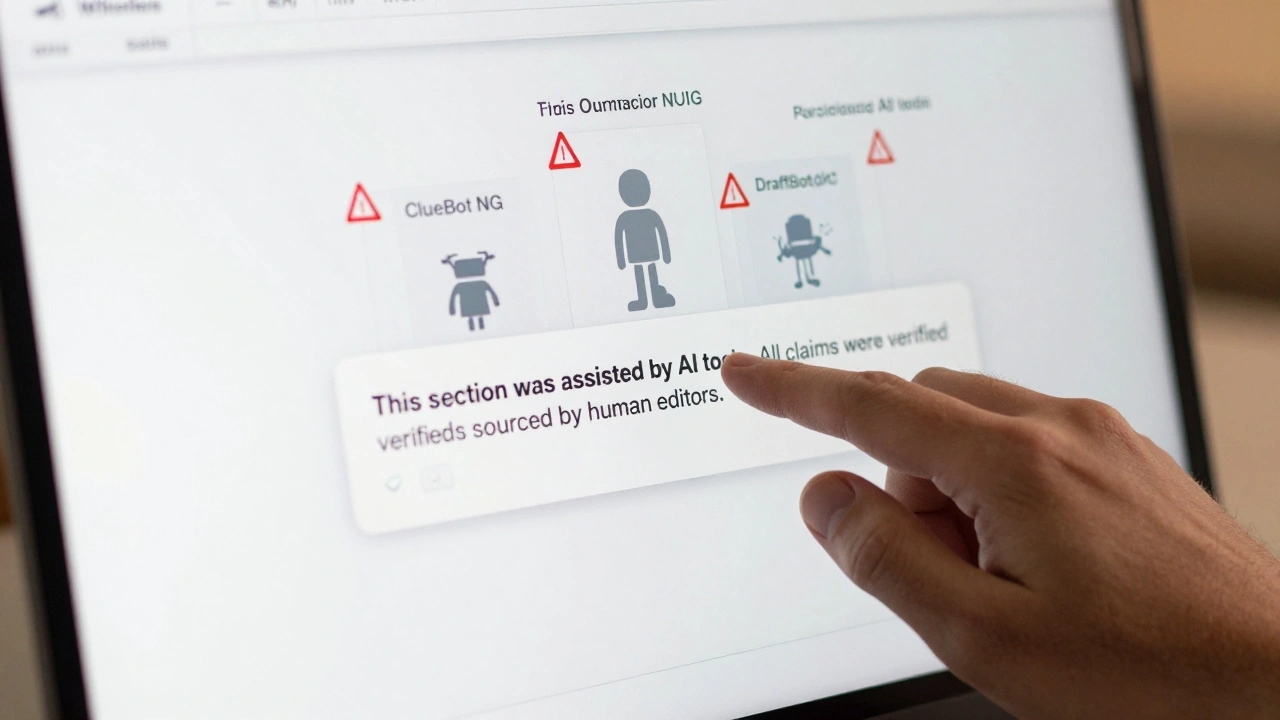
Wikipedia’s volunteer editors used to rely on human eyes. Now, they use bots-dozens of them. One bot, called ClueBot NG, scans every edit in real time. It flags edits that look like AI-generated text: overly smooth sentences, repetitive phrasing, missing citations, or sudden shifts in tone.
Another bot, DraftBot, checks new articles for compliance with sourcing rules before they even go live. If a user tries to add a paragraph about a fictional scientist with no references, DraftBot blocks it and suggests: "Add a source from a university or scientific journal."
These bots don’t replace humans. They help them. In 2024, bots prevented over 1.2 million AI-generated edits from being published. That’s about 80% of all AI attempts.
AI Detection Is Hard-But Not Impossible
Wikipedia doesn’t use AI detectors like GPTZero or Originality.ai. Why? Because those tools are unreliable. They flag human writing as AI sometimes. And they miss clever AI that mimics human style.
Instead, Wikipedia uses something simpler: pattern recognition. If an edit looks like it came from a template, uses the same three phrases over and over, or cites sources that don’t exist, it gets flagged. Editors call it "AI smell." It’s not science. But it works.
One example: a user added a 500-word section on "The 2023 Mars Colony Act" with citations to fake NASA documents. The citations looked real-until you clicked them. They led to non-existent pages. The edit was reverted in under 12 minutes.
The New Policy: AI-Generated Content Must Be Disclosed
In July 2025, Wikipedia’s Arbitration Committee passed a new rule: if you use AI to help write or edit a page, you must say so.
It’s not a ban. It’s a transparency rule. You can use AI to draft a paragraph. You can use it to fix grammar. But you must add a note like: "This section was assisted by AI tools. All claims were verified and sourced by human editors."
This rule targets the gray area. Many students, journalists, and researchers use AI to write summaries. They think it’s fine-as long as they "edit" it. But if they don’t disclose it, they’re hiding the source. And that breaks Wikipedia’s core principle: trust through transparency.
The rule has been controversial. Some editors say it’s too vague. Others say it’s too weak. But so far, it’s working. In the first six months, over 4,300 edits included disclosure tags. And the number of undetected AI edits dropped by 34%.
Wikipedia vs. ChatGPT: The Battle for Truth
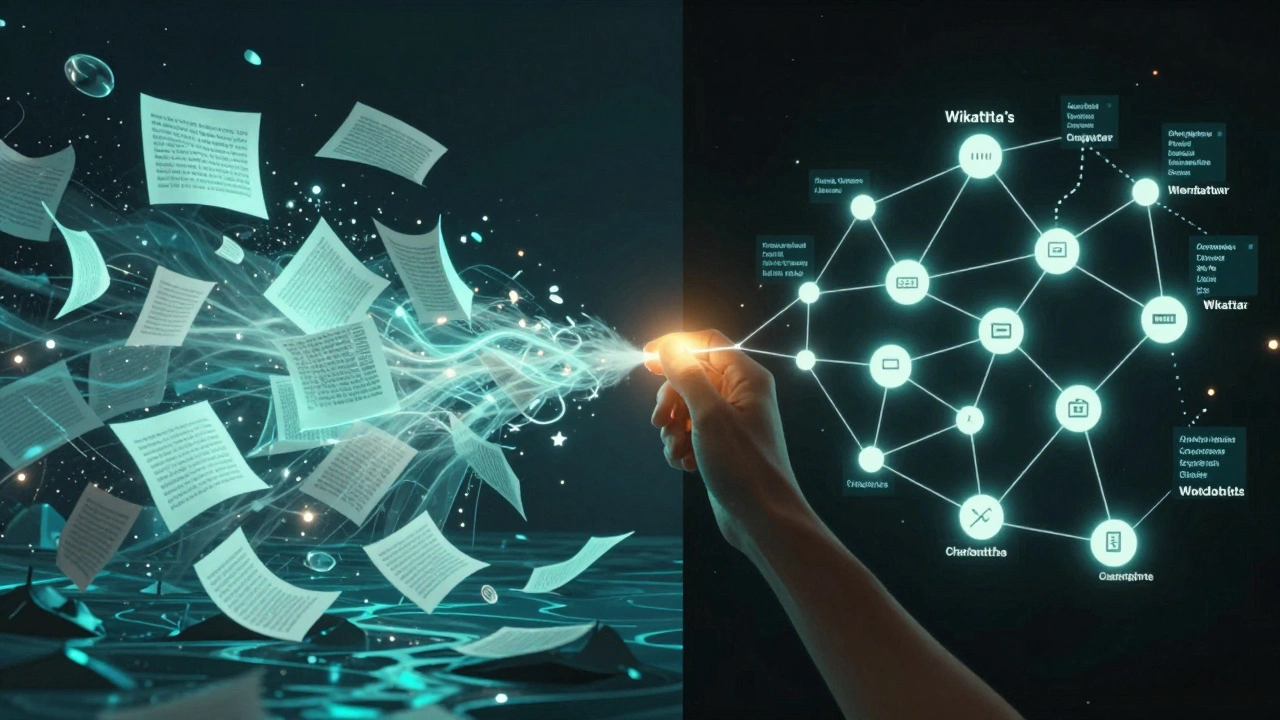
ChatGPT, Gemini, and Claude all pull from Wikipedia. But they don’t give credit. They don’t link back. They just absorb and repackage. In 2024, a Stanford study found that 89% of AI-generated answers citing "Wikipedia" were either wrong or misattributed.
Wikipedia’s answer? Fight back with better data. The Wikimedia Foundation launched Wikidata as a structured knowledge base. Unlike Wikipedia articles, Wikidata entries are machine-readable. Each fact has a unique ID, a source, and a revision history.
Now, some AI companies are starting to use Wikidata instead of raw Wikipedia pages. Google’s AI uses it for knowledge panels. Meta’s Llama models now pull from Wikidata for factual queries. It’s not perfect-but it’s a step toward accuracy.
What Happens When AI Gets It Right?
Wikipedia isn’t just fighting bad AI. It’s also helping good AI. In 2025, researchers at the University of California used Wikipedia’s edit history to train a model that detects misinformation trends. The model learned how false claims spread, how they’re corrected, and which sources are most trusted.
That model is now used by fact-checking groups in India, Brazil, and Germany. It’s not AI replacing Wikipedia. It’s Wikipedia training AI to be better.
Wikipedia’s Future: Human-Machine Collaboration
Wikipedia’s goal isn’t to stop AI. It’s to make AI respect truth. The site has 300,000 active editors. That’s more than the entire staff of Facebook, Twitter, and YouTube combined. And they’re not paid. They do it because they believe in open knowledge.
The real threat isn’t AI. It’s indifference. If people stop caring whether something is true, Wikipedia becomes just another website. But as long as people still value accuracy over speed, Wikipedia will keep winning.
The next big challenge? AI-generated images and audio. A fake audio clip of a politician saying something they never said is now being added to Wikipedia articles as "evidence." Editors are working on new tools to detect synthetic media in citations. It’s a race. But for now, Wikipedia is still ahead.
Can AI edit Wikipedia without being detected?
It’s getting harder. Wikipedia uses automated bots that flag AI-like text patterns-repetitive phrasing, missing citations, unnatural tone. While no system is perfect, over 80% of AI-generated edits are caught before they go live. Human editors also review suspicious changes, especially on high-traffic pages.
Does Wikipedia ban AI tools completely?
No. Wikipedia doesn’t ban AI tools. Instead, it requires transparency. If you use AI to help write or edit a page, you must disclose it. You can use AI for grammar checks, drafting, or research-but you must verify every fact and cite reliable sources. The rule is about honesty, not technology.
Why doesn’t Wikipedia use AI detectors like GPTZero?
Because they’re unreliable. AI detectors often flag human writing as AI and miss sophisticated AI that mimics human style. Wikipedia relies on pattern recognition instead: unusual phrasing, fake citations, or edits that ignore sourcing rules. These are harder for AI to fake consistently.
How does Wikipedia ensure AI doesn’t spread misinformation?
Wikipedia requires every claim to be backed by a reliable, published source. AI can’t bypass that. Even if it generates perfect text, it can’t create a real citation. Editors check sources. Bots flag edits without references. And the community reverses false edits quickly-often within minutes.
Is Wikipedia still trustworthy if AI uses its content?
Yes-because Wikipedia controls what goes in, not what comes out. AI models that scrape Wikipedia without understanding context often misrepresent it. But Wikipedia’s content remains accurate because it’s edited, cited, and verified by humans. The problem isn’t Wikipedia. It’s how others use it.
What’s the difference between Wikipedia and Wikidata?
Wikipedia is for human-readable articles with narratives and context. Wikidata is a structured database of facts-each with a unique ID, source, and revision history. AI models can pull clean data from Wikidata without misinterpreting context. Many AI companies now use Wikidata to improve accuracy.