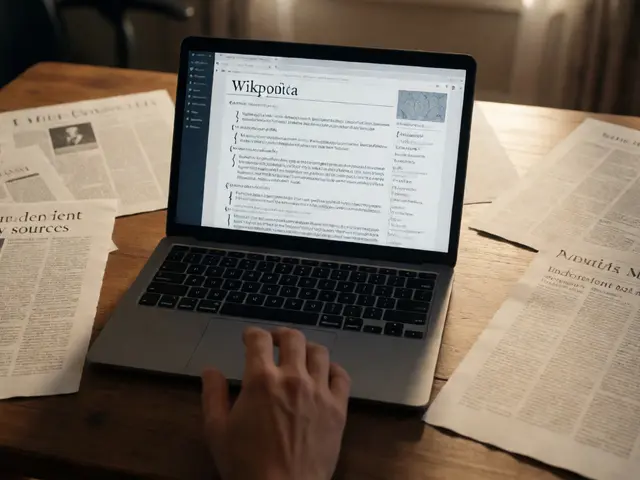
Wikipedia articles don’t just appear polished by accident. Behind every well-structured entry is a set of hidden rules-infoboxes and templates-that keep information consistent, accurate, and easy to find. These aren’t optional decorations. They’re the backbone of reliability on Wikipedia. If you’ve ever wondered why some articles feel instantly trustworthy while others leave you guessing, the answer often lies in how well these tools are used.
What Infoboxes Actually Do
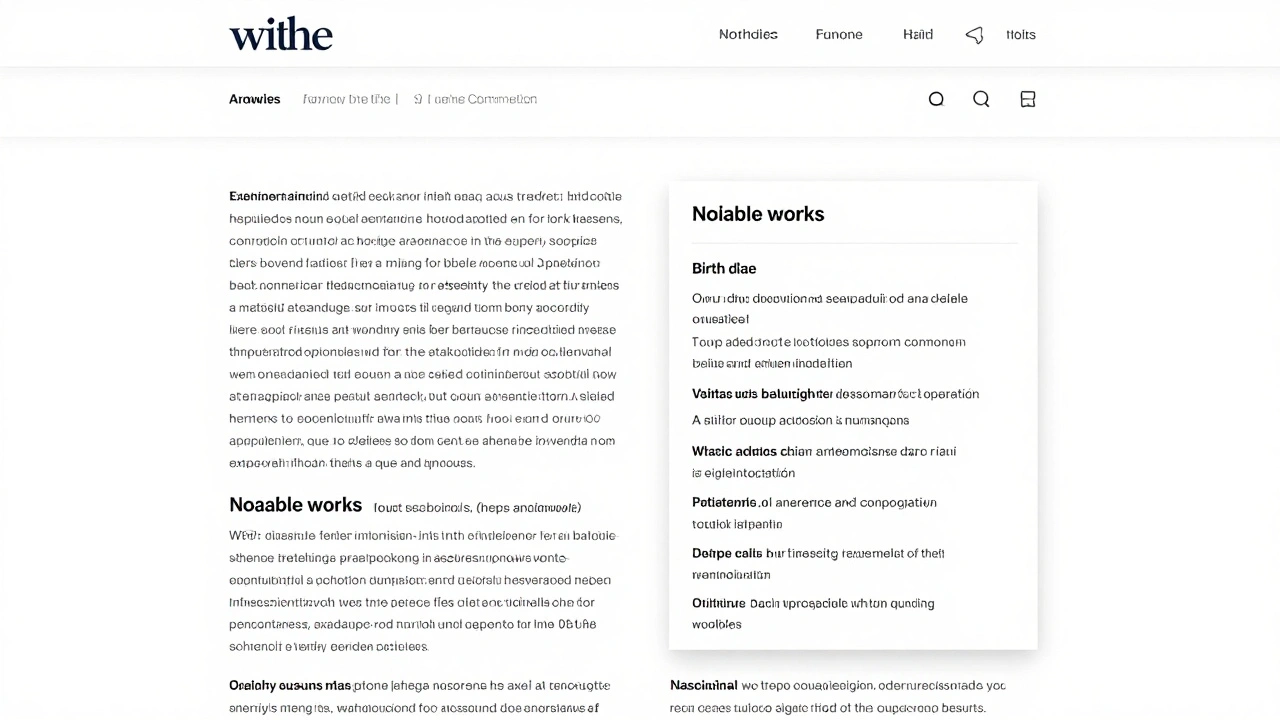
An infobox is that compact box you see on the right side of many Wikipedia pages-usually with a title, photo, and key facts. It’s not there to look nice. It’s there to answer the most common questions in seconds. For a person, it might show birth date, nationality, and major achievements. For a company, it shows founding year, headquarters, and revenue. For a movie, it lists director, cast, and release date.
Infoboxes follow strict templates. You can’t just throw in any data you like. Each infobox type-Infobox person, Infobox company, Infobox film-has a predefined list of fields. These aren’t suggestions. They’re requirements. If you add a field that doesn’t belong, editors will remove it. If you leave out a required one, like the birth date for a living person, the article gets flagged for improvement.
Why does this matter? Because machines read Wikipedia too. Search engines, apps, and voice assistants pull data from infoboxes. If the data isn’t structured correctly, your article won’t show up in Google’s Knowledge Panel or Siri’s quick answers. That’s not a side effect-it’s the point.
Template Rules: No Creativity Allowed
Templates are reusable code blocks that format recurring content. They’re used for citations, navigation boxes, warning banners, and even dispute tags. But they’re not for personal style. You can’t tweak a template to make it look "prettier" or "more modern." Wikipedia templates are standardized for a reason: consistency across millions of pages.
Take the Cite web template. It doesn’t let you write "I found this on a blog in 2023." It requires: author, title, website, date, URL, and access date. Missing one? The article gets tagged with "Citation needed" or "Poor citation." And it’s not just about rules-it’s about traceability. If someone challenges a fact, editors must be able to verify it using the same template format, no matter which article they’re reading.
Another example: the Stub templates. If an article is too short, you don’t just say "This needs work." You add {{stub}} or {{biology-stub}} or {{film-stub}}. These tags help volunteers find articles that need expansion. They’re not punishments. They’re signposts.
Why Standards Prevent Bias
Wikipedia’s biggest threat isn’t vandalism-it’s unconscious bias. A well-written article about a scientist from the U.S. might include five major awards, five publications, and three university affiliations. An article about a scientist from Nigeria might list only their current job and one paper-because the editor doesn’t know what else to include.
Infoboxes and templates fix that. They force the same level of detail everywhere. If the template asks for "notable works," then every artist, writer, or inventor gets the same treatment. No exceptions. That’s how Wikipedia avoids favoring certain cultures, languages, or regions.
There’s data to back this up. A 2022 study by the Wikimedia Foundation found that articles using standardized infoboxes were 47% more likely to be rated "high quality" by editors-and 32% less likely to contain unverified claims. The structure doesn’t just make articles look better. It makes them more accurate.
Common Mistakes and How to Fix Them
Even experienced editors mess up. Here are the top three errors-and how to avoid them:
- Adding unofficial data-like "popularity score" or "fan rating." Infoboxes only include verifiable, published facts. If it’s not in a reliable source, it doesn’t belong.
- Using the wrong template-like putting a Infobox person on a company. Always check the template documentation first. Wikipedia has over 2,000 templates. Using the wrong one breaks the system.
- Ignoring update rules-infoboxes must reflect current data. If a CEO leaves a company, the infobox must be updated within weeks. Outdated info is misleading info.
When in doubt, check the template page. Go to Wikipedia:Template:Infobox person and read the documentation. It lists every field, what kind of data goes there, and which sources are acceptable. No guesswork.
How to Improve an Article Using Templates
Want to make your article stand out? Start with templates. Here’s how:
- First, identify what kind of article you’re editing. Is it a person? A place? A book? Then find the correct infobox template.
- Fill in every required field. Don’t skip anything just because it seems obvious. "Born in 1985" isn’t obvious to someone reading this in 2030.
- Use citation templates for every claim. Even if it seems common knowledge-like "Paris is the capital of France"-cite a reliable source. Wikipedia doesn’t assume anything.
- Add navigation templates at the bottom. These help readers find related articles. For example, {{European Union}} links to all member states.
- Check for dispute tags. If you see {{POV}} or {{cleanup}}, fix the underlying issue before adding more content.
There’s no shortcut. High-quality articles aren’t written-they’re built, piece by piece, using the right tools.

What Happens When Standards Are Ignored
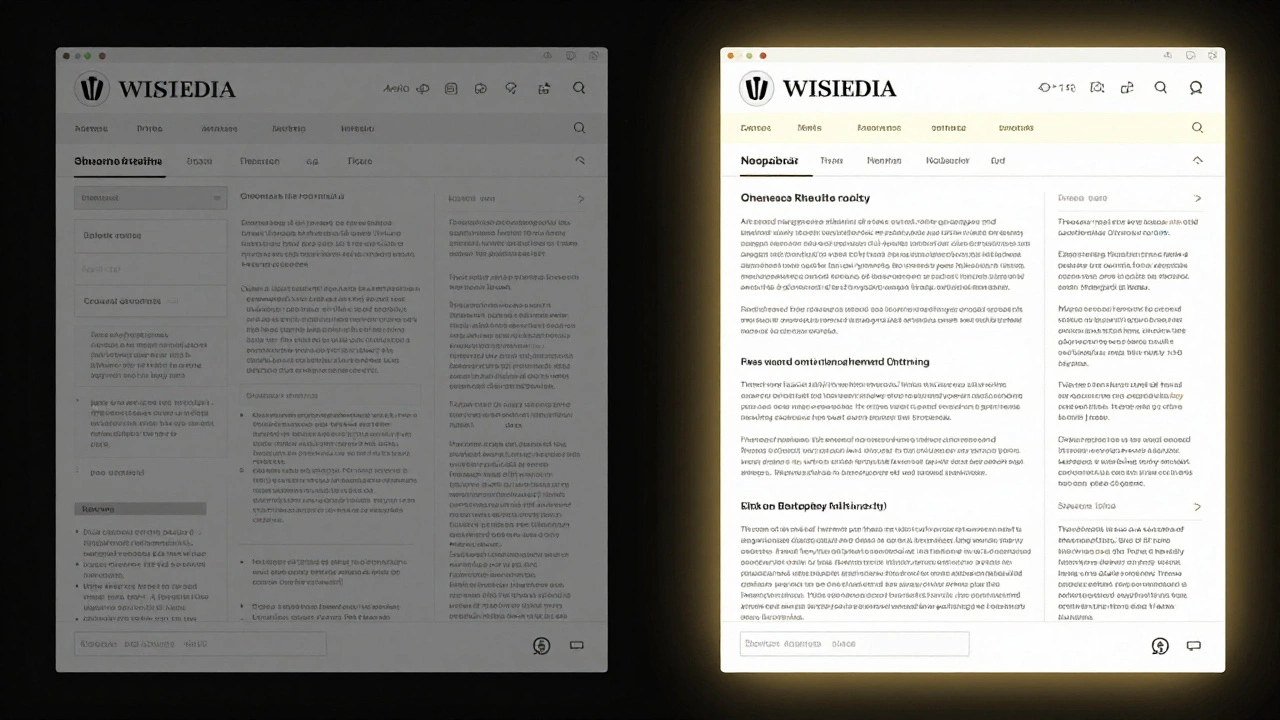
Look at any Wikipedia article that’s been flagged for low quality. Chances are, it’s missing an infobox, has no citations, or uses a custom template that doesn’t exist on other pages. These articles rarely get updated. They don’t appear in search results. They’re often deleted.
One case from 2024 involved a Wikipedia article on a well-known environmental activist. The article had 12,000 words, dozens of photos, and detailed personal history. But it had no infobox. No citation templates. No navigation links. Editors spent over 40 hours cleaning it up before it was approved as a "Good Article." That’s 40 hours that could’ve been saved if the original editor had followed the standards.
Wikipedia doesn’t punish editors. It just doesn’t promote content that doesn’t meet the rules. If your article looks like it was written in a rush, it won’t get noticed. If it looks like it was built with care, using the right tools, it’ll be cited, shared, and trusted.
Where to Learn More
Wikipedia’s official guidelines are public and free. Start here:
- Wikipedia:Manual of Style/Infoboxes-rules for formatting and content
- Help:Template-how to use and create templates
- Wikipedia:Article quality-what makes an article "Good" or "Featured"
Don’t just read them. Try them. Edit a stub article. Add a proper infobox. Fix a citation. You’ll see how much difference structure makes.
Do all Wikipedia articles need an infobox?
No, not all articles need one. Infoboxes are used for topics that benefit from structured data-people, organizations, places, events, and products. Articles about abstract concepts, theories, or historical events often don’t use infoboxes because there’s no clear set of standard fields. But if your topic has measurable, repeatable facts, an infobox is expected.
Can I create my own infobox template?
You can propose one, but you can’t just start using it. New templates require community approval. You must demonstrate a clear need, show that existing templates don’t cover your topic, and get support from at least five experienced editors. Most new templates are rejected because they duplicate existing ones or add unnecessary complexity.
Why do some infoboxes have more fields than others?
Each infobox is designed for a specific type of subject. A Infobox book includes fields like ISBN and publisher, while a Infobox video game includes platform and developer. The fields are chosen based on what information is consistently available and relevant for that category. Adding unrelated fields makes the infobox cluttered and less useful.
Are infoboxes the same across all language versions of Wikipedia?
No. Each language version has its own set of templates and standards. The English Wikipedia has more detailed infoboxes than most others, but the structure is similar. For example, the German Wikipedia uses a different layout for person infoboxes, but still requires birth date, nationality, and notable works. Consistency matters within each language, not across them.
What if I don’t have reliable sources for all infobox fields?
Leave the field blank. Don’t guess. Don’t use blogs, forums, or social media. If you can’t verify a birth date, don’t write "circa 1970." If you can’t find a company’s revenue, leave it out. Wikipedia values accuracy over completeness. An empty field is better than a false one.
Can I use infoboxes in draft articles before they’re published?
Yes, and you should. Drafts are reviewed by editors before going live. If your draft includes a properly formatted infobox and citations, it’s much more likely to pass review quickly. Editors can spot incomplete or incorrect templates instantly. Building with standards from the start saves time for everyone.
Next Steps for Editors
If you want to contribute to high-quality Wikipedia articles, start small. Pick one article that lacks an infobox. Add it. Find three missing citations. Use the correct template. Submit the edit. Then do it again. Over time, you’ll notice a pattern: the better you follow the rules, the more your edits get accepted-and the more trust you earn in the community.
Wikipedia doesn’t reward effort. It rewards accuracy. And accuracy comes from structure. Infoboxes and templates aren’t boring bureaucracy. They’re the quiet system that keeps the entire encyclopedia working.