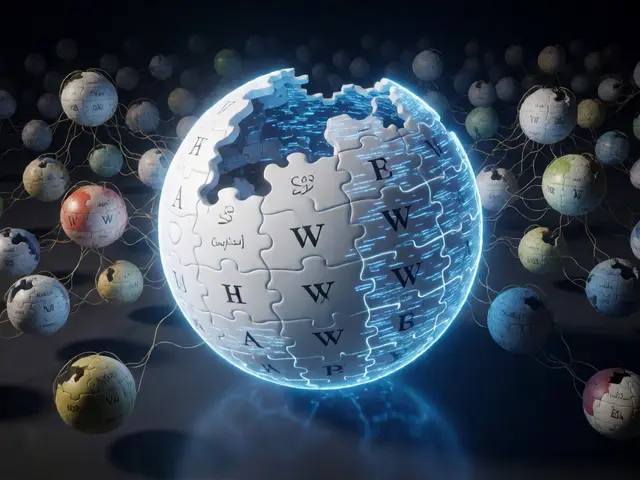
Imagine a world where no single company or foundation holds the keys to human knowledge. That is the core promise behind Encyclosphere, a concept championed by a former Wikipedia co-founder who now advocates for a network of independent, interoperable encyclopedias. Launched as a vision in recent years, Encyclosphere aims to solve the biggest problem with current online reference sites: centralization. If you have ever felt frustrated by Wikipedia’s editorial policies or worried about the long-term stability of a single-platform model, this new approach might look like a breath of fresh air.
The idea isn’t just about building another wiki. It is about creating an ecosystem where multiple projects can exist side-by-side, sharing data but maintaining their own unique voices and standards. This shift from a monolithic structure to a distributed one changes how we think about trust, curation, and ownership of information on the web.
Why Centralization Became a Problem
To understand why Wikipedia’s co-founder, Larry Sanger, left the project he helped create in 2001, you have to look at the tension between openness and control. For two decades, Wikipedia has been the default go-to for quick facts. But it operates under a strict set of rules enforced by a community that can be rigid and sometimes exclusionary. Editors often complain that consensus is hard to reach, and that the "neutral point of view" policy can stifle niche perspectives.
Sanger argued that while Wikipedia was a monumental success, it had become too much of a single point of failure. If the Wikimedia Foundation were to change its policies, or if the server infrastructure failed, the entire global repository of free knowledge would be at risk. More importantly, there was no room for alternative models of curation. You either played by Wikipedia’s rules, or you started over from scratch with zero audience. Encyclosphere addresses this by allowing different communities to define their own quality standards without needing to compete for the same centralized traffic pool.
How the Encyclosphere Model Works
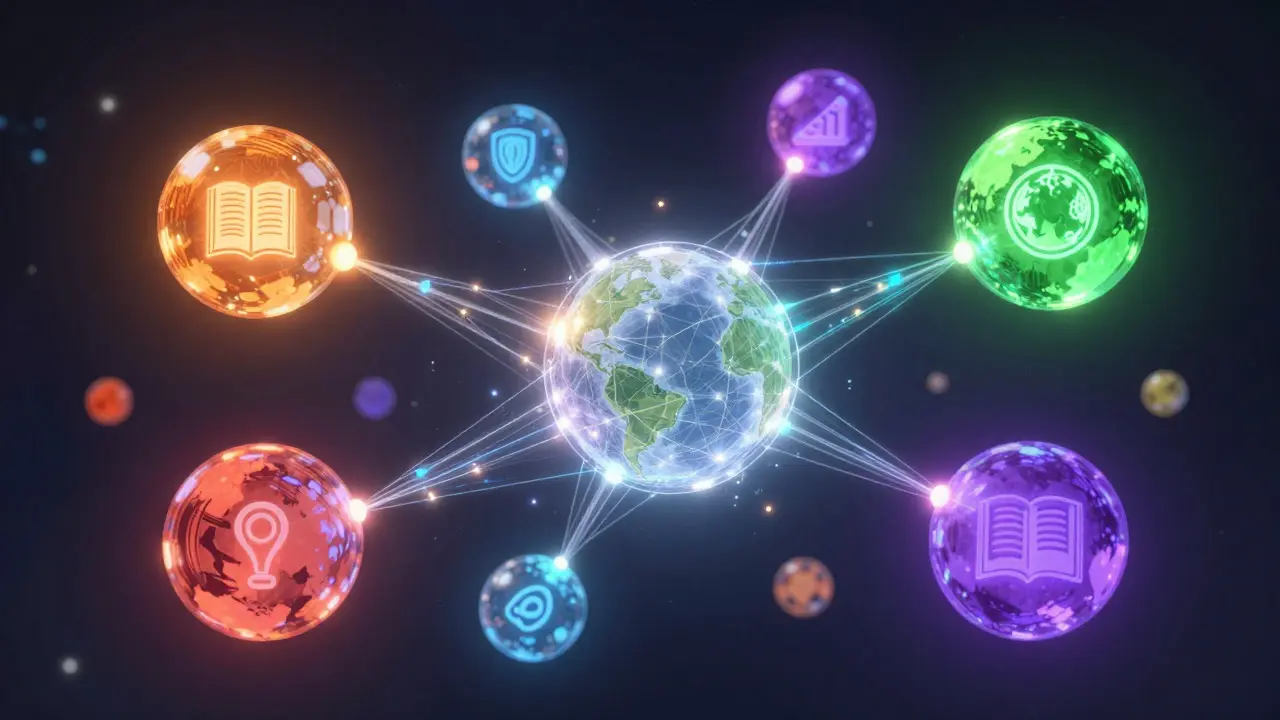
At its heart, the Encyclosphere relies on Semantic Web technologies and open data standards. Instead of every encyclopedia being a walled garden, they act as nodes in a larger network. Here is how the mechanics work:
- Interoperability: Projects use shared data formats, meaning a fact verified in one node can be referenced in another without copy-pasting errors.
- Autonomy: Each node (or individual encyclopedia) sets its own editorial guidelines. One might focus on academic rigor, while another prioritizes local history or creative writing.
- Linking: Articles link across nodes, creating a web of references that users can traverse seamlessly.
This setup resembles the early days of the internet itself, before search engines consolidated power. It allows for diversity. A reader interested in deep philosophical analysis can visit a node dedicated to that topic, while someone looking for a quick definition can use a more generalist node. The key difference is that these nodes are not isolated; they talk to each other through standardized APIs.
Platform Competition in the New Era
When we talk about platform competition in the context of knowledge, we usually mean the battle for user attention. In the past, this meant fighting for SEO rankings. In the Encyclosphere model, competition shifts to quality of curation and community engagement. Since all nodes share underlying data, the value proposition becomes the lens through which that data is presented.
Consider two hypothetical nodes within the Encyclosphere. Node A focuses on strictly peer-reviewed scientific content. Node B focuses on cultural interpretations and historical context. Both pull from similar primary sources, but their articles read differently because their editorial goals differ. Users choose based on what kind of depth or perspective they need. This creates a healthy market dynamic where mediocrity doesn't survive, because users can easily switch to a better-curated node for the same topic.
| Feature | Centralized Model (e.g., Wikipedia) | Decentralized Model (Encyclosphere) |
|---|---|---|
| Governance | Single foundation/community rules | Distributed, node-specific rules |
| Data Portability | High, but within one platform | High, across multiple platforms via open standards |
| Editorial Flexibility | Low (strict NPOV policies) | High (customizable per node) |
| Risk of Failure | Single point of failure | Resilient network redundancy |
| User Choice | One version of truth | Multiple perspectives available |
The Role of Open Standards and APIs
None of this works without robust technical infrastructure. The Encyclosphere depends heavily on RESTful APIs and structured data languages like JSON-LD. These tools allow developers to build applications that aggregate content from multiple nodes. Imagine a mobile app that pulls the most relevant snippet from three different Encyclosphere nodes and presents them side-by-side, letting you compare viewpoints instantly. This is the kind of innovation that was difficult to achieve when all data was locked inside a single, proprietary-like system, even if it was open-source.
Furthermore, the use of Wikidata-compatible structures ensures that machine readability remains high. Search engines and AI assistants can crawl these nodes just as easily as they do traditional websites, but with richer semantic context. This means that as artificial intelligence becomes more integrated into our daily research habits, the Encyclosphere offers a cleaner, more modular data source than a monolithic database.

Challenges and Criticisms
Naturally, no solution is perfect. Critics argue that decentralization could lead to fragmentation. If every node has its own rules, how do we ensure accuracy? Could misinformation spread faster if there is no central authority to police it? Sanger and his supporters counter that competition solves this. If a node lets bad information slide, users will stop trusting it and move to a more rigorous node. Reputation becomes the currency of trust, rather than institutional authority.
Another challenge is the initial adoption hurdle. Wikipedia benefits from massive brand recognition. New nodes in the Encyclosphere have to prove their worth to users who are already habituated to the big red elephant logo. Building a critical mass of editors and readers for each individual node is a significant logistical task. It requires strong community management and clear value propositions for why someone should contribute to Node X instead of Node Y.
What This Means for the Future of Research
For academics and researchers, the Encyclosphere represents a potential game-changer. Currently, citing Wikipedia is often frowned upon in formal papers due to its variable reliability. However, citing a specific, highly curated node within the Encyclosphere-perhaps one maintained by a university consortium or a specialized professional body-could offer a middle ground. It provides the accessibility of a wiki with the credibility of a specialized journal.
As we move further into the 2020s, the demand for nuanced, multi-perspective information is growing. People want to know not just *what* happened, but *how* different groups interpret it. The Encyclosphere model supports this by making those different interpretations visible and accessible simultaneously. It turns the encyclopedia from a static book into a dynamic conversation.
Is Encyclosphere a replacement for Wikipedia?
Not necessarily. Many see it as a complement. Wikipedia can continue to serve as a generalist hub, while Encyclosphere nodes provide specialized, high-depth alternatives. They may coexist, with Wikipedia acting as one large node within the broader network.
How does Encyclosphere prevent misinformation?
It relies on competitive reputation. Each node is responsible for its own editorial standards. If a node fails to maintain accuracy, users will migrate to more reliable nodes. Transparency in editing histories and contributor credentials helps users make informed judgments about source reliability.
Who owns the data in the Encyclosphere?
The data is generally owned by the community or organization running the specific node, but it must adhere to open licensing standards (like Creative Commons) to remain part of the interoperable network. This ensures that no single entity can lock up the collective knowledge.
Can I edit any article in the Encyclosphere?
It depends on the specific node's rules. Some nodes may allow open editing like Wikipedia, while others might require expert verification or registered accounts. This flexibility is a core feature of the decentralized model.
How does this affect search engine results?
Search engines will likely index multiple nodes for the same query. Users may see results from different Encyclosphere nodes alongside traditional websites, providing a richer set of options depending on the specificity of the search intent.