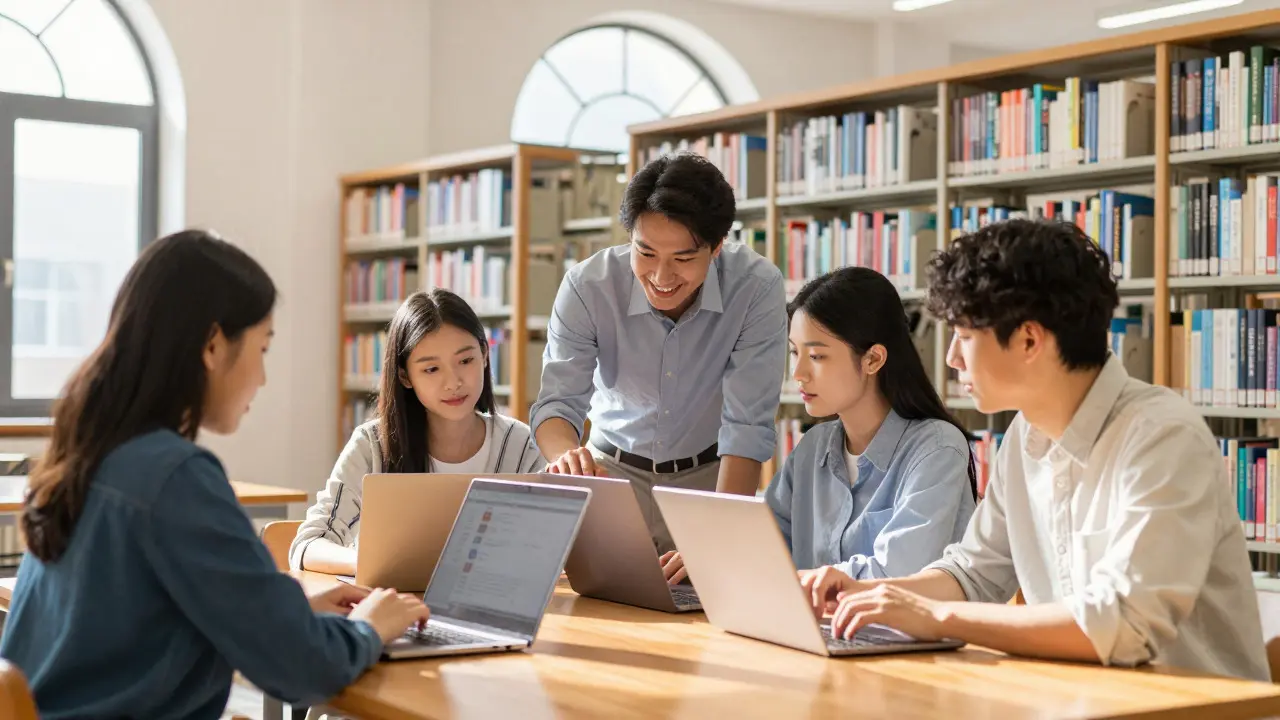
Imagine a quiet corner of the university library where students aren't just reading about history or science-they're actively writing it. This is the reality for institutions that have embraced Wikipedia as an educational tool. While many faculty members view the platform with skepticism, campus libraries are stepping in as the critical bridge between academic rigor and public knowledge sharing. By leveraging their expertise in information literacy and resource management, librarians are transforming how students engage with open source content.
Why Libraries Are the Ideal Partner
Universities often struggle to integrate collaborative platforms into the curriculum due to grading complexities and technical barriers. Academic librarians, however, already possess the skills needed to navigate this landscape. They understand citation standards, digital archives, and the nuances of reliable sourcing. When a library partners with the Wikipedia Education Program, it provides a structured framework that reduces the risk for both instructors and students. The library acts as a neutral ground, offering training sessions and technical support without adding direct pressure to the course grade. This separation allows students to experiment with editing while feeling secure in the knowledge that a professional information specialist is nearby if they get stuck.
The Role of the Wikipedia Education Program
The Wikipedia Education Program serves as the global backbone for these initiatives. It connects educators across different continents, sharing best practices and lesson plans that have been tested in diverse classroom settings. For a local campus, this means access to a vast repository of proven strategies rather than starting from scratch. The program provides specific modules on topics like citation formatting, neutral point of view, and conflict resolution within edit wars. These resources are crucial because they translate abstract academic concepts into practical actions that can be executed directly on the Wikipedia interface. Without this standardized support, individual attempts at integrating Wikipedia into courses often fail due to inconsistent guidance.
Practical Steps for Establishing a Partnership
Setting up a successful collaboration requires more than just a handshake between a dean and a librarian. It involves a series of concrete steps that ensure sustainability and impact. Here is how most successful campuses approach the process:
- Identify Champions: Find one enthusiastic librarian and one faculty member who believe in the value of open education. Their buy-in is essential for overcoming initial institutional resistance.
- Define Scope: Decide whether the project will be a standalone workshop or integrated into specific courses. Standalone workshops tend to have higher participation rates but lower long-term retention, while course integration yields deeper learning outcomes.
- Secure Resources: Allocate budget for potential stipends for student editors and time for librarian-led training sessions. Even small amounts of funding signal institutional support.
- Pilot First: Start with a single class or department. Gather feedback, adjust the workflow, and document successes before scaling up to the whole university.
Overcoming Common Challenges
Despite the benefits, hurdles exist. The most common complaint from faculty is the fear of vandalism or poor quality edits. To mitigate this, libraries often implement a "sandbox" approach where students practice on non-public pages before making live edits. Another significant challenge is the perception that Wikipedia is not a scholarly source. Librarians address this by teaching students the difference between using Wikipedia as a reference and contributing to it as a creator. The act of verifying sources and maintaining neutrality is, in itself, a rigorous academic exercise that mirrors the research process taught in traditional seminars. By reframing the task, the library helps shift the narrative from "fixing errors" to "contributing to the global commons."
Measuring Success Beyond Edit Counts
How do you know if the partnership is working? While tracking the number of words added or articles created is useful, it misses the bigger picture. Successful programs measure success through student confidence in digital literacy and the development of civic engagement. Surveys conducted post-project often reveal that students feel more empowered to use online resources critically. Additionally, the quality of the edits matters. An edit that adds a well-sourced paragraph to a niche topic demonstrates a higher level of understanding than ten superficial changes. Libraries should track qualitative metrics alongside quantitative data to provide a holistic view of the program's impact.
| Feature | Traditional Research Paper | Wikipedia Editing Project |
|---|---|---|
| Audience | Instructor only | Global public readership |
| Feedback Loop | Single grade at end of term | Continuous peer and community review |
| Source Verification | Static list of references | Dynamic, real-time verification against live sources |
| Collaboration | Often individual work | Inherent collaborative structure |
| Digital Literacy | Basic word processing | Advanced media handling and version control |
Building Long-Term Sustainability
To prevent these initiatives from dying out when the initial champion leaves, libraries must embed the program into the institution's broader strategy. This includes creating a dedicated page on the library website, archiving past student projects, and recognizing top contributors during annual awards ceremonies. When the university administration sees tangible results-such as improved student satisfaction scores or increased visibility for the institution’s unique collections-they are more likely to provide ongoing support. The goal is to move from a pilot project to a standard part of the information literacy curriculum, ensuring that every graduating student has experienced the power of contributing to open knowledge.
Do students need prior experience with Wikipedia to participate?
No, prior experience is not required. The Wikipedia Education Program provides introductory modules that cover account creation, basic editing tools, and style guidelines. Librarians typically lead a one-hour orientation session to familiarize students with the interface before they begin their assigned tasks.
How does the library handle copyright issues during editing?
Librarians train students to use freely licensed images and properly cite all textual sources. Since Wikipedia uses Creative Commons licenses, students learn to identify which materials can be reused. The library’s collection of open-access resources serves as a primary source pool, reducing the risk of copyright infringement.
Is the project graded as part of the course?
It depends on the instructor's preference. Some faculty integrate editing into the final grade, while others treat it as extra credit or a separate component of information literacy assessment. The key is to align the grading criteria with learning objectives, such as source verification and neutral tone, rather than just the volume of text added.
What types of subjects work best for student editing?
Subjects related to the university’s strengths or local heritage often yield the best results. For example, a university with a strong biology department might focus on improving articles about local flora or emerging scientific discoveries. Niche topics with fewer existing editors allow students to make significant, visible contributions.
How much time does it take for a librarian to manage a cohort?
For a class of 30 students, a librarian can expect to spend approximately 4-6 hours total. This includes two 1-hour training sessions and occasional check-ins via email or office hours. Once the system is established, the workload decreases significantly as students become self-sufficient.