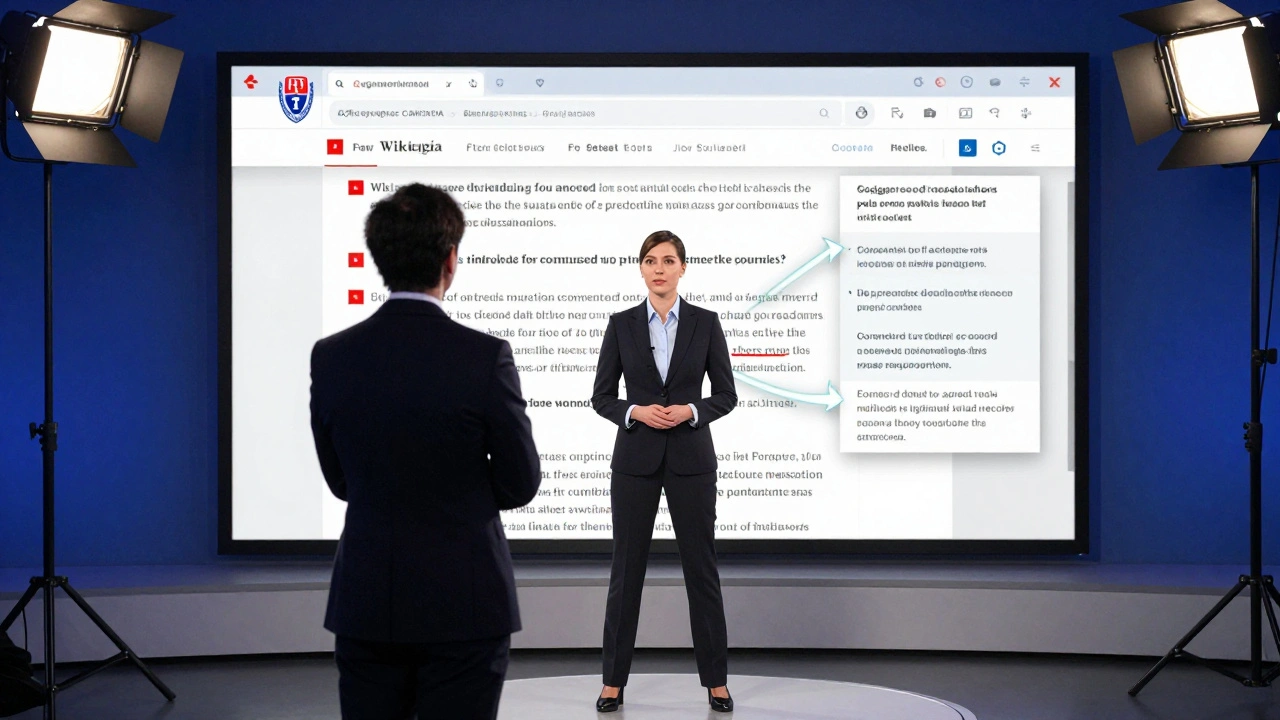
You’re on live TV. The host turns to you and says, "Wikipedia says X. Is that true?" Your heart skips. You’ve read Wikipedia before, sure-but now you’re on the clock, cameras are rolling, and millions might hear your answer. This isn’t a classroom. This isn’t a podcast. This is live broadcast, and Wikipedia is suddenly the center of the conversation.
Why Wikipedia Always Comes Up in Interviews
Wikipedia isn’t just a website. It’s the default reference for most people. A 2024 Pew Research study found that 78% of U.S. adults have used Wikipedia to check a fact in the past year. Journalists use it. Politicians cite it. Even your neighbor Google-searches it before dinner party debates. So when a media outlet brings you on to talk about climate policy, AI ethics, or local history, they’re going to ask: "What does Wikipedia say?" It’s not because they distrust Wikipedia. It’s because they assume you do. And they want to see if you can separate what’s written on a crowd-sourced page from what’s verified, credible, or true.Know the Difference Between Wikipedia and Reality
Wikipedia is a summary, not a source. It’s a synthesis of published reports, academic papers, news articles, and official documents. But it’s not peer-reviewed. It’s not fact-checked by experts before publication. It’s edited by volunteers-some highly knowledgeable, others with agendas or poor sources. Here’s the key: Wikipedia can be right. But it can also be outdated, incomplete, or outright wrong. A 2023 study from the University of Michigan found that 14% of Wikipedia entries on U.S. political figures contained at least one factual error that persisted for over six months. That’s not rare. That’s normal. So when you’re asked, "What does Wikipedia say?" your answer shouldn’t be "I don’t know" or "I didn’t check." It should be: "Wikipedia says X, but here’s what the actual evidence shows."Three Rules for Answering Wikipedia Questions on Air
There’s no script for this. But there are three rules that work every time.- Don’t defend Wikipedia. Explain it. Saying "Wikipedia is reliable" makes you sound naive. Saying "Wikipedia is a starting point" makes you sound smart. You’re not here to be a Wikipedia fan. You’re here to be the person who knows what’s behind the page.
- Lead with the truth, not the edit history. If the host says, "Wikipedia says the event happened in 2019," and you know it was 2021, don’t say, "That edit was made by a user in Ohio." Say, "Actually, the official report from the Department of Energy confirms it was 2021. Here’s why that matters."
- Offer a better source. Don’t just correct them. Elevate the conversation. "Wikipedia cites a blog post from 2018, but the peer-reviewed study in Nature from 2022 has more accurate data. That’s the one I’d rely on."
Practice Before You Go On Air
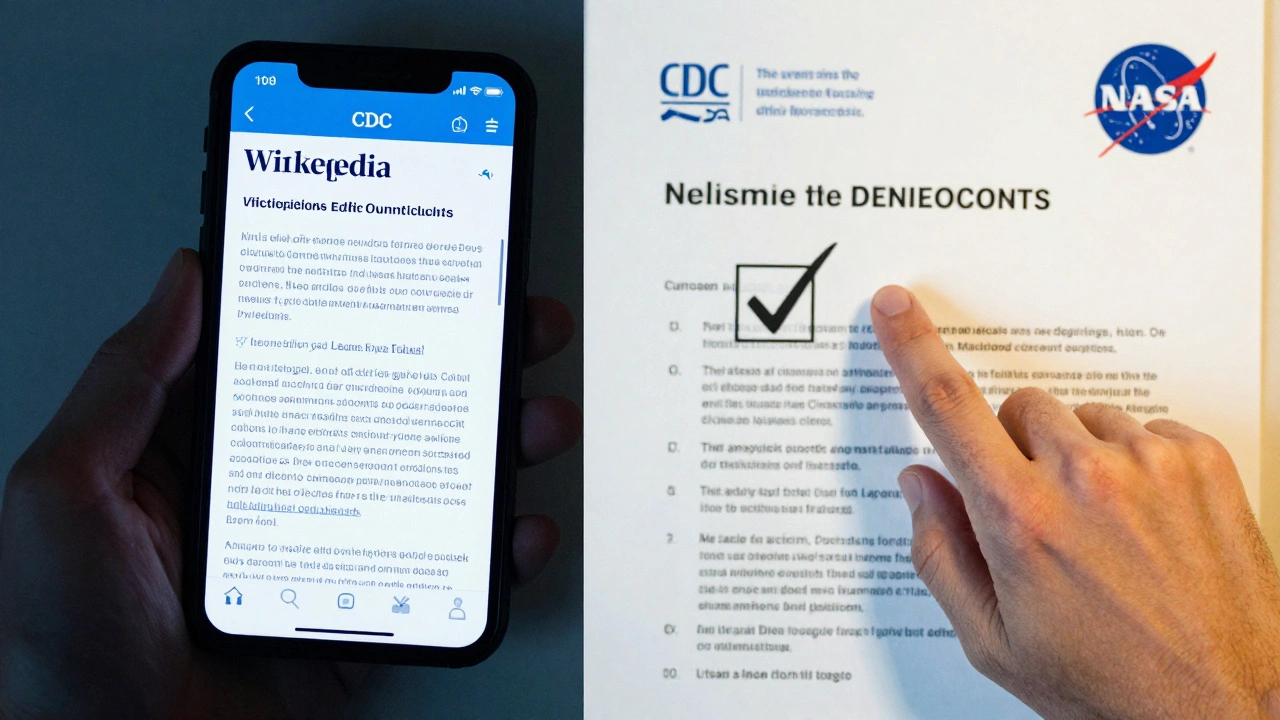
You wouldn’t walk into a job interview without rehearsing your answers. Don’t walk into a live interview without rehearsing Wikipedia questions. Here’s how to prep:- Find three recent news stories related to your topic. Go to Wikipedia. Read the first paragraph. Then read the references at the bottom. Compare what Wikipedia says to the original source.
- Write down five likely questions: "What does Wikipedia say about [X]?" "Is Wikipedia accurate on [Y]?" "Why do people trust Wikipedia when it’s wrong?"
- Record yourself answering them. Watch the video. Do you sound confident? Do you sound like you’re making things up? Adjust until your tone is calm, clear, and authoritative.
What to Do When You’re Wrong
You’re human. You’ll make a mistake. Maybe you misremember a date. Maybe you misquoted a source. The camera’s still rolling. Don’t panic. Don’t double down. Don’t say, "I’m sure I’m right." Say this: "I apologize-I misspoke. Let me correct that. The correct information is [X], and here’s where you can verify it." That’s not weakness. That’s credibility. People remember how you handle mistakes more than how you get things right.Why This Matters More Than Ever
In 2025, misinformation spreads faster than ever. But so does access to truth. When you’re on air and someone asks about Wikipedia, you’re not just answering a question. You’re modeling how to think critically in a world full of noise. You’re showing viewers: Don’t take the first result. Don’t trust the crowd. Check the source. That’s the real value you bring-not your title, not your credentials, but your ability to turn a simple Wikipedia question into a lesson in media literacy.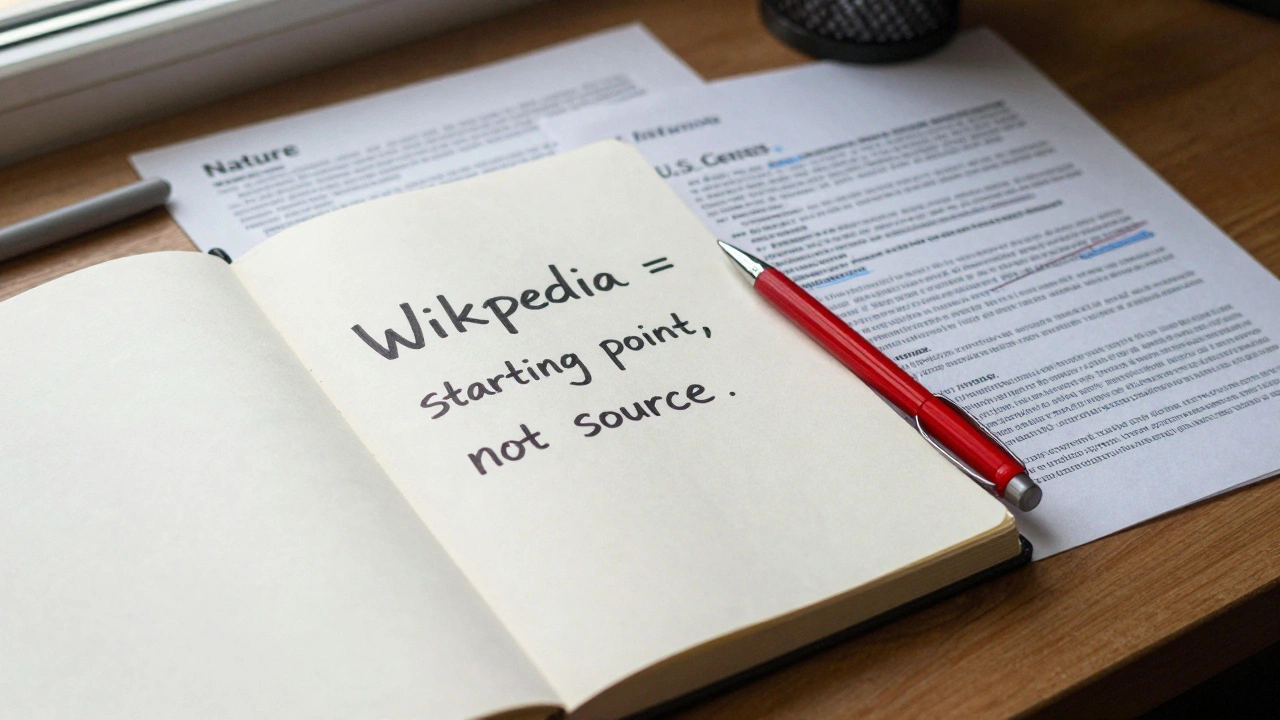
Common Traps to Avoid
Here are the mistakes most guests make-and how to dodge them:- "I don’t know what Wikipedia says." → Say: "I haven’t checked it today, but I can tell you what the most reliable sources say right now."
- "Wikipedia is fine." → Say: "Wikipedia can be useful, but it’s not a primary source. I always trace claims back to the original data."
- Getting defensive about edits. → Say: "The edit history is public, but what matters is whether the information is supported by evidence."
- Trying to cite Wikipedia as proof. → Say: "I don’t cite Wikipedia. I cite peer-reviewed journals, government reports, or verified databases."
What to Say When They Push Back
Sometimes, hosts will say, "But everyone uses Wikipedia." Or, "Isn’t it the most trusted source?" You don’t have to argue. Just reframe: > "It’s the most visited. But trust isn’t the same as accuracy. People used to trust the Yellow Pages for business hours. That doesn’t mean they were always right. We’ve learned to check websites directly. The same applies here." Or: > "If you’re choosing a surgeon, you don’t ask what Wikipedia says. You ask for credentials, outcomes, peer-reviewed studies. The same standard should apply to facts."Final Tip: Bring a Source Card
Before your interview, print or save on your phone a one-page cheat sheet with:- Three key facts about your topic
- The name of the best source for each (e.g., "CDC 2024 report on vaccine safety")
- One Wikipedia entry you’ve reviewed and know is outdated
Live interviews aren’t about having all the answers. They’re about knowing how to find the right ones-and helping others do the same. When you handle a Wikipedia question well, you’re not just answering a question. You’re teaching a skill. And that’s the kind of impact that lasts long after the broadcast ends.
Should I cite Wikipedia in a live interview?
No. Citing Wikipedia on air makes you look unprepared. Instead, say, "Wikipedia mentions X, but the original source is [Y]," and name the real document, study, or report. That shows you’ve done your homework and value accuracy over convenience.
What if Wikipedia is correct and I contradict it?
That’s rare, but it happens. If Wikipedia matches the latest verified data, say so: "Wikipedia is accurate here-it’s citing the 2024 U.S. Census data, which is correct. That’s a good example of how reliable information can end up on the site when it’s backed by official sources."
Can I use Wikipedia during the interview to look something up?
Never. Looking up Wikipedia live on a phone or tablet during an interview looks unprofessional and distracts from your message. If you’re unsure of a detail, say: "I don’t have the exact number in front of me, but I can confirm the broader trend is [X]." Then offer the correct context. You’ll earn more trust by being honest than by pretending to know everything.
Why do journalists ask about Wikipedia so often?
Because they know their audience uses it. They’re not testing you-they’re testing the audience’s assumptions. Your job is to show that facts need verification, not just popularity. Answering well helps viewers think more critically, which is exactly what good journalism should do.
What’s the most common mistake people make when answering Wikipedia questions?
The biggest mistake is treating Wikipedia as a source instead of a summary. Saying "Wikipedia says so" gives it authority it doesn’t have. The right move is to say, "Here’s what’s written there-and here’s what the real evidence shows." That shifts the conversation from rumor to reality.