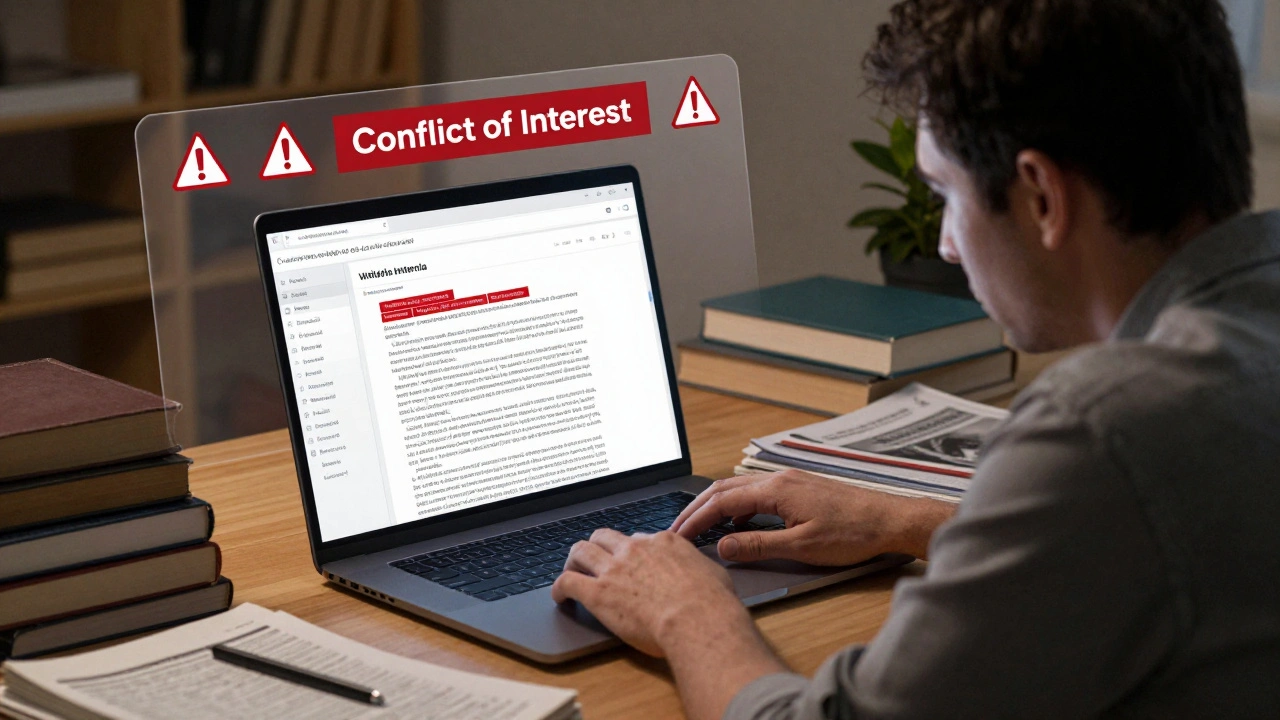
Every year, thousands of academics make edits to Wikipedia. Some fix a typo in a biography. Others rewrite entire sections of articles on climate science, economics, or medical treatments. Many do it because they care about accuracy. But here’s the problem: when you’re an expert in a field, and you edit the Wikipedia page about your own research, you’re not just helping the public-you’re also promoting your own work. That’s a conflict of interest, and Wikipedia doesn’t allow it.
Why Academics Edit Wikipedia
Academics edit Wikipedia for good reasons. They see misinformation. They notice that a key study is missing from a summary on cancer treatments. Or they realize their own paper, published in a niche journal, is never cited-even though it’s the most reliable source on the topic. They want to fix it. And they can. Wikipedia is open. Anyone can edit. But that openness is also its weakness. When a professor edits a page about their own research, they’re not just adding facts. They’re shaping how the public sees their work. They might emphasize their own findings, downplay competing theories, or leave out criticisms. Even if they believe they’re being fair, the bias is real. And Wikipedia’s community knows it.What Wikipedia Says About Conflicts of Interest
Wikipedia’s policy on conflicts of interest is clear: editors should not edit topics where they have a personal, financial, or professional stake. This includes academics editing articles about their own research, institutions, or funded projects. The policy isn’t about stopping experts from helping. It’s about stopping them from acting like advocates. The guideline isn’t new. It was formalized in 2009 after a wave of scandals. Professors from top universities were caught rewriting their own biographies to remove criticism, deleting references to controversial studies, or adding glowing quotes from their own publications. One historian added 12 citations to his own books to a page on 18th-century trade. Another psychologist removed a paragraph questioning the validity of his most cited experiment. Wikipedia’s volunteer editors caught them all-and banned them.How Conflicts Show Up in Real Edits
It’s not always obvious. Sometimes, it’s subtle. An economics professor adds a paragraph to the “GDP growth” article, citing only papers from their own lab. A biologist updates the “CRISPR” page to highlight their team’s 2023 breakthrough, but leaves out two competing studies that showed lower efficiency. A sociologist rewrites the “social media and mental health” section to match their recent book’s conclusions, ignoring meta-analyses that contradict them. These edits look professional. They’re well-sourced. They use correct terminology. But they’re still biased. And Wikipedia’s automated tools and human reviewers flag them. The system doesn’t care if you’re tenured at Harvard. It cares if your edits serve your agenda.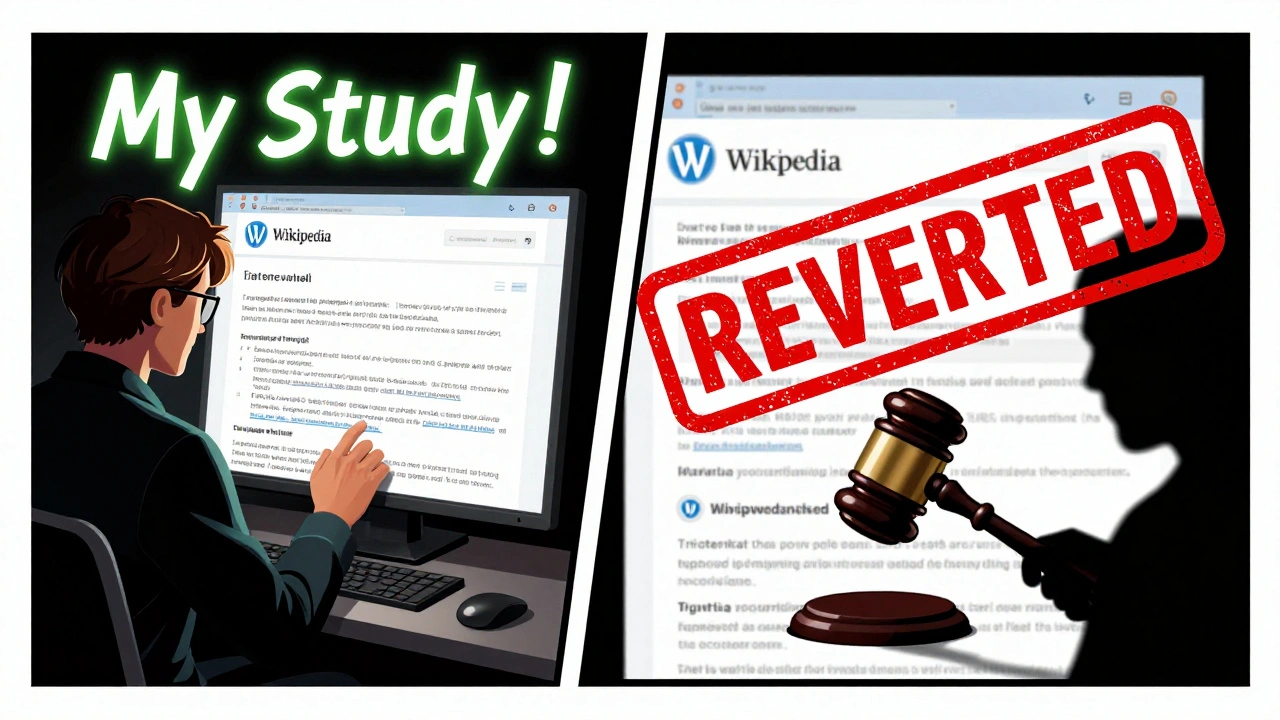
What Happens When Academics Get Caught
Most academics don’t get banned right away. They get warned. A notice appears on their user page: “Your edits appear to be related to your professional affiliation. Please disclose your conflict and consider using the talk page instead.” If they ignore it, their edits get reverted. Their account gets restricted. Sometimes, they’re blocked for weeks or months. The most serious cases lead to permanent bans. The Wikimedia Foundation doesn’t publicly name offenders, but academic journals have reported on cases. One 2023 study in Science & Engineering Ethics found that 17% of surveyed academics admitted to editing Wikipedia about their own work without disclosure. Of those, 62% said they believed it was acceptable if they “just added facts.”How to Edit Ethically
You can still help Wikipedia. You just have to do it the right way.- Use the talk page. Instead of editing the article directly, go to the article’s discussion tab. Write a clear, neutral comment: “I’m a researcher in this field. My 2022 paper on X is relevant here. Here’s the link. Please consider adding it if it meets Wikipedia’s sourcing standards.”
- Disclose your affiliation. If you’re editing on a topic related to your job, add a note to your user page: “I am a professor of neuroscience at XYZ University.” This doesn’t disqualify you-it just makes your intent transparent.
- Let others decide. Wikipedia works because editors review each other. Don’t push your version. Ask for feedback. If your sources are solid, someone else will add them.
- Use third-party accounts. If your university or lab wants to improve coverage of a topic, assign a student or librarian who has no stake in the subject to make the edits.
Why This Matters Beyond Wikipedia
Wikipedia is the fifth most visited website in the world. Millions of students, journalists, and even doctors rely on it. When academics manipulate its content-even slightly-they’re not just breaking a website rule. They’re eroding public trust in knowledge itself. Think about it: if a student reads a Wikipedia page on climate change that omits peer-reviewed studies because a climate scientist edited it to favor one model, that student walks away with a distorted view. If a journalist cites that page in a news story, the misinformation spreads further. Wikipedia’s strength is its transparency. Every edit is tracked. Every source is cited. Every conflict is visible-if people report it. Academics have a responsibility to protect that system, not exploit it.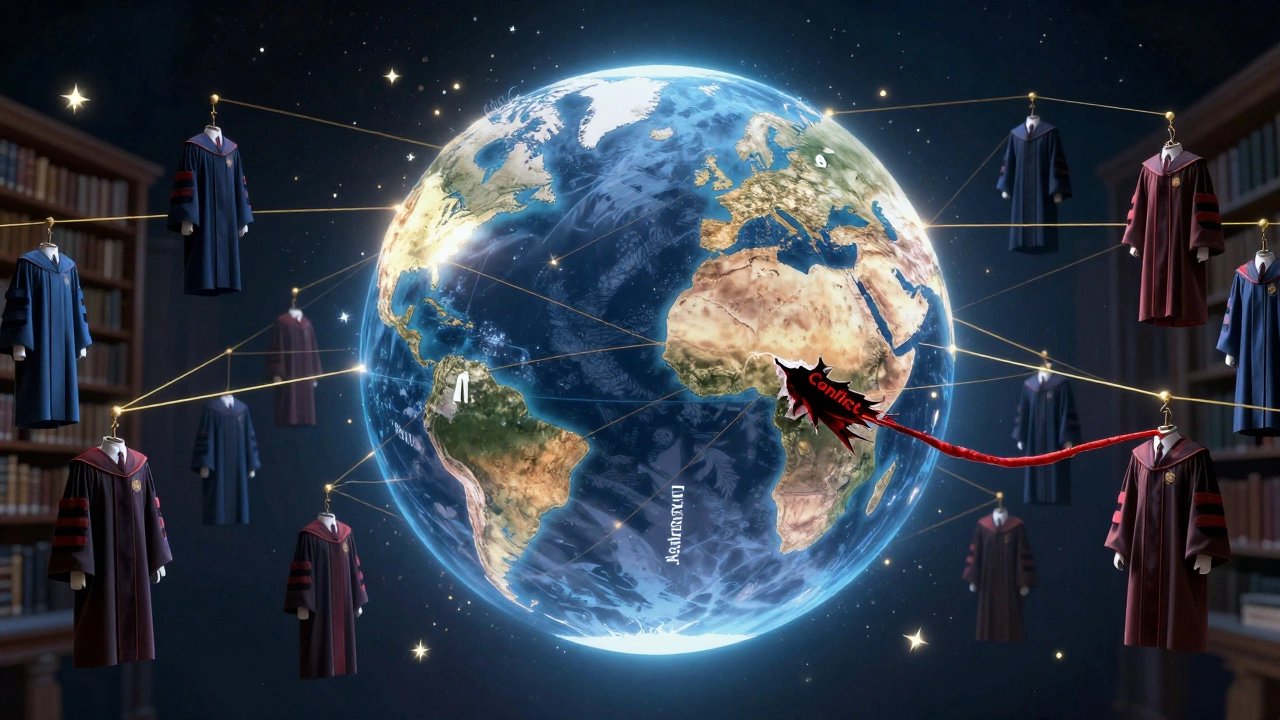
What Universities Should Do
Most universities don’t have policies on Wikipedia editing. They should. Some, like Stanford and the University of Toronto, now include Wikipedia ethics in their research integrity training. Others give workshops on how to engage with public knowledge platforms responsibly. A good policy includes:- Clear guidelines on disclosing conflicts
- Training for graduate students and postdocs
- Recognition for ethical Wikipedia contributions in tenure reviews
- Support for staff who help academics edit through the talk page process
What to Do If You See a Problem
You don’t have to be an expert to help. If you spot a Wikipedia article that seems overly favorable to one researcher or institution, you can flag it. Click “View history,” then “Recent changes.” Look for edits from accounts with names like “Dr. Jane Smith, Professor at XYZ.” Check the edit summary. If it says “added my recent paper,” that’s a red flag. You can:- Tag the article with {{conflict of interest}}
- Leave a comment on the talk page
- Report it to Wikipedia’s Conflict of Interest Noticeboard
Can academics edit Wikipedia at all?
Yes, but not directly on topics where they have a personal or professional stake. Academics can contribute by using the article’s talk page to suggest edits, disclose their affiliation, and let neutral editors make the changes. Direct editing of self-related topics violates Wikipedia’s conflict of interest policy.
What happens if an academic edits their own Wikipedia page?
If detected, their edits will be reverted. They may receive a warning, have their editing privileges restricted, or be temporarily or permanently blocked. Wikipedia’s community actively monitors for self-promotion, even from well-known scholars. The goal isn’t to silence experts-it’s to prevent bias.
Is it okay to cite your own work on Wikipedia?
Yes, but only if it meets Wikipedia’s reliability standards and is added by someone without a conflict of interest. Your own paper can be cited if it’s peer-reviewed and published in a reputable journal. But you should never add it yourself. Instead, suggest it on the article’s talk page with a neutral explanation.
Why doesn’t Wikipedia just let experts edit directly?
Because expertise doesn’t guarantee neutrality. Even the most honest experts have blind spots. Wikipedia’s strength is its collective review process. If only experts edited, the encyclopedia would become a collection of competing academic opinions, not a neutral summary. The system relies on multiple perspectives, not authority.
Do universities encourage academics to edit Wikipedia?
Some do, especially those with strong public engagement programs. Universities like Stanford, MIT, and the University of British Columbia offer training on ethical Wikipedia editing. Others are starting to recognize it as a form of scholarly communication. But most still don’t have formal policies, leaving academics to navigate the rules on their own.
Next Steps for Academics
If you’re thinking about editing Wikipedia:- Check the article’s talk page first. Has someone already raised the same issue?
- Write a clear, neutral suggestion. Include the source and why it matters.
- Disclose your affiliation on your user page.
- Wait for feedback. Don’t push.
- If your suggestion is accepted, great. If not, respect the decision. Wikipedia’s consensus matters more than your opinion.