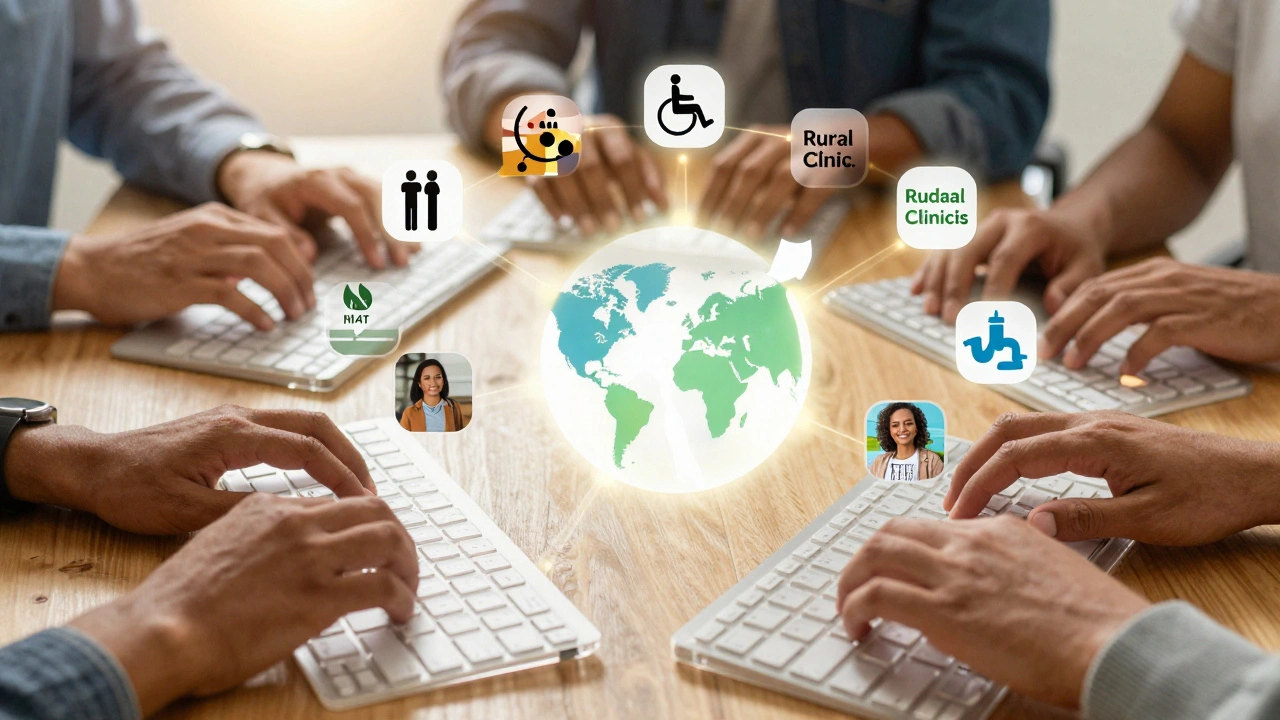
Wikipedia isn’t just a static archive of facts-it’s a living network of volunteers who constantly reshape what gets covered, how it’s covered, and who gets to decide. On January 1, 2025, six new WikiProjects officially launched, each targeting gaps that have lingered for years. These aren’t minor tweaks. They’re structured efforts to fix systemic blind spots in one of the world’s most visited reference sites.
What Is a WikiProject?
A WikiProject is a team of Wikipedia editors who come together around a shared interest. They don’t write articles alone-they coordinate, set standards, review each other’s work, and push for better coverage in underrepresented areas. Think of them as specialized task forces inside Wikipedia’s volunteer army.
Some WikiProjects have been around since the early 2000s, like WikiProject Medicine or WikiProject History. Others, like the new ones launched in 2025, respond to real-world needs. These aren’t created because someone thought it’d be cool-they’re born from data. Wikipedia’s own analytics show that articles on Indigenous languages, disability history, and rural healthcare in low-income countries are either missing, outdated, or written by outsiders with little lived experience.
New WikiProject: Indigenous Languages of the Americas
This project started after a 2024 audit found that 78% of Indigenous languages spoken in North and South America had no Wikipedia article at all. Even when articles existed, many were written in English, using colonial terminology, and lacked input from native speakers.
The new project has 1,200 active contributors, including fluent speakers of Navajo, Quechua, and Mi’kmaq. Their goal? To create articles in the original languages first, then provide translations. They’ve already published 32 articles in Ojibwe, a language with fewer than 10,000 speakers worldwide. One article, on traditional Anishinaabe medicinal plants, was co-written with elders from the White Earth Nation and includes audio recordings of pronunciation.
This isn’t just about adding content. It’s about correcting centuries of erasure.
New WikiProject: Disability History and Culture
Before 2025, Wikipedia had over 1,500 articles on famous people with disabilities-but only 12% were written by disabled editors. Most focused on medical diagnoses, not lived experience.
The new project changed that. It now requires all articles on disability to include: a section on community perspectives, a list of key activists or organizations, and links to primary sources like oral histories or personal blogs. They’ve added over 200 new articles in six months, covering topics like the 1977 Section 504 sit-ins, Deaf theater in Brazil, and adaptive sports in Nigeria.
One article on the history of sign language suppression in U.S. schools was cited by the National Association of the Deaf in their official educational toolkit. That’s the kind of impact this project was built for.
New WikiProject: Rural Healthcare Systems
Wikipedia has detailed pages on cutting-edge cancer treatments in Tokyo or neurosurgery in Boston. But if you searched for "rural health clinics in Malawi" or "telemedicine in Appalachia," you’d get fragmented, outdated, or vague entries.
The new Rural Healthcare Systems WikiProject is fixing that. Contributors include public health nurses, village health workers, and researchers from 34 countries. They’re building standardized templates so every clinic entry includes: number of staff, common diseases treated, availability of medicines, transportation access, and patient wait times.
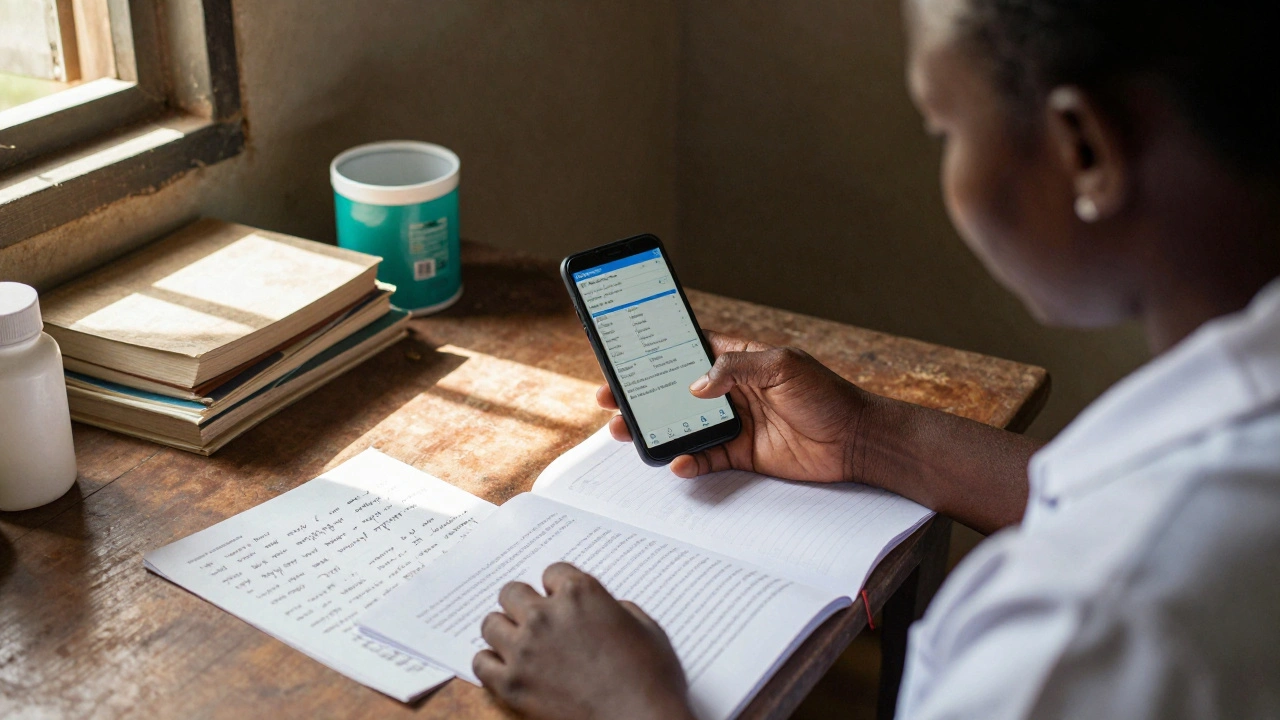
One article on the only functioning clinic in the Tana River District of Kenya was updated weekly for three months by a local nurse who used her phone to take photos of medicine stock logs and share them with editors. That level of detail was unheard of before.
New WikiProject: Climate Migration in the Global South
Climate change isn’t just about rising sea levels-it’s about people being forced to move. But Wikipedia barely covered internal displacement caused by drought, flooding, or crop failure in places like Bangladesh, the Sahel, or Central America.
This project now tracks 87 distinct migration corridors. Contributors use satellite data, UNHCR reports, and interviews with displaced families to build maps and timelines. They’ve created articles on how farmers in northern Nigeria are adapting to desertification, or how families in coastal Peru are relocating to urban slums after repeated floods.
Each article includes a "Sources and Voices" section that credits local journalists, NGOs, and community leaders-not just international agencies. It’s a direct challenge to the bias that makes the Global North the default lens for global issues.
New WikiProject: Women in STEM from Non-OECD Countries
Wikipedia’s coverage of women scientists is still dominated by names like Marie Curie, Rosalind Franklin, and Jane Goodall. But what about Dr. Amina Mohammed, who developed a low-cost water purification system in rural Uganda? Or Dr. Lina Chen, who led the first all-female team to map seismic risks in Laos?
This project is building biographies for women in science and tech from countries that aren’t part of the OECD. So far, they’ve added 417 new profiles, with over 60% written by women from those same regions. They also require that each article include: education path, barriers faced, funding sources, and current projects.
One article on a Kenyan engineer who designed solar-powered irrigation for small farms was translated into Swahili and shared in 12 rural schools. Teachers now use it in class.
New WikiProject: Forgotten Local Histories
Every town has stories that never made it into textbooks. A labor strike in 1923 in a small Ohio town. A women’s cooperative in 1978 in a village in Kerala. A protest against a dam in 1991 in the Philippines.
This project encourages editors to document local events that didn’t make national headlines but shaped communities. It’s not about fame-it’s about memory.
They’ve created a simple tool that lets users upload scanned photos, oral histories, or newspaper clippings directly into Wikipedia’s archive. Over 800 local history articles have been added since launch, many with photos donated by families who never thought their stories mattered.
Why This Matters
Wikipedia is often called the encyclopedia everyone can edit. But for years, it’s been shaped mostly by a narrow group: urban, educated, English-speaking men from Western countries. These new WikiProjects are changing that.
They’re not just adding content. They’re changing who gets to decide what’s important. They’re bringing in voices that were silenced, ignored, or erased. And they’re doing it without funding, without staff, without permission-just by showing up, every day, to write, edit, and argue for better representation.
If you’ve ever looked up a topic on Wikipedia and felt like something was missing, now you know why. And now you know there’s a team working to fix it.
How to Get Involved
You don’t need to be a historian, scientist, or expert to help. All you need is curiosity and a willingness to listen.
- Visit Wikipedia:WikiProject to see all active projects
- Join one that matches your interest or background
- Start by editing one article-fix a broken link, add a citation, improve a section
- Ask questions in the project talk page. Most are welcoming to newcomers
- If you speak a minority language, consider helping translate or create content in your language
Wikipedia doesn’t need more experts. It needs more people who care enough to show up.
How do I find out which WikiProjects are active?
You can browse all active WikiProjects at Wikipedia:WikiProject. Each project has a main page with goals, guidelines, and a list of current tasks. You can also search by topic-like "disability" or "Indigenous"-to find projects that match your interests.
Do I need to be an expert to join a WikiProject?
No. Most WikiProjects welcome beginners. You don’t need a PhD to help. Simple tasks like fixing typos, adding references from reliable sources, or improving formatting are just as valuable as writing long articles. Many projects have "beginner-friendly" tasks listed on their talk pages.
Can I start my own WikiProject?
Yes, but it takes effort. You need at least five active editors who agree on the scope, and you must demonstrate there’s a real gap in coverage. Proposals are reviewed on Wikipedia’s WikiProject Council page. The new projects launched in 2025 all went through this process-some took over a year to get approval.
Why do some articles get deleted even if they’re true?
Wikipedia doesn’t delete articles because they’re false-it deletes them because they don’t meet its notability guidelines. A person or event must have been covered in multiple independent, reliable sources. A blog post or social media post doesn’t count. This keeps the encyclopedia from becoming a directory of personal stories, but it’s also why many underrepresented voices struggle to get coverage-because mainstream media ignores them.
Are these new projects changing how Wikipedia works overall?
Yes. These projects are pushing Wikipedia to rethink what counts as "important." They’re forcing the community to ask: Who gets to decide what’s notable? Why are some stories easy to find and others nearly invisible? Their success is slowly shifting the culture from one that favors fame and power to one that values depth, diversity, and lived experience.