Wikipedia thrives on collaboration. Thousands of volunteers edit articles, debate changes, and build consensus - all within the wiki. But what happens when that collaboration spills outside the site? When editors start talking about edits on Reddit, Discord, email chains, or private Facebook groups? That’s off-wiki canvassing. And it’s one of the most quietly destructive forces in Wikipedia’s history.
What Is Off-Wiki Canvassing?
Off-wiki canvassing means contacting people outside Wikipedia to influence editing decisions. It’s not just chatting with a friend. It’s systematically reaching out to others - asking them to support your edit, vote in an RfC, or oppose a rival editor. The goal? To tip the balance of consensus in your favor.
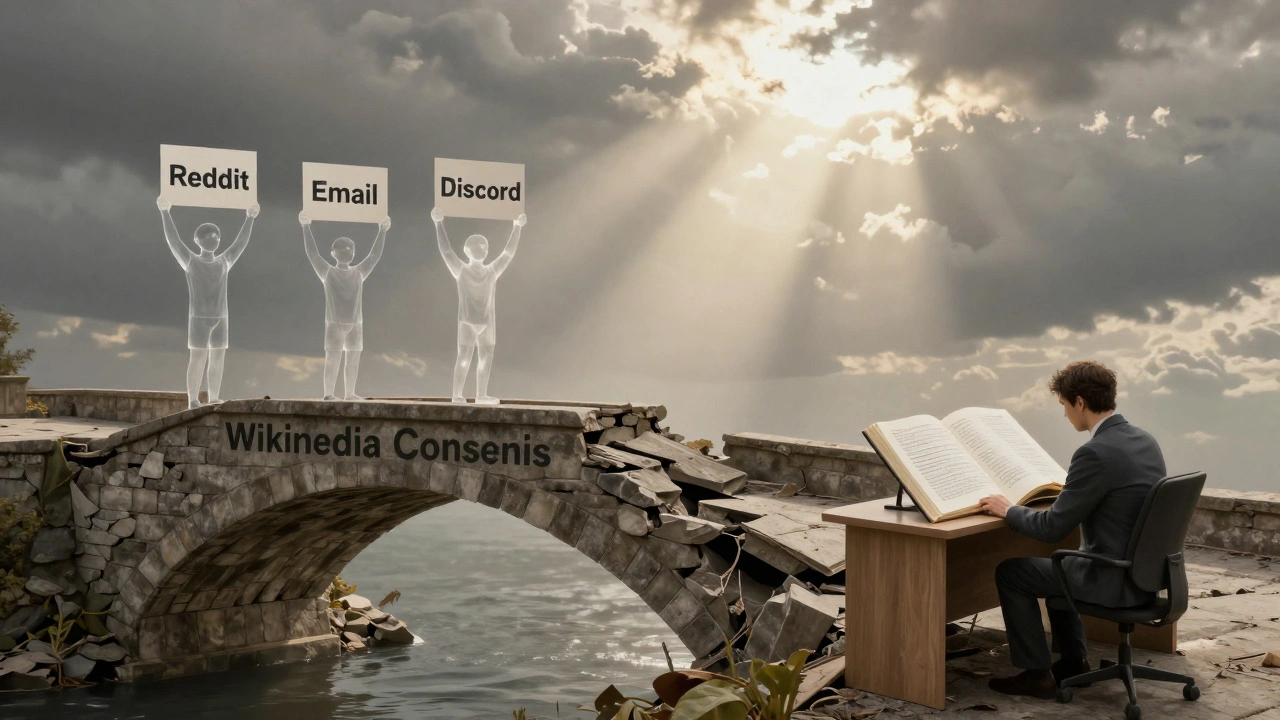
Wikipedia’s policies are clear: consensus must be built on discussion within the project. Wikipedia:Consensus is a core policy that requires decisions to emerge from open, transparent, and project-based dialogue. When someone emails 20 editors to ask them to back their version of a biography, or creates a Reddit thread titled "Help me win this edit war on Wikipedia," they’re breaking that rule.
It’s not always obvious. A well-meaning editor might share a draft with a colleague for feedback. That’s fine. But if that colleague then shows up on Wikipedia to vote, without disclosing their outside involvement? That’s a problem. The system can’t function if votes are bought, not earned.
How Off-Wiki Canvassing Undermines Consensus
Consensus on Wikipedia isn’t about who shouts loudest. It’s about who builds the most convincing argument based on evidence, policy, and neutral tone. Off-wiki canvassing distorts that process.
- It turns discussion into a numbers game. Instead of persuading editors through logic, you recruit allies from outside.
- It hides bias. If 15 editors suddenly vote the same way after a private Slack group meeting, it looks like broad agreement - but it’s manufactured.
- It erodes trust. Editors start wondering: "Is this person really representing the community, or are they part of a coordinated campaign?"
Take the 2021 controversy around the article on Climate Change in the Arctic. One editor, frustrated with repeated reverts, started a private Telegram group with 12 other users. They coordinated edits, shared talking points, and then flooded the article’s talk page with nearly identical comments. The result? A 72-hour edit war. The dispute didn’t end because of better evidence - it ended because administrators traced the pattern and shut it down.
That’s not consensus. That’s collusion.
Common Forms of Off-Wiki Canvassing
It’s not just one tactic. Off-wiki canvassing shows up in many forms:
- Email campaigns - Sending bulk emails to editors with a "please support this edit" message.
- Private messaging networks - Using Discord, Signal, or WhatsApp to organize voting blocs.
- Social media manipulation - Posting about Wikipedia edits on Twitter or Mastodon to rally followers.
- External forums - Creating threads on Reddit, Stack Exchange, or niche forums to drum up support.
- Professional or institutional lobbying - Organizations like PR firms, universities, or advocacy groups directing staff to edit Wikipedia under false pretenses.
Some of these are harder to detect. A university researcher might quietly ask a grad student to "fix" a citation. A nonprofit might train volunteers to "improve" articles about their cause. These aren’t always malicious - but they’re still off-wiki influence.
Why It’s Hard to Catch
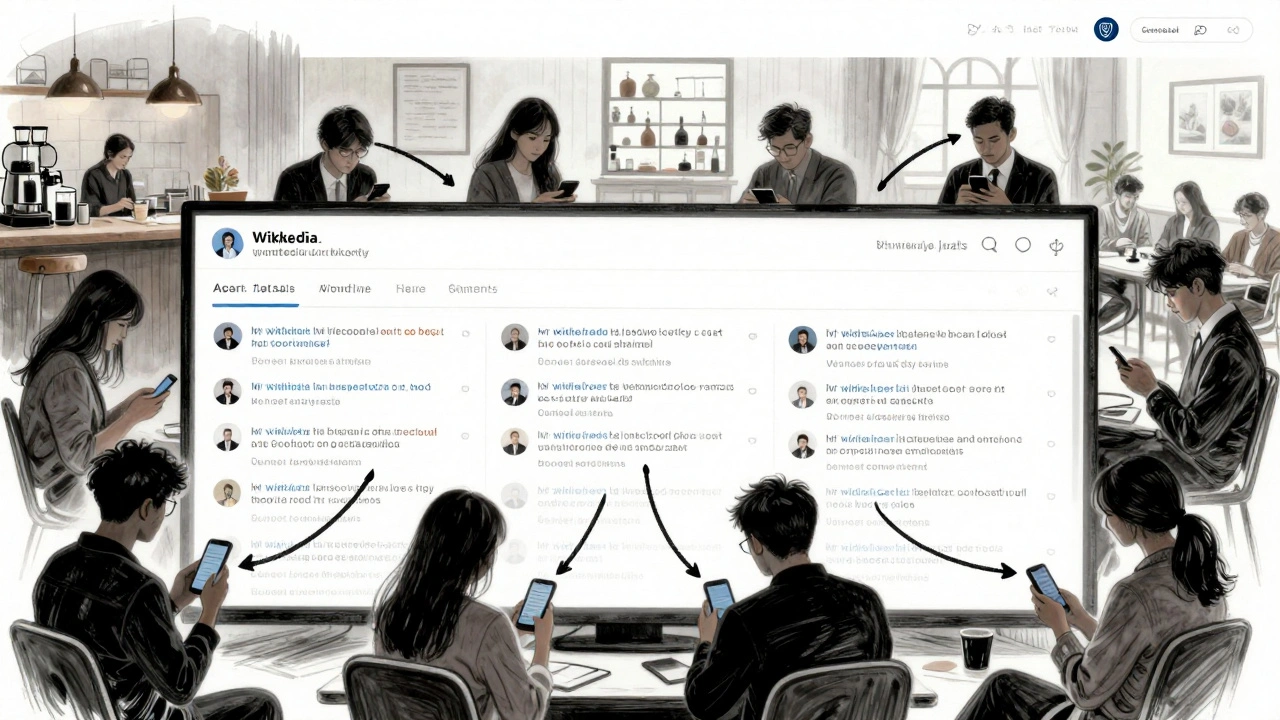
Wikipedia has no central surveillance system. There’s no AI that flags every email sent to an editor. Detecting off-wiki canvassing relies on human intuition and pattern recognition.
Administrators look for:
- Multiple accounts with identical language or timing
- Editors who never edited before suddenly showing up to vote
- Comments that mirror external forum posts word-for-word
- Patterns of "support" that cluster around a single topic
In 2023, a study of 1,200 closed RfCs found that 17% showed signs of off-wiki coordination. The most common red flag? Editors who joined Wikipedia less than 30 days before weighing in - and all voted identically.
And here’s the kicker: most of these editors don’t even realize they’re breaking the rules. They think they’re "helping." That’s why education matters more than punishment.
The Ripple Effect on Wikipedia’s Culture
Off-wiki canvassing doesn’t just affect one article. It poisons the entire community.
Regular editors - the ones who show up every day to fix typos, update stats, and cite sources - start to feel like outsiders. They see the same few voices dominating discussions, not because they’re right, but because they’ve got a network. That drives people away.
Wikipedia’s strength has always been its openness. But when editors suspect the system is rigged, they stop participating. The 2024 Wikipedia Community Health Survey found that 41% of inactive editors cited "perceived manipulation" as a reason they left. That’s not just a number. It’s a slow erosion of trust.
And when trust breaks down, so does neutrality. If every controversial topic becomes a battleground for off-wiki campaigns, Wikipedia becomes less about knowledge - and more about who can mobilize the most allies.
What’s Being Done About It?
Wikipedia’s community has responded. The Wikipedia:Off-wiki canvassing is a policy that explicitly bans coordinated editing efforts outside the project. It’s been updated several times since 2018, with clearer examples and enforcement guidelines.
Administrators now have a toolkit:
- Checkuser tools to trace IP patterns
- Global blocks for repeat offenders
- Template warnings for suspected canvassing
- Public case logs so others can learn from past incidents
But tools alone aren’t enough. The real fix is culture. More editors need to know: if you’re not talking about it here, you shouldn’t be influencing it at all.
Some projects, like the English Wikipedia Arbitration Committee, now require parties in disputes to disclose any external communication. That’s a step forward. Transparency is the antidote.
What You Can Do
If you edit Wikipedia:
- Never ask someone outside Wikipedia to support your edit.
- If you’re contacted by someone outside the site about an edit, report it - don’t ignore it.
- When you see identical comments from new editors, ask: "Did they just find this article, or were they told what to say?"
- Stick to talk pages. If it’s not on Wikipedia, it doesn’t count toward consensus.
And if you’re part of an organization that uses Wikipedia? Train your team. Teach them that Wikipedia isn’t a PR channel. It’s a collaborative encyclopedia. And its integrity depends on every editor playing fair.
Is it off-wiki canvassing if I talk to a friend about a Wikipedia edit?
It depends. If you’re just asking for feedback - "What do you think of this edit?" - that’s fine. But if you ask them to go to Wikipedia and vote, or if you coordinate your edits with them outside the site, that’s canvassing. The line is action: if your friend shows up on Wikipedia to support your position after a private chat, it’s a violation.
Can I share Wikipedia edits on social media?
You can share edits as news - like "I fixed a major error in the Mars rover article" - but you can’t say, "Help me win this edit war" or "Vote for my version." Social media posts that call for support on Wikipedia are considered canvassing. The community doesn’t want viral campaigns; it wants thoughtful discussion.
What happens if I’m accused of off-wiki canvassing?
You’ll likely get a warning. If it’s your first offense and you cooperate, you’ll probably just be asked to stop. Repeat offenses can lead to temporary blocks - sometimes up to a year. In extreme cases, where there’s clear coordination with organizations or bots, editors can be permanently banned. The goal isn’t to punish, but to protect the integrity of consensus.
Do organizations get special treatment for off-wiki canvassing?
No. In fact, organizations are under more scrutiny. When a company, university, or NGO directs staff to edit Wikipedia, it’s seen as a serious breach. The Wikipedia:Conflict of interest is a policy that requires disclosure of paid or institutional editing. If they hide their affiliation and coordinate edits, they’re violating multiple policies at once.
How can I tell if a comment is from off-wiki coordination?
Look for these signs: identical phrasing across multiple users, sudden influx of new accounts voting on one topic, comments that mirror a Reddit thread or blog post, or editors who never edited before but all support the same side. If it feels like a campaign, not a conversation - it probably is.
Final Thought: Consensus Must Be Built, Not Bought
Wikipedia isn’t a democracy. It’s not even a majority vote. It’s a conversation - messy, slow, and sometimes frustrating - where the best argument wins. Off-wiki canvassing turns that into a popularity contest. And once that happens, the encyclopedia loses its soul.
The solution isn’t more rules. It’s more awareness. Every editor who chooses to stay on-wiki - who lets the discussion unfold where it belongs - is helping preserve the integrity of knowledge itself.