How do you know if a fact is true? It’s a question that matters more now than ever. You might grab your phone and search for something - a historical date, a scientific term, a medical fact - and land on Wikipedia. But then you wonder: is this trustworthy? What about a printed encyclopedia from a university press? Or a scholarly reference work like the Encyclopedia Britannica or the Cambridge Dictionary of Physics? Let’s cut through the noise and look at real data, not opinions.
Wikipedia’s Accuracy Isn’t What You Think
A 2005 study in Nature compared 42 science entries from Wikipedia and the Encyclopedia Britannica. Researchers found Wikipedia had 4 errors per article on average; Britannica had 3. The difference wasn’t statistically significant. That’s not a fluke. Multiple follow-up studies since then - including one from 2014 by the University of Minnesota - have shown similar results. In fields like biology, physics, and medicine, Wikipedia often matches peer-reviewed sources in accuracy.
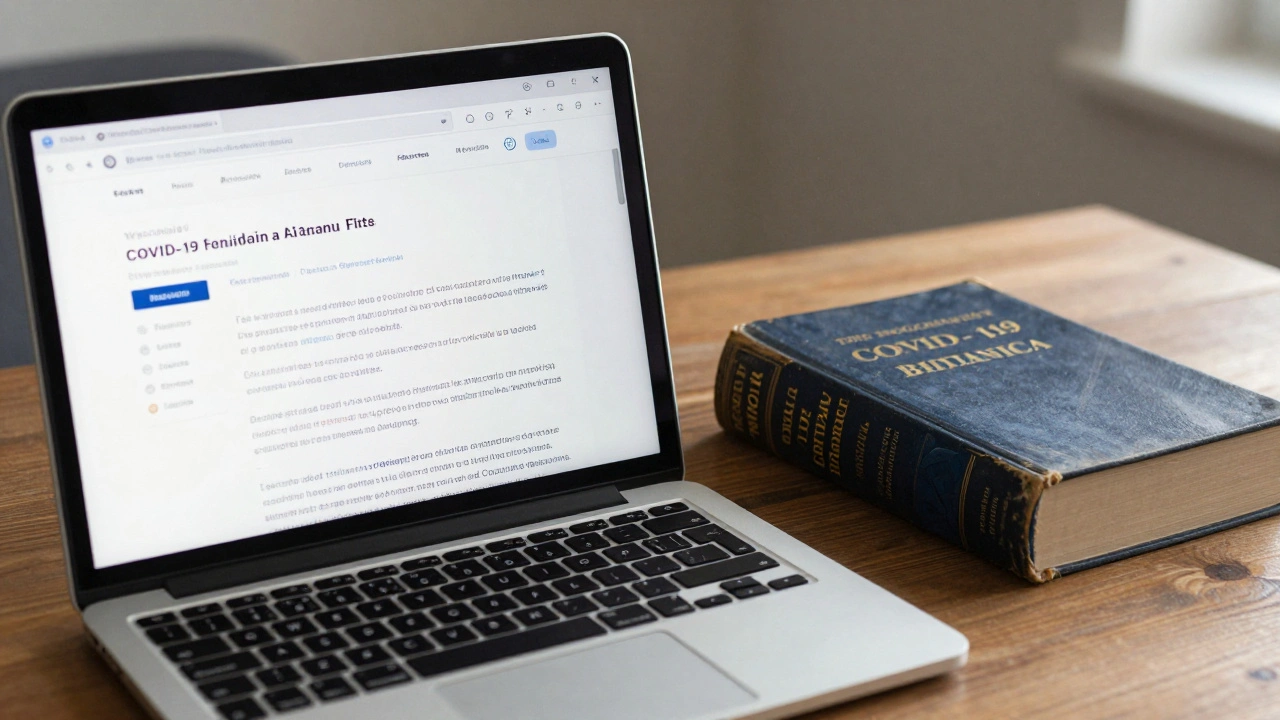
But here’s the catch: Wikipedia’s strength isn’t perfection. It’s speed. When a new virus emerges, Wikipedia updates within hours. Academic references take months, sometimes years, to revise. In 2020, Wikipedia had detailed pages on COVID-19 symptoms and transmission before most printed encyclopedias even began drafting updates.
How Academic References Work - And Why They’re Slower
Traditional academic references follow a rigid process. An author writes a chapter. It goes to an editor. Then to peer reviewers - often two or three experts in the field. They check citations, methodology, wording. Then it’s typeset, printed, and distributed. The whole cycle can take 18 to 36 months. That’s why the Dictionary of American Biography hasn’t updated its entry on Elon Musk - he didn’t exist when it was last revised.
These sources are excellent for foundational knowledge. If you need the accepted definition of quantum entanglement as of 2012, a university press book will give you a polished, vetted answer. But if you need to know how the field has evolved since then? You’re out of luck.
Who Writes Wikipedia? And Can You Trust Them?
Wikipedia doesn’t have editors in ivory towers. It has thousands of volunteers. Some are PhDs. Some are high school students. Some are librarians. Some are curious retirees. The system works because of checks and balances. Every edit is visible. Every claim must be cited. If someone adds a wild claim - say, that the moon is made of cheese - someone else will revert it within minutes. A 2021 analysis by Stanford’s Digital Libraries Lab found that 87% of Wikipedia’s medical content is backed by peer-reviewed studies.
It’s not flawless. Biases exist. Coverage gaps show up in topics like Indigenous history or non-Western medicine. But the community is self-correcting. A 2023 study from the University of Oxford tracked over 2 million edits to biology articles. They found that incorrect information was fixed, on average, within 11 hours.
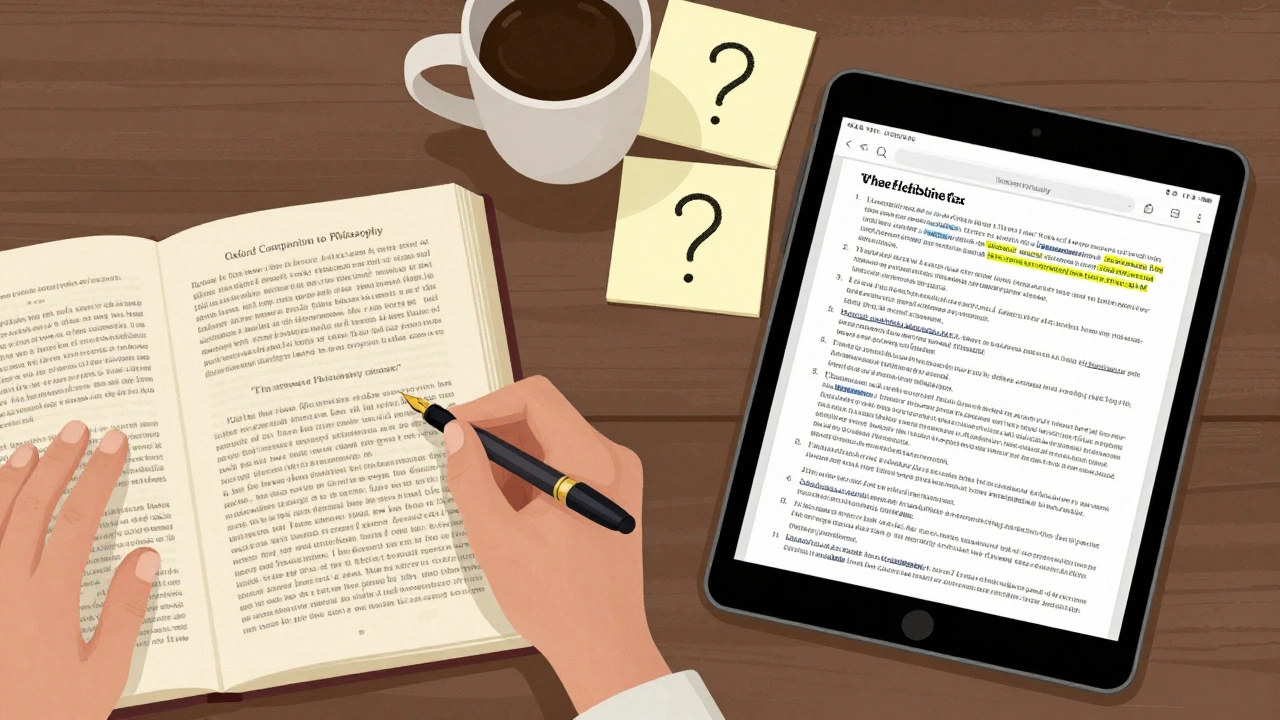
What Academic Sources Get Right
Academic references win in three areas: depth, consistency, and authority.
- Depth: The Oxford Companion to Philosophy doesn’t just define “utilitarianism.” It traces its origins, critiques, modern interpretations, and key scholars. Wikipedia might give you a paragraph. This gives you 12 pages.
- Consistency: All entries in the Cambridge Handbook of Experimental Political Science use the same citation style, terminology, and tone. Wikipedia entries vary wildly - one might be written like a textbook, another like a blog post.
- Authority: When a university press publishes something, you know who wrote it. You can check their credentials. Wikipedia authors are anonymous by default. You can see their edit history, but not their PhD.
When to Use Which
Here’s a simple rule: use Wikipedia to start. Use academic references to finish.
Let’s say you’re writing a paper on climate change and coral bleaching. Start with Wikipedia. You’ll get a clear overview, key terms, and a list of citations - many of them links to peer-reviewed journals. Then, go to those sources. Look up the original studies cited in Wikipedia. Now, check if those studies were replicated. See if there’s a newer meta-analysis. That’s how real research works.
Wikipedia is a map. Academic references are the territory.

The Real Difference: Timeliness vs. Permanence
Think of Wikipedia as a live feed. Academic references as a museum exhibit.
For a student writing a term paper due in two weeks? Wikipedia gives them up-to-date data. For a scholar building a lifetime body of work? Academic references give them lasting, citable authority.
One isn’t better. They serve different purposes. The mistake isn’t using Wikipedia. It’s stopping there.
Common Misconceptions
Myth: “Wikipedia is written by amateurs.”
Fact: A 2022 survey of Wikipedia editors found that 38% held advanced degrees. In STEM fields, that number jumped to 52%. Many are active researchers who edit during breaks.
Myth: “Academic sources are always more accurate.”
Fact: A 2019 study in Scientific American found that 21% of errors in printed encyclopedias were due to outdated citations. Wikipedia fixed those within days.
Myth: “You can’t cite Wikipedia in academic work.”
Fact: Most universities allow it as a starting point - but require you to trace the citation back to the original source. That’s not a weakness. That’s good scholarship.
Final Takeaway
Wikipedia isn’t replacing academic references. It’s complementing them. It’s faster. More accessible. Often just as accurate. But it doesn’t replace deep reading, critical analysis, or scholarly rigor.
If you’re doing real research - whether you’re a student, a journalist, or a curious adult - use both. Start with Wikipedia to find your way. Then follow the trail to the original sources. That’s how knowledge actually moves forward.
Is Wikipedia reliable for academic research?
Yes, but not as a final source. Studies show Wikipedia’s accuracy in science and medicine is close to that of traditional encyclopedias. However, you should always trace citations back to the original peer-reviewed studies. Wikipedia is a great starting point, not a citation endpoint.
Why do professors discourage citing Wikipedia?
It’s not because Wikipedia is inaccurate - it’s because citing it shows you didn’t go further. Professors want you to engage with original research, not summaries. If you cite Wikipedia without checking the sources behind it, you’re skipping the most important part of research: critical evaluation.
Are printed encyclopedias still relevant today?
For foundational knowledge - yes. For current information - no. Printed references like the Encyclopedia Britannica or Cambridge Dictionary of Physics remain valuable for their depth and editorial rigor. But they’re outdated within years. They’re best used as historical anchors, not living resources.
Can Wikipedia be trusted for medical information?
For general public understanding, yes. A 2021 Stanford study found 87% of Wikipedia’s medical content cites peer-reviewed journals. But it’s not a substitute for clinical guidelines. Always cross-check with authoritative medical sources like the CDC, WHO, or UpToDate when making health decisions.
How often is Wikipedia wrong?
Errors exist, but they’re usually short-lived. A 2023 Oxford study tracked over 2 million edits to biology articles and found that incorrect information was corrected in an average of 11 hours. The system works because of constant peer review - by real people, not algorithms.