Wikipedia gets cited like a newspaper. People link to it in emails, quote it in presentations, and treat it like the go-to source for what’s happening right now. But here’s the truth: Wikipedia is not a news organization. It doesn’t break stories. It doesn’t chase deadlines. It doesn’t cover breaking events the way a newsroom does. And if you treat it like one, you’re going to get burned.
How News Works vs. How Wikipedia Works
News organizations are built for speed. They report on events as they unfold. A fire in downtown Chicago? A reporter is on the scene in minutes. A political scandal breaks? The headline goes up before lunch. The goal is timeliness - being first, being relevant, being alive to the moment.
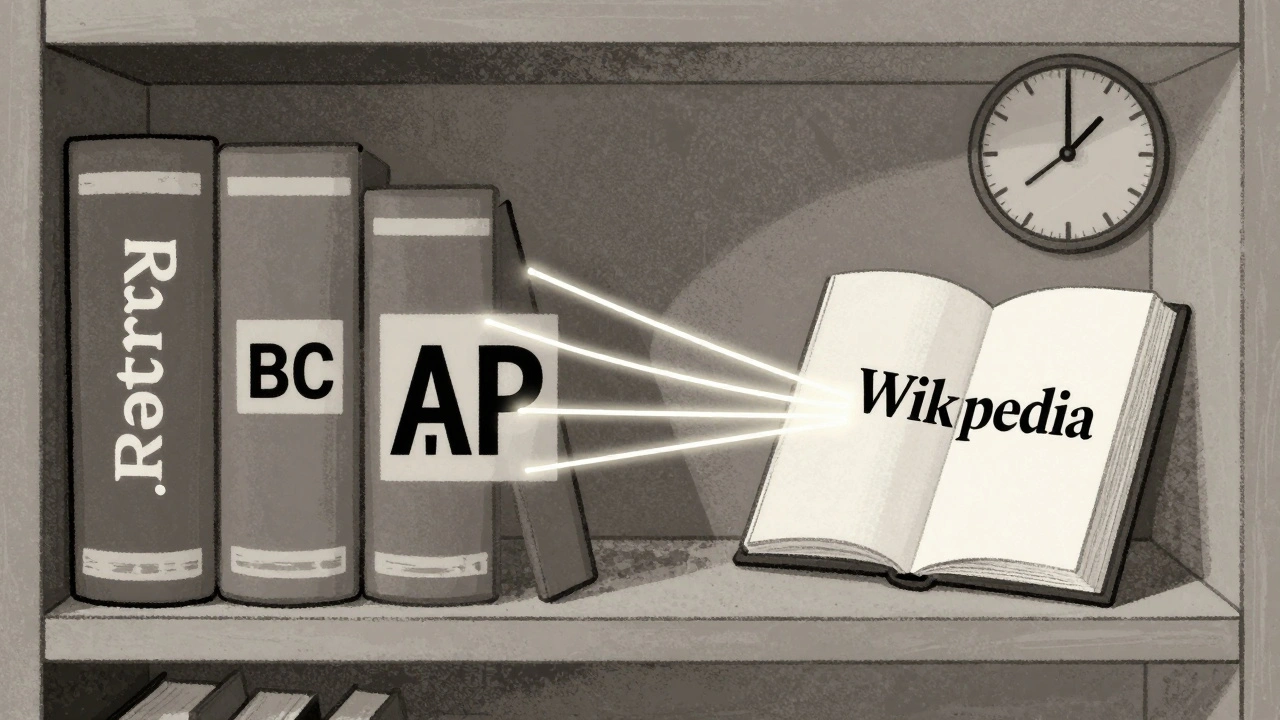
Wikipedia? It’s the opposite. It waits. It watches. It verifies. A major event - say, a presidential resignation or a space launch - doesn’t show up on Wikipedia until days, sometimes weeks, after it happens. Why? Because Wikipedia needs reliable sources that have already covered it. Not one tweet. Not one blog post. Not even one news article. It needs multiple independent, published sources that agree on the facts.
That’s not laziness. That’s philosophy. Wikipedia’s core rule - verifiability - means every claim must be backed by something that already exists outside Wikipedia. News outlets create those sources. Wikipedia just collects them.
Why Wikipedia Can’t Cover Breaking News
Let’s say a major earthquake hits Tokyo. Within an hour, news sites are posting updates: death tolls, rescue efforts, aftershock warnings. You might think, "Wikipedia should update too." But here’s what happens on Wikipedia instead:
- Someone adds a sentence: "An earthquake struck Tokyo on February 12, 2026."
- Another editor checks: Is this confirmed by the Japanese Meteorological Agency? By Reuters? By the BBC?
- One source isn’t enough. Two? Still not enough. Three independent, authoritative reports? Now we’re talking.
- Meanwhile, the death toll keeps changing. The news reports 50. Then 72. Then 68. Wikipedia won’t lock in a number until the sources stop changing.
By the time Wikipedia updates, the news has already moved on. That’s not a flaw - it’s the point. Wikipedia isn’t trying to be first. It’s trying to be right. And it’s willing to wait months for certainty.
The Editorial Culture: No Opinions, No Urgency
Newsrooms thrive on narrative. A story isn’t just facts - it’s context, emotion, consequence. "The president’s resignation shocked the nation," "families are left without homes," "markets plunged." These aren’t just descriptions - they’re framing.
Wikipedia bans framing. It doesn’t say "shocked," "left without homes," or "plunged." It says: "The president resigned on February 11, 2026. The stock market closed down 2.3%. Over 12,000 homes lost power."
Wikipedia editors don’t write opinions. They don’t choose angles. They don’t assign headlines. Their job is to summarize what reliable sources have already said - in neutral language. If a news article calls something "a historic moment," Wikipedia might just say, "This was the first time since 1998 that a sitting president resigned."
And there’s no rush. No editor is pressured to publish before the facts are solid. No breaking news alert. No live blog. No "developing story." Wikipedia doesn’t do "developing." It does "final."
What Happens When People Mistake Wikipedia for News
You’ve probably seen it. Someone posts a Wikipedia link on social media with the caption: "Breaking: [event]!" And then the comments explode - "This is fake!" "Wikipedia got it wrong!"
But Wikipedia didn’t get it wrong. It just didn’t update yet. Or maybe it updated with a number that’s now outdated because the news has moved on. That’s not a mistake - it’s how the system works.
When Wikipedia is used as a news source, it causes real confusion. Students cite it in papers as if it’s a primary source. Journalists quote it as if it’s an eyewitness. Politicians use it to prove something happened "on the internet." None of that works.
Wikipedia is a secondary source. It’s a summary of summaries. You don’t cite Wikipedia to prove something happened - you cite the original news report, government statement, or academic paper that Wikipedia itself cites.
The Real Value of Wikipedia
So if it’s not news, what’s it good for?
- It gives you the background: "What led to this event?"
- It gives you context: "How does this compare to past events?"
- It gives you sources: "Where did this information come from?"
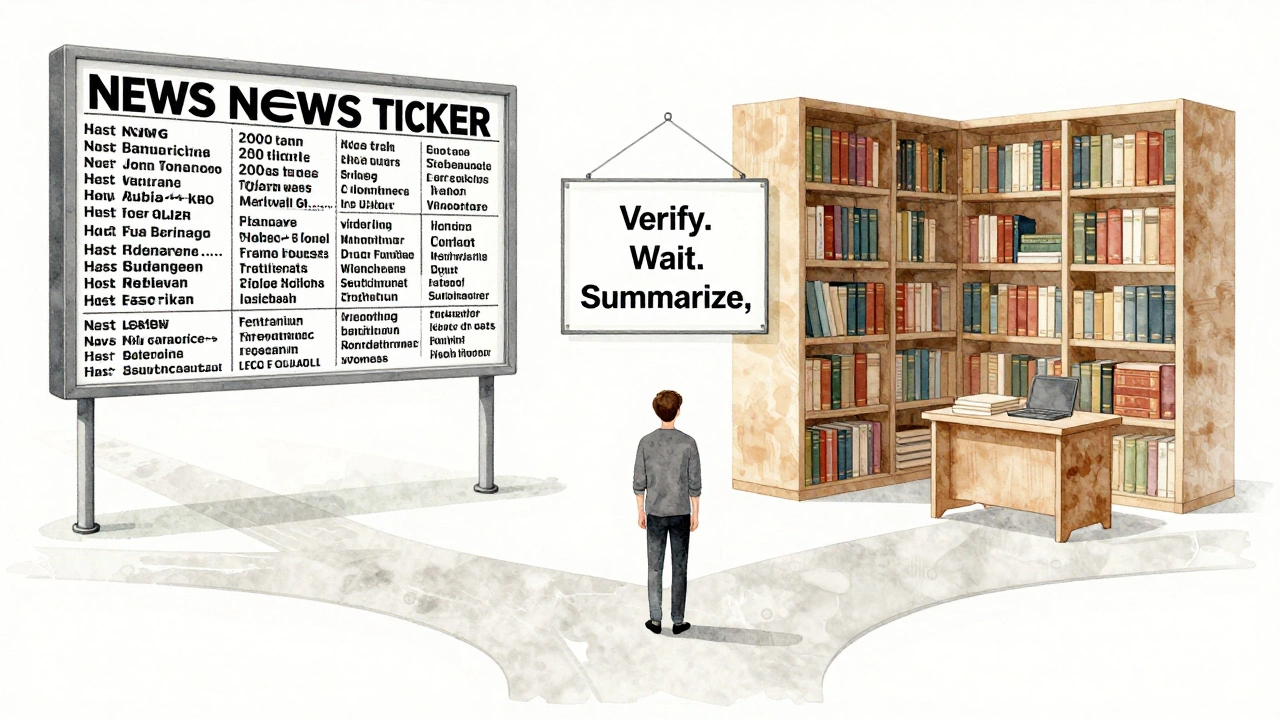
Think of it like a library catalog. If you want to understand the 2026 presidential resignation, Wikipedia won’t tell you what happened at 3 p.m. on the day it happened. But it will tell you who the president was, what their policies were, what the political climate looked like, and where to find the original news coverage.
It’s not a live feed. It’s a reference shelf. And that’s why it’s one of the most trusted sources in the world - not because it’s fast, but because it’s careful.
What to Do Instead
If you need to know what’s happening right now, go to real news outlets: Reuters, AP, BBC, local newspapers. Check their updates. Look at their sources. Follow their reporting.
If you want to understand what it means - why it matters, how it connects to history, what the long-term effects might be - then go to Wikipedia. Use it after the dust settles. Use it to dig deeper. Use it to find the original sources.
Wikipedia doesn’t replace news. It complements it. And when you understand that difference, you stop misusing it - and start using it right.
Can I use Wikipedia to fact-check breaking news?
No. Wikipedia is not designed to track breaking events in real time. By the time a breaking news story appears on Wikipedia, the event has usually been covered by multiple reliable sources - which means it’s already hours or days old. For live updates, rely on established news organizations like Reuters, AP, or major broadcast networks. Wikipedia is best used afterward, to understand context and verify the accuracy of what you read in the news.
Why does Wikipedia take so long to update?
Wikipedia requires multiple independent, reliable sources to confirm any change. This prevents misinformation from spreading. For example, if a celebrity dies, one news outlet might report it before others confirm. Wikipedia waits until at least two or three reputable outlets - like the BBC, CNN, and AP - all report the same thing. This process can take hours or days, but it ensures the information is accurate, not just fast.
Is Wikipedia biased because it doesn’t cover some events?
Wikipedia doesn’t cover every event because it doesn’t meet its own standards for notability and sourcing. If an event isn’t covered by multiple reliable, independent sources, it doesn’t get a page - not because it’s ignored, but because it lacks the documentation required for inclusion. This isn’t bias - it’s a filter. It prevents rumors, fringe claims, and unverified reports from becoming part of the encyclopedia.
Can Wikipedia be trusted for academic research?
Wikipedia is not a primary or scholarly source, so it shouldn’t be cited in academic papers. However, it’s an excellent starting point. The references at the bottom of each article often lead directly to peer-reviewed journals, books, or official reports. Use Wikipedia to find credible sources - then cite those instead.
Why do some people say Wikipedia is "wrong"?
People often call Wikipedia "wrong" when it doesn’t match their expectations - especially if they’re used to news that changes hourly. But Wikipedia doesn’t change just because something is trending. It changes only when multiple reliable sources confirm a fact. If you think Wikipedia is wrong, check the talk page and citation history. Often, what looks like an error is actually a deliberate decision based on editorial policy.