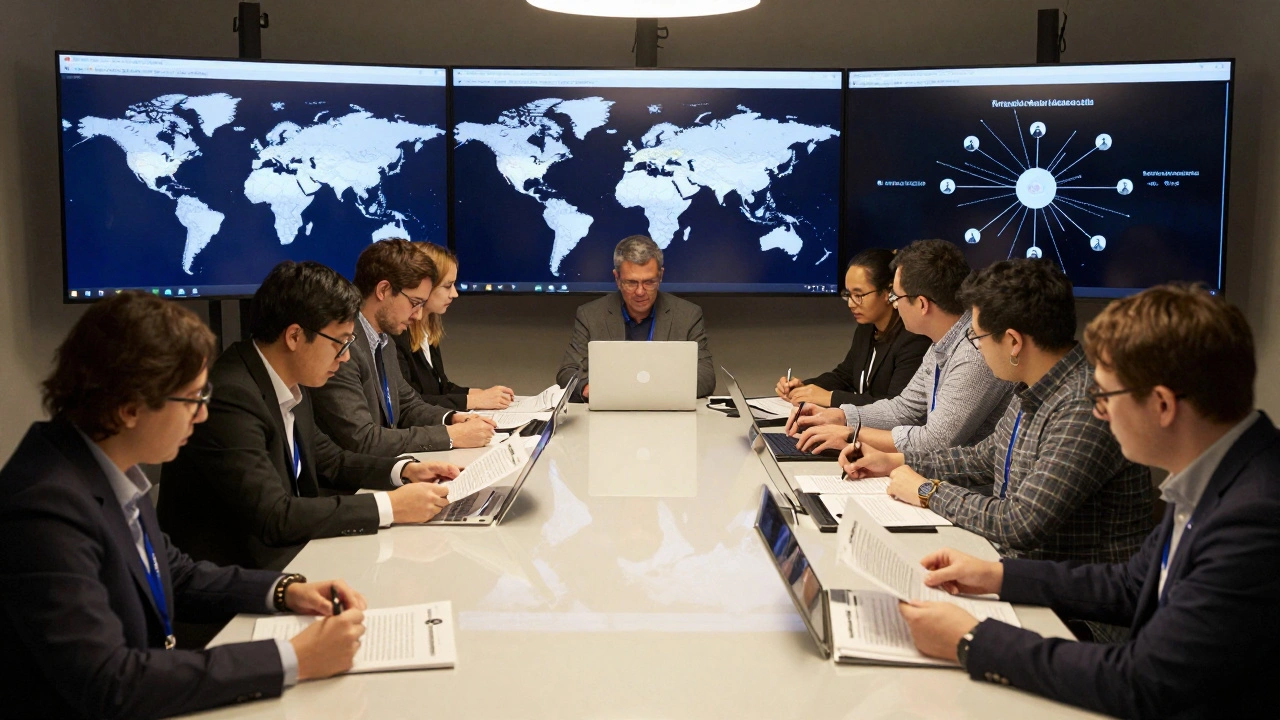
When you edit Wikipedia, you’re not just adding facts-you’re participating in a global conversation about truth, power, and who gets to decide what counts as knowledge. The Wikimedia Foundation (WMF), the nonprofit that runs Wikipedia, doesn’t write articles. But it does set the rules for how those articles are made, moderated, and protected. And over the past few years, its Trust and Safety team has become one of the most talked-about-and sometimes criticized-parts of the whole system.
What Is the Trust and Safety Team?
The Trust and Safety team at WMF isn’t a group of editors checking every edit. It’s a small, centralized unit with legal, technical, and policy expertise. Their job is to handle serious violations that local volunteer editors can’t or shouldn’t resolve alone: threats of violence, coordinated harassment campaigns, doxxing, copyright abuse on a massive scale, and manipulation by state actors.
They don’t decide whether a fact is true. They decide whether someone is being targeted, silenced, or exploited. In 2023, they handled over 12,000 reports of severe misconduct across all Wikimedia projects. That’s up 40% from 2021. The increase isn’t because Wikipedia is getting more toxic-it’s because more people are reporting abuse, and the team is getting better at tracking it.
Transparency: Why It Matters
For years, critics said WMF made decisions behind closed doors. If an editor was banned for violating the Code of Conduct, there was often no public explanation. No reasoning. No appeal process that felt fair. That eroded trust.
In 2022, WMF started publishing detailed case summaries for every major enforcement action. Not every ban, but the ones that sparked public debate. These summaries include: the violation, the evidence, the policy violated, the decision, and the reasoning. Some are short. Others are 2,000-word deep dives.
One 2023 case involved a high-profile editor who used multiple sockpuppet accounts to push a specific political narrative across dozens of articles. The team didn’t just ban them-they published the entire network of accounts, the edit patterns, and how they violated the anti-coordination policy. The post got 150,000 views in three days. Editors from Germany, India, and Brazil weighed in. Some agreed. Some didn’t. But for the first time, the public could see the logic behind the decision.
The Debate: Not Everyone Agrees
Transparency doesn’t mean consensus. In fact, it often makes things louder.
When WMF banned a well-known editor in 2023 for repeatedly targeting transgender contributors with harassment, the community split. Some called it a necessary stand for safety. Others said the evidence was thin, and the ban set a dangerous precedent. A petition with 8,000 signatures demanded a reversal. The team didn’t change the decision-but they held a live Q&A on the English Wikipedia talk page. Over 300 comments poured in. The discussion lasted 11 days.
That’s the point. WMF isn’t trying to silence debate. It’s trying to make it visible. And accountable.
How Decisions Are Made-Behind the Scenes
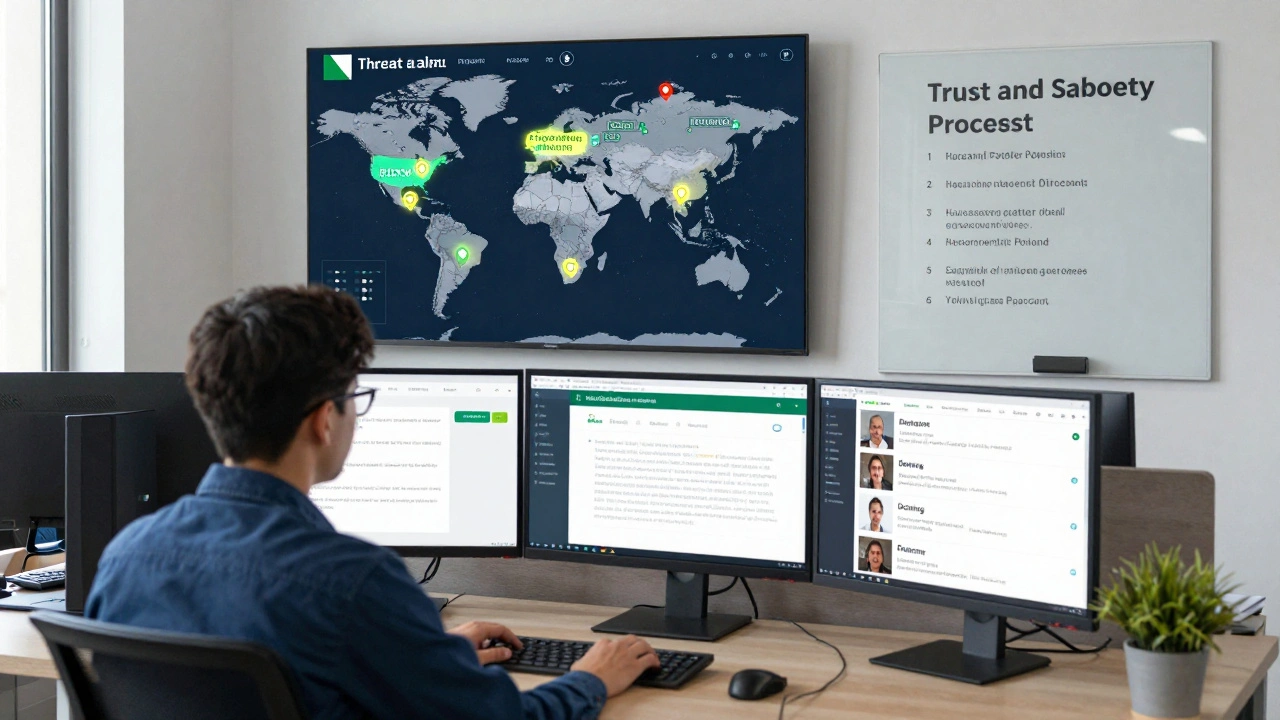
WMF doesn’t act alone. Every major Trust and Safety decision goes through a multi-step process:
- Report intake: Volunteers, users, or automated systems flag serious issues.
- Initial review: A case manager assesses urgency and severity.
- Evidence gathering: Technical tools trace edits, IP logs, account histories.
- Legal review: If laws are involved (like defamation or threats), lawyers weigh in.
- Policy alignment: The team checks if the action fits the Code of Conduct and global policies.
- Community consultation: For high-profile cases, they invite input from trusted editors worldwide.
- Decision and publication: The outcome is documented publicly.
This isn’t perfect. Sometimes it takes weeks. Sometimes the wrong person gets flagged. But the process is documented-and open to scrutiny.
What’s Changed Since 2020
Before 2020, Trust and Safety was a side project. One part-time staff member. No public reporting. No clear policy framework.
Today, it’s a team of 18 full-time staff, with regional liaisons in Latin America, Southeast Asia, and Eastern Europe. They speak 12 languages. They work with local volunteer groups to understand cultural context. A ban in Nigeria might look different than a ban in Poland-not because the rules change, but because the context does.
They also now have a Policy Review Board made up of 12 volunteer editors from six continents. They meet quarterly to review enforcement trends, suggest policy updates, and challenge WMF’s own assumptions. In 2024, they pushed for a new rule: if a user is banned for harassment, their ban must include a clear path to appeal after six months. That change came from community feedback, not top-down policy.
Where It Still Falls Short
Not everyone is convinced. Critics point to three big gaps:
- Language bias: Most case summaries are written in English. Non-English editors often don’t know about them until weeks later.
- Slow responses: In urgent cases-like threats to editors in authoritarian countries-it can take 72 hours to respond.
- Lack of appeal clarity: While appeals exist, the process isn’t always clear. Many editors don’t know how to request one.
WMF admits these are problems. They’re testing AI tools to auto-translate summaries into the top 10 most-used languages on Wikipedia. They’ve hired two new case managers focused on emergency response. And they’re redesigning the appeal portal with input from users who’ve gone through it.
Why This Matters Beyond Wikipedia
Wikipedia is the last major public space where knowledge is built by volunteers, not algorithms or advertisers. What happens here sets a precedent.
If a platform can enforce rules fairly, transparently, and with community input, it proves that large-scale cooperation isn’t impossible. If it fails, it becomes another example of top-down control disguised as neutrality.
WMF’s approach isn’t perfect. But it’s trying something radical: letting the public watch how the sausage is made. And that’s why, despite all the noise, many editors still believe in this system.
What You Can Do
You don’t need to be an admin to help. Here’s how you can contribute:
- Read the Trust and Safety case summaries. They’re posted on Meta-Wiki.
- Join the monthly Community Feedback Call. It’s open to anyone.
- Report serious violations-not just edits you disagree with.
- Help translate summaries into your language.
- Ask questions. The team answers every public comment.
Wikipedia’s future isn’t written by a CEO. It’s written by the people who show up, speak up, and demand better. And that’s the real power behind Trust and Safety.
How does WMF decide what counts as a "serious violation"?
WMF uses a five-tier severity scale. Tier 1 includes threats of violence, doxxing, and coordinated harassment. Tier 2 is large-scale vandalism or copyright abuse. Tier 3 is persistent policy violations by experienced editors. Tier 4 is minor disputes that escalate. Tier 5 is subjective disagreements. Only Tiers 1-3 trigger Trust and Safety intervention. The full scale is published on Meta-Wiki with examples.
Can I appeal a ban from WMF?
Yes. Every ban notice includes a link to the appeal portal. Appeals are reviewed by a separate team-not the same people who issued the ban. You must submit evidence and explain why you believe the decision was incorrect. Most appeals are answered within 14 days. About 18% of appeals result in modified outcomes, according to WMF’s 2024 transparency report.
Why doesn’t WMF let the community vote on bans?
Voting doesn’t work for safety issues. It turns serious harm into popularity contests. A harasser might have 500 supporters but still be violating the Code of Conduct. WMF relies on trained staff applying consistent policy-not majority rule. That’s why they consult the community-but don’t defer to it.
Do WMF staff edit Wikipedia?
No. Staff are strictly prohibited from editing articles, even to fix typos. Their role is policy enforcement and support, not content creation. This avoids conflicts of interest. Any staff who violate this rule are fired. There have been two cases since 2021.
How does WMF handle cases involving government pressure?
WMF refuses to comply with government takedown requests that violate free speech principles. In 2023, Turkey demanded the removal of a page about Kurdish history. WMF refused and published the request publicly. The page remains live. They’ve done this in at least seven countries since 2020. Their stance is documented in their public legal policy page.