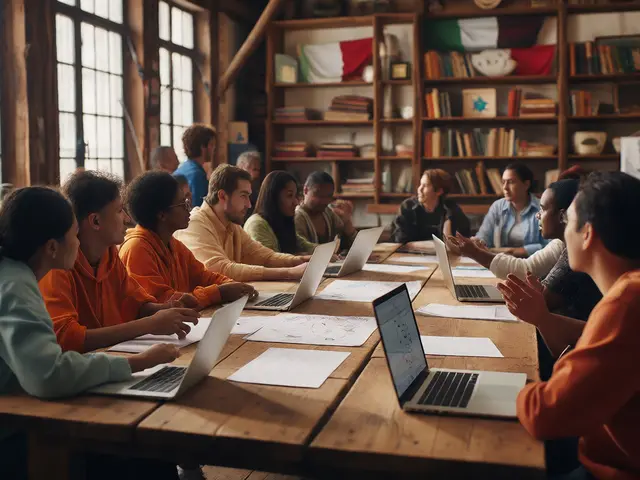
Imagine a student in a rural high school who cannot afford a $200 textbook but has a smartphone. They need to understand cellular respiration for their biology exam tomorrow. Instead of failing or skimming a blurry PDF, they turn to Wikipedia, cross-reference it with an openly licensed teaching material that explains the Krebs cycle using interactive diagrams, and actually grasp the concept. This is not a hypothetical future; it is happening right now. The gap between what students know and what they can access is closing, but only when educators actively bridge the divide between Open Educational Resources (OER) and collaborative knowledge platforms.
The core problem isn't a lack of information. It's a lack of alignment. Most teachers treat OER as standalone packets-PDFs to print or slides to project-while students treat Wikipedia as a quick fact-checker. When these two powerful tools operate in silos, students miss out on the deeper learning that happens when they see how static educational content connects to dynamic, evolving global knowledge. Integrating them requires a shift in mindset: from viewing resources as isolated inputs to seeing them as parts of a continuous learning ecosystem.
Understanding the Core Entities
To integrate effectively, you first need to clearly define what you are working with. Open Educational Resources are teaching, learning, and research materials that reside in the public domain or have been released under an intellectual property license that permits their free use and reuse. These include textbooks, lesson plans, videos, simulations, and assessments. Their defining attribute is accessibility; anyone can download, modify, and share them without permission from the original author, provided the license terms are respected.
Wikipedia, on the other hand, is a multilingual, web-based, free, self-described open encyclopedia, written collaboratively by volunteer editors around the world. While often criticized for its variable accuracy, its strength lies in its breadth and currency. Unlike a printed textbook that becomes outdated five years after publication, Wikipedia articles are updated in real-time. For example, if a new chemical compound is discovered, the Wikipedia entry for that element might be updated within hours, whereas a standard chemistry textbook would take years to reflect this change.
The third critical entity is the educational workflow where students consume, critique, and contribute to knowledge. This is the process that transforms passive reading into active learning. When a student reads an OER module on climate change and then checks the current IPCC data cited in the related Wikipedia article, they are engaging in source verification. This simple act builds critical thinking skills that no single resource can teach in isolation.
Why Siloed Learning Fails
Many educators hesitate to recommend Wikipedia because they fear students will cite unsourced claims. Many students avoid OER because they find them less "polished" than commercial textbooks. Both fears stem from a misalignment of expectations. If you give a student a rigorous OER lab manual but tell them to ignore the context of why that experiment matters in the broader scientific community, you are withholding half the story. Conversely, if you let a student rely solely on Wikipedia for a deep-dive history essay, they may miss the structured argumentation found in curated OER essays.
The friction arises because traditional education often prioritizes fixed answers, while digital collaboration prioritizes evolving consensus. Aligning these means designing assignments that require both. For instance, instead of asking "What is the capital of France?" (a question best answered by a quick search), ask "How has the administrative status of Paris changed over the last century, and how do different sources describe this transition?" This forces the student to compare the stable, verified facts in an OER history text with the nuanced, debated points in Wikipedia's talk pages.
Practical Integration Strategies
You don't need a massive budget to start integrating these tools. You just need a clear framework. Here are three concrete strategies that work in classrooms from middle school to graduate seminars:
- The Verification Loop: Start with an OER primary source or dataset. Have students identify one key claim. Then, task them with finding that same claim in a Wikipedia article. Did the numbers match? Was the context similar? If there’s a discrepancy, which source is more reliable for this specific fact, and why? This teaches students that reliability is contextual, not absolute.
- The Gap-Fill Exercise: Use an OER textbook chapter that covers a topic broadly. Ask students to find one aspect that feels under-explained. Direct them to Wikipedia to find more detail. Then, have them write a short paragraph summarizing how the Wikipedia information complements the textbook. This highlights the complementary nature of the two resources.
- The Contribution Project: For advanced students, assign a minor edit to a Wikipedia article based on a class project. If a biology class completes a simulation on protein folding, have them check if the Wikipedia article on that specific protein includes the latest structural data. If not, guide them through the process of adding a citation from a peer-reviewed paper to the article. This turns students from consumers into contributors, fostering ownership of knowledge.
These strategies work because they make the relationship between the resources explicit. Students stop seeing OER and Wikipedia as competing sources and start seeing them as different lenses for examining the same reality.
Navigating Licensing and Credibility
One of the biggest hurdles in integration is understanding licenses. Not all OER are created equal, and not all Wikipedia content is suitable for academic citation without careful checking. Creative Commons Licenses are the backbone of the OER movement. The most common is CC BY-SA (Attribution-ShareAlike). This means you can use the material freely, but you must credit the original creator and release your modifications under the same license. If you remix an OER slide deck for your class, you must keep those same freedoms for your students.
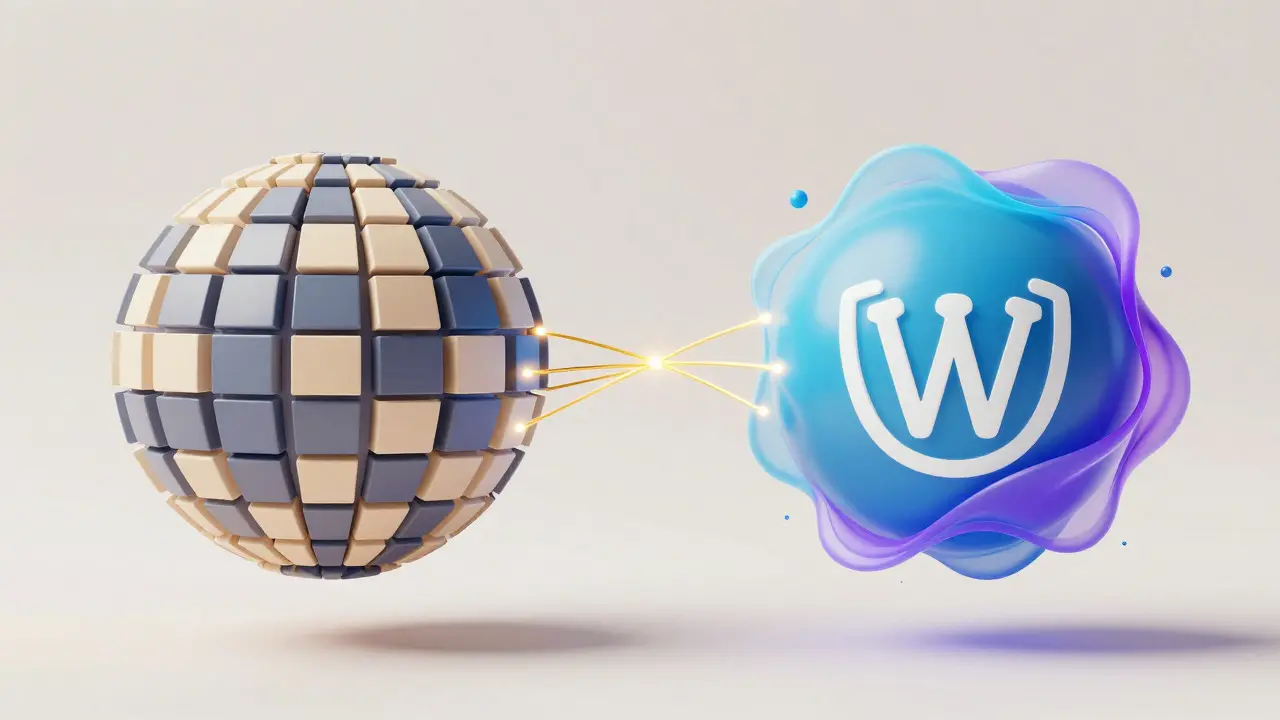
Wikipedia operates under the Creative Commons Attribution-ShareAlike License (CC BY-SA) for text and Creative Commons Attribution-ShareAlike 4.0 International (CC BY-SA 4.0) for images. This legal alignment is crucial. It means that technically, you can copy a Wikipedia paragraph into an OER document, provided you credit Wikipedia and maintain the share-alike clause. However, practical credibility is a separate issue. Always encourage students to check the "References" section of any Wikipedia article they plan to cite. If a claim lacks a reliable reference, it should be treated as a starting point for inquiry, not a final answer.
| Feature | Open Educational Resources (OER) | Wikipedia |
|---|---|---|
| Primary Purpose | Structured instruction and assessment | Broad reference and information aggregation |
| Content Stability | High (fixed versions for courses) | Low (dynamic, real-time updates) |
| Licensing Model | Varies (CC BY, CC BY-SA, Public Domain) | CC BY-SA 4.0 |
| Best For | Deep dives, skill-building, standardized testing prep | Context, current events, broad overviews, fact-checking |
| Risk Factor | Potential obsolescence if not updated | Inconsistent quality, vandalism, bias |

Common Pitfalls to Avoid
Even with good intentions, integration efforts can fail if you fall into a few common traps. The first is over-reliance on surface-level matching. If a student finds the same word in an OER and a Wikipedia article, they might assume the concepts are identical. In reality, terminology can vary significantly between disciplines. A "cell membrane" in a basic biology OER might be described differently than in a specialized biochemistry Wikipedia entry due to depth differences. Teach students to look at the structure of the argument, not just the keywords.
The second pitfall is ignoring the talk pages. On Wikipedia, the talk page is where editors discuss changes, disputes, and errors. For educators, this is a goldmine. It shows students that knowledge is contested and refined through debate. Assigning students to read a talk page for a controversial historical event helps them understand that history is not just a list of dates, but a narrative shaped by interpretation. This adds a layer of meta-cognition that pure OER consumption rarely provides.
Finally, avoid treating Wikipedia as a substitute for primary sources. Wikipedia is a tertiary source. It summarizes secondary sources, which summarize primary sources. If a student needs to analyze a historical document, they should go to the archive (an OER repository like the Library of Congress Digital Collections), not Wikipedia. Use Wikipedia to find the link to the primary source, but never cite the summary as the evidence itself.
Building a Sustainable Workflow
Integration isn't a one-time fix; it's a habit. To build a sustainable workflow, start small. Pick one unit per semester where you will explicitly pair an OER resource with a Wikipedia exploration. Create a simple rubric that evaluates how well the student synthesized information from both sources. Look for evidence that they distinguished between the instructional tone of the OER and the encyclopedic tone of Wikipedia.
Encourage students to keep a "source log." In this log, they record every OER and Wikipedia page they visit, noting what they learned from each and how the two connected. Over time, this log becomes a personal map of how they navigate complex topics. It also serves as proof of work for grading purposes, making it easier for you to assess their critical thinking process rather than just their final output.
As technology evolves, so will these tools. New AI-driven OER platforms are emerging that can dynamically generate practice problems based on a student's performance. Meanwhile, Wikipedia continues to expand its multimedia capabilities. By establishing a strong foundation of alignment now, you prepare your students for a future where the boundary between learning materials and general knowledge becomes increasingly fluid. The goal isn't to choose one over the other; it's to teach students how to dance between them.
Can I cite Wikipedia in a college paper?
Yes, but with caution. Most universities allow Wikipedia citations if used to provide background context or to locate primary sources. Always check the references section of the Wikipedia article and cite the original source if possible. Never cite Wikipedia for controversial or niche topics without verifying the information against peer-reviewed journals or official databases.
What is the difference between OER and Open Access?
Open Access typically refers to scholarly articles that are free to read online, usually published in academic journals. OER refers to teaching and learning materials (like textbooks, lectures, and worksheets) that are free to use, adapt, and redistribute. While both promote free access, OER focuses on the classroom experience, whereas Open Access focuses on the dissemination of research findings.
How do I ensure the OER I use is high quality?
Look for peer review indicators. Reputable OER repositories like OER Commons or OpenStax often have review processes. Check for clear authorship, up-to-date publication dates, and positive feedback from other educators. If the material includes a table of contents, index, and consistent formatting, it is likely to be more structured and reliable than a random blog post.
Is it ethical to copy text from Wikipedia into my OER course pack?
Generally, yes, provided you follow the Creative Commons Attribution-ShareAlike license. You must credit Wikipedia and any individual authors mentioned in the article's history. Since the license is ShareAlike, your course pack must also be released under a compatible license if you distribute it publicly. For internal classroom use, attribution is the key requirement.
How can I help students distinguish between facts and opinions in Wikipedia?
Teach them to look for neutral language. Facts are stated objectively (e.g., "The treaty was signed in 1919"), while opinions or interpretations are often marked with phrases like "Some historians argue..." or "Critics contend...". Encourage students to click on the citation links next to claims. If a claim leads to a reputable news outlet or academic journal, it is likely a fact. If it leads to a personal blog or opinion piece, it may represent a perspective rather than a consensus.