Wikipedia isn’t run by experts in ivory towers. It’s built by people like you-volunteers who care enough to fix a typo, add a citation, or rewrite a confusing paragraph. But how do you know if that edit actually makes an article better? That’s where WikiProjects come in.
What Are WikiProjects?
WikiProjects are groups of Wikipedia editors who focus on a specific topic area-like medicine, history, video games, or climate change. They don’t have official power, but they have influence. Members coordinate reviews, share resources, and set quality standards for articles in their niche. Think of them as neighborhood watch teams, but for Wikipedia content.
There are over 2,000 active WikiProjects. Some are huge-WikiProject Medicine has thousands of contributors. Others are tiny, like WikiProject Lighthouses, with just a handful of dedicated editors. Size doesn’t matter as much as consistency. A small group that meets weekly to review articles can have a bigger impact than a large one that’s inactive.
How Peer Review Works in WikiProjects
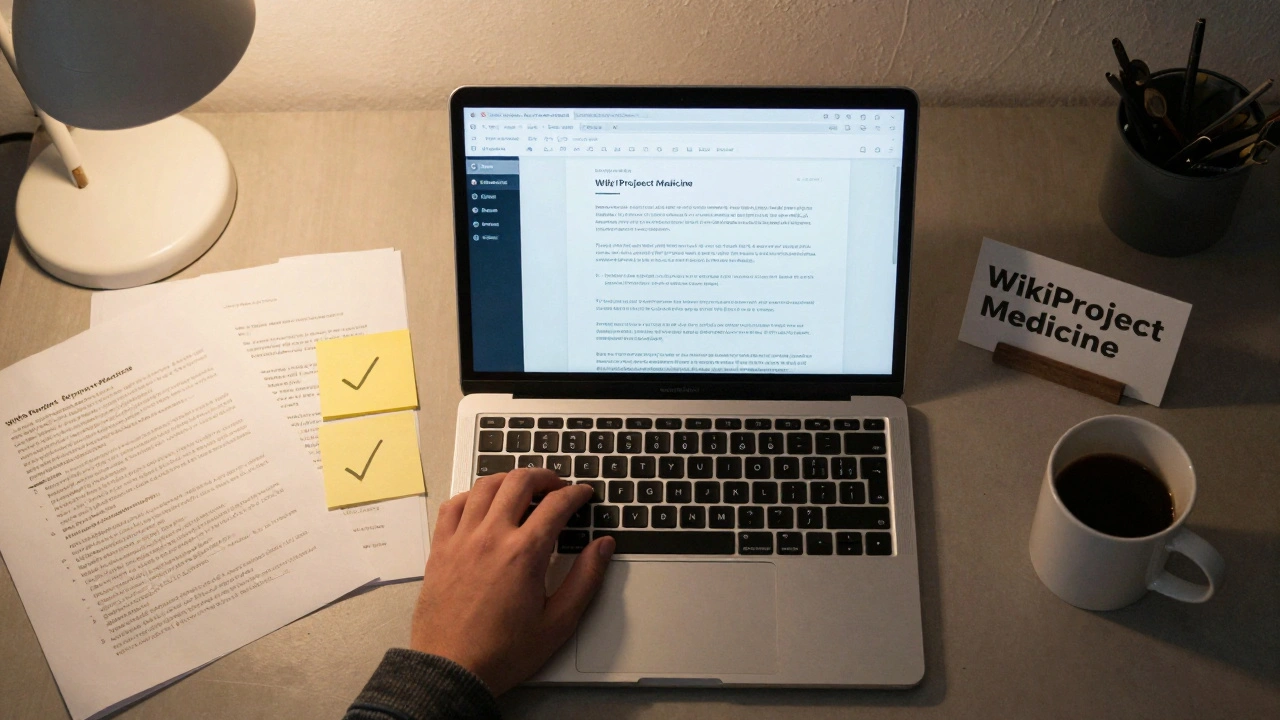
When an editor finishes a draft or makes major changes to an article, they can flag it for peer review. This isn’t automatic. You have to ask for it. You go to the article’s talk page, add a template like {{subst:peer review}}, and link it to the relevant WikiProject. Then, editors from that group show up.
They don’t just say “looks good.” They check for:
- Is the article neutral? Are both sides of a debate fairly represented?
- Are all claims backed by reliable sources? No blogs, no self-published material.
- Is the structure clear? Does it flow logically from introduction to conclusion?
- Are there gaps? Missing dates, names, context?
- Is the writing clear to a general audience? No jargon without explanation.
One editor might point out that a biography lacks details about the person’s early life. Another might find a citation from a 1998 newspaper that’s no longer available online. A third might suggest splitting a 10,000-word article into two because it’s too dense.
These aren’t random opinions. They’re based on Wikipedia’s official policies-Neutral Point of View, Verifiability, and No Original Research. WikiProject reviewers know these rules inside out because they apply them daily.
Why This System Works Better Than Top-Down Editing
Wikipedia doesn’t have editors with titles like “Senior Fact Checker.” There’s no HR department approving changes. Instead, quality emerges from repeated, distributed feedback.
A 2023 study by the Wikimedia Foundation analyzed over 120,000 articles flagged for peer review. Articles that went through WikiProject review were 68% more likely to be rated as “Good Articles” or “Featured Articles”-the highest quality tiers on Wikipedia-than those edited without peer input.
Why? Because peer review catches things automated tools miss. A bot can spot a broken link. It can’t tell if a paragraph about a historical event is written from a colonial perspective. Only a human familiar with the subject can.
And it’s not just about fixing errors. It’s about raising the bar. When a new editor sees that their article was reviewed by five people who spent hours improving it, they learn. They start citing better sources. They write more clearly. They become better editors themselves.
Real Examples of Improved Articles
Take the article on the 1918 influenza pandemic. In 2021, it was tagged as “start-class”-the lowest quality rating. A member of WikiProject Medicine noticed it had only three citations from peer-reviewed journals. They reached out to other editors. Over six months, contributors added 47 new references, rewrote the entire epidemiology section, and included data from newly digitized public health records.
By 2023, it became a Featured Article. It’s now one of the most-read pages on Wikipedia about the pandemic.
Another example: the history of the Nintendo Switch. Originally written by a single fan with lots of opinion and few sources, it was flagged by WikiProject Video Games. Reviewers removed unsubstantiated claims like “the Switch was designed to beat Sony,” added official sales figures from Nintendo’s financial reports, and restructured the timeline to match industry publications like IGN and Polygon.
These aren’t rare cases. They happen every day.
How to Get Your Article Reviewed
If you’ve spent time writing or editing a Wikipedia article and want to make sure it’s solid, here’s how to get it reviewed:
- Make sure your article meets the basics: at least 1,500 words, properly cited, no copyright violations.
- Find the right WikiProject. Search “WikiProject [your topic]” in Wikipedia’s search bar. For example, “WikiProject Astronomy” or “WikiProject Women Writers.”
- Go to the article’s talk page and type:
{{subst:peer review|project=WikiProject Name}} - Wait. Usually, someone responds within 3-7 days. If not, leave a polite reminder on the WikiProject’s main talk page.
- When feedback comes, respond to each point. Don’t argue-ask questions. “Can you help me find a better source for this?” is more effective than “I think this is fine.”
Some WikiProjects even have review queues you can join. Others host monthly “edit-a-thons” where groups focus on improving a set of articles together.
What Happens If No One Responds?
It happens. Not every WikiProject is active. Some are overwhelmed. If you’ve waited over two weeks with no reply:
- Try a broader project. If your article is about a scientist, try WikiProject Biography.
- Post a request on Wikipedia’s Peer Review Noticeboard.
- Ask for help on Reddit’s r/Wikipedia or the Wikipedia Discord server.
Don’t give up. Even one thoughtful comment can improve your article.
Why This Matters Beyond Wikipedia
Wikipedia is the fifth most visited website in the world. Millions of students, journalists, and professionals rely on it for quick, reliable information. If an article on “climate change impacts” or “vaccination safety” is poorly written or biased, it affects real-world understanding.
WikiProjects are the quiet engine behind that reliability. They turn a chaotic editing process into a structured, collaborative quality control system. No corporation owns them. No algorithm drives them. Just people who care enough to check, correct, and improve.
And you can join them. You don’t need a degree. You don’t need to be an expert. You just need to care about getting things right.
What You Can Do Today
Here’s a simple plan:
- Find an article on a topic you know something about.
- Read it. Does it feel incomplete? Biased? Uncited?
- Make one improvement-add a source, fix a broken link, clarify a sentence.
- Then, go to the article’s talk page and add:
{{subst:peer review}}. - Wait. Then respond to feedback.
That’s it. You’ve just helped raise the quality of knowledge for millions of people.
Do WikiProjects have the power to delete articles?
No. WikiProjects can’t delete or block anything. They can only recommend improvements, flag issues, or suggest articles for deletion through Wikipedia’s formal deletion process. Final decisions are made by neutral administrators based on community consensus, not by WikiProject members alone.
Can anyone join a WikiProject?
Yes. Anyone with a Wikipedia account can join any WikiProject. Just go to the project’s page and add your username to the list of participants. There’s no application, no approval needed. You can start reviewing articles right away.
Do WikiProjects only review new articles?
No. They review articles at any stage-new drafts, old articles with outdated info, or even Featured Articles that need updating. Many WikiProjects focus on maintaining quality over time, not just creating new content.
How long does peer review usually take?
It varies. For active WikiProjects, you might get feedback in 2-3 days. For smaller ones, it can take 1-2 weeks. If you haven’t heard back after two weeks, it’s okay to follow up politely. Most reviewers appreciate the reminder.
Are WikiProject reviews anonymous?
No. All edits and comments on Wikipedia are public and tied to usernames. This transparency helps build trust. If someone gives you feedback, you can see their editing history and judge their expertise. It also prevents abuse-no one can hide behind anonymity to push personal agendas.