When you read a Wikipedia article, you’re not just reading someone’s opinion. You’re reading a summary built on reliable sources. But not every source counts. Some websites, books, and news outlets are trusted year after year. Others get flagged, removed, or ignored. If you’ve ever wondered why some citations stick around while others vanish, you’re not alone. This is about the backbone of Wikipedia’s credibility: the perennial reliable sources list.
What Makes a Source "Reliable" on Wikipedia?
Wikipedia doesn’t have a secret list of approved publishers. Instead, it uses a set of consistent standards. A reliable source is one that has editorial oversight, fact-checking, and accountability. Think of it like this: if a source wouldn’t survive a fact-check by a professional journalist, it probably won’t survive on Wikipedia.
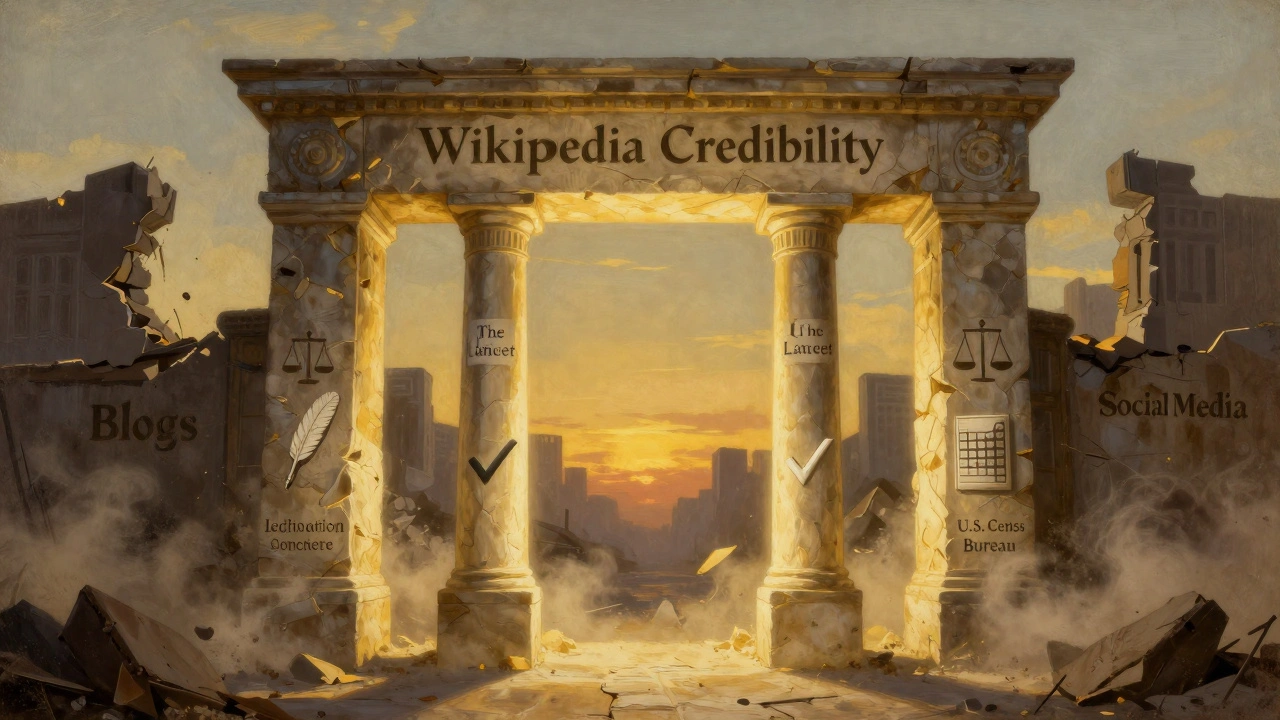
Peer-reviewed journals, major newspapers, university presses, and government publications are the gold standard. Why? Because they have editors, reviewers, and legal teams. If they publish something false, they get sued, corrected, or lose credibility. That’s the kind of accountability Wikipedia needs.
On the flip side, blogs, personal websites, social media posts, and forums don’t meet this bar. They’re not edited, not verified, and often anonymous. That doesn’t mean they’re always wrong - but Wikipedia can’t risk building facts on them.
The Perennial List: Sources That Never Go Out of Style
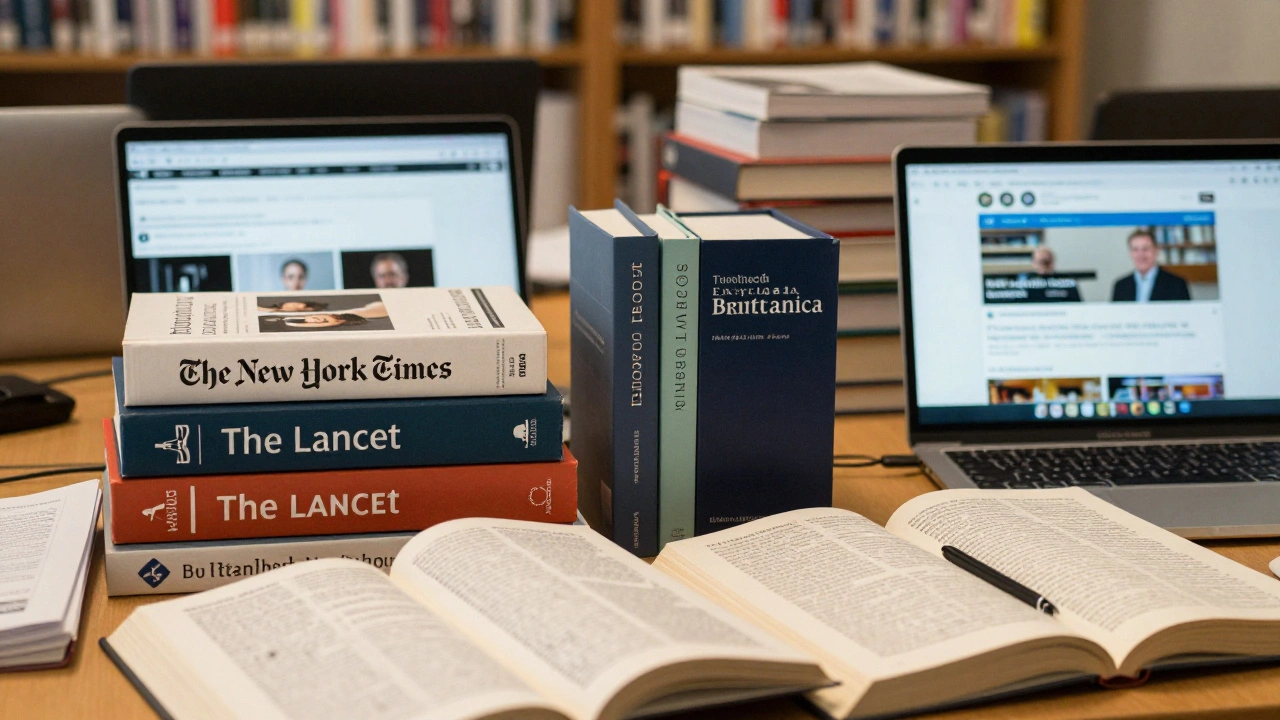
Some sources are so consistently trustworthy that they’re treated like infrastructure. They show up in thousands of articles across languages. Here are the ones you’ll see over and over:
- The New York Times - A U.S. newspaper with a global audience, known for its investigative reporting and editorial standards. It’s been cited over 1.2 million times on English Wikipedia alone.
- The Lancet - One of the world’s oldest and most respected medical journals. Peer-reviewed since 1823. If a medical claim appears on Wikipedia, it’s likely backed by The Lancet.
- Reuters - A global news agency with a strict neutrality policy. It doesn’t have opinion sections. Its reporting is used by governments, universities, and broadcasters worldwide.
- Encyclopædia Britannica - The original reference work. Even though it’s online now, its editorial process hasn’t changed. Experts write, review, and update entries under strict guidelines.
- Journal of the American Medical Association (JAMA) - Another medical journal with a 140-year track record. It’s cited more than 700,000 times on Wikipedia.
- U.S. Census Bureau - Official government data. Numbers on population, income, education - if it’s official, it’s reliable.
- IEEE Xplore - A database of peer-reviewed engineering and technology papers. Used for anything involving computers, networks, or hardware.
These aren’t just popular. They’re durable. They’ve been trusted for decades. Even as media changes, these sources have held onto their credibility. That’s why they’re called perennial.
Why Some Sources Get Rejected - Even If They Look Official
Not everything that sounds official is reliable. Here are common traps:
- University websites - A student blog on a university domain? Not reliable. A peer-reviewed journal published by the university? Absolutely.
- Think tanks - Some, like the Brookings Institution, are highly credible. Others are advocacy groups with clear political agendas. Wikipedia requires transparency about bias.
- Books - Self-published books don’t count. But books from Oxford University Press or Harvard University Press? Yes. The publisher matters more than the author.
- Trade publications - Industry magazines like Wired or Scientific American are okay because they have editorial staff. But niche newsletters with no review process? No.
Wikipedia editors don’t care how fancy a website looks. They care about process. Who checks the facts? Who signs off? Who can be held responsible?
How to Check a Source Yourself
You don’t need to be an expert to judge a source. Here’s a quick checklist:
- Is it published by a known organization with a public reputation?
- Does it have editors, peer reviewers, or fact-checkers listed?
- Can you find the same information in multiple independent reliable sources?
- Is there a clear author with credentials? Or is it anonymous?
- Does it cite its own sources? If not, it’s probably not reliable.
Try this: search for the source name + "bias" or "controversy". If you find credible reports questioning its reliability, take it with a grain of salt.
What About Non-English Sources?
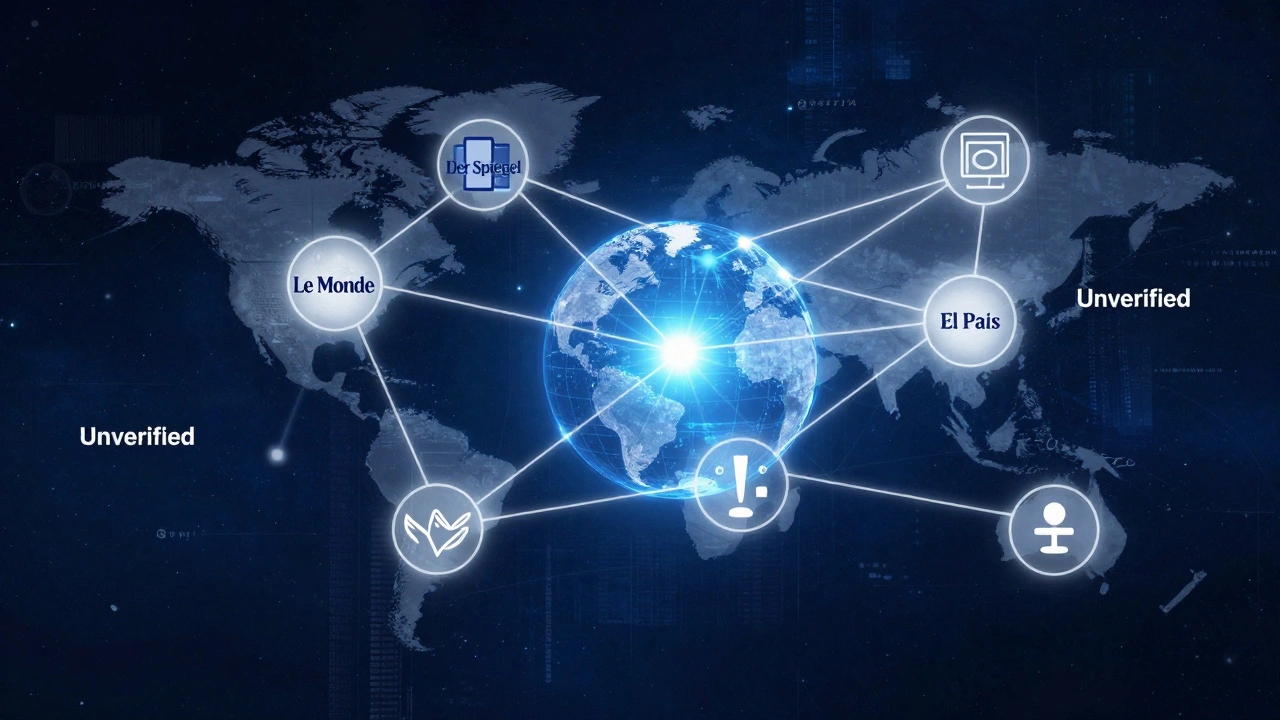
Wikipedia isn’t just English. There are 300+ language versions. Each has its own trusted sources. In French, Le Monde and Libération are gold standards. In German, Der Spiegel and Die Zeit carry the same weight as The New York Times. In Spanish, El País and El Mundo are go-tos.
Wikipedia’s rules are the same across languages: editorial oversight matters more than language. A Japanese government white paper is as reliable as a U.S. federal report. A peer-reviewed Japanese medical journal is treated the same as JAMA.
Why This Matters Beyond Wikipedia
Wikipedia is the fifth most visited website in the world. Millions use it as a starting point for research. If Wikipedia gets sources wrong, people believe it. That’s why the rules are strict.
But here’s the real win: learning how to spot reliable sources on Wikipedia teaches you how to evaluate information everywhere. Whether you’re reading a health blog, a news article, or a corporate report - ask: Who’s behind this? What’s their process? Can I verify it elsewhere?
Wikipedia’s source list isn’t just about editing articles. It’s a public lesson in critical thinking.
Common Myths About Reliable Sources
Let’s clear up a few misunderstandings:
- Myth: "If it’s on Google Scholar, it’s reliable."
Reality: Google Scholar includes everything - even self-published papers. You still need to check the journal. - Myth: "Academics use Wikipedia, so it must be trustworthy."
Reality: Academics use it as a starting point. They then trace the citations back to the original sources. - Myth: "Wikipedia deletes sources because they’re unpopular."
Reality: It deletes them because they lack editorial control. Politics doesn’t matter - process does.
The system isn’t perfect. But it’s designed to be transparent. Every edit is logged. Every source is discussed. If you’re curious, click the "Talk" tab on any Wikipedia article. You’ll see editors arguing over whether a source is reliable - and why.
Can I use Wikipedia as a primary source for academic work?
No. Wikipedia is a secondary source - it summarizes other sources. For academic work, you must go back to the original references cited in Wikipedia articles. Use Wikipedia to find those sources, then cite them directly.
Are all government websites reliable?
Most are, but not all. Official government data portals like data.gov or cdc.gov are reliable. But agency blogs, press releases without citations, or partisan sub-sites may not be. Look for .gov domains with clear editorial oversight and archived data.
Why is Wikipedia so strict about blogs?
Blogs usually lack editorial oversight. Anyone can post anything. Even if a blogger is an expert, their personal site isn’t peer-reviewed or fact-checked. Wikipedia needs sources where mistakes are corrected publicly - not just deleted.
Do news outlets lose reliability over time?
Yes, if they change their standards. For example, some outlets that once had strong fact-checking now publish opinion as news. Wikipedia editors monitor these shifts. If a source becomes biased or unreliable, it gets flagged and removed from the list.
How often is the reliable sources list updated?
It’s not a static list. It evolves through community discussion. Editors propose changes on Wikipedia’s Reliable Sources Noticeboard. Changes happen when there’s consensus - not by one person. This keeps the list grounded in real-world practice, not theory.
If you’re trying to verify something, start with Wikipedia’s citations. Then follow them back to the original source. You’ll not only find better information - you’ll learn how to judge it.