Online Censorship and Wikipedia: How Free Knowledge Resists Control
When governments block websites, online censorship, the suppression of information by governments or institutions to control what people can see or say online. Also known as internet filtering, it affects billions—and online censorship is one of the biggest threats to free knowledge. Wikipedia doesn’t just sit back. It fights back—with editors, tools, and policies designed to keep information alive, even when it’s banned.
Wikipedia isn’t a news site, but it’s often the last open archive when media outlets are shut down. In countries where press freedom dies, Wikipedia articles become lifelines. Editors in Iran, Russia, and China risk their safety to update pages about protests, human rights abuses, and historical events that official sources erase. The Wikimedia Foundation, the nonprofit that supports Wikipedia and its global network of volunteers has invested in tools like Tor access, encrypted editing, and anonymous contributions to protect these contributors. This isn’t just about technology—it’s about trust. When people can’t trust their local news, they turn to Wikipedia because it’s built on sourcing, not slogans.
But censorship doesn’t always come from governments. Sometimes it’s hidden inside policies. content moderation, the process of reviewing and controlling user-generated content to meet community standards on Wikipedia can accidentally silence marginalized voices if not applied carefully. A page about a local activist might get deleted for lacking "notable" sources—sources that were censored elsewhere. That’s why Wikipedia’s community debates every rule, every guideline, every edit. They know that if they don’t defend access to knowledge, no one else will.
What you’ll find below isn’t just a list of articles. It’s a record of how real people—editors, developers, researchers—keep knowledge alive under pressure. From bots that fight spam to policies that protect editors in dangerous regions, these stories show how Wikipedia survives when the world tries to turn off the lights.
Geopolitical Edit Wars on Wikipedia: High-Profile Cases
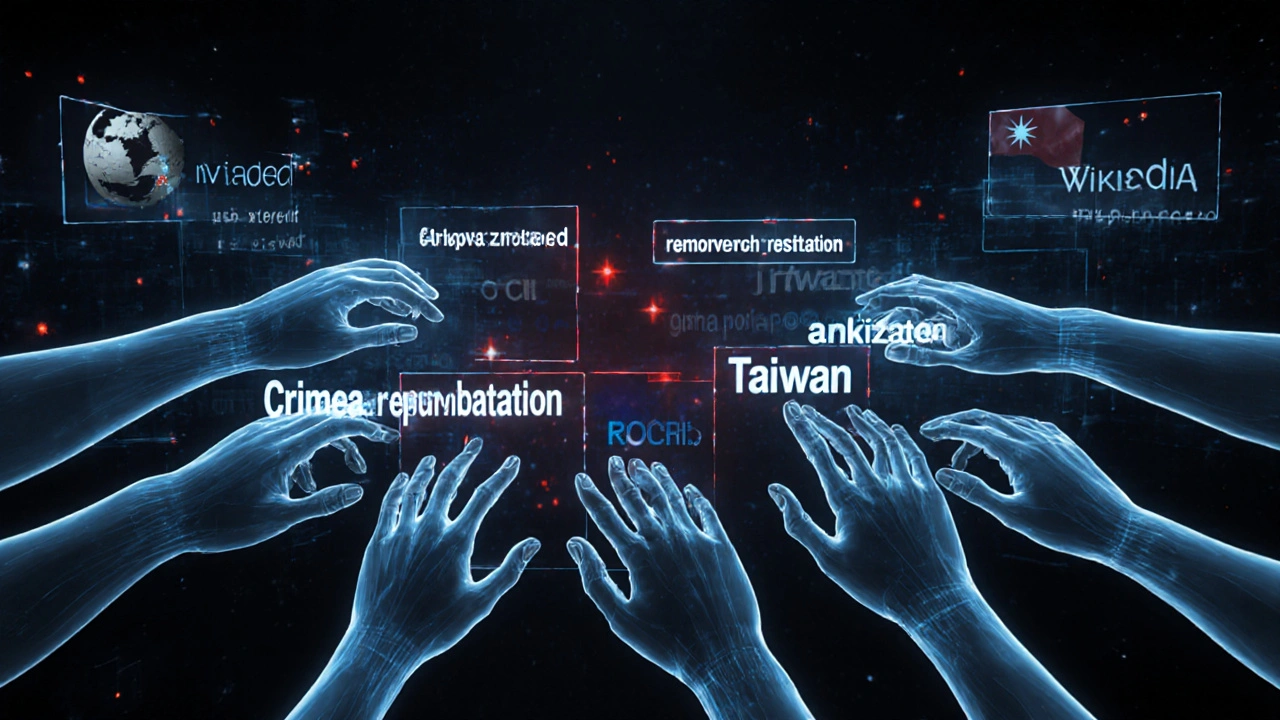
Wikipedia's open-editing model is being exploited in geopolitical edit wars, where nations and groups manipulate articles on Ukraine, Taiwan, Partition, and Iraq to control global narratives. These battles shape how history is remembered.