Most students assume that if it’s on Wikipedia is a free online encyclopedia that anyone can edit and serves as a primary reference point for millions of users daily, it must be true. This misconception is dangerous in a newsroom. For journalism students, Wikipedia is not the final destination; it is the starting line. The goal isn’t to ban the tool, but to teach them how to use it without getting lost in its depths.
Why Wikipedia Fails as a Primary Source
The core issue with relying on Wikipedia for hard news or investigative pieces is the lack of direct accountability. When you cite a newspaper article, you can call the editor. When you cite a wiki page, who do you call? The content is written by anonymous volunteers, which means errors can persist for months until someone notices. In a professional setting, this is a liability.
However, dismissing it entirely wastes a powerful research tool. Wikipedia excels at providing context, timelines, and background information. It tells you *who* the key players are and *when* events happened. What it rarely does well is tell you *why* something happened or provide the nuance of a breaking story. Teaching students to distinguish between these two functions is the first step toward responsible usage.
The Citation Trail Method
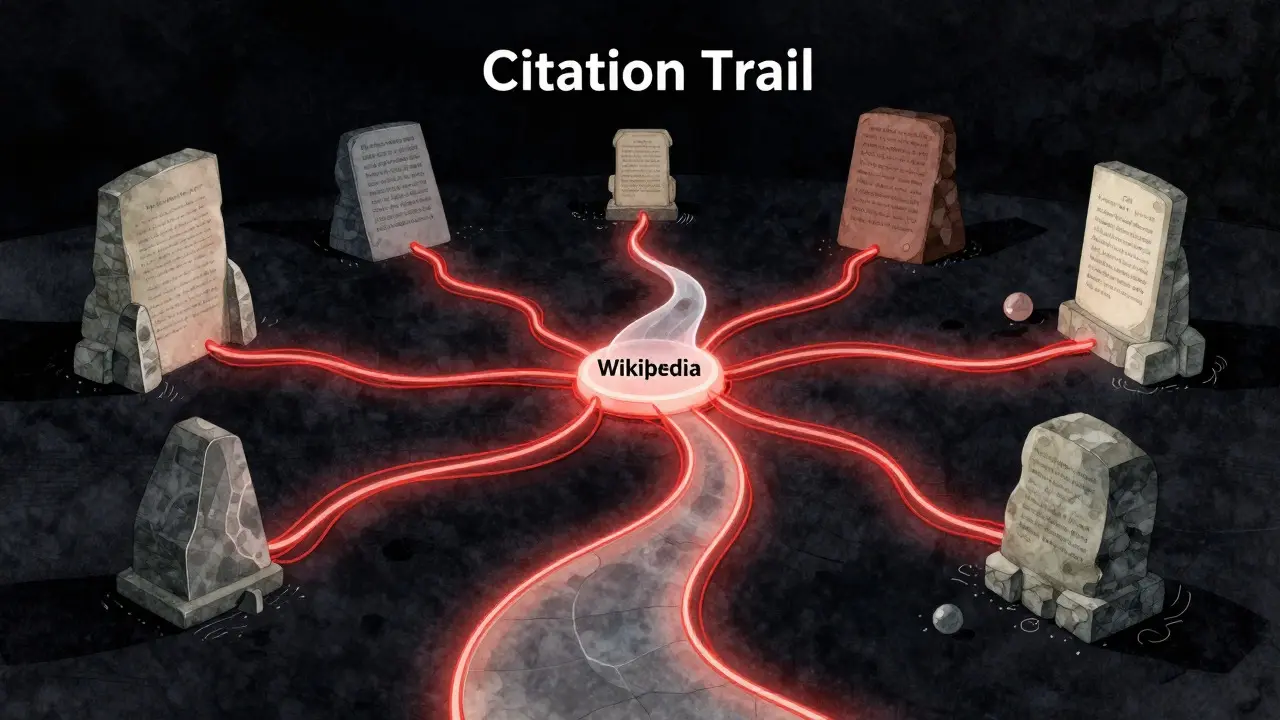
To turn Wikipedia from a potential trap into a reliable map, students need to master the "Citation Trail" method. This technique requires treating every claim on a Wikipedia page as a hypothesis that needs external validation.
- Identify the specific claim: Don't just read the summary box. Find the exact sentence that supports your angle.
- Locate the footnote: Click the small number superscript next to the claim. This leads to the references section.
- Evaluate the source type: Is it a peer-reviewed journal, a major newspaper (like The New York Times is a major American daily newspaper known for its investigative reporting and global reach), or another wiki? If it’s another wiki, keep digging.
- Visit the original source: Go to the actual URL provided. Read the full context, not just the snippet.
- Cite the original, not the wiki: In your story, credit the primary source. Mention Wikipedia only if you used it to find that source.
This process takes time, but it builds muscle memory. Once students do this ten times, they stop trusting the blue text and start trusting the red links.
Recognizing Bias and Edit Wars
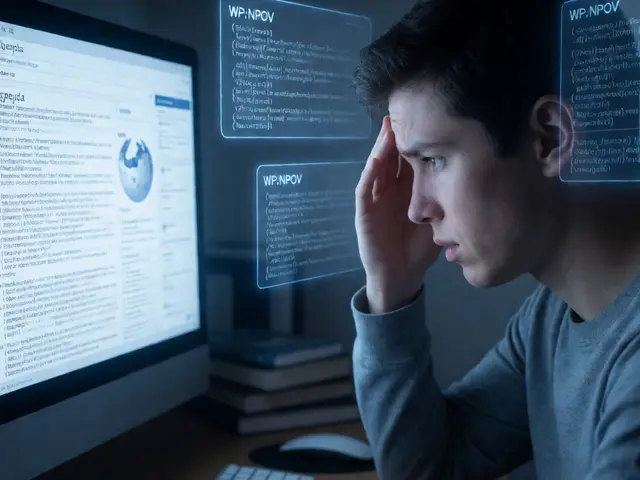
Wikipedia pages aren't static documents; they are living battlegrounds. Students often miss the "Talk" tab, which reveals the history of disagreements over content. If a page has a long history of "Edit Wars," the current version might be a compromise rather than the truth.
Teaching students to check the page history is crucial. They should look for recent massive deletions or additions made by single users. If one person added 500 words about a controversial figure overnight, that content is likely promotional or biased. Tools like WikiDiff is a tool that allows users to compare different versions of Wikipedia articles to see what changed can help visualize these changes, showing exactly what was added or removed in specific edits.
| Strategy | Risk Level | Best For | Action Required |
|---|---|---|---|
| Direct Citation | High | Nothing (Avoid) | Never cite Wikipedia as a primary source |
| Contextual Background | Low | Explainer pieces, biographies | Verify dates and names against secondary sources |
| Citation Trail | Very Low | Investigative research, fact-checking | Trace footnotes to primary sources |
| History Audit | Medium | Controversial topics | Check page history for edit wars or vandalism |
The Role of Media Literacy in Verification
Responsible Wikipedia use is really an exercise in broader media literacy. Students need to understand that all digital information is constructed. Wikipedia constructs consensus among editors; newspapers construct narratives based on editorial standards. Neither is objective truth, but both have mechanisms for correction.
Instructors should assign exercises where students take a simple Wikipedia article and trace five facts back to their origins. Then, they should ask: Does the primary source actually say what the wiki claims? Often, the answer is no. The wiki might simplify a complex legal ruling into a single sentence that misses a critical caveat. This gap between simplification and accuracy is where bad journalism happens.
Practical Classroom Exercises
How do you teach this effectively? You need active learning, not lectures. Here are three proven methods:
- The "Red Flag" Hunt: Give students a list of controversial figures or events. Ask them to find the Wikipedia page, then identify one instance where the tone seems biased or where a source is weak. They must present their findings and explain why it matters.
- Source Swap: Have students write a short paragraph using only Wikipedia citations. Then, force them to rewrite it using only the primary sources found in the wiki's references. Compare the word count and depth. Usually, the primary sources reveal more nuance and complexity.
- Version Control Challenge: Pick a topic that changed significantly in the last year (e.g., a political scandal). Have students compare the Wikipedia page from six months ago to today. What changed? Why? Who edited it? This teaches them that information is dynamic.

Common Pitfalls to Avoid
Even with training, students make mistakes. The most common error is "confirmation bias." If a student already believes a certain narrative, they will skim the Wikipedia page, see the headline they expected, and move on. They won't check the footnotes because they don't want to disprove their own assumption.
Another pitfall is ignoring the "Stub" status. Many minor topics are marked as stubs, meaning they are incomplete. Students often treat these thin pages as authoritative summaries. Teach them to look for the "Stub" template at the bottom of the page. If it’s there, dig deeper elsewhere.
Building a Personal Verification Workflow
By the end of the course, students should have a personal workflow they can use in any newsroom. This workflow should include a checklist: Did I check the date? Did I verify the source? Did I look at the talk page? Did I cross-reference with at least one other independent outlet?
Wikipedia remains one of the most visited sites on the internet, with billions of monthly views. Ignoring it is unrealistic. But using it blindly is amateurish. By teaching students to view Wikipedia as a gateway rather than a destination, we prepare them for a world where information is abundant but truth is scarce. The skill isn't just about knowing how to click a link; it's about knowing when to stop clicking and start thinking.
Is it ever okay to cite Wikipedia directly in a news story?
Generally, no. Most style guides prohibit citing Wikipedia as a primary source. However, you can mention it if the story is *about* Wikipedia itself, such as a controversy over an edit war or a policy change within the platform.
What is the difference between a Wikipedia citation and a primary source?
A Wikipedia citation is a reference to another document listed in the bibliography. A primary source is the original document itself, such as a court record, a raw interview transcript, or a scientific paper. Always aim to cite the primary source.
How can I tell if a Wikipedia page is being vandalized?
Check the page history for sudden, large-scale changes made by new accounts or anonymous IP addresses. Look for obvious typos, absurd claims, or removal of citations. Reverting to a previous stable version is usually possible via the history tab.
Should students use Wikipedia for breaking news?
No. Breaking news moves too fast for the consensus-building process of Wikipedia to keep up accurately. Use live blogs, official press releases, and wire services for breaking stories. Save Wikipedia for post-event analysis and background.
What tools help journalists track Wikipedia changes?
Tools like WikiDiff allow side-by-side comparisons of different versions. Additionally, the built-in "History" tab on every page shows a log of all edits, including who made them and when. Subscribing to email notifications for specific pages is also useful for monitoring high-stakes topics.