Wikipedia templates are the invisible backbone of thousands of articles. They standardize infoboxes, navigation bars, citation formats, and warning messages - but getting them right is harder than it looks. One misplaced bracket, an unclosed tag, or a typo in a parameter name can break an entire page. That’s where TemplateWizard is a visual editor tool built into Wikipedia’s editing interface that helps users create and edit templates without writing raw wikitext. Also known as TemplateWizard, it was introduced in 2020 and has since helped over 2 million editors avoid common template mistakes.
Why TemplateWizard Exists
Before TemplateWizard, editing templates meant copying and pasting wikitext from other articles or digging through documentation. Even experienced editors made mistakes. A missing pipe, an extra space, or a parameter spelled wrong could cause the template to display as raw code - ugly, broken, and confusing to readers. New editors? They’d often give up entirely. Wikipedia’s template system was powerful but unforgiving.
TemplateWizard changes that. It doesn’t replace wikitext - it makes it optional. Instead of typing {{Infobox person | name = John Doe | birth_date = 1980}}, you get a clean form. You pick the template type, fill in fields like a form, and click ‘Insert’. The tool writes the code for you. No memorizing syntax. No guessing. No broken pages.
How TemplateWizard Works
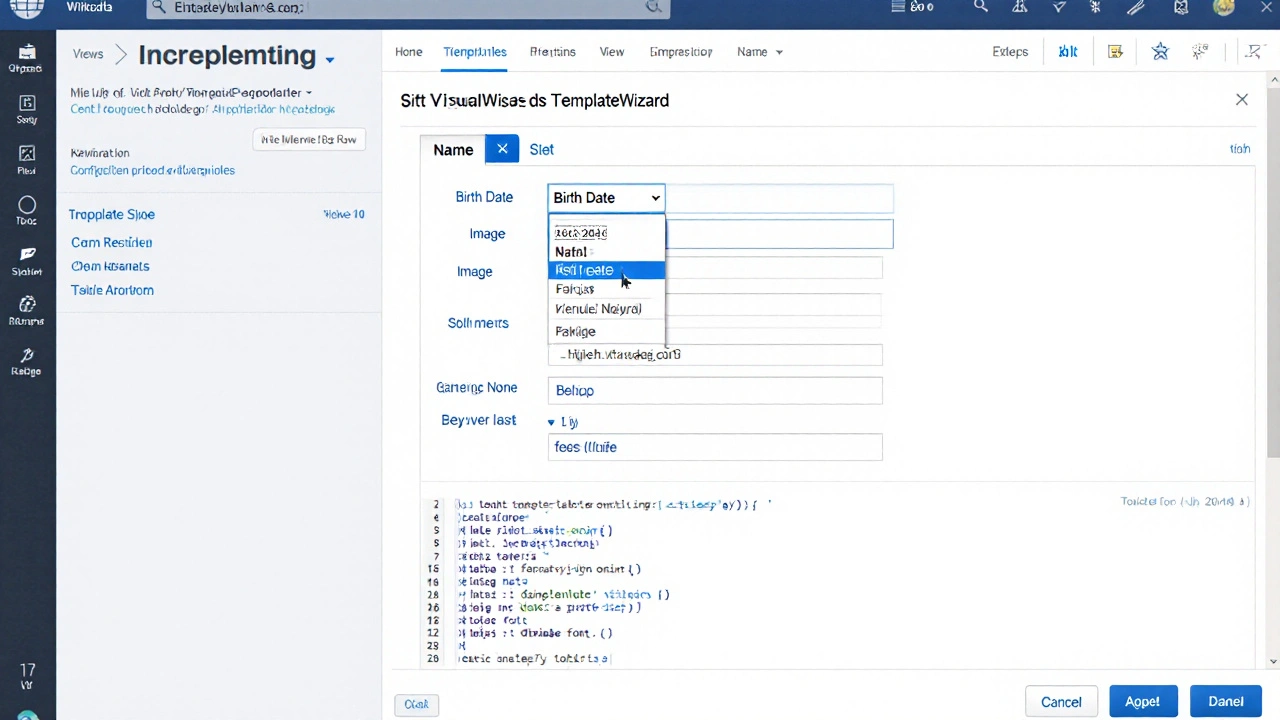
TemplateWizard appears automatically when you click the ‘Insert’ button in the visual editor and choose ‘Template’. Here’s how it works step by step:
- Open any Wikipedia article in edit mode using the visual editor.
- Click ‘Insert’ in the toolbar, then select ‘Template’.
- A search box appears. Type the name of the template you want - like ‘Infobox person’ or ‘Cite web’.
- TemplateWizard shows a list of matching templates. Click the one you need.
- A form pops up with labeled fields. Some are required, some are optional. Hover over each to see a description.
- Fill in the values. For dates, it even gives you a calendar picker.
- Click ‘Insert’. The template appears in your article, properly formatted.
It’s that simple. No curly braces, no pipes, no syntax errors. The tool handles all the punctuation. If you’re editing a biography, you don’t need to know that the ‘Infobox person’ template uses ‘| birth_date’ instead of ‘| birthdate’. TemplateWizard knows.
What Templates TemplateWizard Supports
TemplateWizard doesn’t cover every template on Wikipedia - but it covers the most used ones. As of 2025, it supports over 1,200 templates, including:
- Infoboxes: For people, places, companies, films, books - anything that needs a structured summary.
- Citation templates: Cite web, cite journal, cite book - all with auto-formatting for DOI, ISBN, and URLs.
- Navigation templates: Like ‘Navboxes’ that link related articles at the bottom of pages.
- Warning and notice templates: Like ‘Cleanup’, ‘Unreferenced’, or ‘Stub’ - used to flag article issues.
- Category templates: For tagging articles with categories like ‘Articles with dead external links’.
Templates that are rarely used, highly customized, or written in Lua (like some complex data templates) aren’t included. But for 95% of editing tasks, TemplateWizard covers what you need.
Common Errors TemplateWizard Prevents
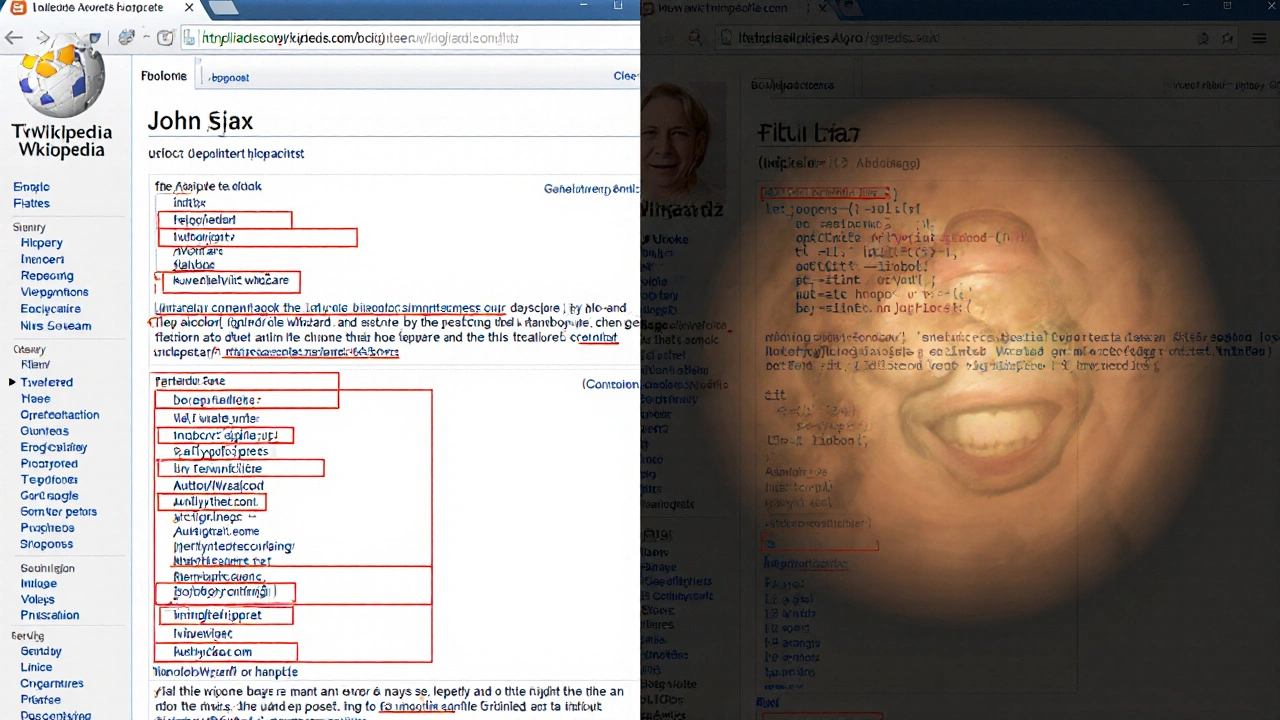
Here are the top five template errors TemplateWizard stops before they happen:
- Missing pipe characters: Typing
{{Infobox person name=John Doe}}instead of{{Infobox person | name=John Doe}}breaks the template. TemplateWizard inserts pipes automatically. - Incorrect parameter names: Writing ‘| birthyear’ instead of ‘| birth_date’ causes the field to be ignored. TemplateWizard only shows valid parameter names.
- Unclosed templates: Forgetting the closing ‘}}’ is common. TemplateWizard wraps the template correctly.
- Wrong template type: Using ‘Infobox film’ for a book? TemplateWizard shows you the right options based on context.
- Formatting inconsistencies: Dates in ‘MM/DD/YYYY’ vs. ‘DD Month YYYY’? TemplateWizard enforces Wikipedia’s date style guide.
These aren’t theoretical problems. In 2023, a study by the Wikimedia Foundation found that 37% of template-related edits on English Wikipedia were corrections of syntax errors - and 82% of those could have been avoided with TemplateWizard.
When TemplateWizard Isn’t Enough
TemplateWizard is great for standard templates, but it has limits. If you’re editing a custom template built by a small community - say, for a niche topic like ‘Medieval chess variants’ - it might not appear in the list. In those cases:
- Use the ‘Advanced’ option in TemplateWizard to enter the template name manually.
- Switch to the source editor and copy a working example from a similar article.
- Check the template’s documentation page - it’s usually at
Template:TemplateName/doc.
Also, TemplateWizard doesn’t help you design new templates. If you’re creating a template from scratch for the first time, you’ll need to learn wikitext basics. But once it’s live, TemplateWizard will let others use it without errors.
TemplateWizard vs. Source Editor
Some editors swear by the source editor. They say it’s faster. They say it gives full control. That’s true - if you already know the syntax. But for most people, speed comes from avoiding mistakes, not typing faster.
| Feature | TemplateWizard | Source Editor |
|---|---|---|
| Learning curve | Minimal - form-based | Steep - requires wikitext knowledge |
| Syntax error risk | Very low | High |
| Speed for beginners | Fast | Slow |
| Custom templates | Limited support | Full control |
| Best for | New editors, occasional contributors | Experienced editors, template developers |
There’s no shame in using TemplateWizard. Even veteran editors use it for infoboxes and citations. It’s not a crutch - it’s a precision tool.
How to Enable TemplateWizard
TemplateWizard is enabled by default on English Wikipedia for users using the visual editor. But if you don’t see it:
- Go to your preferences (top-right corner, click ‘Preferences’).
- Click ‘Editing’.
- Under ‘Editing mode’, make sure ‘VisualEditor’ is selected.
- Scroll down to ‘VisualEditor features’ and check ‘Enable TemplateWizard’.
- Click ‘Save’.
If you’re using a mobile device, TemplateWizard works on the mobile web version too - just tap the ‘+’ button and select ‘Template’.
Pro Tips for Using TemplateWizard
- Use the hover tooltips: Each field has a short explanation. Don’t skip them - they tell you what data to enter.
- Check the preview: After inserting, always preview the article. Sometimes templates need extra context (like a category tag) to display properly.
- Don’t ignore optional fields: Fields like ‘| image’ or ‘| caption’ might seem optional, but they improve article quality.
- Use it for citations: TemplateWizard auto-fills DOI and ISBN lookups. It’s faster than searching for them yourself.
- Teach others: If you see a new editor struggling with templates, point them to TemplateWizard. It’s the easiest way to get started.
What Comes Next
TemplateWizard is still evolving. In 2025, the Wikimedia team added support for template suggestions based on article content. If you’re editing an article about a movie, TemplateWizard now suggests ‘Infobox film’ before you even search for it. It’s learning your habits.
Future updates will include:
- Auto-detection of missing required fields.
- Integration with Wikidata to auto-fill values like birth dates or population figures.
- Template versioning - so you can see if a template was updated and needs re-editing.
For now, TemplateWizard is the best tool on Wikipedia to build templates without errors. It’s not flashy. It doesn’t make headlines. But every time it saves someone from a broken infobox, it makes Wikipedia better.
Does TemplateWizard work on all Wikipedia languages?
TemplateWizard is available on most major Wikipedias, including English, Spanish, French, German, and Japanese. Support varies by language - some smaller editions may not have it enabled yet. Check your local Wikipedia’s help pages or preferences to confirm.
Can I use TemplateWizard on mobile?
Yes. On mobile web browsers, tap the pencil icon to edit, then tap the ‘+’ button and select ‘Template’. The same form interface appears. It works on iOS and Android.
Why doesn’t TemplateWizard show my custom template?
TemplateWizard only includes templates that are registered in the system. If you created a template for your own use or a small community, it won’t appear unless it’s added to the official template registry. You can request inclusion through Wikipedia’s TemplateWizard feedback page.
Do I still need to learn wikitext?
You don’t need to learn wikitext to use TemplateWizard - but you’ll benefit from knowing it. If you ever need to fix a template that TemplateWizard can’t handle, or want to edit a template’s code directly, basic wikitext skills help. Think of TemplateWizard as a training wheel - useful, but not the whole bike.
Is TemplateWizard free to use?
Yes. TemplateWizard is part of Wikipedia’s free, open-source editing tools. It’s funded by the Wikimedia Foundation and available to anyone with a Wikipedia account. No subscriptions, no paywalls.