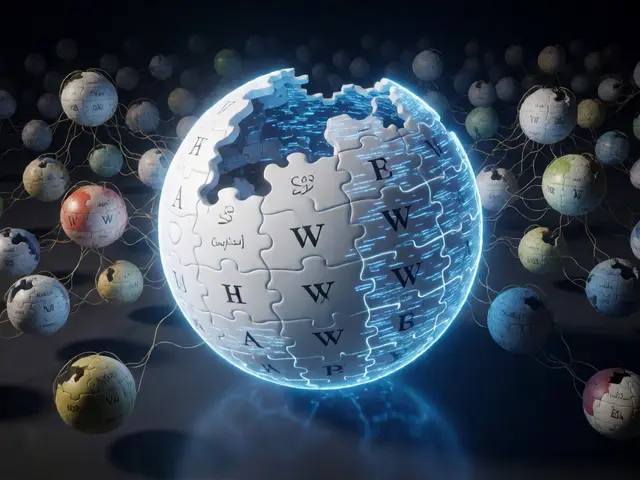
Ever clicked on a fact in the English version of Wikipedia is a free online encyclopedia that collaboratively edits content across multiple languages. It hosts over 350 language editions, serving billions of readers globally. However, a persistent gap exists between these editions. A landmark study by the Wikimedia Foundation revealed that only about 20% of articles are fully translated across major language versions. The remaining 80% suffer from partial translations, outdated information, or complete absence. This isn't just a technical glitch; it's a crisis of trust. When a reader in Brazil checks a medical fact and finds it contradicts the German version, the credibility of the entire platform wavers.
The core issue isn't just language barriers. It's about how knowledge flows-or fails to flow-between communities. Translation quality determines whether a global resource remains a local echo chamber. For editors, this means navigating complex workflows involving machine learning tools, community review boards, and strict style guides. For readers, it means deciding which version to trust. Understanding the mechanics behind translation quality helps demystify why some pages feel authoritative while others seem like rough drafts.
Why Translation Gaps Persist
You might assume that with AI advancing rapidly, translating encyclopedic content would be trivial. In reality, the process is fraught with semantic traps. Machine translation engines, such as those based on neural networks, handle syntax well but often miss nuance. Consider the term "privacy." In English, it implies individual rights. In Japanese, the concept maps more closely to social harmony and context-dependent boundaries. A direct word-for-word translation can distort the legal and cultural implications entirely.
Beyond semantics, there is the problem of volume. The English edition has over 6.5 million articles. The Spanish edition has around 1.9 million. The Russian edition sits at roughly 1.7 million. Smaller editions, like Icelandic or Basque, have fewer than 50,000 articles each. Maintaining parity is logistically impossible without massive volunteer coordination. Most translations happen reactively. An editor sees a popular topic trending in their language version, translates it from English, and hopes for the best. Proactive synchronization, where updates propagate automatically, remains rare due to licensing complexities and stylistic differences.
The Role of Automated Tools and Human Review
Modern translation pipelines rely heavily on Computer-Assisted Translation (CAT) tools integrated into the MediaWiki software. These tools offer features like glossary enforcement, segment memory, and real-time suggestions. However, they are not autonomous translators. They are assistants. The human-in-the-loop model is critical here. Without human oversight, automated outputs can introduce subtle errors that compound over time.
Let's look at a practical example. Suppose an article on "Climate Change" mentions a specific temperature rise metric. The automated tool translates the number correctly but misinterprets the unit context if the source uses imperial units and the target expects metric. A human reviewer catches this. But what happens when the reviewer is tired, or the article is obscure? Errors slip through. To mitigate this, experienced editors use a tiered review system. High-traffic articles undergo double-blind review. Niche topics rely on subject-matter experts within the community. This hybrid approach balances speed with accuracy.
Measuring Quality Beyond Word Count
How do we know if a translation is good? Many people equate length with completeness. If the French article is 80% the length of the English one, is it 80% accurate? Not necessarily. Quality metrics must go beyond simple ratios. The Wikimedia Foundation tracks several key indicators:
- Semantic Fidelity: Does the meaning match the source? This requires linguistic analysis, not just keyword matching.
- Cultural Adaptation: Are examples, references, and idioms appropriate for the target audience?
- Structural Integrity: Do headings, tables, and citations align with the source structure?
- Recency: Is the information current relative to the source language version?
Tools like WikiTrans help visualize these gaps. They map articles across languages and flag discrepancies. For instance, if the English article cites a 2023 study, but the German version still references a 2019 paper, the tool flags it as "outdated." This data drives editorial priorities. Communities use these dashboards to identify high-impact areas where translation efforts yield the most value.
Community Dynamics and Editorial Bias
Translation isn't just a technical task; it's a social one. Different language communities have different editorial cultures. The English Wikipedia tends toward detailed, sourced narratives. The German Wikipedia often favors concise, structured definitions. When translating, editors must decide: do we adapt the content to fit the target culture's norms, or preserve the source's style?
This decision impacts readability. A long, nuanced English paragraph might feel verbose to a Dutch reader accustomed to directness. Conversely, a terse Japanese entry might seem lacking in context to a Brazilian reader. Successful projects adopt a "glossary-first" approach. Core terms are standardized across all editions. Style guides are localized, not universal. This ensures consistency without sacrificing cultural relevance.
Furthermore, bias creeps in through selection. Which articles get translated? Often, it's the ones popular in the source language. This creates a skewed representation of global knowledge. Topics relevant to the Global South may remain untranslated until they trend in Western media. Addressing this requires active curation, not just passive translation queues.

Practical Steps for Improving Your Edits
If you're an editor looking to improve translation quality in your local Wikipedia, start with small wins. Here’s a actionable checklist:
- Verify Sources: Never translate a citation blindly. Check if the original source is accessible in your language. If not, note the barrier in the talk page.
- Use Templates: Leverage existing translation templates. They ensure metadata (like date translated, source link) is preserved.
- Flag Ambiguities: If a term has no clear equivalent, use a footnote explaining the nuance rather than forcing a wrong word.
- Collaborate: Invite native speakers to review your work. Fresh eyes catch blind spots.
- Monitor Feedback: Watch for edit wars or reverts. They often signal misunderstanding of the source material.
These steps reduce friction and build trust. Over time, consistent quality leads to higher reader engagement and more contributions. It’s a virtuous cycle: better translations attract better editors, who produce even better content.
Frequently Asked Questions
Is machine translation reliable for Wikipedia articles?
Machine translation is useful for drafting but unreliable for final publication without human review. It handles grammar well but often misses cultural context and specialized terminology. Always treat MT output as a first draft, not a finished product.
How can I find untranslated articles in my language Wikipedia?
Use the "List of missing articles" feature available in most language editions. You can also check the interlanguage links sidebar. If a red link appears next to a language code, it indicates a missing article. Community portals often maintain curated lists of high-priority topics needing translation.
What is the difference between localization and translation?
Translation converts text from one language to another. Localization adapts the content to the target culture, including changing examples, dates, currency, and formatting. On Wikipedia, localization is preferred for user experience, ensuring the content feels native rather than foreign.
Do all Wikipedia languages have the same level of quality?
No. Quality varies significantly based on community size, expertise, and resources. Larger editions like English, German, and French generally have higher average quality due to more reviewers. Smaller editions may have excellent niche coverage but lack breadth. Always check the talk page and recent edits to gauge current reliability.
How does Wikipedia handle copyright issues in translations?
Most Wikipedia content is under Creative Commons licenses, allowing free reuse. However, fair use images or proprietary diagrams may not be translatable. Editors must verify license compatibility before moving media or text. When in doubt, create original content or seek permission from the copyright holder.