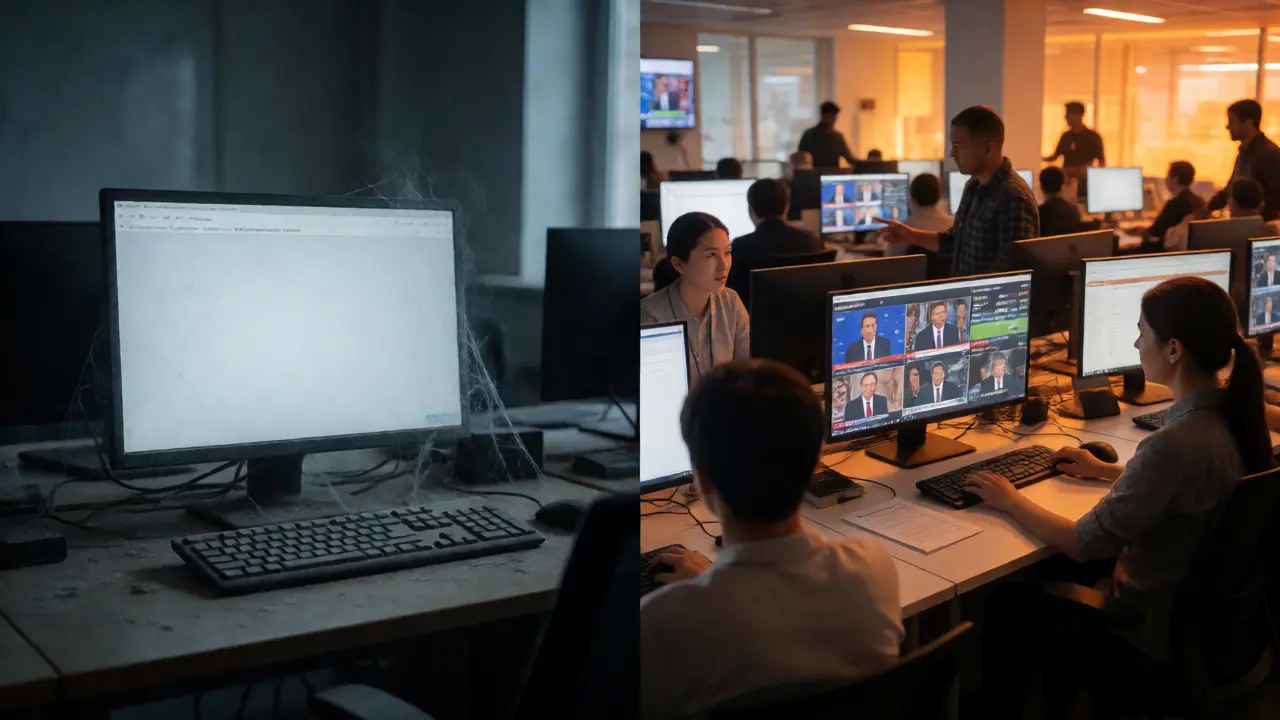
You scroll through the English Wikinews, and it feels quiet. Maybe a few updates on local elections or tech glitches. Then you check the German edition, and suddenly there’s a live feed of political debates, cultural reviews, and sports scores updating every ten minutes. Why does one version feel like a ghost town while another buzzes with activity? It isn’t about budget or server power. It’s about people.
The difference between a thriving Wikinews edition and a dormant one comes down to how well a language community manages its own editorial culture. When editors in Berlin or Tokyo take ownership, they build systems that fit their local news cycle. They don’t just copy-paste what works in English; they adapt tools, norms, and incentives to match how their readers consume information. This article breaks down exactly why some communities succeed where others stall out, using real patterns from active hubs like the German, French, and Japanese editions.
The Core Problem: News Needs Urgency, Not Just Accuracy
Wikinews is a free-content news source hosted by the Wikimedia Foundation, operating as a wiki-based collaborative platform for current events reporting. Unlike Wikipedia, which aims for encyclopedic permanence, Wikinews lives and dies by speed. If an article takes three days to get reviewed, the news is old. The biggest hurdle for any edition is balancing the rigorous neutrality checks of the broader Wikimedia ecosystem with the breakneck pace of modern journalism.
In smaller communities, this tension often kills momentum. A new editor posts a breaking story. It sits in review because senior editors are asleep or busy. By the time it’s published, the Twitter trend has moved on. In contrast, successful editions have streamlined this bottleneck. They’ve created fast-track protocols for obvious facts-like election results or natural disaster magnitudes-that bypass lengthy debate without sacrificing accuracy.
Key Takeaways
- Local Relevance Drives Traffic: Editions that cover hyper-local issues (e.g., city council votes) retain readers better than those only covering global headlines.
- Low-Barrier Entry Works: Successful communities simplify the first-edit process, reducing the technical friction for new reporters.
- Cultural Fit Matters: Editorial guidelines must align with local journalistic standards, not just translate English policies.
- Automation Helps Small Teams: Bots handling formatting and link-checking free up humans for actual writing.
Lesson 1: Ownership Over Translation
A common mistake in struggling editions is treating them as mere translations of the English hub. Editors wait for the main site to post a big story, then translate it. This creates a passive audience. Readers ask, "Why read this here when I can read it in English?"
Thriving editions flip this script. They prioritize original reporting. The German Wikinews community, for instance, heavily covers domestic politics and regional culture. They don’t wait for permission from the global admins. They run their own polls, interview local experts, and publish opinion pieces that reflect German societal debates. This sense of ownership makes editors feel invested. They aren’t just maintaining a project; they’re building a newspaper.
When you look at the data, the correlation is clear. Editions with higher rates of original content creation see more repeat visitors. Passive translation models suffer from high bounce rates because users leave if the content isn’t immediately relevant to their daily lives.

Lesson 2: Streamlined Editorial Workflows
Bureaucracy is the enemy of news. In many inactive wikis, the review process is opaque. New contributors submit an article and hear nothing for weeks. They assume their work was rejected or ignored, so they stop contributing. Active communities solve this with transparent, tiered workflows.
Take the French edition. They use a color-coded status system visible on every draft page. Green means ready for publication, yellow needs minor tweaks, red requires major restructuring. Senior editors commit to reviewing drafts within 24 hours during peak news cycles. This predictability keeps the pipeline moving.
| Feature | Stagnant Edition Pattern | Active Edition Pattern |
|---|---|---|
| Review Time | 7-14 days average | < 24 hours for breaking news |
| Feedback Loop | Silent rejection or vague comments | Specific, actionable edits provided |
| Onboarding | Complex policy reading required first | "Edit-a-thons" with mentorship |
| Content Source | 80% translated from English | 60%+ original local reporting |
Lesson 3: Community Rituals and Social Glue
Newsrooms are social spaces. Even virtual ones need rituals. Successful Wikinews communities host regular "news jams" or weekly digests where editors discuss the week’s top stories. These aren’t mandatory meetings; they’re casual hangouts where people share tips or vent about difficult sources.
The Japanese edition leverages this well. They integrate with local social media platforms like Twitter and Line, creating hashtags for specific articles. Editors retweet each other’s work, tagging colleagues who helped edit. This public recognition acts as a reward. In volunteer-driven projects, visibility is currency. When an editor sees their name attached to a widely shared piece, they return next week.
Conversely, isolated editions lack these feedback loops. Editors work in silos. No one praises good work, and no one offers help on bad drafts. Isolation leads to burnout. You need a digital watercooler to keep morale high.

Lesson 4: Technical Accessibility for Non-Techies
Not every journalist knows HTML or wiki markup. Many potential contributors are students, bloggers, or retired professionals who want to report but find the editing interface intimidating. Thriving editions invest in user-friendly tools.
Some communities have developed simple templates that auto-format dates, locations, and sources. Others use visual editors that hide the code behind buttons. The goal is to reduce cognitive load. If a contributor spends 20 minutes fighting with brackets instead of writing sentences, they won’t come back.
Consider the Spanish edition. They created a guided wizard for submitting breaking news. It asks five simple questions: What happened? Where? When? Who said it? What’s the impact? The system then generates the basic wiki structure. This lowers the barrier to entry significantly, allowing non-tech-savvy users to contribute meaningful content quickly.
Building Your Own Success Model
If you’re looking to revive a dying edition or start a new one, focus on these three pillars:
- Niche Down First: Don’t try to cover everything. Pick a beat your community cares about-local sports, tech startups, or environmental issues. Build authority there before expanding.
- Recruit Mentors: Identify your most active 5% of editors. Ask them to pair with newcomers. One-on-one support beats generic help pages every time.
- Publish Consistently: Set a target, like three articles per day. Consistency builds habit for both editors and readers. Sporadic posting trains readers to ignore you.
Remember, Wikipedia succeeded because it solved a knowledge gap. Wikinews succeeds when it solves a timeliness gap. If you can deliver neutral, verified news faster than traditional outlets-or provide depth they skip-you win.
How is Wikinews different from Wikipedia?
Wikipedia focuses on static, encyclopedic knowledge that remains relevant over years. Wikinews focuses on dynamic, time-sensitive current events. While Wikipedia articles are updated occasionally, Wikinews articles are meant to be read once and archived, serving as a historical record of immediate happenings.
Can anyone write for Wikinews?
Yes, anyone can create an account and start writing. However, articles must adhere to strict neutrality guidelines. Breaking news often goes through a quick peer-review process to ensure factual accuracy and unbiased tone before being marked as published.
Which Wikinews language edition is the most active?
As of recent metrics, the German, French, and Japanese editions are among the most active in terms of daily contributions and original content generation. These communities have strong local engagement and efficient editorial workflows.
Is Wikinews content reliable?
Reliability varies by edition and topic. Articles that undergo thorough peer review and cite multiple independent sources are generally highly reliable. However, because it is crowd-sourced, users should always check citations and compare with other established news outlets for critical verification.
How do editors handle bias in Wikinews?
Editors follow a Neutral Point of View (NPOV) policy similar to Wikipedia. This involves presenting all significant views fairly and avoiding loaded language. Disputes are resolved through discussion on talk pages, aiming for consensus rather than majority vote.