You’ve spent hours researching your company’s latest product launch. You have the official press release, a glowing post on your corporate blog, and maybe even a tweet from the CEO. It feels like solid proof that something important happened. But when you try to add this information to Wikipedia is a free online encyclopedia that relies on verifiable, independent sources for its content, your edit gets deleted. Or worse, it gets reverted with a confusing tag saying the source isn’t "reliable."
This is one of the most common frustrations for new editors and PR professionals alike. The logic seems obvious: if the company published it, it’s true. So why does the encyclopedia reject it? The answer lies in the fundamental difference between verifiability and notability, and specifically, the requirement for editorial independence.
The Core Rule: Independence Over Accuracy
To understand why your press release was rejected, you have to look at Wikipedia’s core policy on Reliable Sources are publications or media outlets that have a reputation for fact-checking and editorial oversight, ensuring information is accurate and unbiased. A source can be 100% factually correct-every date, name, and figure perfect-and still be completely useless for an encyclopedia entry.
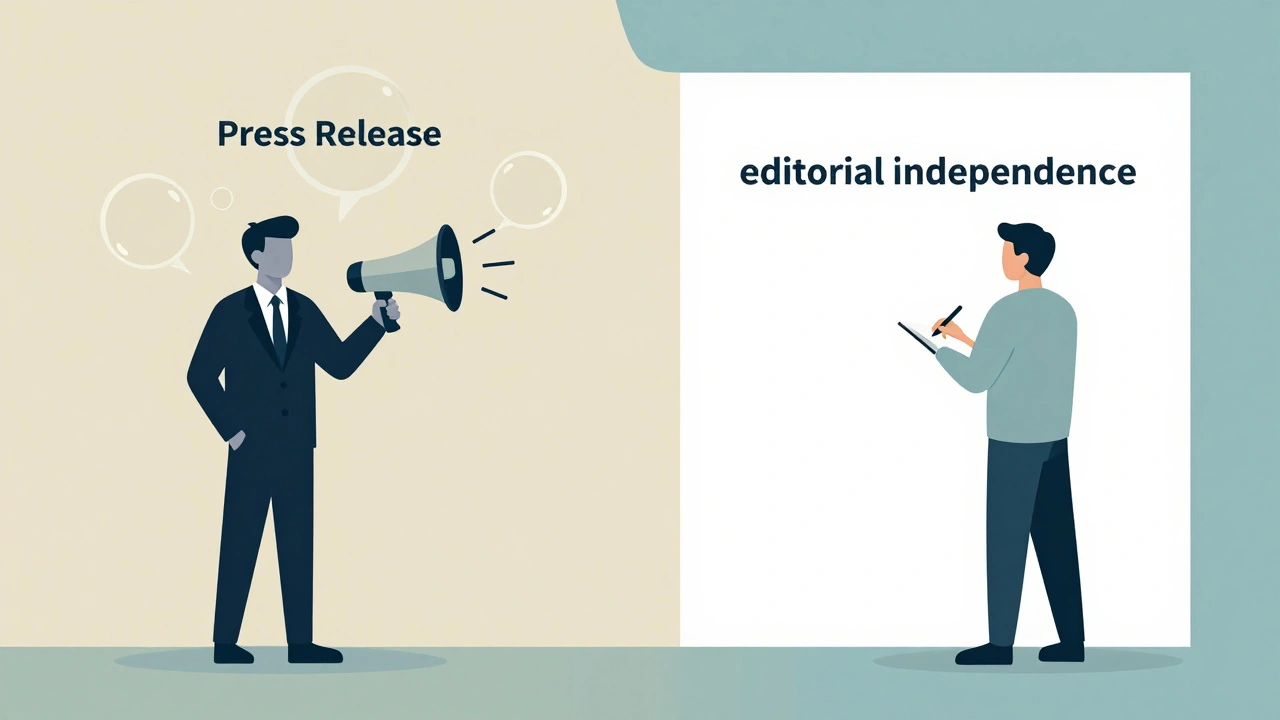
Wikipedia requires sources to be independent. This means the source must not have a financial conflict of interest or a close relationship with the subject being described. When a company writes about itself, it lacks this distance. Even if the intent is purely informational, the perception of bias is unavoidable. The platform assumes that self-published material will naturally highlight positives and omit negatives.
Think of it this way: If a restaurant owner claims their food is the best in town, that’s an opinion backed by self-interest. If a food critic with no ties to the restaurant reviews the meal, that’s an independent assessment. Wikipedia needs the critic, not the owner’s statement.
Why Press Releases Are Considered Self-Published
A Press Release is an official statement distributed to members of the news media to provide details or commentary on an issue, announce a newsworthy event, or promote a person, product, or company is the classic example of a non-independent source. While journalists often use press releases as tips to investigate further, they do not copy them word-for-word into articles without verification.
Wikipedia treats press releases similarly. They are considered "self-published" because the entity controlling the narrative is the same entity being discussed. Using a press release to support a claim creates a circular argument: "Company X did Y because Company X said it did Y." This doesn’t prove anything to a neutral reader.
There are very few exceptions. For instance, a press release might be used to confirm a simple, uncontroversial fact like a specific opening date, but only if no other source exists. However, relying solely on this method usually leads to deletion because it fails to demonstrate that the topic is noteworthy enough to warrant an article in the first place.
The Problem with Corporate Blogs and Social Media
Corporate blogs, LinkedIn posts, and Twitter accounts fall into the same category as press releases. These platforms allow anyone with credentials to publish content without rigorous editorial review. There is no third-party fact-checker standing between the writer and the public.
Consider a tech startup posting on its blog about raising $5 million in funding. The amount might be accurate, but the blog itself cannot serve as proof. Why? Because the startup has a vested interest in making the raise look bigger or more significant than it is. An independent source, like a business journal or a financial news outlet, would verify the terms, check regulatory filings, and perhaps interview investors before reporting the number.
Social media adds another layer of complexity. Tweets from verified accounts are often cited by users, but Wikipedia explicitly discourages using social media as a primary source. The transient nature of these platforms, combined with the lack of editorial standards, makes them unreliable for building long-term encyclopedic knowledge.
What Counts as an Independent Source?
If press releases and blogs are out, what is in? You need sources that demonstrate editorial oversight. This means a publication where editors and fact-checkers review content before it goes live, and who have no financial stake in the outcome of the story.
Here are examples of sources that typically meet the criteria:
- Mainstream News Outlets: Publications like The New York Times, BBC, Reuters, or local newspapers with established editorial boards. These organizations have reputations to protect and strict guidelines against publishing unverified claims.
- Academic Journals: Peer-reviewed articles in fields relevant to the topic. These undergo rigorous scrutiny by experts before publication.
- Government Documents: Official records, court filings, or census data. These are primary sources but are generally considered independent because they are created by bodies separate from the commercial entities they might reference.
- Industry Trade Magazines: Specialized publications that cover a specific sector. As long as the magazine doesn’t own the company being written about, it can serve as an independent voice.
The key test is always: Would this source criticize the subject if the facts warranted it? If the answer is yes, it’s likely independent. If the source only ever praises the subject, it’s probably too biased to be useful.
| Source Type | Independence Level | Editorial Oversight | Acceptable for Wikipedia? |
|---|---|---|---|
| Press Release | None (Self-published) | Internal Only | Rarely |
| Corporate Blog | None (Self-published) | Minimal/Internal | No |
| Social Media Post | None (Self-published) | None | No |
| Mainstream News Article | High | Strict Editorial Process | Yes |
| Peer-Reviewed Journal | High | Expert Peer Review | Yes |
How to Find Better Sources
If you’re trying to build a Wikipedia page for a client, a project, or yourself, stop looking inward. Start looking outward. Your goal is to find evidence that others care about the topic enough to write about it independently.
Use search engines strategically. Instead of searching for "[Company Name] press release," try "[Company Name] site:nytimes.com" or "[Company Name] analysis." Look for interviews where the subject speaks to a journalist, rather than statements issued directly by the subject. Interviews are powerful because the journalist asks the questions and frames the narrative, adding a layer of independence.
Also, consider the depth of coverage. A brief mention in a newsletter isn’t enough. Wikipedia requires significant coverage. This means multiple paragraphs, detailed analysis, or substantial discussion across several independent sources. One short blurb in a newspaper won’t cut it; you need a pattern of attention.

Common Mistakes to Avoid
Even experienced editors make mistakes when sourcing. Here are a few pitfalls to watch out for:
- Mixing Primary and Secondary Sources: A primary source (like a book written by the author) can provide quotes or basic biographical data, but it cannot establish notability. You need secondary sources (reviews of the book, articles about the author) to prove importance.
- Using Paid Content: Articles labeled as "Sponsored," "Partner Content," or "Native Advertising" are not independent. Even if they appear on a reputable news site, the payment arrangement compromises their neutrality.
- Citing Aggregators: Sites like Reddit, Quora, or Wikipedia itself cannot be cited. They aggregate user-generated content and lack editorial control. Citing Wikipedia to support a Wikipedia article is circular and forbidden.
When in Doubt, Ask the Community
Wikipedia is a community-driven project, which means interpretations of rules can vary. If you’re unsure whether a source is acceptable, don’t guess. Use the "Talk" page associated with the article. Explain your reasoning and ask for feedback. Experienced editors can often point you toward better sources or clarify why a particular link was rejected.
Remember, the goal isn’t to argue that your source is good. The goal is to find a source that the community agrees is reliable. By focusing on independence and editorial oversight, you’ll save time and avoid the frustration of having your work deleted.
Can I use a press release if it’s picked up by a major news outlet?
No, you should cite the news outlet’s article, not the press release. The news article represents the independent verification and editorial judgment of the journalist. The press release remains self-published material, regardless of whether it was distributed widely.
Is a company’s annual report a reliable source?
Annual reports are primary sources. They can be used for factual data like revenue figures or employee counts, but they cannot be used to establish notability or interpretive claims. You need independent analysis of those numbers to show why they matter.
Why can’t I just link to my own website for background info?
Your own website is self-published. While it’s fine for readers to visit your site for more information, it cannot be used as a citation to prove that the information is notable or accurate according to independent standards. Wikipedia requires third-party validation.
What if there are no independent sources for my topic?
If there are no significant independent sources, the topic likely does not meet Wikipedia’s notability guidelines. In this case, creating a Wikipedia page is not appropriate. Consider using other platforms like LinkedIn, personal websites, or industry directories instead.
Are trade magazines always reliable?
Not always. Some trade magazines accept paid advertisements or sponsored content that looks like editorial. Always check if the article is marked as sponsored. If it’s genuine editorial content written by staff journalists with no financial tie to the subject, it is usually acceptable.