Over 1,500 WikiProjects once thrived on Wikipedia-groups of volunteers who came together to improve articles on everything from jazz musicians to medieval fortresses. Today, more than half are silent. No edits in months. No discussions. No new members. They’re not deleted. They’re just… gone. Why do these collaborations fade? It’s not because no one cares. It’s because the system doesn’t support them.
The Illusion of Structure
WikiProjects were designed to bring order to chaos. A group of editors interested in, say, African history would create a project page, list articles that needed work, set goals, and invite others to join. It sounded simple. But Wikipedia never built real tools to keep them alive. No automated reminders. No activity dashboards. No way to see who was still active. Without those, projects became digital graveyards.Imagine starting a book club, but the library gives you a shelf, a sign-up sheet, and nothing else. No meetings scheduled. No new members notified. No one checks if you’re still reading. That’s a WikiProject after its first three months.
Volunteer Burnout Is Real
Most WikiProject contributors are unpaid, overworked, and already managing dozens of other edits. They join a project because they love the topic. But soon, they’re the only one updating the project page. They fix broken links. They tag articles. They reply to the same three questions from new editors. No one else steps up. After six months, they stop logging in. The project becomes a ghost.One editor, who worked on WikiProject Military History for two years, told me they kept going because they felt responsible. “I didn’t want to be the one who let it die,” they said. But when they finally quit, the project had only three active members-and none of them had edited in over a year. That’s not dedication. That’s guilt.
Leadership Isn’t Encouraged
Active WikiProjects have one thing in common: someone who shows up every week. Not just edits-coordination. They update the to-do list. They reply to talk pages. They welcome new people. They remind others about upcoming goals.But Wikipedia doesn’t recognize that role. There’s no badge for project leaders. No mention in edit summaries. No way to track who’s keeping a project alive. So people who start projects don’t stick around long enough to make them sustainable. Why put in the extra work if no one notices?
Goals That Don’t Change
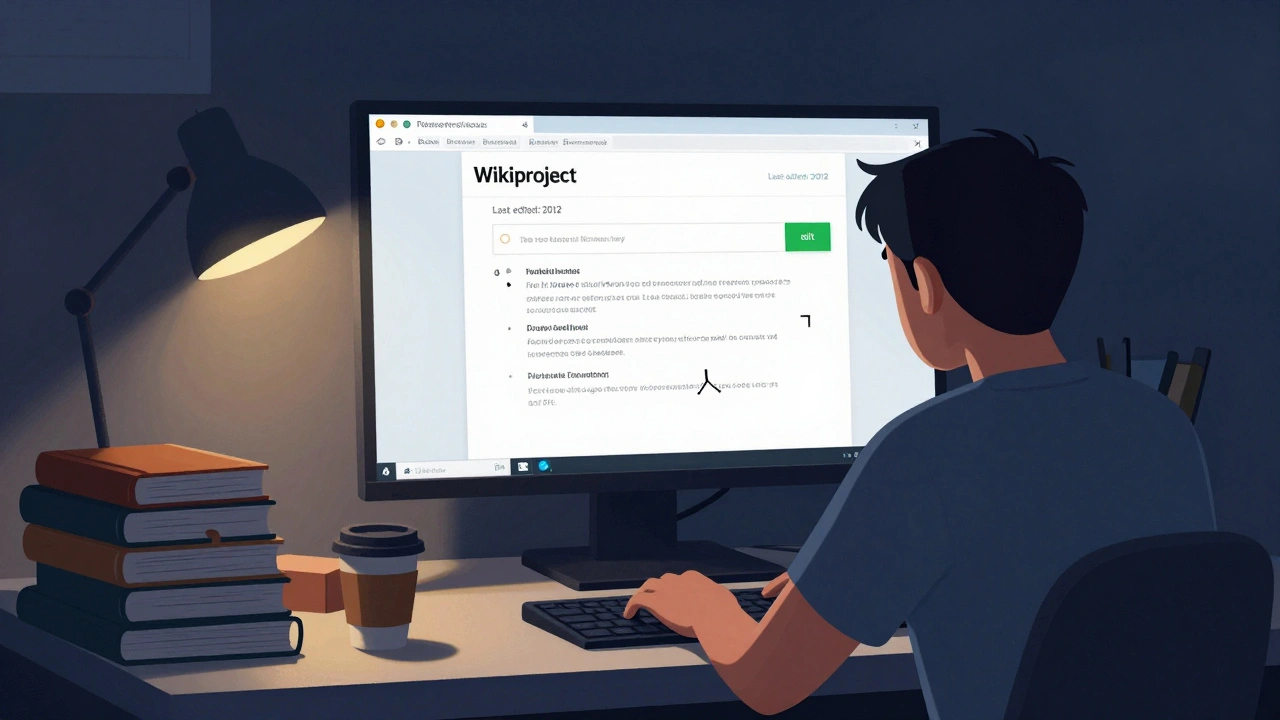
Look at any inactive WikiProject page. You’ll see the same goals from 2012: “Improve 50 articles to Good Article status.” “Create 100 new stubs.” “Hold a monthly edit-a-thon.”Those goals were written when the project had 20 active members. Now? Zero. But the page stays frozen. No one updates it. No one says, “Let’s scale back to just cleaning up references” or “Let’s focus on one country.” The project becomes a relic of its own ambition.
Active projects adapt. They shrink. They pivot. Inactive ones don’t. They keep asking for things no one can deliver.
The New Editor Problem
Wikipedia gets 300,000 new editors every month. Less than 1% stick around for more than a week. Why? Because the onboarding process is broken.When a new editor finds a WikiProject page, they see a wall of text: guidelines, templates, talk pages, lists of articles. No welcome message. No quick-start guide. No one says, “Hey, here’s a simple fix you can do in five minutes.”
They leave. And the project doesn’t notice. There’s no system to track who visited, who clicked, who disappeared. So the project doesn’t change. It doesn’t get easier. It just gets quieter.
What Keeps a WikiProject Alive?
Not passion. Not ideology. Not even good intentions. It’s rituals.Look at the few WikiProjects still active today-like WikiProject Women in Red or WikiProject Medicine. They have:
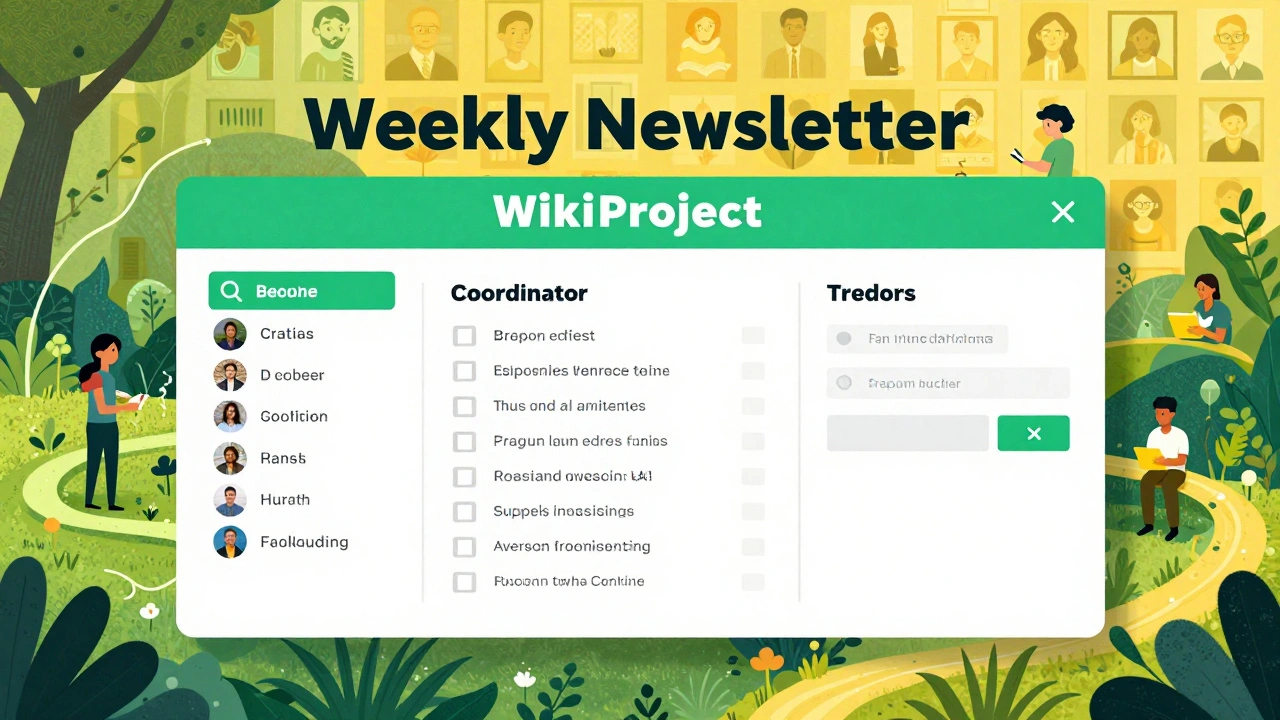
- A weekly newsletter or update posted every Monday
- A simple, one-click task for new editors (like adding a citation to a single article)
- A public list of recent edits so people can see progress
- A rotating coordinator who takes over every three months
They don’t need hundreds of members. They need consistency.
One editor in WikiProject Women in Red told me they started by just editing one article a week. Then they invited three friends. Then they made a simple checklist. Within a year, they had over 5,000 new biographies. Not because they were brilliant. Because they showed up.
What Can Be Done?
Wikipedia doesn’t need to reinvent the wheel. It just needs to use the tools it already has.- Use the Watchlist feature to notify project members when new editors join
- Automate a monthly email to project members: “You haven’t edited in 60 days. Want to revive your project?”
- Create a template for “Mini-Projects”-small, time-bound goals like “Fix all dead links in 10 articles by March”
- Let inactive projects be archived with a clear note: “This project is on pause. Want to restart it? Contact [name].”
Right now, Wikipedia treats WikiProjects like museum exhibits. They’re preserved, but not alive. They need to be treated like gardens-watered, pruned, replanted.
It’s Not Too Late
There are still 600+ WikiProjects with at least one edit in the last year. Many of them could be revived with just a few hours of work. You don’t need to be an expert. You don’t need to lead. You just need to show up once.Find a WikiProject that interests you. Open the project page. Look for the “To Do” list. Pick one article. Fix one broken link. Add one citation. Leave a comment: “I’m here. Let me know if you need help.”
That’s all it takes to bring a project back to life.
Why This Matters
WikiProjects aren’t just about improving articles. They’re about building community. They’re where new editors find their place. They’re where expertise gets passed down. When they die, Wikipedia doesn’t just lose content-it loses its soul.Every inactive project is a story of good intentions that ran out of steam. But it doesn’t have to be that way. Change doesn’t require a revolution. It just requires someone who shows up.
What counts as an inactive WikiProject?
A WikiProject is considered inactive if it has had no edits, talk page activity, or member participation for at least six months. Many stay listed on Wikipedia’s directory even when empty, making them hard to distinguish from active ones.
Can I revive an inactive WikiProject?
Yes. Start by editing the project page to update its goals, then pick one article to improve. Post a message on the talk page: “I’m restarting this project. Can you help?” Even one other person joining is enough to begin rebuilding momentum.
Why doesn’t Wikipedia delete inactive projects?
Wikipedia avoids deleting content unless it’s spam or vandalism. Inactive projects are seen as potential resources, even if unused. Some editors also believe they might be revived later, so they’re kept for historical record.
Are there any WikiProjects that are still growing?
Yes. Projects like WikiProject Women in Red, WikiProject Medicine, and WikiProject Biography have active coordinators, regular events, and clear, simple tasks for new editors. They succeed because they focus on small wins and consistent communication.
How can I find active WikiProjects to join?
Go to Wikipedia’s WikiProject directory and filter by “Recently active.” Look for projects with recent talk page posts or edits in the last 30 days. Projects with a “New contributors welcome!” banner are usually the best places to start.