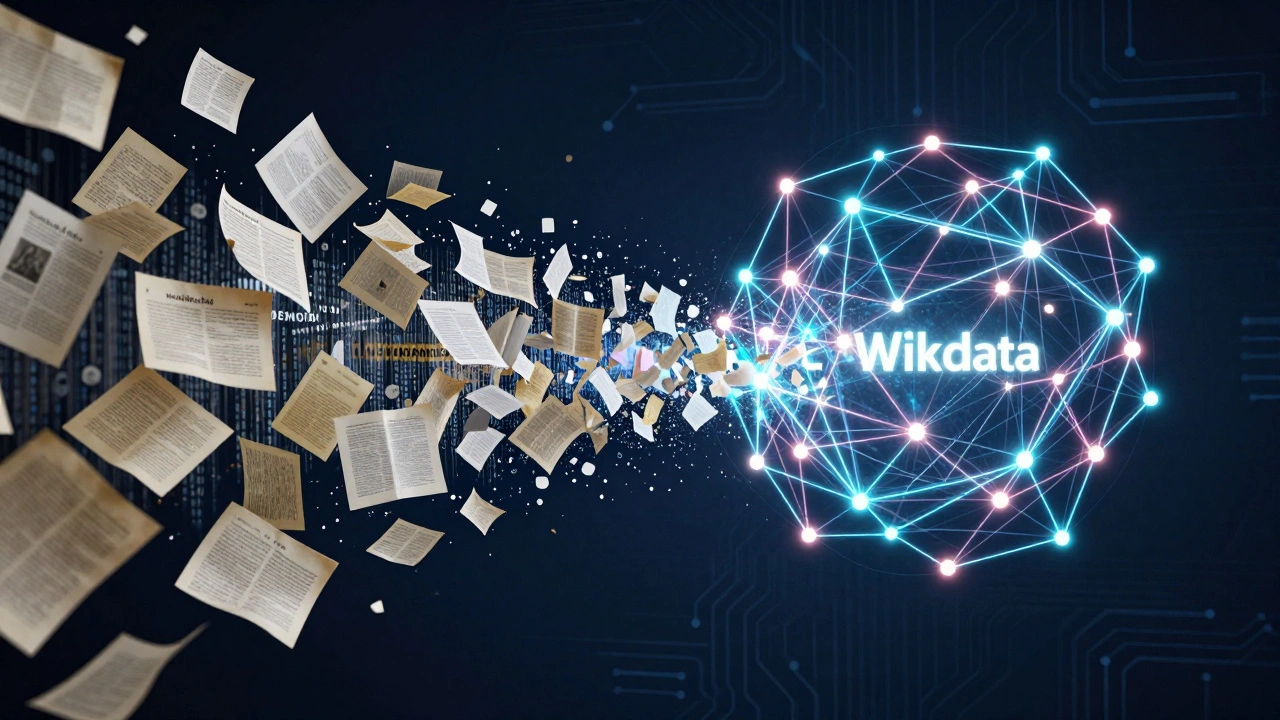
Large Language Models are great at talking, but they're surprisingly bad at remembering facts. You've probably seen an AI confidently invent a historical date or a fake legal case-this is the 'hallucination' problem. To fix this, developers are turning to structured data. Instead of hoping an AI remembers a fact from its training, we can give it a map of the world's knowledge. That's where Wikidata is a collaboratively edited multilingual knowledge base that stores data as structured triples comes in. By turning Wikipedia's prose into a machine-readable graph, we can provide AI with a "source of truth" that doesn't guess.
Key Takeaways for AI Developers
- Wikidata transforms unstructured Wikipedia text into a structured Knowledge Graph (KG).
- Using KGs reduces LLM hallucinations by providing factual grounding (RAG).
- The SPARQL query language allows AI to fetch precise attributes rather than predicting tokens.
- Integrating structured data improves AI reasoning across different languages.
Moving from Prose to Patterns
Wikipedia is written for humans. If you ask a computer to find every city in France with a population over 100,000 by reading Wikipedia articles, it has to parse thousands of paragraphs, deal with weird formatting, and hope the writer mentioned the population in a consistent way. It's a nightmare for efficiency.
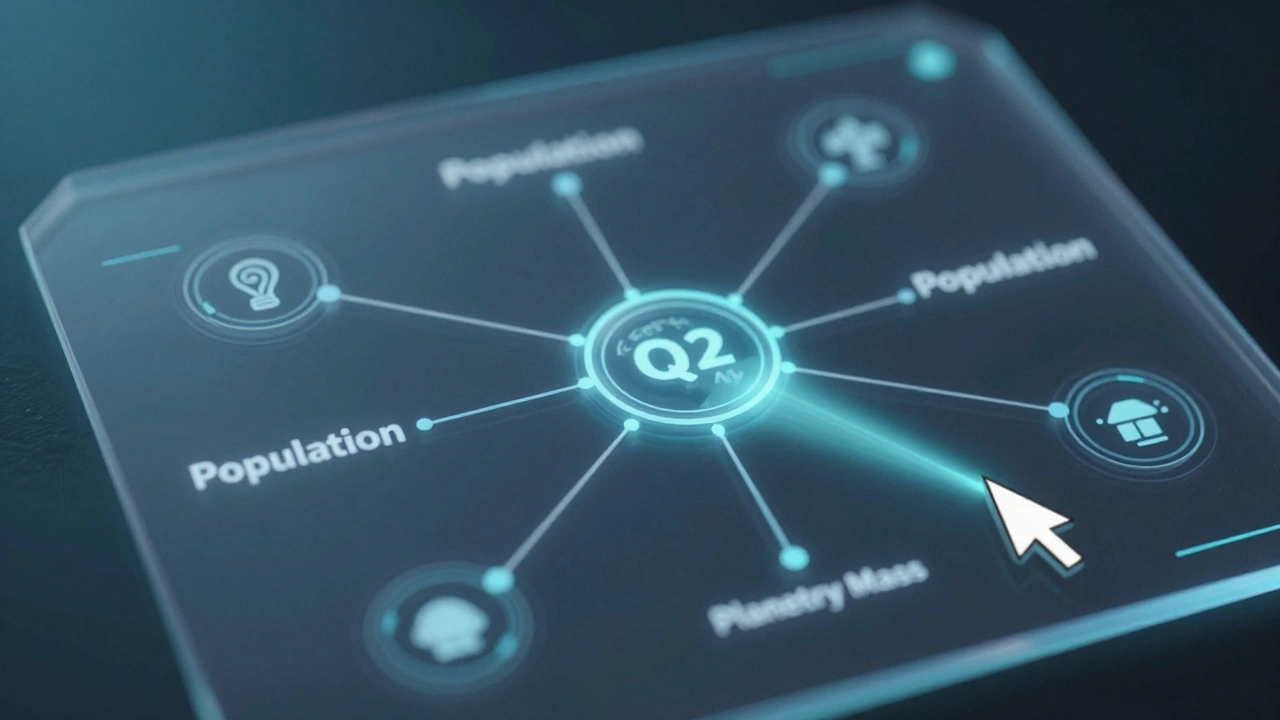
Wikidata solves this by separating the description from the data. In this system, every single concept-from "Quantum Physics" to "The Eiffel Tower"-is assigned a unique identifier (called a QID). For example, the entity for "Earth" is Q2. Attached to that ID are statements (claims). A claim consists of a property (like "population") and a value (like "8 billion").
This structure creates a Knowledge Graph, which is essentially a massive web of nodes (entities) and edges (relationships). When an AI uses a graph, it isn't just predicting the next word; it's traversing a path. If the AI needs to know who the current CEO of a company is, it doesn't guess based on patterns in its training data; it looks up the entity, follows the "CEO of" edge, and finds the exact name.
The Role of SPARQL in AI Workflows
You can't just feed a raw database dump into an AI. You need a way to ask specific questions. This is where SPARQL comes in. It's the query language designed specifically for RDF (Resource Description Framework) data. While SQL is for tables, SPARQL is for graphs.
Imagine you're building a medical AI. You don't want the model to guess the side effects of a drug. Instead, your application can generate a SPARQL query that hits the Wikidata Query Service (WDQS). The query asks: "Find all entities that are types of 'medication' and have the property 'side effect'." The result is a clean, structured list of facts that the AI can then summarize for the user in natural language.
| Feature | Wikipedia (Unstructured) | Wikidata (Structured KG) |
|---|---|---|
| Data Format | Natural Language Prose | Triples (Subject-Predicate-Object) |
| Retrieval Method | Vector Search / Embedding | SPARQL Queries / Graph Traversal |
| Accuracy | Prone to hallucination | Deterministic / Factual |
| Update Speed | High (User edits) | Instant (Property update) |
Solving the Hallucination Problem with RAG
Most modern AI apps use a technique called Retrieval-Augmented Generation, or RAG. Traditionally, RAG involves searching a vector database for a similar-sounding paragraph and feeding that to the LLM. But vector search is based on similarity, not truth. Sometimes the most "similar" paragraph is actually wrong.
By integrating a Knowledge Graph, we move toward "Graph-RAG." Instead of retrieving a chunk of text, the system retrieves a subgraph. For instance, if a user asks, "How is the economy of Japan related to the semiconductor industry?", the AI can pull a set of connected entities: Japan $\rightarrow$ economy $\rightarrow$ exports $\rightarrow$ semiconductors $\rightarrow$ TSMC. This provides a factual skeleton that the AI then fleshes out with prose. This prevents the model from making leaps of logic that aren't supported by evidence.
Handling Multilingual Data at Scale
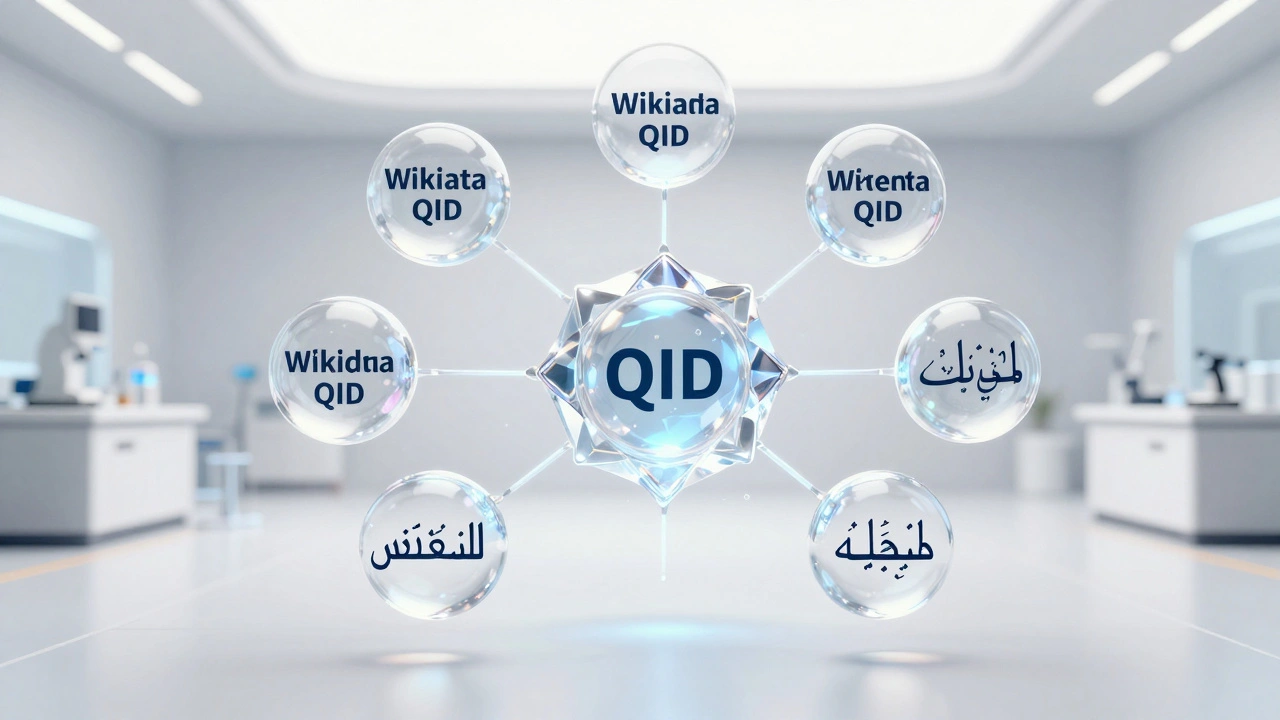
One of the biggest headaches in AI is the language gap. Models often perform better in English than in Swahili or Vietnamese because the training data is skewed. However, Wikidata is language-agnostic. The entities are IDs (QIDs), not words.
If you want to build an AI that works across borders, you don't need to translate your entire database. You use the QID as the universal key. The AI can find the entity Q42 (Douglas Adams), and then fetch the label for that entity in any of the 300+ languages supported by the system. This ensures that the factual core of the AI's knowledge remains consistent, regardless of the language the user is speaking.
Practical Steps to Build Your Own Graph-Based AI
You don't have to build a knowledge base from scratch. You can leverage the existing ecosystem to enhance your models. Here is a realistic workflow for implementing this:
- Identify your Entities: Determine which real-world objects (companies, chemicals, people) your AI needs to be an expert in.
- Map to Wikidata: Use the Wikidata API to find the corresponding QIDs for your entities. If you're dealing with "Tesla Inc," you'll map it to Q4653.
- Construct Queries: Write SPARQL queries to extract the specific properties you need (e.g., founding date, headquarters, key executives).
- Create a Hybrid Pipeline: Use a framework like LangChain or LlamaIndex to create a tool that allows the LLM to decide when to search the graph versus when to rely on its internal weights.
- Validate and Cache: Since the WDQS can be slow or rate-limited, cache frequent queries in a local graph database like Neo4j.
Common Pitfalls to Avoid
It's not all smooth sailing. The biggest risk with using a community-driven graph is data inconsistency. While Wikidata is generally accurate, some properties might be missing or outdated. You shouldn't treat a single SPARQL result as an absolute, divine truth without some validation.
Another mistake is trying to import all of Wikidata. The dataset is massive-terabytes of data. Unless you have a massive cluster, you should only extract the "subgraph" relevant to your specific domain. If you're building a tool for architects, you don't need the data on 18th-century French poetry.
What is the difference between Wikipedia and Wikidata for AI?
Wikipedia is unstructured text designed for humans to read. Wikidata is a structured database designed for machines to query. For AI, Wikipedia is used for training language patterns, while Wikidata is used for factual grounding and precise data retrieval.
Is SPARQL hard to learn for Python developers?
If you know SQL, SPARQL is relatively intuitive. Instead of SELECTing from tables, you are SELECTing patterns from a graph. There are many libraries, such as SPARQLWrapper, that make it easy to integrate into Python scripts.
How does a Knowledge Graph actually stop AI hallucinations?
Hallucinations happen when an AI predicts a word that sounds right but isn't factual. A Knowledge Graph replaces this prediction with a lookup. Instead of the AI guessing a date, the system fetches the date from a database and tells the AI, "Use this exact date in your answer."
Can I use Wikidata for private company data?
Wikidata is a public repository. You cannot put private data there. However, you can use the format and logic of Wikidata to build a private Knowledge Graph using tools like Neo4j or AWS Neptune for your internal business data.
What is a QID in the context of Wikidata?
A QID is a unique identifier for an entity. For example, Q42 is the ID for Douglas Adams. Using QIDs prevents confusion between two people with the same name, which is a common problem for LLMs.