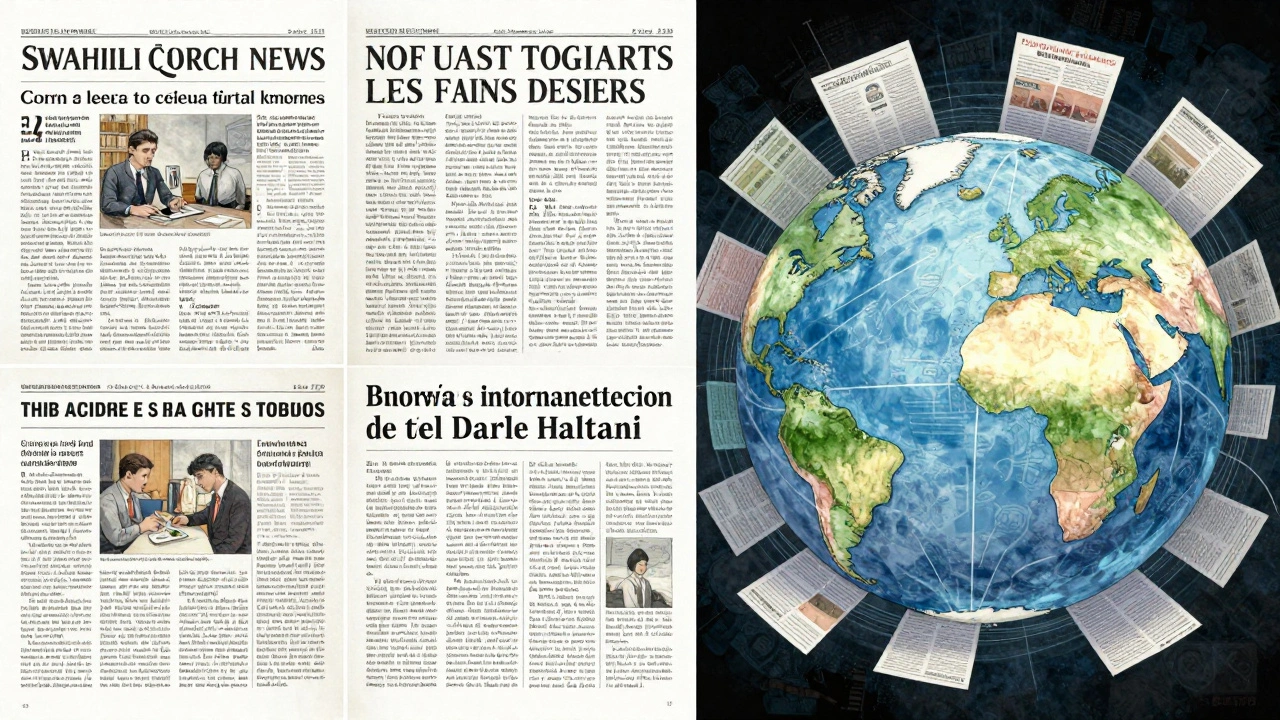
Wikinews isn’t just another news site. It’s a living archive of real events, written by volunteers, in over 30 languages, and it doesn’t charge for access or run ads. But here’s the thing: while it claims to be global, not every part of the world speaks equally through it. Some languages have dozens of articles a week. Others haven’t had a single story in months. Why does that matter? Because if news only flows in a few languages, we’re missing the full picture of what’s happening on Earth.
How Wikinews Works
Wikinews is part of the Wikimedia Foundation, the same group behind Wikipedia. It follows the same open-editing rules: anyone can write, edit, or fact-check a story. But unlike Wikipedia, which summarizes knowledge, Wikinews reports on current events. A protest in Lagos, a new law in Manila, a flood in Peru-all of these can become Wikinews articles if they meet basic criteria: original reporting, neutral tone, and verifiable sources.
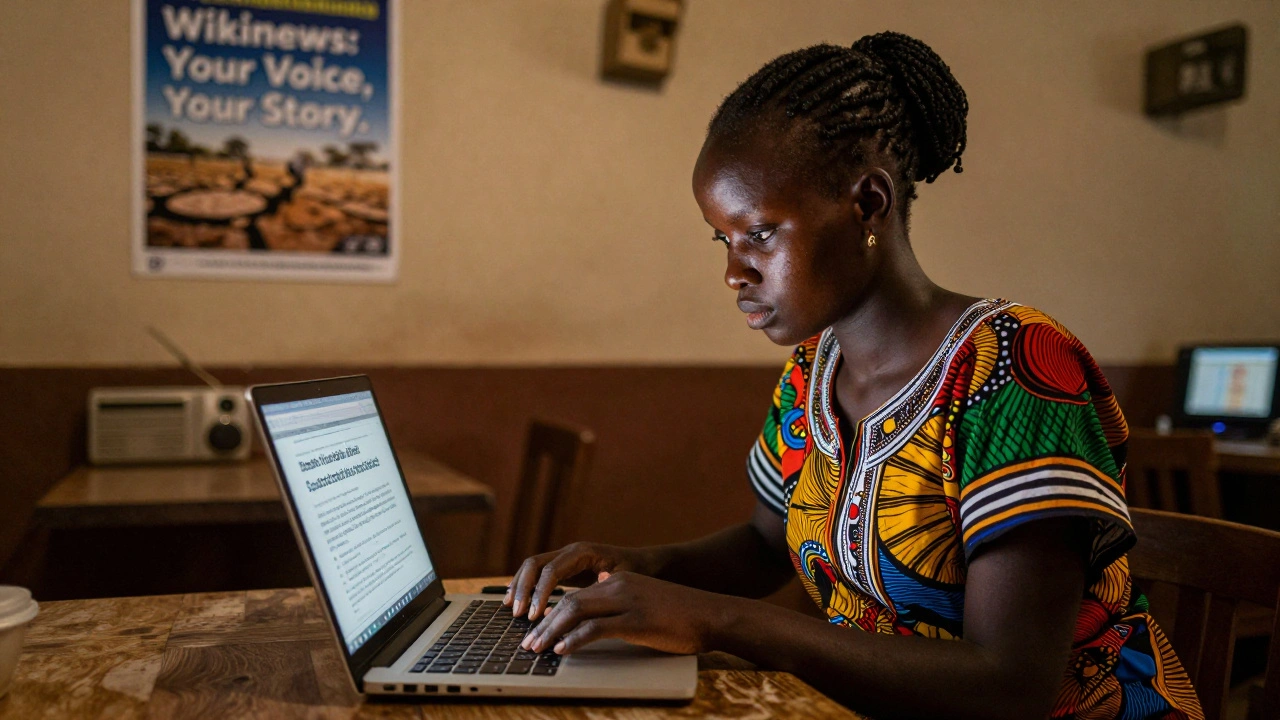
There’s no paid staff. No editors with final say. No corporate agenda. Just volunteers, often students, retirees, or journalists in their spare time, typing away from kitchens, libraries, and internet cafes. The result? A patchwork of news that’s sometimes slow, sometimes rushed, but always free and open to the public.
The Language Gap
As of early 2026, Wikinews has active editions in 32 languages. But the distribution is wildly uneven. English leads with over 20,000 published articles since 2004. Spanish comes second, with around 8,000. Then French, German, and Russian, each with a few thousand. But look further down the list: Swahili has 172 articles. Bengali, 98. Quechua, 12. And 15 languages have fewer than five articles total.
This isn’t about lack of interest. It’s about access. People in rural India, parts of Africa, and Indigenous communities in Latin America often don’t have the tools or training to contribute. Many don’t know Wikinews exists. Others are fluent in their native language but not in English, and there’s no one to help translate their local stories into the global network.
For example, in 2023, a major drought hit the Sahel region. Hundreds of thousands were affected. Local radio stations reported it daily. But Wikinews? Only one article appeared-written in French, sourced from a Paris-based NGO. No reports from Hausa, Fulani, or Tamasheq speakers. That’s not diversity. That’s silence.
Why Some Languages Thrive
It’s not random. Languages with strong Wikipedia communities tend to have stronger Wikinews ones too. That’s because the same volunteers often cross over. In countries like Brazil, Germany, and Japan, people are used to editing Wikipedia. They know how to cite sources. They understand neutrality. They’ve built networks. So when Wikinews launched, they jumped in.
But in places like Bangladesh or Nigeria, Wikipedia has grown slowly due to internet access issues, lack of educational support, or political distrust. Wikinews hasn’t had a chance to catch up. There’s also a language hierarchy at play. Editors often default to English because they think it’s “more important.” They translate stories from local languages into English instead of writing directly in their mother tongue. That kills authenticity.
There’s a real example: In 2022, a student in Oaxaca, Mexico, wrote a detailed report on a community-led water rights protest in Mixtec. She wrote it in Mixtec. But she couldn’t find anyone to help translate it into Spanish or English. So it never got published. That story died because the system didn’t support it.
What’s Being Done
Some small groups are trying to fix this. The Wikinews community in Indonesia started a mentorship program for high schoolers in Javanese and Sundanese. In Kenya, volunteers trained local radio journalists to turn their broadcasts into Wikinews articles in Swahili. In 2025, the Wikimedia Foundation launched a pilot grant program specifically for underrepresented languages, offering small stipends for translation help and tech training.
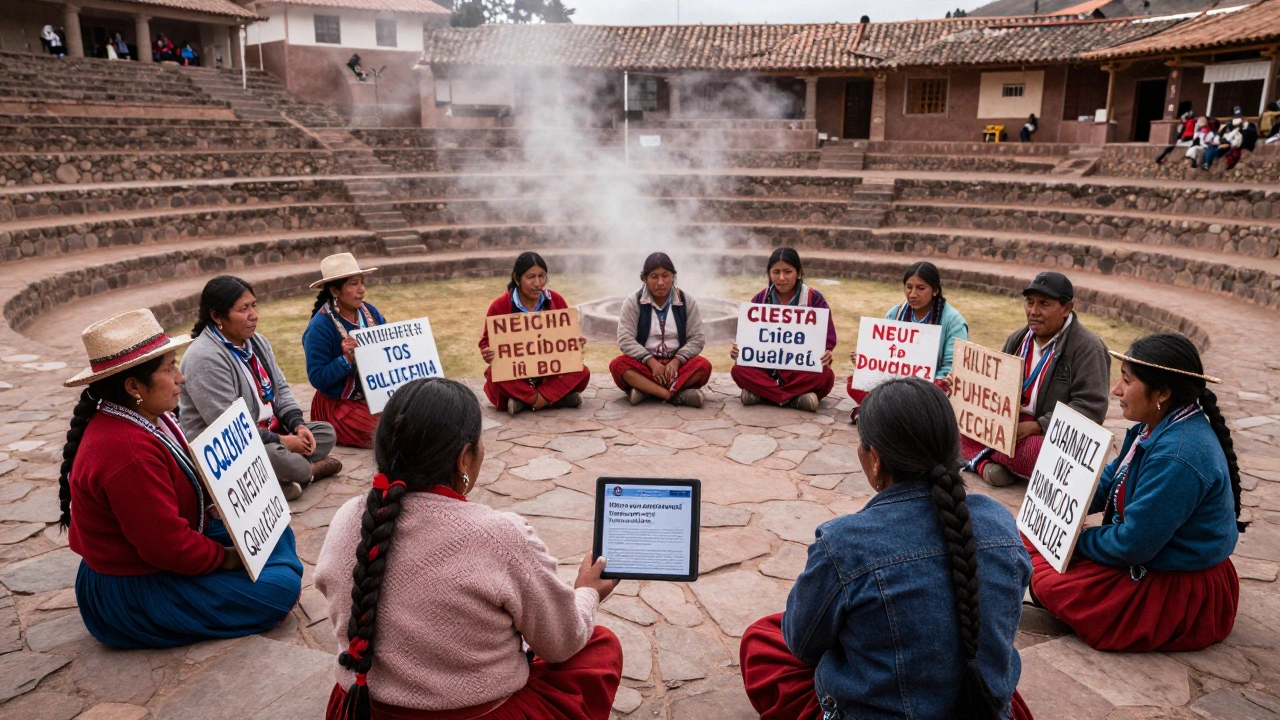
One success? The Quechua edition. After five years with only two articles, a team of university linguists and Indigenous activists launched a campaign. They held workshops in Cusco and La Paz. They created simple guides in Quechua on how to write a news article. Within a year, they published 23 stories-about land rights, school closures, and traditional medicine. It’s still tiny compared to English, but it’s real. It’s local. It’s alive.
The Real Cost of Missing Voices
When news only comes from a few languages, the world gets a distorted view. We hear about protests in Paris, but not the same protests in Lima. We read about tech layoffs in Silicon Valley, but not the factory shutdowns in Vietnam that supply the chips. We assume a story is unimportant if no one’s reporting it. But that’s not truth. That’s absence.
And it’s not just about fairness. It’s about accuracy. Climate events, disease outbreaks, political shifts-these don’t respect borders or language barriers. If you’re trying to understand a global crisis, and your only sources are in English, you’re missing half the data.
Imagine a pandemic starts in a remote village in Papua New Guinea. The local healer notices a pattern. She tells her community. They start sharing warnings in Tok Pisin. But no one translates it. No one reports it. By the time it reaches a WHO bulletin in Geneva, hundreds are already infected. That’s not a failure of medicine. That’s a failure of information.
How You Can Help
You don’t need to be a journalist. You don’t need to be fluent in five languages. You just need to care about what’s happening outside your bubble.
- Find a language you know that’s underrepresented on Wikinews-maybe your grandmother’s tongue, or the language of your neighborhood. Check if it has an edition. If not, start one. The process is simple: go to meta.wikimedia.org, request a new language edition, and find three others who want to join.
- Translate a story. Pick an article in Spanish, Arabic, or Hindi. Translate it into English or your native language. Add a note: “Translated from [language] by [your name].” That helps bridge gaps.
- Share local news. If you hear about a community meeting, a school closure, or a new law in your town, write it up. Even if it’s small. Wikinews doesn’t need big headlines. It needs truth.
There’s a myth that global news must come from big cities. But the most important stories often come from quiet places. The person who speaks only Kinyarwanda might be the first to report a new virus strain. The teenager in Hanoi might be the only one documenting air pollution levels in her district. Their voices matter. But only if someone gives them a platform.
The Future of Wikinews
Wikinews could become the most diverse news source on Earth-if it chooses to be. Right now, it’s a mirror that reflects the digital elite. But it doesn’t have to stay that way. With better tools, more training, and real support for minority languages, it could become the first truly global news network: not by broadcasting from the center, but by listening from everywhere.
The technology exists. The volunteers are out there. What’s missing is the will. And maybe, just maybe, that’s something you can change.