Imagine opening your talk page to find a comment that isn't about the article, but directly targets you. It happens more often than most editors expect. Wikipedia’s Anti-Harassment Committee is a specialized group within the English Wikipedia community tasked with resolving disputes involving personal attacks, stalking, and other non-contentious conflicts. Unlike standard dispute resolution, this body focuses on protecting users from interpersonal friction that hinders their ability to contribute.
The challenge isn't just social; it's technical. The platform relies on a complex web of permissions, automated scripts, and user-driven tools to keep these issues manageable. Understanding how these systems work helps you navigate conflicts without getting stuck in a bureaucratic loop. You don't need to be an administrator to use most of these features, but knowing what exists changes how you approach a heated debate.
Core Protection Mechanisms
Before diving into specific committees, look at the built-in shields. These are the first lines of defense against harassment. They range from simple visibility toggles to robust blocking powers held by Administrators who hold elevated user rights on Wikipedia to maintain order, delete pages, and block disruptive users.
- Talk Page Hiding: Any editor can hide comments they deem harassing. This removes the text from public view immediately while preserving it for potential review. It’s a low-friction way to stop a bad moment from escalating.
- User Blocks: Administrators can prevent specific users from editing or posting. A temporary block (usually 1-7 days) is common for minor infractions. Indefinite blocks are rare and usually reserved for serial offenders.
- Page Protection: If a page becomes a battleground, admins can lock it. Only higher-level editors can make changes. This freezes the conflict until the dust settles.
- Edit Summaries: While not a protection tool per se, clear edit summaries help trace the origin of a dispute. Ambiguous edits often lead to accusations of bad faith, so documenting your intent is a passive defense strategy.
These tools rely on human judgment. An admin has to decide if a comment is "harassing" or just "rude." That distinction is subjective, which is why the formal process exists.
The Anti-Harassment Committee Process
When informal talks fail, the English Wikipedia Anti-Harassment Committee steps in. It operates under a specific set of guidelines designed to be faster and less formal than the Arbitration Committee.
- Filing a Case: Any editor can file a case. You describe the incident, provide links to evidence (talk pages, edit history), and state the desired outcome (e.g., a warning, a block, or a mediation).
- Case Review: A panel of three committee members reviews the file. They check if the issue falls under their jurisdiction (personal attacks, stalking, etc.).
- Hearing Phase: Both parties get a chance to present their side. This isn't a court trial; it's a structured conversation. The goal is clarity, not punishment.
- Decision: The panel votes. Outcomes include no action, a formal warning, a temporary block, or a referral to the Arbitration Committee for severe cases.
The key difference here is speed. Standard arbitration can take months. The Anti-Harassment Committee aims to resolve most cases within 30 days. This matters because prolonged uncertainty is often worse than the initial insult.
Technical Tools for Moderation
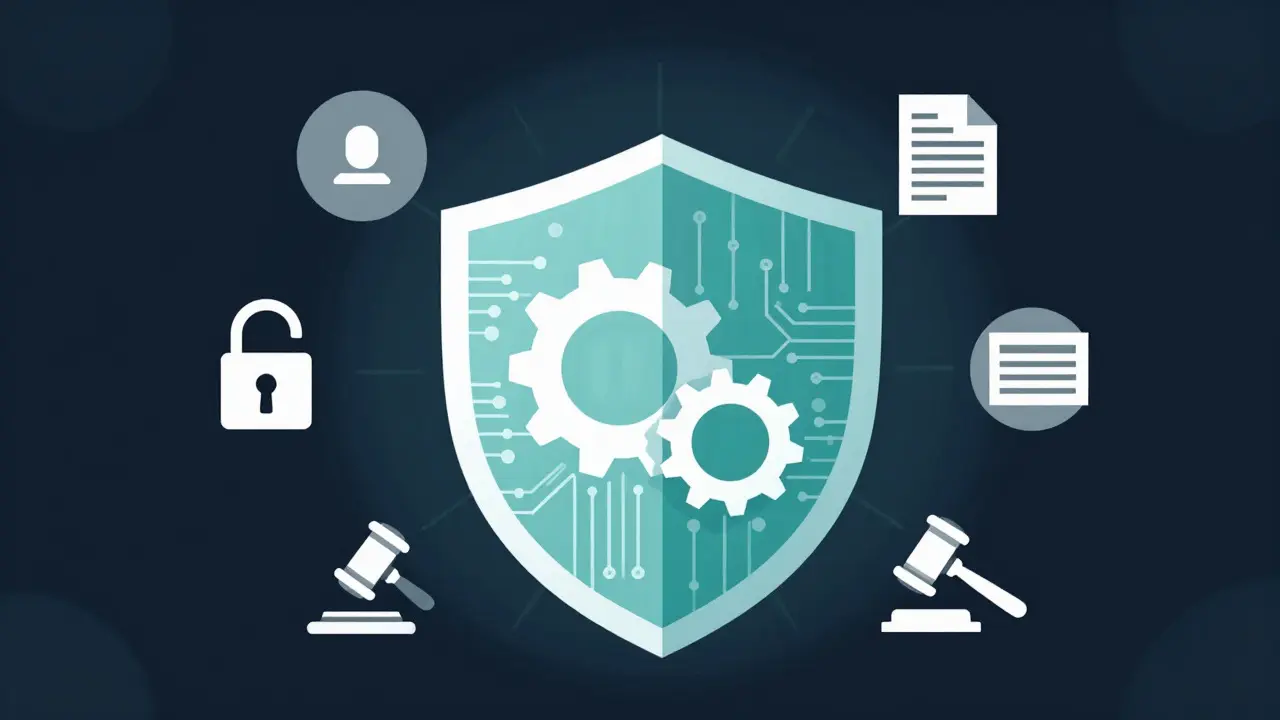
Beyond manual interventions, several technological aids support the moderation workflow. These aren't always visible to casual users but play a huge role in background processing.
| Tool Name | Primary Function | User Access Level | Response Time |
|---|---|---|---|
| Talk Page Hide | Removes specific comments from view | All Registered Users | Instant |
| Admin Block | Prevents user from editing/posting | Administrators | Minutes to Hours |
| Page Protection | Limits editing to senior users | Administrators | Instant |
| AH Committee Case | Formal dispute resolution for harassment | All Registered Users | ~30 Days |
| Arbitration Committee | Final appeal for severe disputes | All Registered Users | Months |
One notable technical feature is the User Rights Management System, which tracks and enforces the specific permissions assigned to each account, such as Admin, Bureaucrat, or Steward. When a block is issued, this system updates the user's status across all related projects instantly. This synchronization prevents a blocked user from bypassing restrictions by switching between Wikipedia and its sister projects like Wikidata or Commons.
Another critical component is the MediaWiki Platform, the software engine behind Wikipedia. It logs every action, creating an immutable audit trail. For harassment cases, this log is the primary evidence. If someone claims they never made a rude comment, the server logs settle it. This transparency is a double-edged sword: it protects the accused from false claims but also ensures the accuser can't fabricate evidence.
Navigating Common Pitfalls
Even with these tools, editors often get stuck. Here are the most frequent errors and how to fix them.
Mistake 1: Treating Content Disputes as Harassment. Not every disagreement is harassment. If two editors argue over a fact in an article, that's a content dispute. Use Talk pages or Request for Comment (RFC). Filing an AH case for a factual error wastes committee time and may result in a quick dismissal.
Mistake 2: Ignoring the "Cool Down" Period. After a heated exchange, wait 24 hours before filing a formal complaint. Emotions run high in the moment. Waiting allows both sides to see if the issue resolves naturally. Many potential cases vanish after a day of silence.
Mistake 3: Poor Evidence Presentation. Don't just say "they were mean." Provide direct links to the specific comments. Quote the text. Show the context. Vague descriptions make it hard for reviewers to judge the severity. Specificity wins.

Role of Automated Scripts
While humans make the final calls, bots do the heavy lifting. Patrol Bots scan recent changes for obvious vandalism. If a bot detects a massive revert or an IP address known for spam, it flags the edit instantly. This reduces the load on human admins, allowing them to focus on nuanced interpersonal conflicts rather than obvious junk edits.
There are also semi-automated tools for tracking user behavior. For example, a script might alert a reviewer if a new account makes rapid-fire edits across multiple unrelated articles. This pattern often signals drive-by trolling. By catching these early, the community prevents small annoyances from becoming large-scale disruptions.
Future Directions and Community Feedback
The landscape is shifting. The Wikimedia Foundation, the non-profit organization that hosts Wikipedia, regularly surveys editors to identify pain points. Recent feedback highlights the need for clearer definitions of "harassment" and faster response times. There is ongoing discussion about integrating AI-assisted sentiment analysis to flag potentially toxic comments before they go live. However, editors remain wary of algorithmic bias, so any such tool would likely serve as a suggestion, not an automatic action.
For now, the best defense remains proactive communication. Clear edit summaries, polite talk page interactions, and knowing when to step back reduce the likelihood of needing formal tools. But when you do need them, understanding the hierarchy-from self-help hiding to full arbitration-ensures you pick the right lever for the problem.
Who can file a case with the Anti-Harassment Committee?
Any registered user on English Wikipedia can file a case. You do not need to be an administrator or have a long editing history. The only requirement is that the dispute involves personal interaction rather than just article content.
How long does an Anti-Harassment Committee case take?
The target timeframe is 30 days from filing to decision. Simple cases often resolve faster, while complex ones involving multiple parties may take longer. It is significantly faster than the Arbitration Committee, which can take several months.
Can I hide my own talk page comments?
Yes, any user can hide comments on their own talk page. This is useful if you want to remove a particularly harsh remark while waiting for a cooler head to prevail. The hidden text remains accessible to administrators for review purposes.
What is the difference between a block and a ban?
A block is a temporary restriction on editing or posting, usually lasting days or weeks. A ban is a permanent removal of access, typically imposed by the Arbitration Committee for severe or repeated violations. Most harassment cases result in warnings or temporary blocks, not bans.
Do anonymous IPs face the same harassment protections?
Yes, but enforcement is harder. Since anonymous users lack persistent accounts, blocking them requires tracking IP ranges, which can be imprecise. Anonymous users can still file complaints, but resolving their cases often results in IP-based blocks rather than account-specific actions.