Staring at a red "Disputed" tag on an article you spent hours editing can feel like hitting a brick wall. You made a good-faith change based on reliable sources, but someone else reverted it, and now the Talk Page is filling up with polite arguments that go nowhere. This is where the Dispute Resolution Noticeboard comes in. It isn't just a place to complain; it's a structured mechanism designed to break deadlocks when two or more editors cannot agree on how to present information neutrally. If you've ever felt stuck in an edit war or confused about why your well-sourced addition keeps getting removed, understanding this tool is essential for keeping Wikipedia's articles accurate and stable.
What Actually Happens on the Noticeboard
The A semi-formal community space where editors post unresolved editorial disagreements for neutral third-party input serves as a middle ground between private Talk Page debates and formal mediation. When you post there, you aren't asking for a vote. You are asking for perspective. A neutral editor-one who hasn't been involved in the specific argument-reads the history of the edits and the arguments presented. Their job is to identify if one side is ignoring evidence, if the tone has become personal, or if the article needs a compromise structure rather than a winner-takes-all approach.
It’s important to distinguish this from the Arbitration Committee, which handles bad behavior. The Dispute Resolution process focuses strictly on the content. If you’re fighting over whether a biographical subject is a "successful entrepreneur" or a "controversial figure," that’s a content dispute. If you’re fighting because someone called you a "stubborn bot," that’s a behavior issue. Mixing these two things usually slows down resolution significantly.
When to Use It (And When Not To)
Timing is everything. Jumping straight to the noticeboard after a single revert looks aggressive and often results in a quick dismissal. The community expects you to try basic communication first. Here is a practical rule of thumb:
- Don't use it yet if: You haven't left a clear explanation on the Talk Page citing a reliable source. If your opponent doesn't know *why* you changed something, they can't engage with the logic.
- Don't use it yet if: The other editor is new and might just not understand Wikipedia's policies on Neutral Point of View (NPOV). A friendly nudge is better than a formal request.
- Do use it if: You have cited sources, explained your reasoning, and waited at least 48 hours with no constructive response.
- Do use it if: The same edit is being reverted back and forth (an edit war) without a discussion reaching a conclusion.
Structuring Your Post for Success
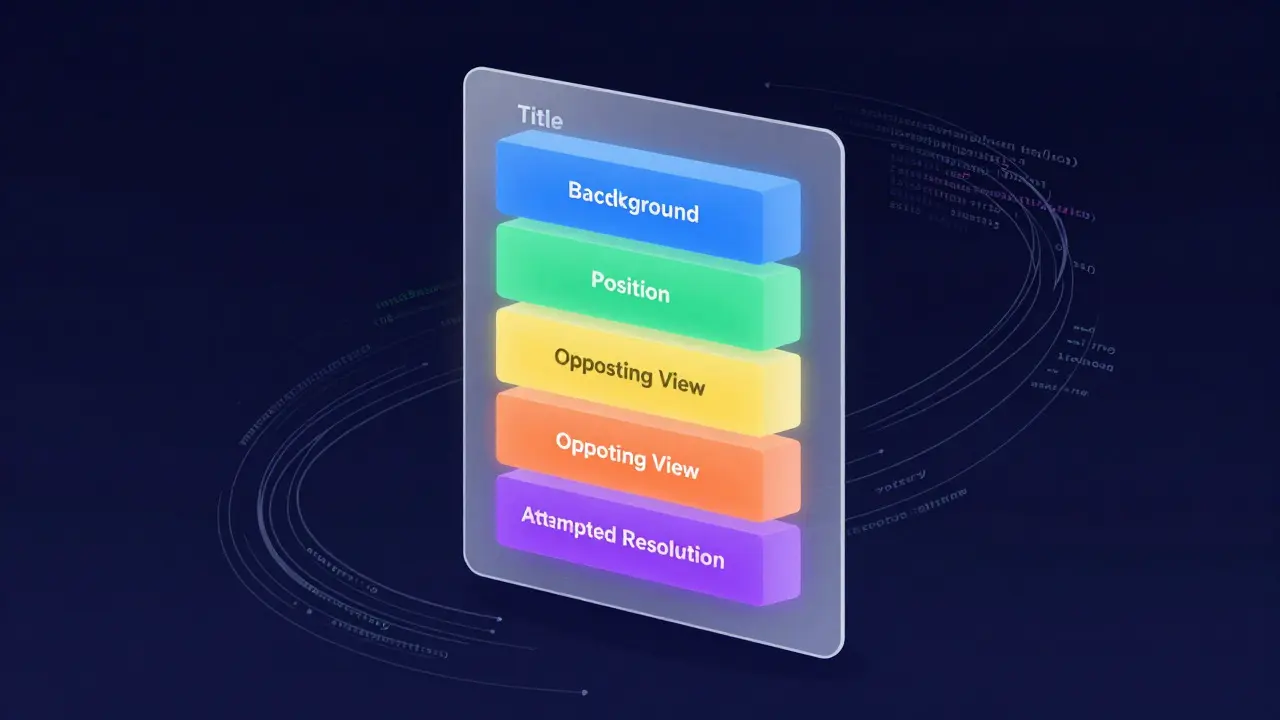
A poorly written noticeboard post gets ignored. Editors scanning the board want to see clarity, not drama. Your post should follow a specific structure to maximize the chance of getting helpful feedback. Think of it as a legal brief, but friendlier.
- Title: Keep it factual. Instead of "Unfair bias against [Topic]," use "Disagreement on characterization of [Topic] in [Article Name]."
- Background: Briefly state what the current article says and what you propose changing. Link directly to the relevant section.
- Your Position: Explain your view and cite the specific reliable sources that support it. Don't just say "it's true." Show the evidence.
- Opposing View: Summarize the other editor's position fairly. If you misrepresent their argument, neutral mediators will lose trust in your objectivity immediately.
- Attempted Resolution: List what you've already tried. Did you suggest a compromise? Did you offer to rephrase? Mention this explicitly.
Common Pitfalls That Kill Your Case
Even with strong sources, editors lose disputes due to presentation errors. Avoid these common traps:
Loading the Docket. This means bringing up past grievances or unrelated topics to make the current dispute look worse than it is. Stick to the specific paragraph or sentence in question. Context matters, but irrelevant context distracts.
Assuming Good Faith is Optional. On Wikipedia, you assume the other editor is trying to do the right thing until proven otherwise. If your post reads like an accusation, mediators will hesitate to help. Phrases like "They seem to ignore sources" work better than "They are deliberately hiding facts."
Ignoring Consensus. Sometimes, the best outcome isn't winning your exact wording. It might be splitting the difference. Being open to compromise signals maturity and makes it easier for neutral parties to step in.
How Neutral Mediators Evaluate Disputes
When a neutral editor picks up your case, they look for three specific things. First, they check Verifiability. Do both sides have citations? If one side relies on memory and the other on peer-reviewed journals, the balance tips heavily toward the cited side. Second, they assess Neutral Point of View. Is one side using emotive language? Does the article read like a press release or a critique? Third, they look for Consensus Building. Have the parties attempted to find common ground? If the history shows only reverts and no dialogue, the mediator may impose a temporary status quo to force a conversation.
| Method | Best For | Timeframe | Outcome Type |
|---|---|---|---|
| Talk Page Discussion | Minor wording issues, new editor confusion | Hours to days | Informal agreement |
| Dispute Resolution Noticeboard | Stalled debates, edit wars, NPOV conflicts | Days to weeks | Mediated compromise or policy application |
| Request for Comment (RFC) | Major structural changes, controversial topics | 1-2 weeks | Broad community opinion |
| Arbitration Committee | Bad behavior, blocking disputes, harassment | Weeks to months | Binding rules/blocks |

Real-World Scenarios: What Works
Consider a dispute over a historical battle. Editor A claims the victory was decisive. Editor B argues it was inconclusive. Both cite sources. On the Talk Page, they argue for three days. No progress. Editor A posts to the Dispute Resolution Noticeboard. A neutral editor notices that Editor A's source is a general textbook, while Editor B cites a specialized military history journal. The mediator suggests using the specialized source for the main text and mentioning the broader perspective in a footnote. Both editors agree. The article improves, and the dispute closes in four days.
Contrast this with a biography dispute where Editor C removes all negative mentions of a living person, claiming they are "undue weight." Editor D restores them. They fight for two weeks. Editor C posts to the noticeboard but fails to cite the specific policy on Living Persons. The mediator notes that Editor C is violating policy by removing sourced criticism. The dispute is resolved quickly, but Editor C feels unheard because they didn't prepare their case properly. Preparation wins.
Next Steps After Posting
Once you post, patience is key. Check the Talk Page daily. If a mediator leaves a comment, respond promptly and courteously. If no one responds within five days, you can politely bump the thread once. If it still stalls, consider moving to a Request for Comment (RFC) for broader input, but only if the topic is significant enough to warrant community-wide attention. Never spam multiple boards simultaneously; it looks desperate and reduces credibility.
Ultimately, the goal isn't to prove you're right. It's to ensure the article reflects the best available evidence in a neutral way. By using the Dispute Resolution Noticeboard correctly, you turn a potential edit war into a collaborative improvement. The system works, but only if you feed it clear facts, fair summaries, and a willingness to listen.
How long does a dispute resolution take?
There is no fixed deadline. Simple disputes may resolve in a few days if mediators are active. Complex or high-profile topics can take weeks. The speed depends largely on how clearly the initial post is written and how responsive the disputing parties are.
Can I win a dispute if my sources are weaker?
Unlikely. Wikipedia prioritizes verifiability through reliable sources. If your opponent has stronger, more recent, or more specialized citations, the mediator will likely side with them. Focus on finding better sources rather than arguing harder.
What if the other editor ignores the noticeboard?
This happens. If the other party goes silent, the mediator may proceed based on the available evidence and policy guidelines. However, silence doesn't automatically mean you win. The mediator will still evaluate if your proposed change meets Wikipedia's standards for neutrality and sourcing.
Is the Dispute Resolution Noticeboard anonymous?
No. All posts are public and linked to your user account. While mediators aim to be impartial, everyone involved can see the full history of the debate. Transparency is a core feature of the process.
Should I lock the article during a dispute?
Usually, no. Locking an article (protection) requires admin intervention and is reserved for severe edit wars or vandalism. For standard content disputes, leaving the article editable encourages continued discussion. Only request protection if the back-and-forth is damaging the article's readability significantly.