Every year, thousands of college students write research papers that end up buried in a professor’s inbox-never seen again. What if those papers could help millions of people instead? That’s the core idea behind the Wikipedia Education Program, a global initiative that turns classroom assignments into real-world contributions. For teachers and professors, it’s not just about grading essays. It’s about giving students a voice that lasts beyond the semester.
What Is the Wikipedia Education Program?
The Wikipedia Education Program is a project run by the Wikimedia Foundation that connects university instructors with Wikipedia editors. It’s not a tool for students to copy-paste from Wikipedia. It’s the opposite: students learn how to write for Wikipedia, improving articles that are read by millions. Professors assign real editing tasks-adding citations, fixing biased language, expanding underdeveloped topics-and students submit their work as part of their course grade.
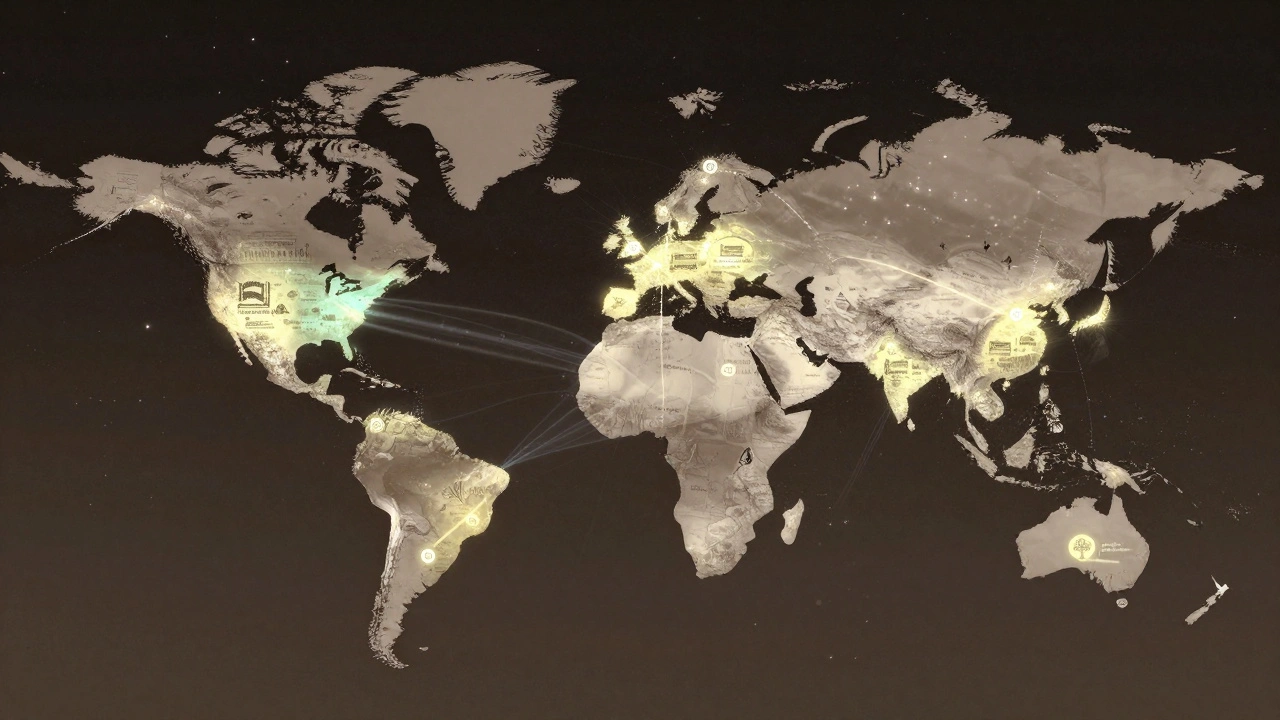
The program started in 2010 in the United States and has since expanded to over 40 countries. In 2024 alone, more than 25,000 students in North America edited over 1.2 million Wikipedia articles. That’s more than 30,000 hours of academic work turned into public knowledge.
How It Works for Professors
Teaching with Wikipedia doesn’t mean you need to be a Wikipedia expert. The program provides free training, lesson plans, and a dedicated support team. Here’s how it breaks down:
- You sign up through the Wikipedia Education Program portal (no fee, no login required for instructors).
- You choose a topic area-history, biology, sociology, etc.-and align it with your course goals.
- Students are assigned to improve or create Wikipedia articles related to your subject.
- They work with trained Wikipedia volunteers who review their edits and give feedback.
- At the end of the term, students submit their final edits as part of their assignment.
One professor at the University of Wisconsin-Madison assigned her environmental science students to expand the article on microplastics in freshwater systems. Before the project, the article had only 400 words and three outdated sources. By the end of the semester, it had 2,100 words, 27 peer-reviewed citations, and was cited in two later scientific papers. That’s not just a good grade-that’s real academic impact.
Why Students Benefit More Than Just a Grade
Traditional research papers are written for one audience: the professor. Wikipedia articles are written for everyone. That shift changes how students think about their work.
Students learn:
- How to evaluate sources critically-Wikipedia requires reliable, published references.
- How to write clearly for a general audience-not jargon-heavy academic prose.
- How to collaborate with strangers-Wikipedia editors give honest, public feedback.
- How to handle revision-edit wars, reverts, and constructive criticism are part of the process.
A 2023 study from Stanford University tracked 800 students in the program. Those students showed a 32% improvement in source evaluation skills compared to peers writing traditional papers. They also reported higher confidence in their writing ability and greater awareness of information bias.
What Subjects Work Best?
You don’t need to teach a "perfect" Wikipedia subject. But some fields fit better than others.
Strong fits:
- History: Expanding underrepresented topics like Indigenous movements or women in science.
- Biology/Medicine: Updating disease entries with new research or correcting misinformation.
- Sociology/Psychology: Adding data on marginalized communities often missing from Wikipedia.
- Environmental Science: Documenting local ecosystems, climate impacts, or conservation efforts.
Harder, but still possible:
- Mathematics: Requires careful handling of technical notation, but doable with training.
- Law: Complex, but students can summarize landmark cases or legal principles in plain language.
The key is finding gaps. Wikipedia has over 66 million articles, but many are incomplete or outdated. A 2025 audit by the University of Toronto found that 43% of biology articles lacked recent citations (post-2020). That’s a huge opportunity for academic input.
Common Misconceptions
Some professors worry:
"Wikipedia isn’t scholarly. Why should my students edit it?"
That’s the wrong question. The program doesn’t ask students to cite Wikipedia. It asks them to write for it. They’re learning how to synthesize peer-reviewed research into accessible summaries-exactly what public science communication requires.
"What if they make mistakes?"
They will. But that’s the point. Wikipedia has a built-in review system. Every edit is tracked. Volunteers flag inaccuracies. Students learn from their errors in real time. One student at UCLA edited a page on HIV transmission and accidentally cited a blog. A Wikipedia editor reverted it within hours and left a detailed comment explaining why. The student later wrote in their reflection: "That was the most valuable feedback I got all semester."
"It’s too much work for me."
It’s not. The program provides pre-built rubrics, grading templates, and a 24/7 support team. Many instructors spend less time grading than they would on traditional papers because Wikipedia edits are public and verifiable. You’re not checking for plagiarism-you’re checking for accuracy, clarity, and sourcing.
How to Get Started
Here’s your step-by-step plan:
- Visit outreach.wikimedia.org/wiki/Education and click "Instructor Sign-Up".
- Choose your course and subject area. You’ll get matched with a campus ambassador (a trained Wikipedia editor).
- Attend a 30-minute orientation webinar (recordings available).
- Assign your first Wikipedia task-start small. One article. One student. One revision.
- Let the Wikipedia community handle the rest. You’ll be surprised how little you need to do.
Most professors who try it once come back. At the University of Michigan, 92% of instructors who used the program in 2023 used it again in 2024.
Real Impact, Real Numbers
Here’s what’s been accomplished through this program:
- Over 1.8 million Wikipedia edits by students since 2010.
- More than 300,000 new articles created by students.
- Articles edited by students have been viewed over 11 billion times.
- Dozens of student-edited articles have been cited in peer-reviewed journals.
One student in New Mexico wrote the first comprehensive Wikipedia article on Indigenous water rights in the Southwest. It became the most-viewed page on that topic in the U.S. and was later used by a tribal council in policy advocacy. That’s not just education. That’s civic engagement.
What Happens After the Semester Ends?
Students don’t just turn in their edits and walk away. Their work stays live. People around the world keep reading it. Other students keep improving it. It becomes part of a living archive of knowledge.
One professor at Harvard noticed that after her class edited the article on climate migration in Sub-Saharan Africa, it began appearing in high school curricula across Africa. She got an email from a teacher in Nairobi saying, "Your students’ work is now in my classroom. Thank you."
That’s the quiet power of this program. It turns classroom work into public legacy.
Frequently Asked Questions
Do I need to know how to edit Wikipedia to use this program?
No. The program provides training and assigns each instructor a campus ambassador who helps with setup, grading, and answering student questions. You don’t need to be an editor-you just need to assign the task.
Can I use this program in a small class or online course?
Yes. The program works for classes of any size-from 5 students to 300. It’s been successfully used in online courses, community colleges, and even high school AP classes. The materials are flexible.
Are students graded on the quality of their Wikipedia edits?
Yes, but not based on how many words they add or whether their edit sticks. They’re graded on process: research quality, use of reliable sources, clarity of writing, responsiveness to feedback, and reflection on what they learned. The final edit is part of the assignment, but not the whole grade.
What if a student’s edit gets deleted?
It happens. Sometimes edits are reverted because they’re incomplete or lack citations. That’s not a failure-it’s part of the learning. Students are asked to reflect on why it was removed and what they can improve. Many go on to resubmit stronger versions.
Is this program only for universities?
No. While it’s most common in higher education, the program also supports high school teachers and community college instructors. There are even pilot programs for K-12 students using simplified Wikipedia editing tools.
Next Steps for Instructors
If you’re curious, start small. Pick one article. Assign one student. Try it once. You’ll see how different it feels to grade work that actually matters outside your classroom.
There’s no deadline. No pressure. Just a chance to turn your syllabus into something that lasts.