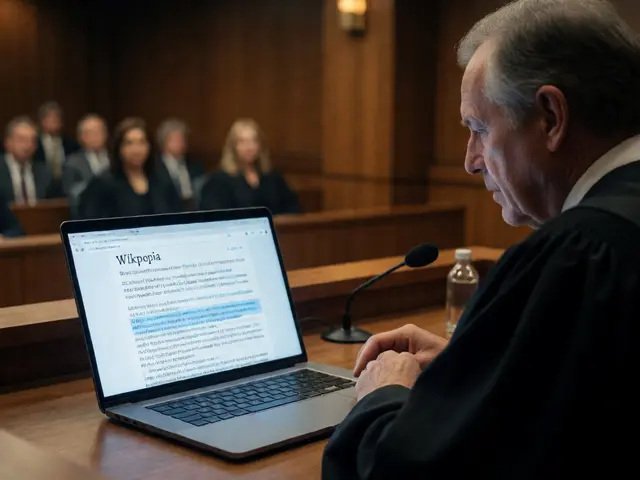
Ever tried to edit a Wikipedia article only to find your changes reverted by someone you’ve never met? It’s confusing, but it’s also how one of the world’s largest knowledge bases keeps itself running. Wikipedia is a free, web-based collaborative project that aims to compile all human knowledge in an encyclopedic reference work. Unlike traditional encyclopedias with strict editors-in-chief, Wikipedia relies on a decentralized system where thousands of volunteers decide what stays, what goes, and how rules are made. This isn’t chaos; it’s a structured form of democracy. The core mechanism is the consensus model, supported by Talk Pages for discussion and Community Oversight mechanisms like Arbitration Committees. If you want to understand how a site with millions of pages maintains some level of order without a boss, you need to look at these three pillars.
The Role of Talk Pages in Editorial Debate
Before you change an article, you check the Talk Page. This is the digital equivalent of a whiteboard where editors discuss content issues. Talk Pages are not just for complaints; they are the primary venue for resolving disputes before they escalate. Every article has its own associated talk page, accessible via a tab at the top of the screen. The process works like this:
- Initiate Discussion: An editor posts a concern, such as a missing citation or a biased tone.
- Invite Input: Other editors join the thread to offer perspectives or evidence.
- Reach Agreement: The group tries to agree on a solution that satisfies the majority of active participants.
Consensus: Not Just Majority Rule
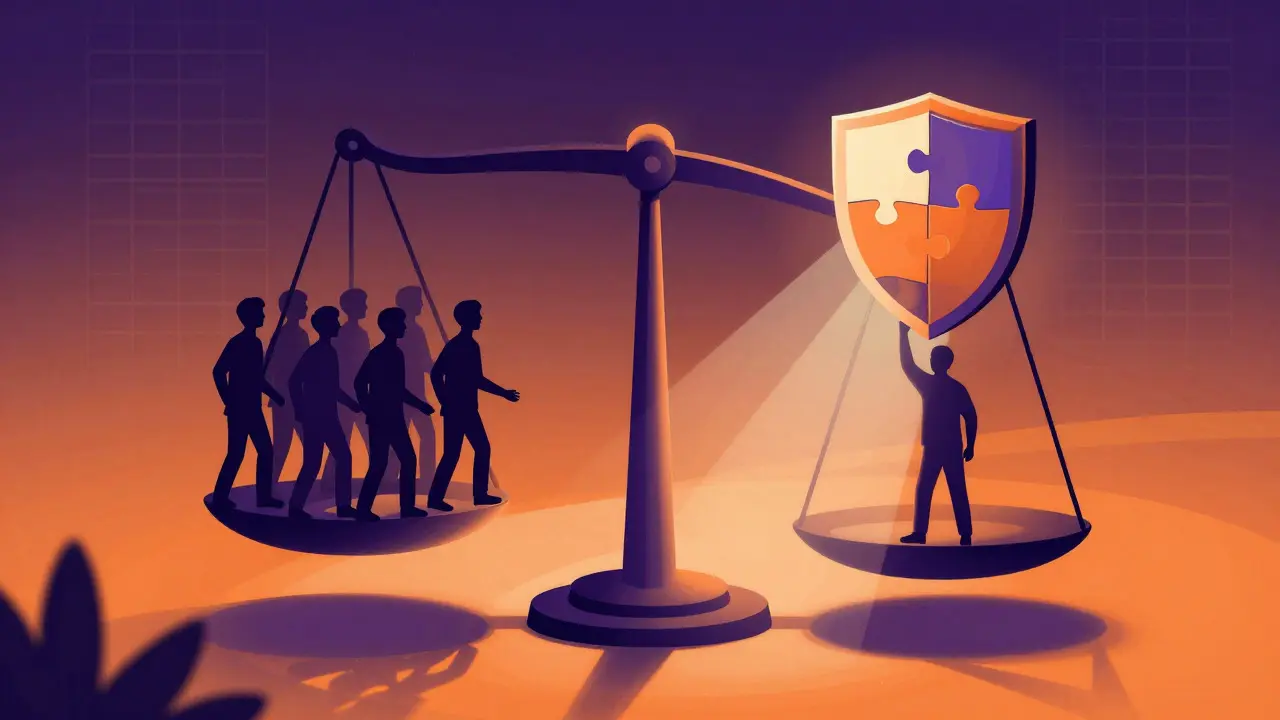
A common misconception is that Wikipedia operates on a simple majority vote. In reality, it uses a Consensus Model. Consensus doesn’t mean everyone agrees 100%; it means no one strongly objects to the proposed change. If a few people passionately oppose a change, the status quo usually remains until those objections are addressed. This approach protects minority viewpoints but can also lead to gridlock. To break ties, editors often rely on established policies rather than raw votes. For example, if there’s a dispute about whether a celebrity is notable enough for an article, editors don’t just count heads. They refer to Notability Guidelines (WP:N). These guidelines provide objective criteria, such as coverage in reliable sources, to settle the debate. When consensus fails completely, the issue may be taken to a formal resolution process. This is where the concept of "cruising for a bruising" comes in-editors know that pushing a hard-fought issue too far can result in administrative action against them, so they often compromise to keep the peace.
Community Oversight: Administrators and Arbitration
What happens when two editors fight over an article for months? Who steps in? This is where Community Oversight kicks in. Wikipedia has a tiered system of enforcement. First, there are Administrators (or Admins). These are experienced editors granted additional technical tools, such as the ability to protect pages from rapid editing or delete vandalized content. However, Admins are not judges. Their role is mostly procedural. They step in when talk page discussions stall or when vandalism occurs. If Admins can’t resolve a deep-seated conflict, the case goes to the Arbitration Committee (ArbCom). ArbCom is the final court of appeal within the English-language Wikipedia. It consists of elected members who review complex disputes involving multiple editors. Their decisions are binding. While rare, ArbCom can even ban users from editing entirely if they repeatedly violate community norms. Here’s a quick comparison of the oversight levels:
| Level | Forum/Role | Primary Function | Binding Power |
|---|---|---|---|
| 1 | Talk Page | Direct discussion between involved editors | No (Voluntary) |
| 2 | Administrators | Procedural fixes, page protection, deletion | Technical (Not Content) |
| 3 | Arbitration Committee | Final ruling on interpersonal conflicts | Yes (Binding) |
The Challenge of Scale and Bias
This democratic system works well for stable topics like history or science, where facts are relatively clear. But it struggles with current events and controversial political figures. Why? Because participation isn’t equal. A small group of highly motivated editors can dominate a specific topic area, creating what’s known as "editorial bias." For instance, articles about local politicians might be heavily influenced by residents of that city, while global news stories are shaped by international contributors. This demographic skew means that the "consensus" reached might reflect the views of a specific subset of the population rather than a neutral global perspective. To mitigate this, Wikipedia emphasizes Neutral Point of View (NPOV). NPOV requires that articles present significant points of view fairly, proportionally, and as neutrally as possible. It’s not about being unbiased (which is impossible), but about representing the best available information without injecting personal opinion.
How Policies Evolve Over Time
Wikipedia’s rules aren’t static. They evolve through a process called "policy development." When a new type of problem arises-such as how to handle AI-generated content or cryptocurrency prices-editors draft new guidelines. These drafts are tested in practice and refined based on feedback. The most important policies are listed under Wikipedia:Policy. These include:
- Verifiability: Claims must be backed by reliable sources.
- Notability: Subjects must meet specific criteria to deserve an article.
- Neutral Point of View: Articles must represent significant viewpoints fairly.
Frequently Asked Questions
Who actually runs Wikipedia?
No single person runs Wikipedia. It is governed by the volunteer community. The Wikimedia Foundation provides legal and financial support, but editorial decisions are made by editors through consensus, talk pages, and arbitration committees.
What is the difference between a policy and a guideline?
Policies are the core rules that define what belongs on Wikipedia (like Notability). Guidelines are more flexible recommendations on how to write articles (like Citation Style). Violating a policy is more serious than ignoring a guideline, though both are expected to be followed.
Can I start my own discussion on any topic?
Yes, you can start a discussion on any article's Talk Page. However, for major changes or controversial topics, it is better to use established forums like Requests for Comment (RFC) to ensure broader community input and avoid accusations of "cruising for a bruising."
Do administrators have more power than regular editors?
Administrators have extra technical tools, such as page protection and deletion rights, but they do not have more say in content decisions. Their role is primarily procedural. Any admin can be removed by the community if they abuse their powers.
How does Wikipedia handle vandalism?
Most vandalism is fixed quickly by other editors or automated bots. Persistent vandals are blocked by administrators. Since every edit is saved in the article's history, reverting bad changes is usually a matter of seconds.