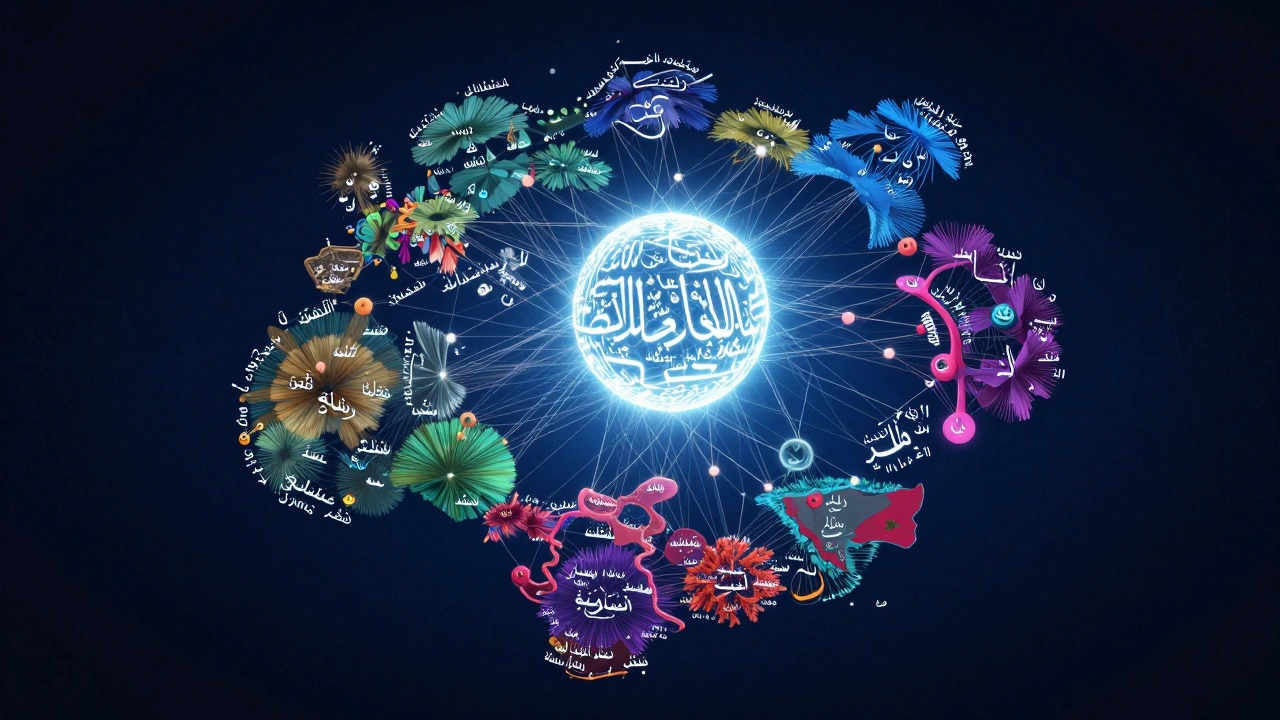
Imagine typing a question into your search engine and getting zero reliable results because the answer simply doesn’t exist in your language. For hundreds of millions of Arabic speakers, this isn’t a hypothetical scenario; it’s a daily reality on one of the internet’s most trusted platforms. While English Wikipedia boasts over 6 million articles, Arabic Wikipedia is the Arabic-language edition of the free online encyclopedia that aims to provide comprehensive, neutral information accessible to all. Despite its rapid growth since its launch in 2003, it still contains fewer than 400,000 articles. This gap represents more than just missing text; it highlights a significant disparity in how global knowledge is preserved, shared, and valued across different cultures.
The journey of the Arabic edition has been remarkable, yet it faces unique hurdles that other language editions rarely encounter. From navigating complex linguistic dialects to managing geopolitical sensitivities, the challenges are as diverse as they are difficult. However, these obstacles also present unprecedented opportunities for innovation in digital publishing and community building. Understanding this landscape requires looking beyond simple article counts to see the human and technical forces at play.
The Linguistic Landscape: Dialects and Standardization
One of the biggest hurdles for Arabic Wikipedia is the sheer diversity of the Arabic language itself. Unlike English, which has relatively stable spelling conventions globally, Arabic exists in two primary forms: Modern Standard Arabic (MSA) and various regional dialects (Ammiya). MSA is the formal language used in education, media, and official documents, while dialects vary significantly from Morocco to Oman.
This creates a fundamental tension for editors. Should the encyclopedia stick strictly to MSA to ensure uniformity and academic rigor? Or should it allow for dialectal variations to make content more accessible to everyday readers? The current consensus leans heavily toward MSA, but this approach can alienate younger users who are more comfortable with colloquial speech. Furthermore, the Arabic script presents technical challenges. Right-to-left (RTL) text rendering often conflicts with left-to-right (LTR) elements like code snippets, mathematical formulas, or embedded images. When these elements mix incorrectly, the result is broken layouts that frustrate both readers and contributors.
- Standardization vs. Accessibility: Strict adherence to MSA ensures consistency but may reduce engagement among casual readers.
- Technical Rendering Issues: RTL/LTR mixing causes display errors in tables, code blocks, and citations.
- Vocabulary Gaps: Many modern technical terms lack standardized Arabic equivalents, leading to inconsistent translations.
For instance, a term like "cloud computing" might be translated differently by five different editors, creating confusion. Solving this requires not just linguistic expertise but also technological solutions that support flexible formatting without compromising readability.
Geopolitical Sensitivities and Content Neutrality
Writing about history, politics, and culture in the Middle East and North Africa (MENA) region is inherently sensitive. The principle of Neutral Point of View (NPOV), which is central to Wikipedia’s mission, becomes exceptionally difficult to enforce when topics involve ongoing conflicts, religious differences, or national pride. Editors from different countries often have deeply held views on issues such as border disputes, historical narratives, or contemporary political figures.
This leads to frequent edit wars, where pages are repeatedly changed back and forth. In extreme cases, entire sections disappear due to vandalism or coordinated campaigns to suppress certain viewpoints. The Wikimedia Foundation is a non-profit organization that supports the development and distribution of free content educational materials and operates Wikipedia, which provides some oversight, but it relies heavily on volunteer moderators. These volunteers must balance fairness with safety, ensuring that no single narrative dominates while protecting against hate speech or misinformation.
| Challenge Type | Impact on Content | Mitigation Strategy |
|---|---|---|
| Border Disputes | Frequent reverts on map and territory descriptions | Use of internationally recognized sources and UN data |
| Religious Figures | Bias in biographical details and tone | Strict citation requirements from neutral academic sources |
| Contemporary Politics | Rapidly changing facts and propaganda | Protection of pages during high-tension periods |
To manage this, the community has developed robust policies requiring verifiable sources. However, finding high-quality, neutral Arabic-language sources can be difficult. Many events are only covered by state-controlled media or partisan blogs, leaving editors with limited options for credible references. This scarcity pushes many contributors to rely on English or French sources, which introduces another layer of translation bias.
The Contributor Gap: Who Is Writing?
A healthy Wikipedia edition needs a large, active community of editors. The English Wikipedia benefits from millions of registered users and countless anonymous contributors. In contrast, the Arabic edition struggles with a much smaller pool of active participants. Why? Several factors contribute to this gap.
First, there is a digital literacy barrier. Many potential contributors do not know how to use MediaWiki markup, the coding-like language behind Wikipedia edits. Second, cultural norms around public writing can discourage participation. In some societies, sharing personal opinions or engaging in public debate online is seen as risky or inappropriate. Third, there is a lack of institutional support. Universities and libraries in the MENA region rarely integrate Wikipedia editing into their curricula, unlike institutions in Europe or North America.
Efforts to bridge this gap include workshops organized by local chapters of the Wikimedia Community. These events teach students and researchers how to create and improve articles. Programs like "Wiki Loves Monuments" encourage photographers to upload images of heritage sites, adding visual richness to existing text. While these initiatives help, they remain localized and often underfunded. Scaling them up requires partnerships with governments, NGOs, and tech companies who recognize the value of open knowledge.
Technological Opportunities: AI and Automation
Despite the challenges, technology offers powerful tools to accelerate growth. Artificial Intelligence (AI) and Natural Language Processing (NLP) are transforming how content is created and maintained. Machine translation models, such as those developed by Google and Meta, can now produce decent drafts of Arabic articles from English originals. While not perfect, these drafts save editors hours of work, allowing them to focus on refining tone, accuracy, and style rather than starting from scratch.
Furthermore, bots and automated scripts can handle repetitive tasks. They can fix formatting errors, update infoboxes, and detect vandalism faster than humans. For example, a bot could scan newly created articles for common grammatical mistakes in MSA and suggest corrections. Another could monitor talk pages for signs of harassment and alert administrators. These tools reduce the burden on volunteers, making it easier for small communities to maintain large volumes of content.
However, AI is not a silver bullet. It lacks cultural context and nuance. An AI model might translate a politically charged phrase literally, missing its underlying implication. Therefore, human oversight remains essential. The goal is not to replace editors but to augment their capabilities, letting them focus on high-value activities like research, synthesis, and conflict resolution.
Building Trust and Credibility
In an era of misinformation, trust is currency. Readers need to believe that what they read on Wikipedia is accurate and unbiased. For Arabic Wikipedia, building this trust is an ongoing process. One major step is improving citation practices. Every claim must be backed by a reliable source. But as mentioned earlier, finding good sources in Arabic is hard. This leads to a cycle where articles lack references, get flagged as unreliable, and then get ignored by serious researchers.
To break this cycle, the community needs to collaborate with academic institutions. Partnering with universities to digitize rare manuscripts, publish peer-reviewed journals online, and archive news archives would provide a rich pool of verifiable sources. Additionally, promoting transparency helps. When editors explain why they made certain changes, it fosters dialogue rather than conflict. Talk pages should be viewed as collaborative spaces, not battlegrounds.
Another key factor is visibility. Many people don’t even know Arabic Wikipedia exists or underestimate its quality. Marketing efforts, social media campaigns, and integration with popular apps can raise awareness. If more users see value in the platform, they are more likely to contribute or advocate for it.
Future Outlook: A Roadmap for Growth
The future of Arabic Wikipedia depends on sustained investment in people, technology, and policy. Here are three critical areas for focus:
- Education Integration: Incorporate Wikipedia editing into school and university programs. Teach students how to verify sources, write neutrally, and use digital tools. This builds a pipeline of skilled, ethical contributors.
- Technology Investment: Develop better AI tools tailored to Arabic linguistics. Improve RTL support in web browsers and software. Create user-friendly interfaces that lower the barrier to entry for new editors.
- Community Support: Provide financial and logistical support to local Wikimedia chapters. Fund travel grants for international conferences. Recognize and reward outstanding contributions to boost morale.
If these steps are taken, the Arabic edition could double or triple its size within the next decade. More importantly, it could become a truly representative resource, reflecting the diverse voices and experiences of the Arab world. This would not only benefit Arabic speakers but also enrich global knowledge by filling gaps that other languages cannot address.
How many articles are currently in Arabic Wikipedia?
As of early 2026, Arabic Wikipedia contains approximately 390,000 to 400,000 articles. This number grows steadily thanks to dedicated volunteers, though it remains significantly smaller than the English edition, which has over 6 million articles.
Can I edit Arabic Wikipedia if I don't speak Arabic?
While you can technically edit any page, meaningful contributions require fluency in Modern Standard Arabic. You can help by translating images, fixing technical formatting issues, or providing links to external resources, but writing or editing text content demands strong language skills to ensure accuracy and neutrality.
Why is there a gap between English and Arabic Wikipedia sizes?
The gap stems from several factors: a larger base of native English speakers, higher digital literacy rates in English-speaking countries, greater institutional support for open knowledge projects, and the historical dominance of English in academia and technology. Arabic faces additional challenges like dialectal diversity and source scarcity.
Is Arabic Wikipedia reliable for academic research?
It can be, but with caution. Always check the references listed at the bottom of each article. High-quality articles cite reputable academic journals, books, and news outlets. However, due to source limitations, some topics may rely on less rigorous materials. Use Wikipedia as a starting point, not a final authority.
What role does AI play in expanding Arabic Wikipedia?
AI assists by generating draft translations from other languages, detecting vandalism, and suggesting formatting fixes. It speeds up the creation process but requires human review to ensure cultural appropriateness and factual accuracy. AI is a tool to support editors, not replace them.