Imagine reading an article about a controversial political figure. One sentence praises their leadership as "visionary," while the next calls it "authoritarian." If you don't know who wrote which part, you're left guessing what's true. This is exactly why Neutral Point of View is the central policy of Wikipedia that requires articles to represent fairly, proportionally, and without bias all significant views held by published sources. It isn't just a suggestion; it is the bedrock rule that keeps the encyclopedia usable for billions of readers.
Many people assume Wikipedia is neutral because it claims to be. In reality, achieving that neutrality is a constant, often messy struggle. The policy, known internally as NPOV, dictates how editors handle conflict, select sources, and structure content. Understanding this policy helps you read Wikipedia more critically and edit it more effectively.
The Core Principle: Verifiability Over Truth
To grasp NPOV, you first have to separate two concepts that most people confuse: truth and verifiability. Wikipedia does not claim to present absolute objective truth. Instead, it presents a summary of what reliable, published sources say about a topic. This distinction is crucial. If three major newspapers report that Event X happened, Wikipedia states that Event X happened, not because an editor believes it, but because the consensus of reliable sources supports it.
This approach relies heavily on the concept of Verifiability, another core pillar of Wikipedia. An editor cannot add personal opinions or original research. Every claim must be backed by a citation to a source that meets Wikipedia's reliability standards. If a viewpoint exists only in a blog post or social media thread, it generally doesn't count toward the neutral representation of the topic, regardless of how many people agree with it online.
- Represent significant views: You must include viewpoints that have been covered substantially by reliable sources.
- No original synthesis: Do not combine facts from different sources to create a new conclusion that no source has explicitly stated.
- Proportional coverage: Give each viewpoint space proportional to its presence in reliable literature, not your personal opinion of its merit.
How Editors Handle Disputed Topics
Disagreement is inevitable on a platform where anyone can edit. When two editors fight over whether a paragraph sounds biased, they aren't usually arguing about facts; they are arguing about tone and framing. The NPOV policy provides specific tools to resolve these conflicts without deleting content.
The most common solution is using Attribution. Instead of stating a controversial claim as fact, the editor attributes it to the source. For example, rather than writing "The policy failed," an editor writes "Critics argue that the policy failed due to implementation errors." This shifts the statement from an assertion of fact to a report on public discourse. This technique preserves the information while removing the editorial voice.
Another key mechanism is the use of Contentious Biographies guidelines. Articles about living persons receive extra scrutiny. Any negative claim about a living person must be supported by high-quality sources. If a source is weak, the content is removed immediately to prevent harm, even if the claim might be true. This prioritizes safety over completeness, a trade-off unique to biographical entries.
The Role of Reliable Sources in Neutrality
You cannot have a neutral point of view without neutral sources, but perfect neutrality in sourcing rarely exists. A news outlet might lean left, while another leans right. Wikipedia editors deal with this by seeking a balance of sources. If one side of an argument is supported by peer-reviewed journals and the other by opinion columns, the weight given to each viewpoint differs significantly.
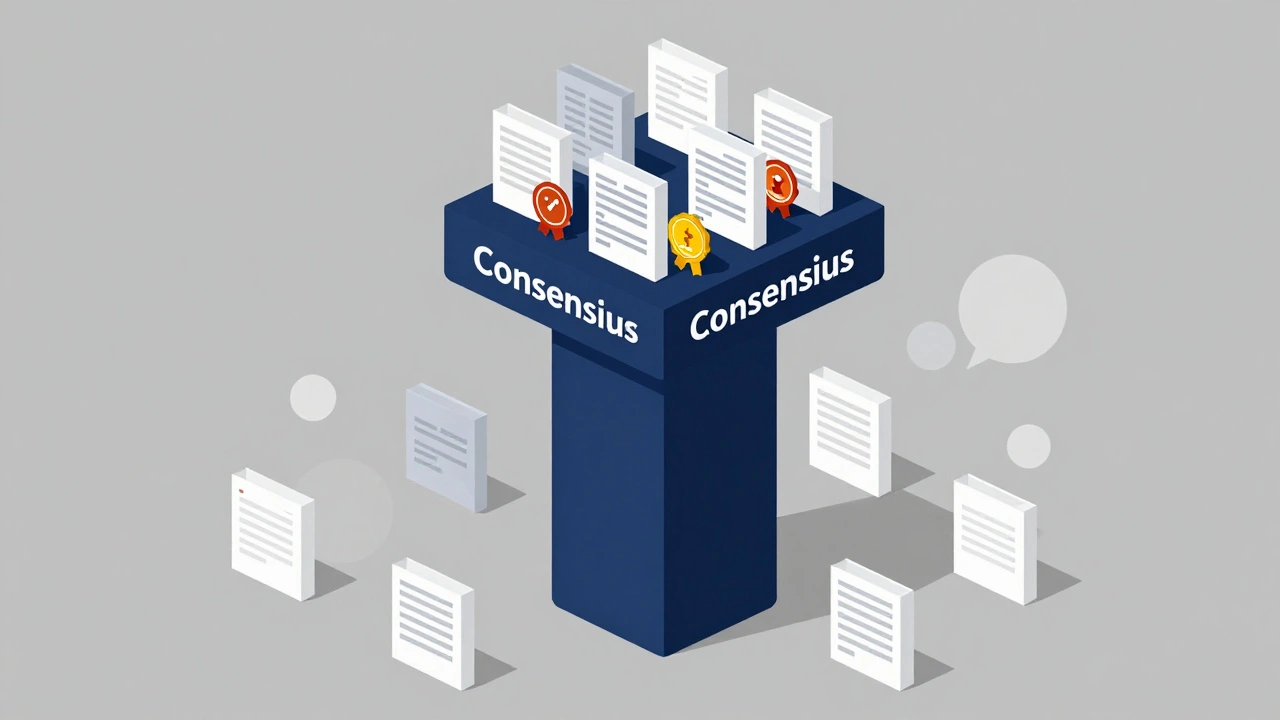
This leads to the concept of Source Weighting. Not all sources are created equal. Academic papers carry more weight than magazine articles, which carry more weight than press releases. When constructing an article, editors look for the "consensus" among the highest-quality sources available. If the scientific community largely agrees on a topic, Wikipedia reflects that consensus, even if a small minority of fringe groups disagrees. The minority view may be mentioned briefly for completeness, but it will not dominate the narrative.
| Source Type | Reliability Level | NPOV Usage |
|---|---|---|
| Peer-Reviewed Journals | High | Primary basis for factual claims and consensus |
| Mainstream News Outlets | Moderate to High | Good for current events and reporting reactions |
| Self-Published Blogs | Low | Generally excluded unless the author is the subject |
| Official Press Releases | Moderate | Useful for stating official positions, not independent verification |
Avoiding Common Bias Traps
Even well-meaning editors fall into bias traps. One of the most subtle is Selection Bias. This happens when an editor chooses to include details that support their preferred narrative while omitting contradictory details that are equally sourced. For instance, writing a biography of a politician might focus entirely on their scandals if the editor dislikes them, ignoring their legislative achievements. NPOV requires including both, weighted by their significance in reliable sources.
Another trap is Tone Bias. Using loaded language like "allegedly," "supposedly," or "infamously" injects emotion into the text. Wikipedia style guides strictly forbid such words. The goal is dry, encyclopedic prose. If a source uses emotional language, the editor paraphrases it neutrally. This ensures the reader forms their own judgment based on the facts presented, rather than being guided by the writer's adjectives.
Structural bias is also common. Placing a controversial claim in the lead section gives it undue prominence. NPOV dictates that the lead should summarize the article's main points, giving fair weight to all significant viewpoints. Controversial or minor details belong in the body of the article, where context can be fully explained.

The Myth of False Balance
A frequent criticism of Wikipedia is that it creates "false balance" by giving equal weight to unequal arguments. For example, giving climate change skeptics the same amount of text as climate scientists might seem neutral, but it misrepresents the scientific consensus. NPOV explicitly rejects false balance. The policy states that views should be represented in proportion to their acceptance in reliable sources.
If 97% of climate scientists agree on anthropogenic warming, the article should reflect that overwhelming consensus. Skeptical views can be mentioned in a dedicated section, but they cannot be framed as an equal alternative to the mainstream science. This distinction protects Wikipedia from becoming a platform for misinformation disguised as neutrality. It forces editors to look at the volume and quality of evidence, not just the existence of opposing opinions.
Practical Steps for Readers and Editors
For readers, understanding NPOV means checking the references. If an article makes a bold claim without a citation, it violates the policy. You can click the reference link to see if the source actually supports the statement. Often, you'll find that the source says something slightly different, revealing a subtle editing error.
For editors, the best practice is to write from the perspective of a neutral observer. Ask yourself: "Would someone who holds the opposite view accept this description as fair?" If the answer is no, you likely need to adjust the tone or add attribution. Use the "Talk" pages associated with every article to discuss changes before making them. This collaborative process helps identify blind spots and biases that individual editors might miss.
- Check citations: Ensure every significant claim has a reliable source.
- Remove loaded language: Replace adjectives with neutral descriptions.
- Balance coverage: Ensure all significant viewpoints are included proportionally.
- Discuss disputes: Use Talk pages to resolve disagreements collaboratively.
What does NPOV stand for on Wikipedia?
NPOV stands for Neutral Point of View. It is the core policy requiring Wikipedia articles to represent all significant viewpoints fairly and without bias.
Can I express my personal opinion in a Wikipedia article?
No. Personal opinions are not allowed. All content must be based on reliable, published sources. Your interpretation must match the consensus of those sources.
How does Wikipedia handle controversial topics?
Controversial topics are handled by attributing claims to their sources and ensuring proportional coverage of all significant viewpoints. Editors avoid taking sides and focus on summarizing published discourse.
Is Wikipedia always completely unbiased?
Wikipedia strives for neutrality through community oversight and strict policies. While individual editors may have biases, the collaborative editing process aims to correct them over time. However, systemic biases in sources can still affect content.
What is the difference between NPOV and Verifiability?
NPOV requires presenting multiple viewpoints fairly. Verifiability requires that all claims be backed by reliable sources. NPOV dictates *what* to include, while Verifiability dictates *how* to prove it.