You’ve probably seen it happen. A tiny change to a Wikipedia infobox is a standardized data box on the right side of an article that displays key facts like dates, dimensions, or biographical details. Someone changes a birth year by one digit. Or they swap "born" for "birth date." Suddenly, the talk page explodes. Editors argue for weeks over a field that takes up less than two inches of screen space. It feels absurd, but these "infobox wars" are some of the most persistent friction points in online collaboration.
The core issue isn't really about the data. It’s about authority. When you tweak a specific value in an infobox, you’re not just updating text; you’re asserting that your source is more accurate than the previous editor’s. In a platform built on consensus, this triggers a defense mechanism. If I can prove my number is wrong, does that make my other edits suspect? This psychological trap turns minor corrections into identity battles.
The Anatomy of a Data Box Conflict
To understand why these fights start, look at what an infobox actually contains. These boxes rely on structured data fields. Common attributes include date of birth, place of origin, height, and affiliation. Each field has a strict format requirement. For example, a height might need to be listed as "1.80 m (5 ft 11 in)" rather than just "5'11"". When an editor ignores this formatting rule, it looks sloppy. But when they change the actual value without citing a primary source, it looks suspicious.
Most conflicts fall into three categories:
- Sourcing Disputes: Editor A cites a 2019 interview; Editor B cites a 2024 census record. Who wins? Usually, the newer, more authoritative source, but proving that takes time.
- Formatting Nitpicks: One editor prefers ISO 8601 dates; another prefers month-day-year. Both are correct, but only one fits the template code.
- Notability Thresholds: Should a minor award go in the infobox? Some say yes if it's significant; others say no if it clutters the view.
These aren't trivial issues. The infobox is often the first thing readers see. If it’s messy or inaccurate, trust in the whole article drops. So, editors treat these small fields with disproportionate care because they represent the face of the entry.
Why Consensus Breaks Down
Consensus building is the process where multiple contributors agree on the final state of an article through discussion and compromise. On Wikipedia, this usually works well for prose. You can rewrite a paragraph to blend two viewpoints. But infoboxes are binary. Either the date is 1985 or 1986. There is no middle ground. This rigidity forces editors into a zero-sum game.
Add in the element of anonymity, and you get a recipe for tension. You don’t know if the person opposing you is a historian, a fan, or a troll. Without social cues, every edit feels like a challenge. Rhetorical questions pop up on talk pages: "Where is your source?" "Is this reliable?" "Have you checked the archive?" These questions are valid, but repeated daily, they wear down goodwill.
There’s also the shadow of Edit warring is a situation where two or more users repeatedly revert each other's changes without reaching a consensus. Technically, it’s a policy violation. Practically, it happens constantly in infobox disputes. One user reverts a change; the other restores it. The page flickers back and forth until an administrator steps in. For casual readers, this looks like chaos. For editors, it’s exhausting.

The Role of Templates and Automation
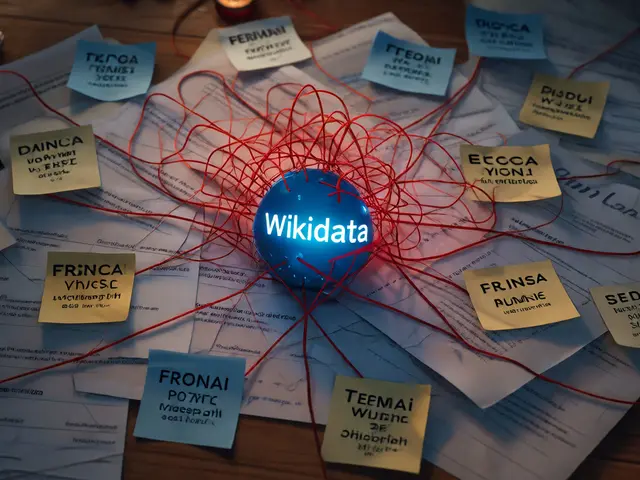
Many infoboxes are generated by templates. These are pre-built code blocks that pull data from Wikidata or local variables. When a template updates automatically, it can overwrite manual edits. Imagine you carefully cite a source for a company’s founding date. Then, a bot runs and pulls a different date from Wikidata. Now you have a conflict between human curation and machine aggregation.
This automation creates a new layer of complexity. Editors now have to decide: do we trust the automated feed, or do we override it with a manually verified fact? Often, the answer is to add a comment explaining the discrepancy. But comments clutter the interface. Readers don’t want to read footnotes about why the bot was wrong. They just want the right number.
| Dispute Type | Example Scenario | Recommended Resolution |
|---|---|---|
| Sourcing Conflict | Different sources list different birth years | Cite the most recent primary source; discuss on talk page |
| Formatting Error | Date format inconsistent with site standards | Apply standard template formatting without debate |
| Notability Question | Including a minor award in the box | Check community guidelines for "significant recognition" |
| Bot Override | Automated update contradicts manual edit | Verify Wikidata entry; fix upstream if incorrect |

How to Stop the Fight Before It Starts
If you’re editing a contentious article, prevention is easier than cure. Here’s a practical approach that keeps the peace:
- Check the Talk Page First: Is there an ongoing discussion? Jumping into an active argument with a new edit often escalates things. Read the last five posts.
- Cite Primary Sources: Don’t cite another encyclopedia. Cite the original document, newspaper, or official registry. This makes your position hard to refute.
- Use Neutral Wording: Instead of saying "This is wrong," try "I found a conflicting source here. Thoughts?" Open-ended questions invite collaboration rather than combat.
- Respect the Template: If the infobox uses a specific template, follow its rules. Fighting the code is a losing battle.
Remember, the goal isn’t to win. It’s to improve accuracy. If you focus on the data, not the ego, the resolution comes faster. Most editors just want the information to be right. Once they see you’re doing the same, the hostility fades.
The Bigger Picture: Trust in Crowdsourced Knowledge
Infobox wars highlight a broader tension in digital knowledge systems. We rely on crowds to maintain massive databases, but humans are imperfect. Errors happen. Biases creep in. The infobox, being so visible, becomes a proxy for the entire project’s reliability. When a fight breaks out, skeptics point to it as proof that Wikipedia is unstable. Defenders point to the eventual correction as proof of its self-healing nature.
Both views have merit. The system works because people care enough to fight. But those fights take energy. Reducing unnecessary friction means better use of volunteer time. By understanding why these small fields spark big reactions, we can create smoother workflows. Less drama, more data.
Next time you see a talk page full of arguments over a single date, remember: it’s not about the number. It’s about who gets to define the truth. And in a world of infinite information, that’s a heavy responsibility for a small text box.
What is the most common cause of infobox disputes?
The most frequent cause is conflicting sources for factual data, such as dates or measurements. When two editors cite different references, they must determine which source is more authoritative or recent.
Do infobox errors affect the credibility of the whole article?
Yes, significantly. Because the infobox is the first visual element readers encounter, inaccuracies there can lead readers to question the reliability of the main text, even if the prose is well-cited.
How can editors avoid starting an edit war over an infobox?
Editors should check the talk page for existing discussions, cite primary sources clearly, and use neutral language when proposing changes. Engaging in dialogue before making the edit reduces the chance of immediate reversion.
What role do bots play in infobox conflicts?
Bots often populate infoboxes from Wikidata or other structured sources. If a bot pulls incorrect data, it can override careful manual edits, leading to disputes between human editors and automated processes.
Is there a standard format for all Wikipedia infoboxes?
No, formats vary by article type. Biography infoboxes differ from company or geographic infoboxes. However, general site-wide standards exist for dates and units of measurement to ensure consistency across entries.