Imagine you’re trying to figure out if a politician actually said something controversial. You open Wikipedia, see the quote in bold with a citation, and assume it’s settled fact. Now imagine you’re reading a breaking news story about a stock market crash that happened ten minutes ago. These two experiences feel similar on the surface-both are text on a screen-but they operate on completely different logic. Confusing Wikipedia with daily news is one of the most common mistakes modern readers make, and it can lead to serious misunderstandings about how information works.
The core difference isn’t just about speed; it’s about purpose. One is a snapshot of what we know *now*, while the other is a record of what happened *then*. If you treat them as interchangeable, you’ll miss the nuance of how truth is constructed in both spaces.
The Fundamental Purpose: Snapshot vs. Story
Wikipedia is a free online encyclopedia where anyone can edit entries to reflect the current consensus of knowledge. It is not a newspaper. It doesn’t chase deadlines. It doesn’t have editors shouting at reporters to get a quote by noon. Instead, it aims for stability. A Wikipedia article about a historical war stays relatively static unless new archaeological evidence emerges or historians reach a new consensus. The goal is to provide a reliable, neutral summary of established facts.
Journalism, on the other hand, is dynamic. It is reactive. When a bridge collapses, journalists are there within hours. They ask questions, interview witnesses, and file stories before all the details are known. This means news is often incomplete when it first appears. It evolves as more information comes in. If you read a news article from last week, it might already be outdated because new facts have emerged. Wikipedia, conversely, tries to incorporate those new facts only after they are verified by multiple independent sources.
How Content Is Created and Verified
This is where the mechanics diverge sharply. In traditional journalism, a single reporter gathers information, an editor reviews it, and a publisher releases it. The chain of responsibility is linear. If a mistake happens, it’s usually traceable to specific human decisions made under pressure.
Wikipedia uses a decentralized model called Open Collaboration is a process where thousands of volunteers contribute to editing pages using a system of talk pages and version history. There is no single gatekeeper. Instead, quality control relies on community norms. Editors leave notes on "talk pages" to debate changes. If someone adds a dubious claim, others might revert it. This self-correcting mechanism works well for stable topics but can be chaotic for breaking events.
Consider the concept of Notability is the standard used to determine if a subject is significant enough to have its own Wikipedia article. For a topic to be on Wikipedia, it generally needs coverage in multiple independent, reliable sources. This creates a lag. A local business opening might be big news locally, but it won’t appear on Wikipedia until it has gained broader recognition. Conversely, a celebrity scandal might dominate news cycles for weeks, but the Wikipedia entry will only update once the legal outcomes are clear and documented.
The Role of Bias and Neutrality
Both platforms struggle with bias, but in different ways. Journalism often carries the editorial voice of the outlet. A liberal paper might frame a protest differently than a conservative one. Readers are expected to understand this context. Wikipedia strives for Neutral Point of View (NPOV) is a guideline requiring articles to present significant viewpoints fairly without endorsing any particular side. However, achieving true neutrality is difficult. Sometimes, the "neutral" view is just the average of conflicting biases, which can result in a bland or confusing summary.
In journalism, bias is often visible through word choice. In Wikipedia, bias can hide in the selection of sources. If an article cites mostly academic papers from one region, it might inadvertently favor that perspective. This is why critical readers must check the references section on Wikipedia, just as they should check the masthead and track record of a news outlet.
Speed vs. Accuracy Trade-offs
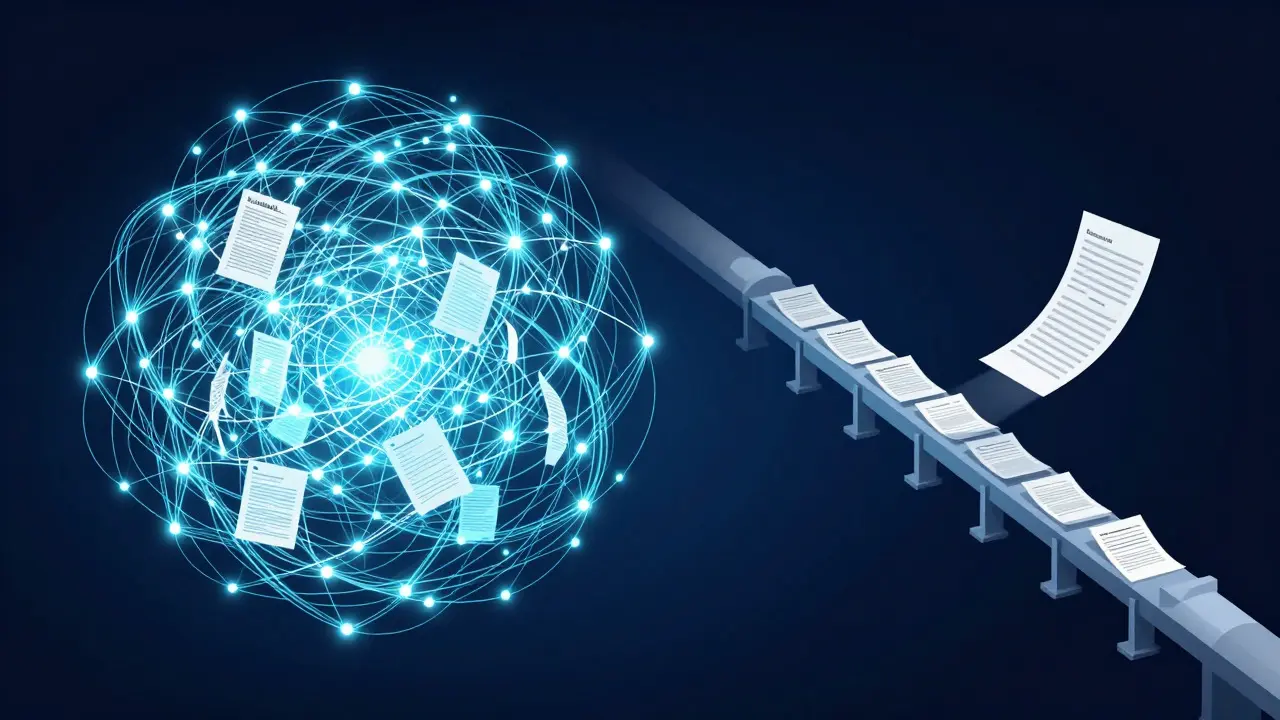
You cannot have maximum speed and maximum accuracy simultaneously. This is a fundamental law of information. News prioritizes speed. That’s why you see headlines like "Suspect Arrested" before the trial even begins. The value is immediacy. You need to know what’s happening *right now* to react-whether that’s avoiding a traffic jam or adjusting your investment portfolio.
Wikipedia prioritizes accuracy over speed. An event might happen today, but the Wikipedia entry might not change for days or weeks. Why? Because editors wait for secondary sources to report on the event. If a major scientific breakthrough is announced, the Wikipedia page won’t update immediately based on the press release. It waits for peer-reviewed journals or reputable science magazines to cover it. This delay ensures that what you read is less likely to be retracted or corrected later.
| Attribute | Wikipedia (Reference) | News Media (Journalism) |
|---|---|---|
| Primary Goal | Stable, comprehensive summary of known facts | Timely reporting of current events |
| Update Frequency | As needed based on new consensus | Continuous, often hourly or minute-by-minute |
| Authorship | Anonymous or pseudonymous volunteer editors | Named journalists and editors |
| Error Correction | Community-driven reverts and discussions | Formal corrections and retractions |
| Best Use Case | Background context, definitions, historical summaries | Breaking events, real-time updates, investigative reports |
Common Pitfalls for Modern Readers
One major pitfall is assuming that because Wikipedia looks professional, it is authoritative in the same way a textbook is. It is not a primary source. It is a tertiary source. It summarizes other sources. If you are writing a research paper, citing Wikipedia directly is often discouraged because you should cite the original sources listed in the Wikipedia references instead.
Another pitfall is ignoring the "cite needed" tags. If you see a tag next to a statement on Wikipedia, it means the community hasn’t agreed on a source for that specific claim yet. In journalism, if a fact isn’t cited, it’s usually assumed to be based on the reporter’s direct observation or interview. On Wikipedia, uncited claims are vulnerable to removal.
Finally, many people forget that Wikipedia covers almost everything, but not everything is equally well-covered. Pages for major world leaders are meticulously maintained. Pages for obscure local figures might be riddled with errors or vandalism. Always check the "History" tab to see if a page has been frequently edited recently, which might indicate ongoing disputes among editors.

How to Use Both Platforms Effectively
To get the best out of both, use them for their strengths. Start with news outlets for immediate context. When a major election happens, follow the live blogs and wire services like AP or Reuters for the raw facts. Once the dust settles, turn to Wikipedia for a balanced overview of the candidates' backgrounds, past policies, and historical precedents.
Here is a simple workflow for verifying information:
- Read the news headline and initial report.
- Check a second, independent news source to confirm basic facts.
- Wait 24-48 hours for analysis pieces to emerge.
- Consult Wikipedia for background context and long-term trends.
- Click the citations on Wikipedia to find the primary academic or official documents.
This layered approach helps you separate the noise of the moment from the signal of established knowledge. It also builds media literacy, which is crucial in an era where misinformation spreads faster than facts.
Frequently Asked Questions
Is Wikipedia a reliable source for academic work?
Generally, no. Most universities prefer primary or secondary sources. However, Wikipedia is excellent for finding leads. Use it to identify key authors, books, and studies, then cite those original sources in your bibliography.
Why does Wikipedia sometimes seem biased?
Bias can creep in through the selection of sources or the wording of summaries. Since editors are volunteers, their personal perspectives can influence edits. Checking the talk page and viewing the article's revision history can reveal these debates.
Which is better for breaking news: Wikipedia or Twitter/X?
Neither is ideal alone. Twitter/X is fastest but prone to rumors. Wikipedia is slowest but most accurate. For breaking news, trusted wire services (like AP) are usually the best balance of speed and verification.
Can I trust Wikipedia for medical information?
It can be a good starting point, but always verify with medical professionals or official health organizations like the CDC or WHO. Medical knowledge evolves rapidly, and Wikipedia may lag behind the latest clinical guidelines.
What is the main difference between a news article and a reference article?
A news article reports on events as they happen, focusing on timeliness. A reference article summarizes established knowledge, focusing on accuracy and stability. News tells you what is happening; reference tells you what is known.