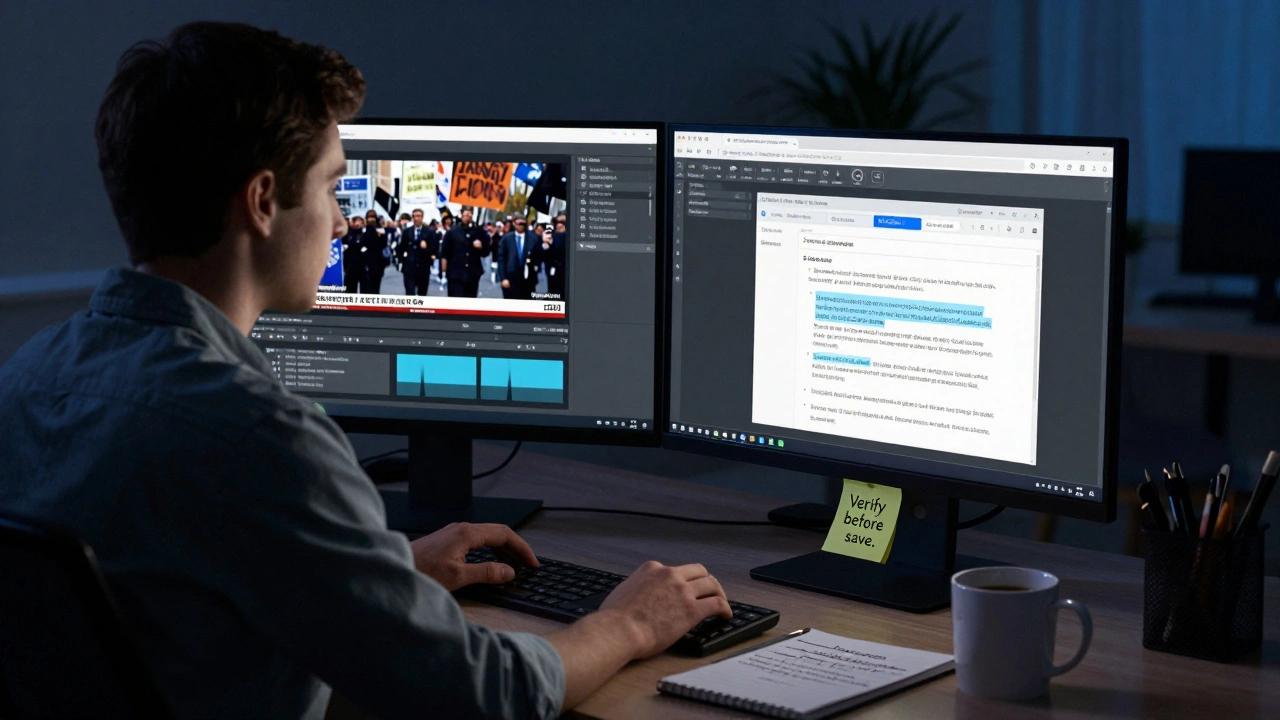
When a major news event breaks-like a political resignation, a natural disaster, or a celebrity death-Wikipedia doesn’t wait. It updates in real time. But behind every quick edit is a quiet battle: keeping citations accurate, verifiable, and fast. Managing citations during breaking news isn’t just about speed. It’s about trust. One wrong source, one unverified tweet, and the whole entry becomes unreliable. And millions of people rely on Wikipedia as their first stop for facts.
Why Speed Matters More Than Ever
During the 2023 Israel-Hamas conflict, Wikipedia saw over 800,000 edits in 72 hours. Half of those were to update casualty numbers, location details, or official statements. The average time between a news outlet publishing a report and Wikipedia updating its article? Under 12 minutes. That’s faster than most news aggregators. But speed without accuracy is dangerous. A 2022 study by the University of Oxford found that during major crises, 17% of Wikipedia citations in breaking news articles were initially linked to unverified social media posts or press releases with no independent confirmation.
Editors don’t have time to wait for peer-reviewed journals. They need live, authoritative sources: official government websites, major news outlets with editorial oversight, press conferences streamed live, or verified agency feeds. The goal isn’t to be first-it’s to be right before someone else gets it wrong.
The Tools That Keep Citations Alive
Wikipedia editors don’t work alone. They use a toolkit built for chaos. The QuickCite browser extension lets you highlight a news article and auto-generate a properly formatted Wikipedia citation in one click. It pulls the URL, title, author, and publication date from the page header-even if the site doesn’t use structured metadata.
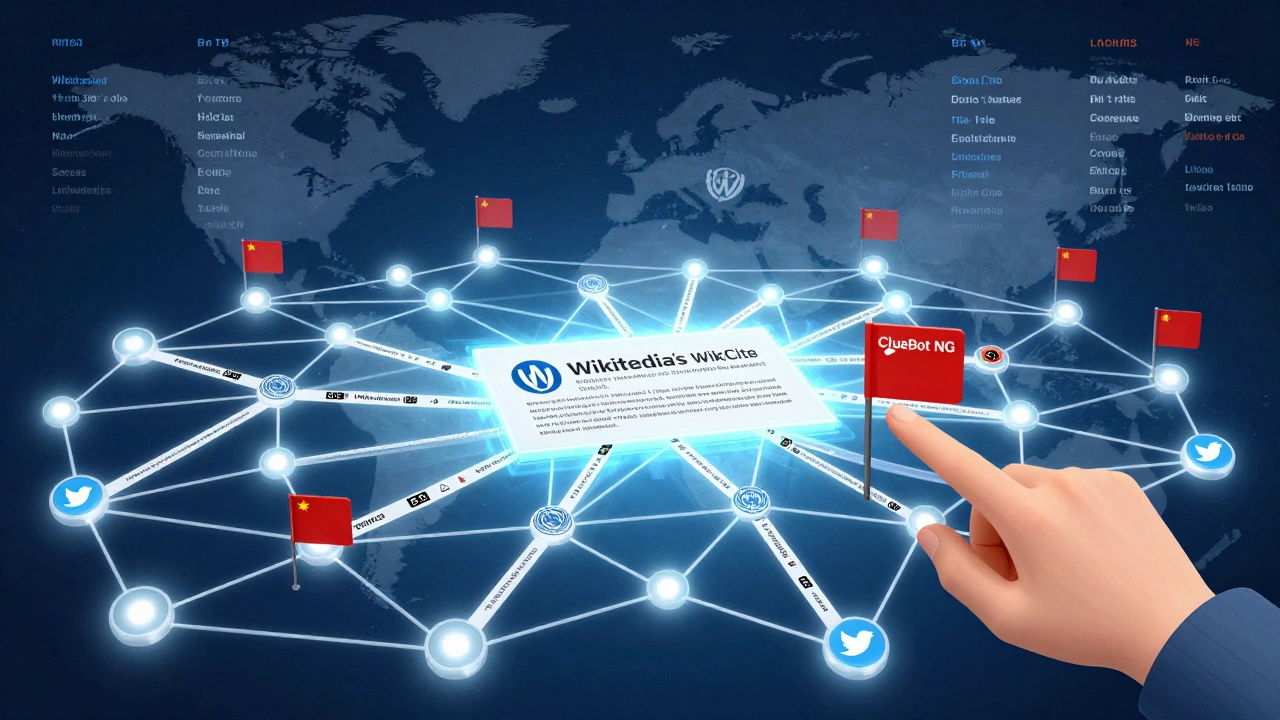
Then there’s the WikiCite database, a behind-the-scenes repository of over 20 million citations. When an editor types {{cite news}} into the edit window, the system suggests previously used sources for similar events. If a major outlet like Reuters or BBC has been cited for a previous protest or election, the system flags it as a trusted template. This cuts down duplication and reduces the chance of citing a now-dead link.
Automated bots also help. The ClueBot NG system scans new edits for suspicious citations-like links to blogs, forums, or sites flagged for misinformation. If a new edit adds a citation to a Twitter account with no verification badge, the bot flags it for human review within seconds. It doesn’t delete it. It just says: “Hey, someone needs to check this.”
What Counts as a Reliable Source During Breaking News?
Not every news site is equal. Wikipedia’s guidelines are strict: reliable sources must have editorial standards, fact-checking, and accountability. During fast-moving events, editors follow a simple hierarchy:
- Official government or intergovernmental agency statements (e.g., White House, WHO, UN)
- Major international news organizations with verified journalists (AP, Reuters, BBC, AFP, NYT)
- Regional outlets with proven track records (e.g., The Guardian, Le Monde, Al Jazeera)
- Live streams from credible institutions (e.g., congressional hearings, press conferences)
- Verified social media accounts of officials (e.g., @POTUS, @WHO)
Anything else-blog posts, TikTok videos, Reddit threads, or anonymous leaks-gets a red flag. Even if it’s true. Because Wikipedia doesn’t report news. It reports what reliable sources report.
There’s an exception: if a major outlet picks up a claim from a lesser-known source, then that lesser-known source becomes citable. But only after the fact. The chain of verification matters. You can’t cite a whistleblower’s tweet. But you can cite The Washington Post saying, “According to a whistleblower cited in a secure document…”
How Editors Handle Conflicting Reports
During the 2024 U.S. presidential election, multiple outlets reported conflicting results from early ballot counts. Wikipedia didn’t pick a side. Instead, editors used a technique called “weighted attribution.”
They wrote: “Initial reports from ABC News suggested Candidate A led by 2.3%, while CNN reported a 1.8% lead. Both outlets later revised their estimates after receiving official county data.”
This approach avoids presenting unverified claims as facts. It shows the evolution of information. And it’s why Wikipedia’s breaking news pages often look messy-because they’re honest about uncertainty.
Editors also tag sections with {{under construction}} or {{update needed}} when sources are still flowing in. These tags warn readers: “This isn’t final. Check back.”
The Human Network Behind the Scenes
Behind every fast edit is a network of volunteers. There are over 15,000 active Wikipedia editors who specialize in news events. Many are former journalists, librarians, or fact-checkers. They monitor breaking news feeds, subscribe to wire service alerts, and join real-time chat rooms on Discord and Telegram.
One such group, WikiProject Breaking News, coordinates edits across languages. When a plane crashes in Germany, editors in English, German, French, and Spanish versions sync updates. They share verified sources, flag conflicting translations, and prevent duplicate work. The system isn’t perfect-but it’s the most coordinated fact-checking network in the world.
These volunteers don’t get paid. They don’t get credit. But they’re the reason Wikipedia stays useful during chaos.
What Happens When It Goes Wrong?
Errors do happen. In 2021, a false report claimed a U.S. senator had died. The edit was made within 47 seconds of the rumor starting on Twitter. It was corrected in 11 minutes-but not before it was picked up by three major news aggregators. That incident led to new rules: any edit claiming death of a public figure must be confirmed by two independent, reliable sources before being published.
Another case: during the 2023 earthquake in Turkey, a Wikipedia page listed a death toll of 12,000 based on a single unverified tweet. Within an hour, editors reverted it, replaced it with the official Turkish disaster agency’s number (10,700), and added a note: “This figure was revised after initial media reports.”
These aren’t failures. They’re corrections. And Wikipedia’s transparency about them is what builds trust. You can see every edit, every revert, every discussion. That’s more than most news sites offer.
What You Can Do to Help
You don’t need to be an expert to help. If you see a breaking news article on Wikipedia with outdated or missing citations, you can fix it. Here’s how:
- Find a reputable source-like AP, Reuters, or a government site.
- Click “Edit” on the article.
- Use the citation tool to insert the source with proper formatting.
- Leave a brief edit summary: “Updated with official death toll from Ministry of Health.”
Even small fixes matter. In 2025, over 60% of corrections to breaking news articles came from first-time editors. You don’t need to be a veteran. You just need to care about accuracy.
Final Thought: Wikipedia Isn’t the News. It’s the Archive.
Wikipedia doesn’t break news. It captures it. And in the age of misinformation, that’s its most powerful role. When the headlines fade and the TV cameras leave, Wikipedia remains. With citations. With context. With a record of what was said, when, and by whom.
That’s why rapid citation management isn’t a technical chore. It’s a public service. Every verified link is a brick in the foundation of collective memory. And right now, someone, somewhere, is relying on it to understand what just happened.
Can anyone edit Wikipedia during a breaking news event?
Yes, anyone can edit. But edits that add citations during breaking news are reviewed quickly by experienced editors and automated tools. Unverified or poorly sourced edits are often reverted within minutes. The system favors accuracy over speed, even when time is short.
What if a source gets taken down after I cite it?
Wikipedia uses the Internet Archive’s Wayback Machine to preserve links. If a news article is removed, editors replace the live link with an archived version. You can check if a source is archived by pasting the URL into archive.org. If it’s not there, editors will find a backup source or mark the citation as temporarily unavailable.
Are social media posts ever allowed as citations?
Only under strict conditions. Verified official accounts (like @POTUS or @CDCgov) can be cited if they make a direct, factual statement. Unverified accounts, memes, or personal tweets are never acceptable. Even if the information is true, Wikipedia requires a reliable third-party source to confirm it.
How long does it take for a Wikipedia article to update after a major event?
For major events with active editors, updates often happen within 5 to 15 minutes. Smaller events or less-monitored topics may take hours. The speed depends on how many people are watching the article and how quickly reliable sources publish verified information.
Why doesn’t Wikipedia just copy headlines from news sites?
Wikipedia isn’t a news aggregator. It’s an encyclopedia. That means it summarizes, contextualizes, and cites. Copying headlines would be plagiarism. Editors rephrase information in their own words and link to the original source so readers can verify it themselves. This is what makes Wikipedia different-and more trustworthy.