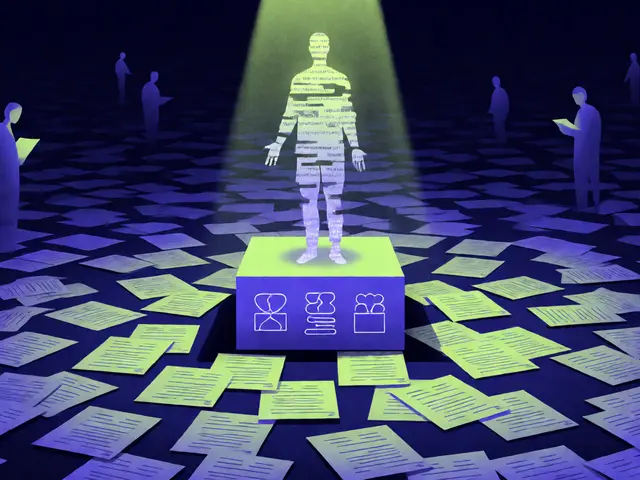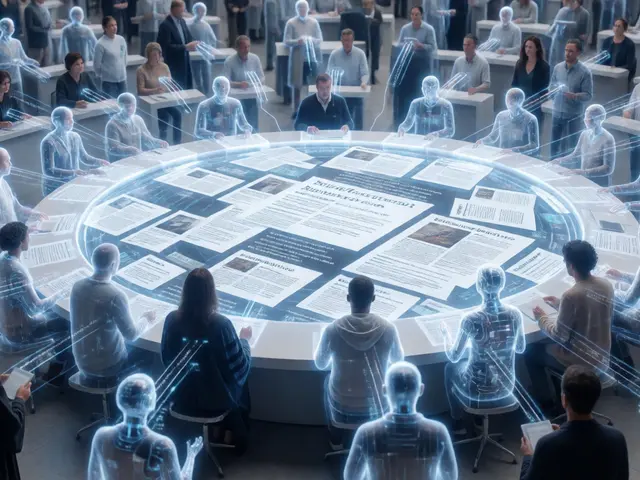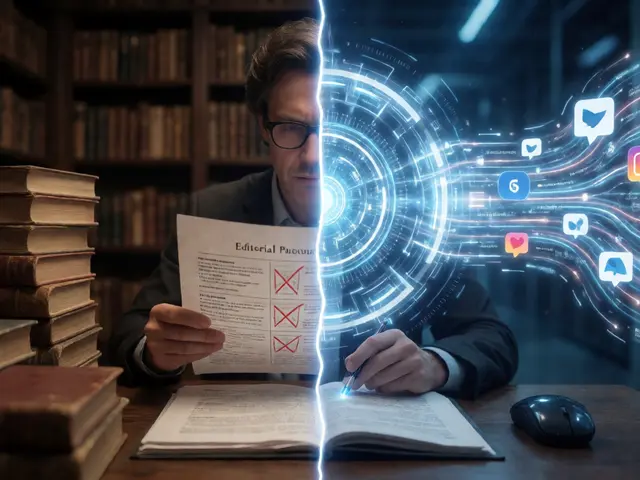
Imagine waking up to find that half the new articles on your favorite topic were written by a robot. For Wikipedia is the world's largest free online encyclopedia, relying entirely on volunteer editors to maintain accuracy and neutrality. It has long been a symbol of collective human intelligence. But as Large Language Models (LLMs) are advanced artificial intelligence systems capable of generating human-like text from prompts, the line between human effort and machine output is blurring fast. The question isn't whether AI will touch Wikipedia-it already has. The real debate is about how much control we keep over our shared knowledge base.
The Current State of AI Integration
Right now, AI tools aren't just visitors; they're active participants in the ecosystem. Many editors use AI for translation, summarizing complex sources, or fixing grammar. This is generally welcomed because it lowers the barrier to entry for non-native speakers. However, a growing number of contributors are pasting entire paragraphs generated by ChatGPT or similar tools directly into drafts without proper citation. This creates a specific type of risk known as "hallucination," where an AI invents facts that sound plausible but have no source.
The core tension lies in verification. Human editors usually read a source, understand it, and then write. AI reads a prompt and predicts the next likely word. When these two processes mix, we get content that looks polished but might be factually shaky. Recent audits have shown that while most AI-edited articles are harmless, a small percentage contain fabricated references or outdated data presented as current truth. This isn't a bug; it's a feature of how probabilistic models work. They optimize for likelihood, not absolute truth.
Opportunities: Scaling Knowledge Creation
If we look past the fear, the potential benefits are massive. Wikipedia currently struggles with coverage gaps in niche fields, indigenous languages, and historical records. AI can bridge these gaps at a speed no human team could match. Consider the task of translating a well-sourced article from English to Swahili. A human editor might take weeks. An AI tool can produce a draft in seconds, which a native speaker can then refine. This accelerates the democratization of knowledge.
Beyond translation, AI excels at structuring unorganized data. Imagine feeding a messy collection of academic papers into an AI system. It can extract key findings, compare methodologies, and generate a neutral summary. This could revolutionize how science is communicated to the public. Instead of waiting for a specialist to write a primer, the community could access a synthesized overview almost instantly. This doesn't replace experts; it empowers them to focus on high-level analysis rather than basic synthesis.
Concerns: The Erosion of Editorial Integrity
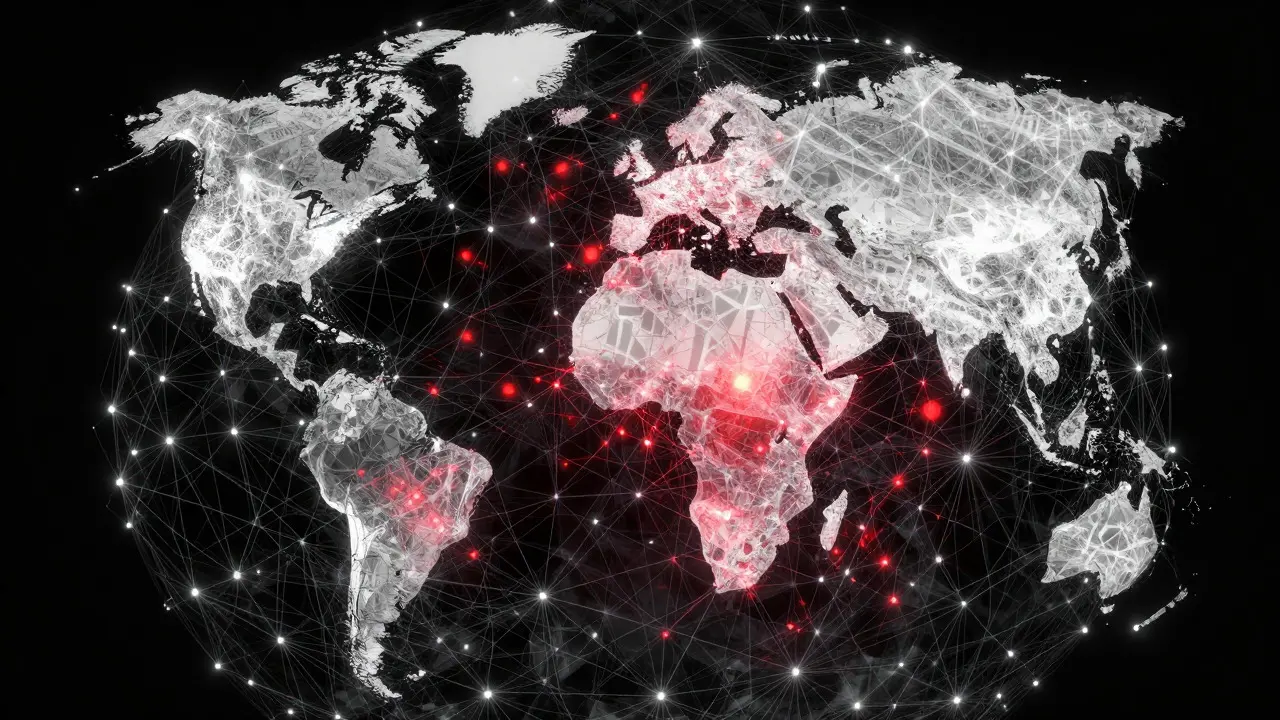
The biggest worry isn't that AI will make mistakes; it's that AI will make *consistent* mistakes. If one model generates biased phrasing, and another uses it as a source, the bias propagates. This is called "model collapse" in data science terms, where training on synthetic data degrades quality over time. On Wikipedia, this manifests as subtle shifts in tone or perspective that go unnoticed because the text sounds authoritative.
There is also the issue of attribution. Who owns an AI-generated sentence? If an editor prompts an AI to write a paragraph, does that editor deserve credit? Does the AI company? Currently, Wikipedia's licensing requires clear attribution for copied text. With AI, the source is often a black box. This legal gray area makes many conservative editors hesitant to accept AI contributions, leading to a stalemate where useful automation is blocked by procedural caution.
Practical Guidelines for Editors
So, what should you do if you want to use AI tools? Here is a practical approach that keeps your edits safe and welcome:
- Cite the Source, Not the Tool: Never cite "ChatGPT" as a reference. Always find the primary source the AI used (or claim it used) and verify it yourself.
- Use AI for Drafts, Not Final Text: Treat AI output as a rough sketch. Rewrite it in your own voice to ensure clarity and originality.
- Check for Hallucinations: Pay extra attention to dates, names, and statistics. These are the most common areas where LLMs fail.
- Disclose Usage: In the edit summary, mention that AI assistance was used. Transparency builds trust within the community.

Comparison: Human vs. AI Editing
To understand the trade-offs, let's compare the two approaches side-by-side. This table highlights where each method shines and where it falls short.
| Attribute | Human Editor | AI-Assisted Editor |
|---|---|---|
| Speed of Production | Slow (hours per article) | Fast (minutes per draft) |
| Factual Accuracy | High (if diligent) | Variable (prone to hallucinations) |
| Linguistic Diversity | Limited by editor's skills | High (supports 100+ languages) |
| Contextual Nuance | Strong (understands cultural context) | Weak (often misses subtleties) |
| Cost | Time-intensive | Low marginal cost |
The Future of Open Knowledge
We are moving toward a hybrid model. Pure human editing is too slow for the scale of modern information needs. Pure AI editing is too risky for a trusted reference. The future belongs to "human-in-the-loop" systems. Think of AI as a tireless intern who can fetch documents, translate passages, and flag inconsistencies, while humans act as the final quality control gatekeepers.
For this to work, Wikipedia needs better infrastructure. We need built-in tools that automatically check citations against original sources using AI. We need clearer guidelines on what constitutes "original research" versus "synthesis." And we need a cultural shift where using AI is seen as a productivity boost, not a cheat code. The goal isn't to ban AI, but to harness its power without surrendering our standards. If we succeed, Wikipedia won't just be a repository of human knowledge; it will become a dynamic engine for global understanding.
Is it allowed to use AI on Wikipedia?
Yes, but with caveats. You must verify all facts independently and cite primary sources. Do not paste unverified AI text directly into live articles without careful review. Disclosure in the edit summary is recommended.
What is an AI hallucination in this context?
A hallucination is when an AI generates a statement that sounds confident and plausible but is factually incorrect or unsupported by any real-world source. For example, inventing a book title or misattributing a quote to the wrong author.
How does AI help with language barriers?
AI translation tools allow editors to quickly convert content between languages. This helps fill gaps in less-resourced language versions of Wikipedia, making global knowledge more accessible to non-English speakers.
Who is responsible for errors in AI-generated content?
The human editor who publishes the content is ultimately responsible. Since Wikipedia operates on a consensus model, the community reviews edits. If an error slips through, it is corrected by other volunteers, regardless of whether AI was used.
Will AI replace human editors eventually?
Unlikely in the near term. While AI can handle routine tasks like formatting and translation, complex topics require critical thinking, ethical judgment, and contextual understanding that humans still excel at. The role of the editor is evolving, not disappearing.