
Imagine you spend three hours polishing a section on 19th-century naval history. You cite primary sources, fix grammar, and add context. Then, a bot or another editor slaps a "Stub" tag on it because they missed the depth of your work. Frustrating? Absolutely. But this is where article assessment comes in-not as a judgment call, but as a shared language for quality control in collaborative editing environments like Wikipedia.
For contributors within a WikiProject, assessing articles isn't just about checking boxes. It's about maintaining a consistent standard so that readers can trust the depth of information they find. Whether you are a new volunteer or a seasoned maintainer, understanding how to assess articles effectively saves time, reduces edit wars, and improves the overall reliability of the encyclopedia.
What Is Article Assessment in This Context?
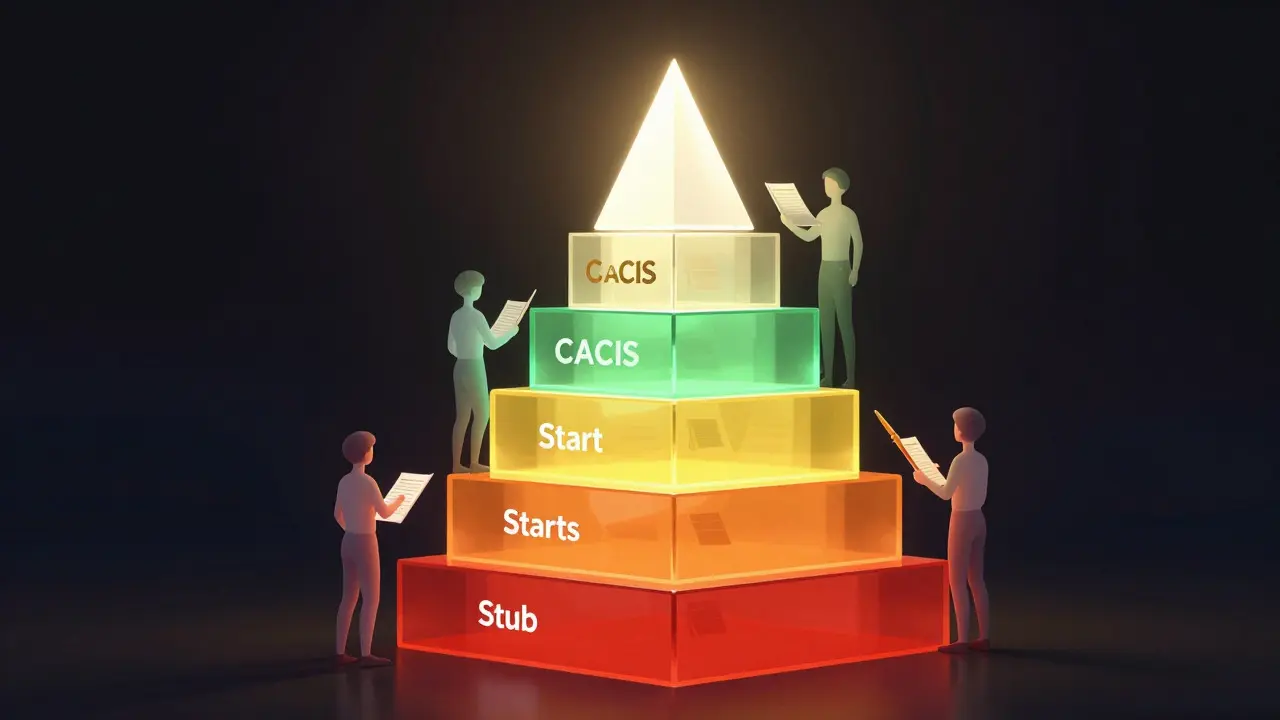
Article assessment is a systematic process used by community groups to evaluate the completeness, accuracy, and readability of encyclopedia entries based on predefined criteria. In major online encyclopedias, these assessments usually result in tags like "Stub," "Start," "C-Class," "B-Class," or "Featured." These labels tell other editors what level of attention an article needs. They also help prioritize work: if a topic is marked as a "Stub," you know it lacks basic structure. If it's "B-Class," it's solid but might need better sourcing or flow.
The goal isn't perfection. It's clarity. When every contributor uses the same yardstick, we avoid subjective arguments like "I think this is good enough." Instead, we ask: Does it meet the specific requirements for this class? That shift from opinion to criterion is the heart of effective assessment.
Why Consistency Matters More Than Speed
New contributors often rush to assess articles because they want to show activity. But speed without consistency creates chaos. If one editor marks an article as "Good" while another marks a similar article as "Poor" for no clear reason, trust erodes. Readers may not care, but other editors will notice, and collaboration breaks down.
Consistency builds a reliable map of content quality. Think of it like grading papers. If a teacher gives an A+ to one essay and a C- to another identical essay, students stop trusting the grade. Similarly, if assessment standards fluctuate wildly, contributors get confused about what actually matters. By sticking to established guidelines, you create a stable environment where effort is rewarded fairly.
Core Criteria for Evaluating Quality
When you sit down to assess an article, look beyond surface-level formatting. Here are the key pillars that determine an article's class:
- Completeness: Does the article cover all significant aspects of the topic? For a biography, does it include early life, career, legacy, and death? For a concept, does it explain origins, development, and current applications? Missing major sections usually caps the rating at "Start" or lower.
- Sourcing: Are claims backed by reliable references? Inline citations should support factual statements. General references at the bottom aren't enough; specific quotes need specific sources. Poor sourcing is the most common reason for low ratings.
- Neutrality: Does the text present multiple viewpoints fairly? Biased language, promotional tone, or ignoring counter-arguments drag down the score. The writing should feel objective, even when discussing controversial topics.
- Structure and Readability: Is the layout logical? Do headings guide the reader smoothly? Is the prose clear and concise? An article with great facts but confusing organization won't reach high classes.
- Images and Media: Are there relevant, well-captioned images? While not always mandatory, good visual elements enhance understanding and signal a polished entry.
Step-by-Step Assessment Process
Don't just skim. Follow a structured approach to ensure your assessment is defensible.
- Read the Talk Page First: Check for ongoing debates, previous assessments, or known issues. This prevents you from contradicting recent consensus or missing obvious problems.
- Review the Current State: Read the entire article from start to finish. Note gaps, broken links, and citation errors. Don't assume the summary reflects the body text.
- Compare Against Criteria: Use the official checklist for your target class. For example, a "B-Class" article typically requires comprehensive coverage and reliable sourcing, but may lack the polish of a "Featured" article.
- Check for Bias and Tone: Look for loaded words, unsupported superlatives (like "greatest" or "best"), or one-sided perspectives. Neutral point of view is non-negotiable.
- Verify References: Spot-check a few citations. Do they actually support the claim? Are they from reputable sources? If a source is obscure or self-published, flag it.
- Assign the Tag: Apply the appropriate class tag. If unsure between two classes, choose the lower one and leave a note explaining why. It’s easier to upgrade later than to downgrade after a dispute.
- Document Your Reasoning: Leave a brief comment on the talk page or in the assessment log. Explain what you liked and what needs improvement. This transparency invites feedback and helps others understand your decision.
Common Pitfalls to Avoid
Even experienced assessors make mistakes. Here are the traps that catch people off guard:
- Assessing Based on Length Alone: A long article isn't automatically high-quality. If it's padded with fluff or repetitive details, it might still be a "Start." Conversely, a short but dense and well-sourced article could be "C-Class" or higher.
- Ignoring Recent Edits: Always check the revision history. If someone just added a huge chunk of unsourced text, don't rate it based on the old version. Assess the current state.
- Being Too Harsh or Too Lenient: Aim for fairness. If an article meets 80% of the criteria for a class, consider giving it that class with a note about the missing 20%. If it barely scrapes by, give it the lower class to encourage further work.
- Skipping the Talk Page: As mentioned, this is critical. Ignoring prior discussions leads to redundant comments and frustration.

Tools and Resources for Better Assessments
You don't have to do this alone. Most WikiProjects provide templates and checklists to streamline the process. Use them. They ensure you're not missing any required elements. Additionally, many projects have mentorship programs where senior editors review your assessments. Don't hesitate to ask for a second opinion if you're torn between two classes.
There are also automated tools that scan for missing references or broken links. While not a substitute for human judgment, they can highlight technical issues you might overlook. Combine these tools with your own reading skills for a thorough evaluation.
Handling Disagreements Gracefully
Not everyone will agree with your assessment. That's normal. If another editor disputes your rating, stay calm. Re-read their argument. Did you miss something? If not, explain your reasoning clearly, citing specific parts of the article and the official criteria. Avoid personal attacks. Focus on the text, not the person. Often, a simple conversation resolves the issue. If not, bring it to the project's discussion board for a group consensus.
| Class | Description | Typical Issues | Action Needed |
|---|---|---|---|
| Stub | Bare minimum info | Lacks structure, few sources | Add sections, expand content |
| Start | Basic outline present | Incomplete coverage, weak sourcing | Flesh out details, add references |
| C-Class | Decent coverage, some gaps | Minor structural issues, inconsistent tone | Refine flow, improve neutrality |
| B-Class | Comprehensive and accurate | May lack polish or advanced media | Enhance presentation, minor edits |
| Featured | Exemplary quality | Rarely has major issues | Maintenance only |
Building a Culture of Constructive Feedback
Assessment isn't just about tagging; it's about guiding improvement. When you leave a note, make it actionable. Instead of saying "Needs work," say "The introduction lacks a hook and doesn't mention the author's major award. Consider adding these details.