Wikipedia articles can look polished, but behind every clean sentence is often a team of volunteers who fixed awkward phrasing, fixed grammar, and smoothed out confusing logic. If you’ve written or edited a Wikipedia article and want it to meet higher quality standards, one of the best steps you can take is to request a copyedit from the Wikipedia Guild of Copy Editors. This isn’t a formal service-it’s a community of experienced editors who volunteer their time to help make articles clearer, more consistent, and more professional.
What the Guild of Copy Editors Actually Does
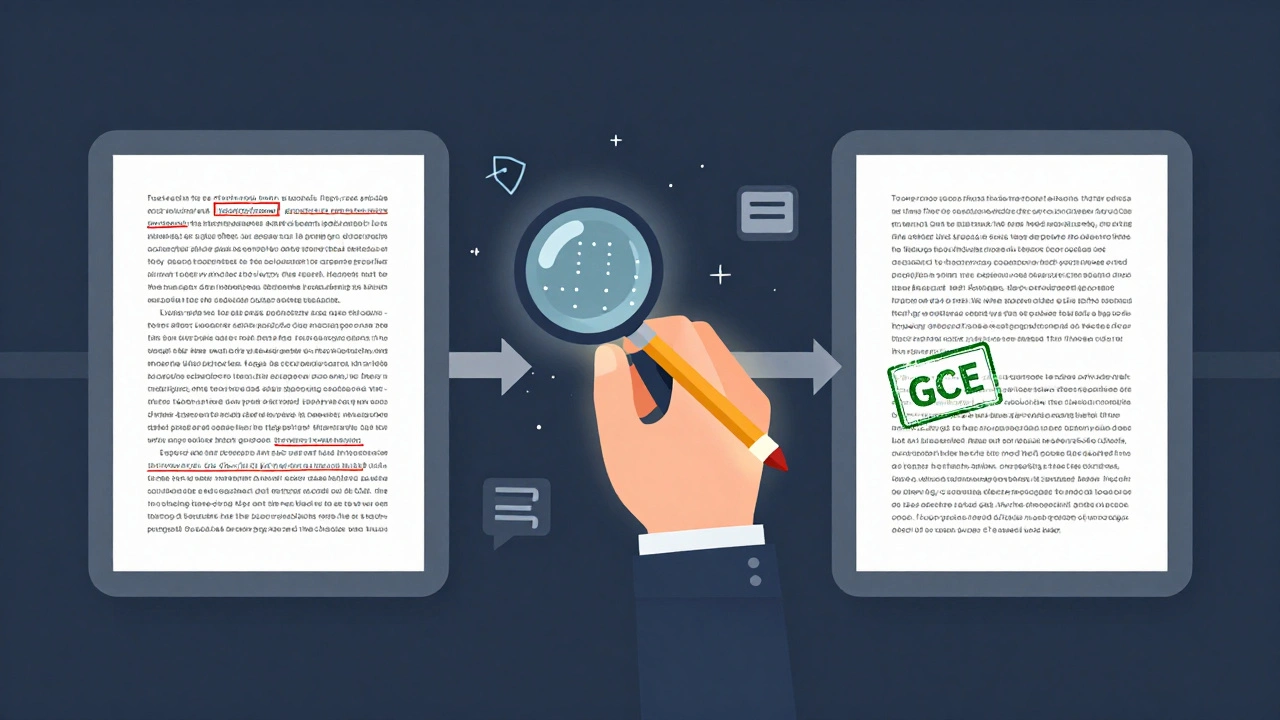
The Guild of Copy Editors (GCE) is a group of Wikipedia editors who specialize in copyediting. They don’t rewrite articles or add new facts. Instead, they focus on language: fixing punctuation, improving flow, removing redundancy, standardizing terminology, and ensuring articles follow Wikipedia’s style guidelines. Think of them as the proofreaders of Wikipedia.
Articles that go through a GCE copyedit often see a noticeable jump in readability. A poorly structured paragraph becomes smooth. Confusing jargon gets replaced with plain language. Inconsistent capitalization or hyphenation gets corrected. These aren’t flashy changes, but they make a big difference in how readers perceive the article’s credibility.
According to Guild statistics from late 2025, over 12,000 articles received copyedits through their formal request system in the past year alone. Around 65% of those requests were completed within 30 days. That’s faster than many people expect.
When You Should Request a Copyedit
Not every article needs a copyedit. You should request one when:
- You’ve finished a major rewrite and want to polish the language before promoting the article
- You’ve received feedback that the article is hard to read or confusing
- You’re preparing an article for Featured Article status, which requires high editorial standards
- You’ve noticed repeated grammar or punctuation errors that you can’t fix yourself
- You’re not a native English speaker and want to ensure clarity for international readers
Don’t request a copyedit if the article is still under heavy development. If you’re adding new sections, changing structure, or adding citations, wait until the content is stable. Copyeditors don’t like to edit content that’s likely to change again soon.
How to Request a Copyedit
Requesting a copyedit is simple, but there’s a right way to do it to get the best results.
- Go to the Guild of Copy Editors page on Wikipedia.
- Scroll down to the section titled Requests.
- Click the link that says Add a new request.
- In the form, paste the full URL of the article you want edited. Make sure it’s the exact version you want reviewed-don’t link to a draft or an old revision.
- Write a brief note explaining why you’re requesting the edit. For example: “This article was recently expanded and needs help with flow and punctuation. It’s being considered for Good Article status.”
- Sign your request with four tildes (~~~~) to add your username and timestamp.
- Click Save page.
That’s it. Your request will appear in the queue. You don’t need to ping editors or message them directly. The Guild has a system that automatically assigns requests based on editor availability and article length.
What Happens After You Submit
Once your request is submitted, it enters a queue. The Guild handles hundreds of requests each week, so wait times vary. Short articles (under 5,000 words) usually get picked up within a week. Longer articles (over 10,000 words) might take 3-6 weeks, especially if they’re complex or niche.
When an editor picks up your request, they’ll leave a comment on your article’s talk page. They might ask for clarification on a point, suggest a rewrite, or simply confirm they’re working on it. You’ll get an edit summary on the article itself once the copyedit is done, tagged with [[Wikipedia:Guild of Copy Editors|GCE]].
You’re not required to accept every change. If you disagree with an edit, you can discuss it on the talk page. Most copyeditors are happy to explain their reasoning or revert changes if you provide a good reason.
What Copyeditors Won’t Do
It’s important to know the limits of what the Guild can and can’t do:
- They won’t fact-check your content. If a claim is wrong, they’ll note it but won’t fix it unless you provide a reliable source.
- They won’t add new sections or rewrite entire paragraphs for clarity unless it’s part of language smoothing.
- They won’t fix citation formatting-that’s handled by the Citation Hunt project or WikiProject Citation.
- They won’t edit articles that are under dispute or involved in edit wars.
- They won’t rush your request, even if you’re on a deadline.
If your article needs structural changes, citation fixes, or factual verification, you’ll need to seek help from other Wikipedia projects first. The Guild is focused on language, not content.
How to Improve Your Chances of Getting Help
Not all requests get answered quickly. Here’s how to make yours stand out:
- Make sure your article is at least 3,000 words long. Very short articles are often deprioritized.
- Ensure all major citations are added. Copyeditors won’t fix references-they’ll flag missing ones.
- Remove obvious errors yourself first. If you have ten typos in the first paragraph, the editor might skip your request.
- Use clear, neutral language in your request note. Avoid phrases like “This article is perfect except for grammar.” That sounds defensive.
- Be patient. The Guild runs on volunteer time. Editors have jobs, families, and other commitments.
Some editors even leave notes like “This article is ready for GA nomination after copyedit” when they’re done. That’s a good sign your work is on the right track.
What to Do After the Copyedit
Once the copyedit is complete:
- Review the changes on the article’s history page. Look for the GCE tag in the edit summary.
- Check the talk page for any follow-up comments from the editor.
- If you’re aiming for Featured or Good Article status, mention in your nomination that the article was copyedited by the Guild.
- Thank the editor on their talk page. A simple “Thank you for the excellent copyedit!” goes a long way.
Many editors who receive copyedits go on to join the Guild themselves. It’s one of the most rewarding ways to give back to Wikipedia after benefiting from its community.
Alternatives If the Guild Is Backlogged
If your request is stuck in the queue for more than 6 weeks, you have a few options:
- Post a reminder on the Guild’s talk page-politely, once only.
- Ask for help on Wikipedia Teahouse, a friendly space for new and experienced editors.
- Use the Citation Hunt tool to find and fix citation issues yourself.
- Join the WikiProject Good Articles and ask for peer review.
There are also bots like WP:CopyeditBot that can flag common errors, but they can’t replace human judgment on tone, clarity, and flow.
How long does a copyedit usually take?
Most short articles (under 5,000 words) are completed within 7-14 days. Longer or more complex articles can take 3-6 weeks. The Guild doesn’t guarantee timelines, but they aim to clear requests as quickly as possible.
Can I request a copyedit for a non-English Wikipedia article?
No. The Guild of Copy Editors only handles English-language Wikipedia articles. Other language versions have their own copyediting communities. For example, the German Wikipedia has the “Korrekturleser” group, and the French Wikipedia has the “Atelier de relecture.”
Do I need to be an experienced editor to request a copyedit?
No. Anyone can request a copyedit, whether you’re a new editor or have been on Wikipedia for years. The Guild welcomes requests from all users, and many editors started by getting help on their first article.
Will the copyedit improve my article’s chances of becoming a Featured Article?
Yes. One of the criteria for Featured Article status is clear, polished prose. Articles that have been copyedited by the Guild often pass this requirement more easily. Many nominators mention the GCE copyedit in their nomination as proof of editorial quality.
Can I ask for a copyedit on a draft article?
It’s not recommended. Drafts are still in progress and often change significantly. Wait until the article is in mainspace and stable before requesting a copyedit. If you’re unsure, you can ask for feedback on your draft in the Teahouse or WikiProject spaces.
Final Thoughts
Wikipedia’s strength isn’t just in its content-it’s in its community. The Guild of Copy Editors is one of the quiet heroes behind the scenes. They don’t get medals or public recognition, but their work makes the encyclopedia more trustworthy, readable, and accessible to millions.
If you care about the quality of your article, requesting a copyedit isn’t just a good idea-it’s a necessary step. It shows respect for your readers and for the standards of the platform. And if you’ve benefited from their help, consider joining them one day. The best way to keep Wikipedia strong is to give back.