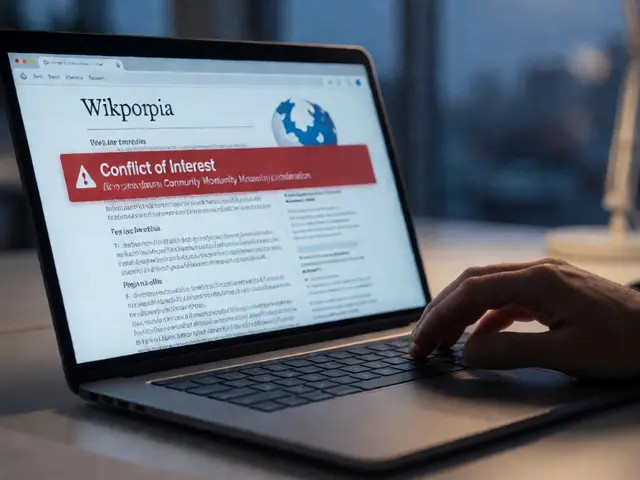
You’re staring at a Wikipedia article about a niche local band. The only source cited is the band’s own website. You check that website, and sure enough, it links back to the Wikipedia page as its primary reference. It’s a loop. A trap. This is circular citation, also known as self-referential sourcing or bootstrapping, where an article cites a source that relies on the article itself for its content. It undermines the entire premise of an encyclopedia: independent verification.
Wikipedia isn’t a place to publish your own research; it’s a place to summarize what credible, independent observers have already published. When you break that rule, you don’t just hurt one article-you erode trust in the platform for everyone who reads it. Here’s how to spot these traps, avoid creating them, and fix them when they sneak in.
Why Circular Citations Break Trust
The core problem with circular references is lack of independence. If Source A says X, and Source B (which cites Source A) says X, you haven’t actually verified X. You’ve just heard the same echo twice. In academic circles, this is called “citation padding” or “self-citation bias,” but on Wikipedia, a collaborative online encyclopedia governed by community consensus, it manifests differently.
Consider a common scenario: An editor creates a biography for their cousin, a minor politician. They cite three news articles. Two are from local papers that quoted the politician. The third is a press release issued by the politician’s office. But wait-did those local papers get their quotes from the press release? Or did the press release quote the Wikipedia draft to give it legitimacy? If the information originated in one place and flowed out to others without independent investigation, the chain is weak.
Independent verification means the source gathered facts through its own reporting, analysis, or observation, not by copying another secondary source. This distinction is vital because it ensures that if one source is wrong, biased, or retracted, the fact doesn’t vanish entirely-it survives because other independent entities confirmed it separately.
Spotting the Red Flags
Circular citations rarely announce themselves. They hide in plain sight, often disguised as legitimate journalism. How do you tell the difference between a real news report and a recycled summary? Look for these specific patterns:
- Single-source origin: All citations trace back to one initial announcement, blog post, or press release. If every article mentions the same date, the same quote, and the same figures without adding new context, they likely all copied from the same seed.
- Self-published material: The subject of the article owns the publication. A restaurant owner writing a review of their own food on a personal blog, then citing that blog in the restaurant’s Wikipedia entry, is a classic loop.
- Lack of attribution depth: Articles that say “according to reports” without naming the original reporter or outlet often signal second-hand information.
- New topics with immediate coverage: If a topic appears today and has five sources by tomorrow, ask: Did five different journalists investigate this independently? Or did one tweet go viral and get picked up by aggregators?
A practical heuristic: If you remove the Wikipedia article from the equation, does the source still make sense? If the source explicitly says “as seen on Wikipedia” or uses phrasing that only makes sense in the context of the encyclopedia’s existence, it’s likely circular.
The Hierarchy of Reliable Sources
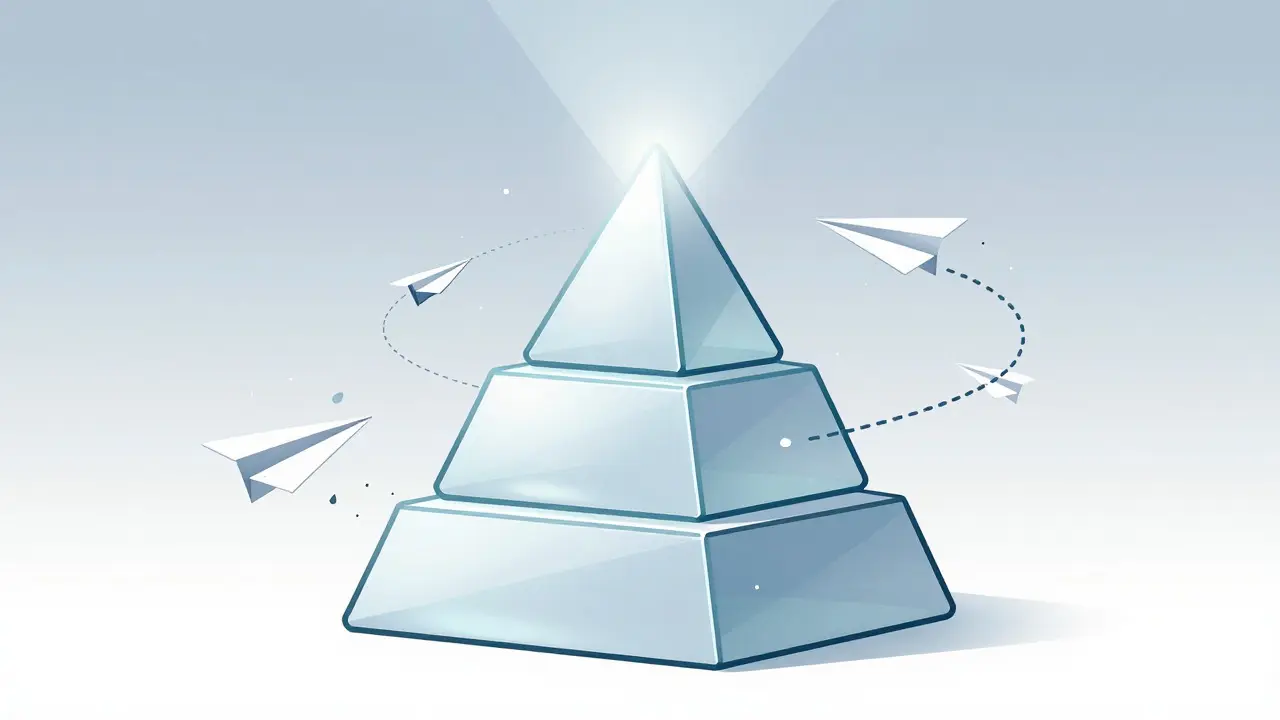
To avoid circularity, you need to understand where information comes from. Wikipedia editors generally follow a hierarchy of source reliability, prioritizing tertiary sources over secondary, and secondary over primary, depending on the context.
| Source Type | Definition | Risk of Circularity | Best Use Case |
|---|---|---|---|
| Primary | Original evidence (e.g., a court document, a raw dataset, a speech transcript) | Low if interpreted correctly, high if used as the sole narrative voice | Verifying specific facts like dates, names, or direct quotes |
| Secondary | Analysis or reporting based on primary sources (e.g., news articles, biographies, reviews) | Moderate; check if the reporter investigated independently | Building the main narrative and context of an article |
| Tertiary | Syntheses of secondary sources (e.g., encyclopedias, textbooks, almanacs) | Low; usually aggregates multiple independent views | Establishing consensus on well-known facts |
| Self-Published | Content created by the subject (e.g., company blogs, personal sites) | High; inherently lacks independence | Only for uncontroversial basic info (like founding date) if no better source exists |
The goal is always to find the most independent source available. For a living person, a peer-reviewed biography or a major newspaper profile is far superior to their LinkedIn profile. For a scientific discovery, the original journal paper (primary) is essential for details, but a reputable science magazine’s summary (secondary) provides the necessary context and independent interpretation.
Practical Steps for Editors
How do you apply this in practice? You don’t need to be a detective, but you do need to be curious. Here’s a workflow to keep your citations clean:
- Trace the lineage: When you find a source, skim it. Does it mention where it got the info? If it says “in a statement released today,” look for the original statement. If it says “according to a study published in Nature,” go to Nature. Don’t stop at the middleman.
- Diversify your outlets: Try to cite sources from different organizations. If you have three citations, aim for three different publishers (e.g., one newspaper, one academic journal, one official government database). This reduces the chance that they all share the same single point of failure.
- Check the date gap: If a source was published within hours of the event it describes, it might be based on early, unverified reports. Wait for follow-up stories that confirm or correct the initial burst. Independent verification takes time.
- Use talk pages: Before finalizing a controversial claim, post on the article’s talk page. Ask, “Is this source independent?” Other editors often know the history of a topic and can flag if a source is part of a known promotional campaign or echo chamber.
- Prefer established media: While not a hard rule, sources with editorial boards and correction policies (like major newspapers or broadcast networks) have built-in checks against error and bias. Blogs and social media posts require extra scrutiny.
Remember, the burden of proof lies with the editor adding the content. If you can’t prove the source is independent, assume it isn’t until you can.

Fixing Existing Loops
What if you find a circular citation in an existing article? Don’t panic. It happens. The key is to replace the weak link with a stronger one. First, identify which part of the loop is the weakest. Usually, it’s the self-published source or the aggregator site. Remove that citation. Then, search for an alternative. Use advanced search operators to find news articles that discuss the topic but don’t link back to Wikipedia. Often, you’ll find older articles or international outlets that covered the story before the Wikipedia page became a reference point. If you truly cannot find an independent source, consider whether the fact belongs in the article at all. Not everything needs to be there. If a detail is only supported by circular references, it might be better to remove it than to leave it with a shaky foundation. A shorter, well-sourced article is always better than a long, poorly verified one.
Frequently Asked Questions
Is it ever okay to use a self-published source on Wikipedia?
Yes, but only for very specific, non-controversial facts. For example, if you’re writing about a small local bakery, the bakery’s own website is acceptable for stating its opening date or list of menu items, provided those facts aren’t disputed. However, for claims about quality, popularity, or historical significance, you must use independent sources like local news reviews or industry awards.
How do I know if a news article is independent?
Look for signs of original reporting. Does the article include quotes from people other than the subject? Does it mention specific details that weren’t in the initial press release? If the article seems to just rewrite a press release without adding new information or critical perspective, it may not be sufficiently independent. Cross-reference with other outlets to see if they added unique insights.
What should I do if all sources seem to come from the same place?
This is a red flag. It suggests a coordinated effort or a lack of genuine public interest. Try searching for the topic in different languages or regions. Sometimes, international media covers stories independently. If you still only find one origin point, consider labeling the section as “disputed” or removing the specific claims until more diverse sources appear.
Does using a Wikipedia citation in a book count as circular?
Not necessarily. If a scholar cites Wikipedia for a basic fact and then adds their own analysis, it’s fine. The issue arises when the Wikipedia article itself cites the book, and the book cites the Wikipedia article for the same specific claim. The circle is broken if each side contributes something new. However, relying solely on Wikipedia for complex arguments is generally discouraged in academic settings due to its collaborative nature.
How important is the date of the source relative to the event?
Very important for breaking news. Early reports are prone to error. For historical events, the date matters less, but for current affairs, prefer sources published after the initial chaos has settled. This allows time for corrections and deeper investigation. A source published two weeks after an event is usually more reliable than one published two hours after.