You know that feeling when you're writing a paper or an article and you pull a fact from Wikipedia is a free online encyclopedia that serves as a common starting point for research but requires careful citation to avoid plagiarism and close paraphrasing errors. You change a few words, swap the sentence structure, and think you're safe. But if you've been flagged for "close paraphrasing" or even outright plagiarism is the act of using someone else's work or ideas without proper attribution, which includes copying text too closely even if some words are changed", you likely fell into the trap of relying too heavily on the source's original phrasing. The risk isn't just about getting caught; it's about losing credibility because your voice got buried under the source's style.
Why Wikipedia Is a Double-Edged Sword for Writers
Wikipedia aggregates information from thousands of reliable sources is peer-reviewed journals, books, and reputable news outlets that provide verified facts and context for topics, making it incredibly convenient. However, because it is a collaborative platform, the language used in articles can sometimes be dry, formulaic, or repetitive. When you copy this language directly, you aren't just borrowing facts; you're borrowing a specific syntactic fingerprint. This is where close paraphrasing is rewriting a source's text with minor changes to word choice or order while retaining the original structure and meaning, which is often considered a form of plagiarism becomes a problem. It looks like you did the work, but structurally, it's still the original author's idea presented in their rhythm.
The Difference Between Quoting and Paraphrasing
To navigate this, you need to understand the mechanical difference between quoting and paraphrasing. Quoting involves taking exact words and enclosing them in quotation marks, followed by a citation. Paraphrasing requires you to digest the information and restate it in your own words and sentence structure. The danger zone is the middle ground: changing "The cat sat on the mat" to "The feline rested upon the rug." You changed the words, but the subject-verb-object structure remains identical. In academic and professional writing, this is often flagged as lazy writing rather than true synthesis. True paraphrasing might look like: "The animal chose the rug as its resting spot." Notice how the focus shifts slightly and the sentence structure is rebuilt entirely.
How to Detect Close Paraphrasing in Your Drafts
Before you submit your work, run a self-check. Here is a simple method to identify if you are too close to the source:
- Hide the Source: Cover up the Wikipedia article. Read your paragraph aloud. Does it sound like you? Or does it sound like a generic encyclopedic entry?
- Check Sentence Length: If your sentences are similar in length and complexity to the source, you are likely mirroring the structure.
- Look for Unique Phrases: Did you keep any three-word phrases from the original? If so, either quote them or rewrite them completely.
Best Practices for Citing Wikipedia Correctly
Citing Wikipedia correctly is less about the format (APA, MLA, Chicago) and more about the intent. You should cite Wikipedia when it provides a useful overview or when the specific version of the page contains unique commentary. However, always verify the claims against the references listed at the bottom of the Wikipedia page. Here is a table comparing risky vs. safe citation practices:
| Practice | Risk Level | Recommendation |
|---|---|---|
| Copying full sentences with minor word swaps | High | Rewrite from scratch after reading the primary source |
| Quoting short, distinctive phrases | Low | Use quotation marks and cite the page |
| Summarizing multiple paragraphs into one | Medium | Ensure your summary adds new insight or context |
| Using Wikipedia as the sole source for a key argument | High | Find at least two independent reliable sources |
When to Look Beyond Wikipedia
While Wikipedia is great for background, it shouldn't be your only pillar for complex arguments. For scientific topics, look for peer-reviewed journals is academic publications where experts evaluate research before publication to ensure quality and validity. For historical events, consult archival records is original documents, letters, or photographs preserved in libraries or museums that provide direct evidence of past events. By diversifying your sources, you naturally diversify your vocabulary and sentence structures, reducing the chance of accidental close paraphrasing. This approach also strengthens your credibility, showing readers that you have done deep digging rather than surface-level skimming.
Tools That Help Prevent Plagiarism
Technology can be your safety net. Tools like Turnitin is a software platform widely used by educators to detect similarity between student papers and existing texts or Grammarly is an AI-powered writing assistant that checks for grammar, style, and potential plagiarism issues can flag high-similarity matches. However, don't rely on them blindly. These tools compare your text against databases, including Wikipedia. A high similarity score doesn't always mean you plagiarized; it might mean you discussed a well-known topic using standard terminology. Use these scores as a prompt to review your wording, not as a final verdict.
Building Your Own Voice Through Research
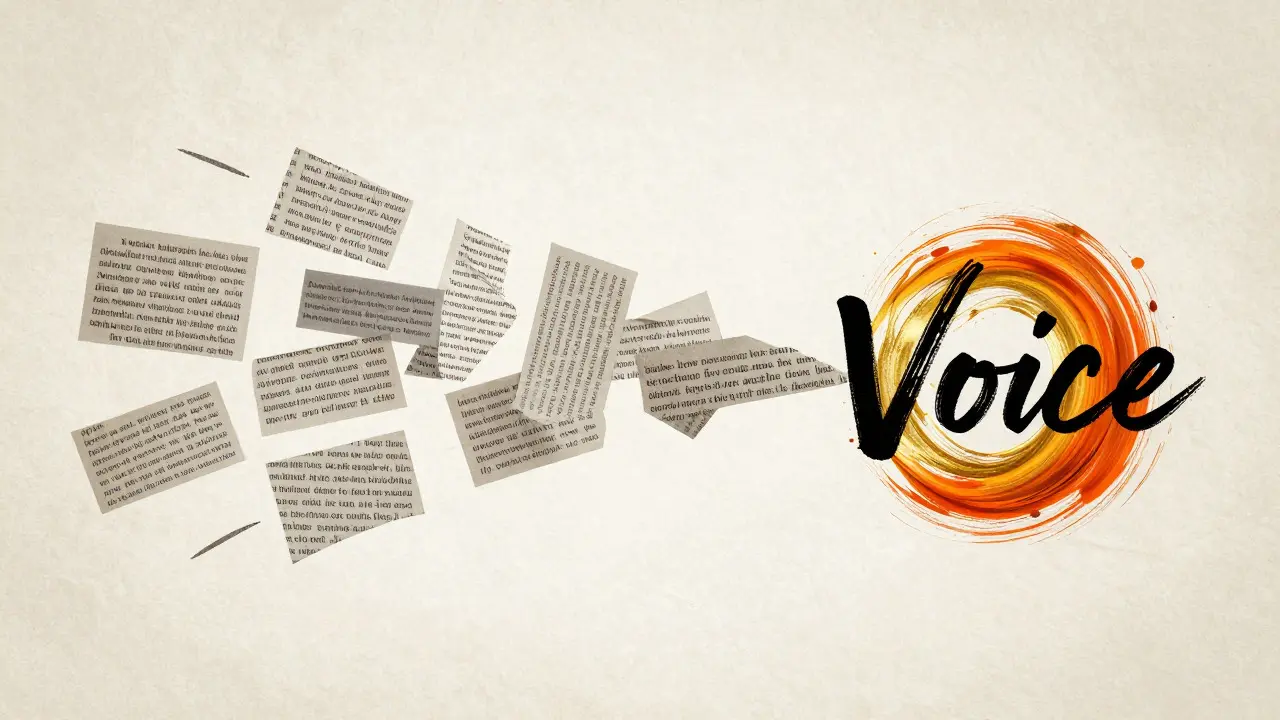
The ultimate goal is to write in a way that reflects your analysis, not just the source's data. When you read a Wikipedia article, ask yourself: "What do I think about this fact? How does it connect to my main argument?" Write down your thoughts first, then use the source to support those thoughts. This reversal of process-thought first, citation second-ensures that your prose drives the narrative, and the citations serve as evidence. It transforms you from a reporter of facts into an analyst of information. This shift is what separates good writing from great writing, and it keeps you far away from the pitfalls of close paraphrasing.
Is it okay to use Wikipedia as a source in academic papers?
Yes, but with caution. Most universities allow Wikipedia for introductory overviews or background information. However, for core arguments, you should always trace the information back to the primary sources cited within the Wikipedia article. Check your specific institution's guidelines, as some strict programs discourage citing tertiary sources like Wikipedia.
What is the main difference between plagiarism and close paraphrasing?
Plagiarism is a broad term for using others' work without credit. Close paraphrasing is a specific type of plagiarism where you change a few words but keep the original sentence structure. Both require proper citation, but close paraphrasing is harder to detect visually because the words look different, yet the intellectual structure remains copied.
How many words can I change to avoid plagiarism?
There is no magic number. Changing 10% of the words is not enough if the sentence structure stays the same. Instead of counting words, focus on restructuring the sentence. Change the active voice to passive, combine two sentences into one, or break one complex sentence into two simple ones. The goal is to make the text sound like you, not the source.
Do I need to cite Wikipedia if I am just using a definition?
Generally, yes. Even definitions can be copyrighted if they are unique to the source. However, common knowledge definitions (like "water is H2O") do not need citation. If the definition is specific or technical, cite the Wikipedia page to be safe. It shows thoroughness and protects you from accusations of uncited borrowing.
Can I use Wikipedia images in my project?
It depends on the license. Many images on Wikipedia are Creative Commons licensed, allowing reuse with attribution. Always check the image description page for the specific license terms. Some images are fair use, which has stricter limitations. When in doubt, use public domain images or create your own graphics to avoid legal and copyright issues.