You are standing in a crowded room, and someone shouts a shocking statistic about a local politician. Before you repeat it at dinner, you pull out your phone. You type the name into Wikipedia is a free, multilingual online encyclopedia that anyone can edit, serving as a primary reference point for millions of daily users worldwide. The page loads instantly. It looks authoritative. But does it actually tell the truth? In the age of instant information, the line between a helpful summary and a misleading narrative is thinner than ever. Consumer journalism isn't just for professional editors; it’s a skill set every digital citizen needs to navigate the web without falling for subtle errors or outdated facts.
The core issue isn’t that Wikipedia is bad. It’s that most people use it like a final answer rather than a starting point. When you treat an open-source database as a static textbook, you miss the dynamic nature of how information evolves. Understanding the mechanics behind the scenes transforms you from a passive reader into an active verifier. This shift changes how you consume news, research topics, and even check claims made by friends on social media.
Understanding the Editorial Engine
To use Wikipedia responsibly, you first need to understand what it actually is. It is not a curated library managed by experts. It is a collaborative platform where thousands of volunteers contribute content. The quality varies wildly from topic to topic. A page on Albert Einstein is likely stable, heavily referenced, and accurate because it has been watched by historians for decades. A page on a new smartphone released last month might be riddled with promotional language or missing key specs because fewer eyes have scrutinized it.
This variability means you must assess the "health" of a page before trusting its content. Look at the talk page, which acts as a public comment section for editors. If there is a heated debate about neutrality, the main article might currently reflect one side of that argument. Checking the revision history shows you how fast the page is changing. A page edited five times in the last hour is unstable. A page unchanged for six months is likely settled. This simple heuristic saves you from citing data that might be wrong by tomorrow morning.
The Reference Gap: What Citations Really Mean
Citations are the backbone of credibility, but they are often misunderstood. On Wikipedia, a citation doesn't always mean a peer-reviewed study. It could be a press release, a blog post, or a news article from a reputable outlet. As a consumer journalist, your job is to look past the blue link and evaluate the source itself.
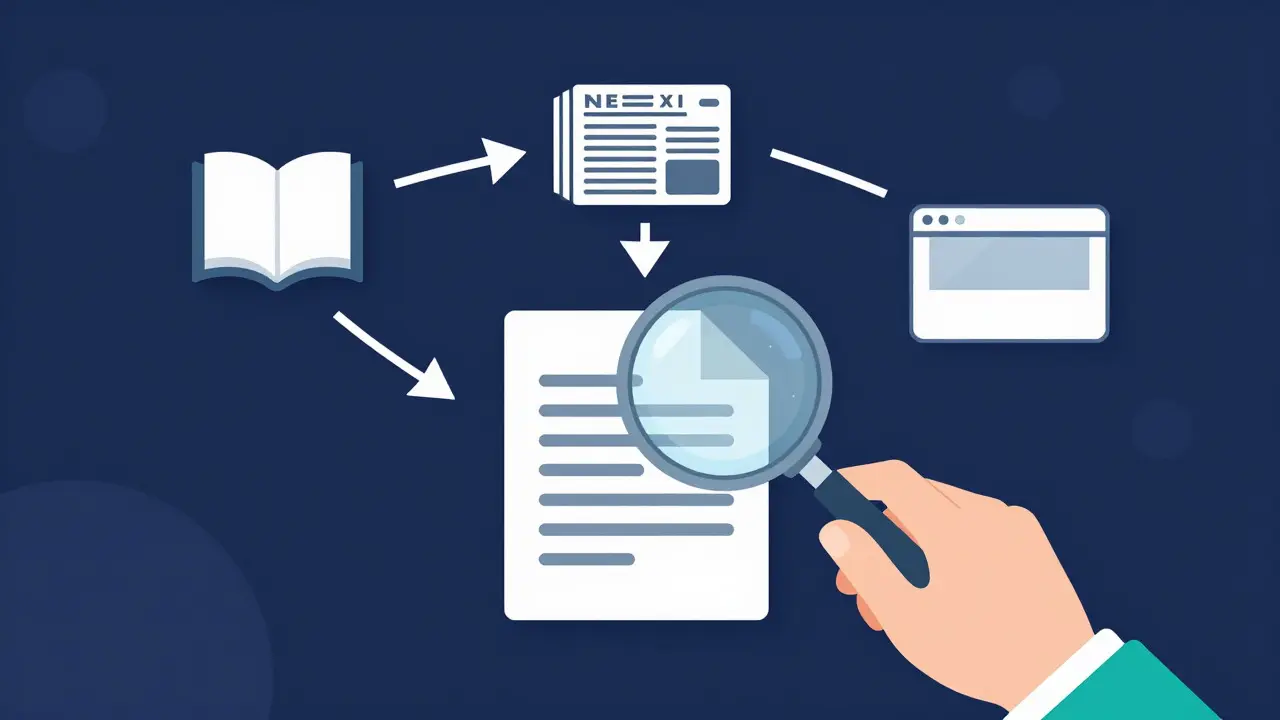
- Primary Sources: These are original documents, interviews, or datasets. They are the strongest evidence.
- Secondary Sources: These interpret primary sources, such as news reports or academic reviews. They are good for context but can carry bias.
- Tertiary Sources: These summarize secondary sources, like dictionaries or encyclopedias. Wikipedia itself is a tertiary source.
If a Wikipedia claim relies solely on tertiary sources, dig deeper. Find the original news report or study. This extra step turns a vague assertion into a verifiable fact. For example, if a page states a company's revenue dropped by 10%, check the annual report (primary) or a major financial news outlet (secondary) rather than relying on the encyclopedia's summary alone.
Navigating Bias and Neutrality
Wikipedia aims for neutral point of view (NPOV), but human bias inevitably slips in. This is especially true for controversial topics like politics, religion, or emerging technologies. Bias often hides in word choice rather than factual errors. Words like "controversial," "alleged," or "claimed" signal uncertainty. Conversely, strong declarative statements without hedging may indicate an editor pushing a specific narrative.
One effective technique is the "Two-Source Rule." Never rely on Wikipedia alone for any significant claim. Cross-reference with at least one independent, high-quality source. If you are researching a medical treatment, check a government health agency or a major medical journal. If you are looking into a historical event, consult a university archive or a published book. This triangulation method ensures that you aren't just reading one perspective, no matter how well-written it appears.

Practical Steps for Daily Verification
Integrating these checks into your daily routine doesn't have to be time-consuming. Here is a streamlined workflow for verifying information on Wikipedia:
- Check the Date: Look at the bottom of the page for the last update date. If it’s over two years old for a fast-moving topic, be cautious.
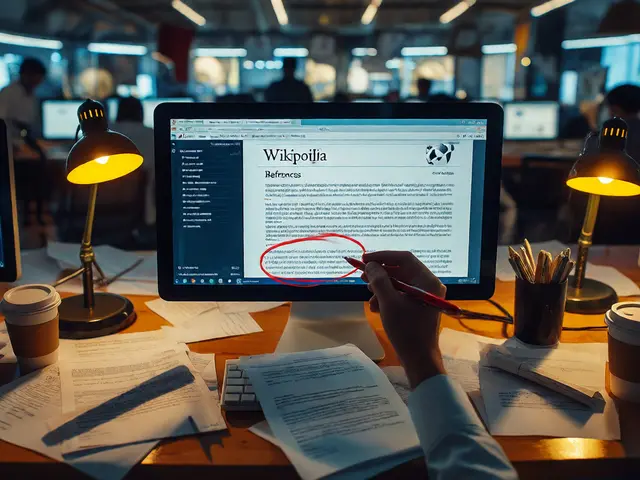
- Scan the References: Click on the footnotes. Are they from credible outlets? Do they support the specific sentence they cite?
- Look for Tags: Yellow tags indicating "needs attention" or "notability dispute" are warning signs. Don't ignore them.
- Compare with Another Source: Open a second tab and search the same topic on a different platform, like a news aggregator or an official government site.
This process takes less than three minutes but drastically reduces the risk of spreading misinformation. It transforms your relationship with the internet from passive consumption to active inquiry.
When to Trust and When to Doubt
Not all topics require the same level of scrutiny. Some subjects are inherently more stable than others. Scientific laws, historical dates, and biographical details of long-deceased figures are generally safe to trust on Wikipedia. However, current events, political scandals, and emerging tech trends are volatile. In these areas, the gap between the latest development and the encyclopedia update can be days or weeks.
Consider the concept of "editorial momentum." Popular topics attract more editors, which usually improves accuracy through collective correction. Obscure topics suffer from "editorial neglect," where errors persist simply because no one notices them. Therefore, the more obscure the topic, the higher the probability of hidden errors. Always apply stricter verification standards to niche subjects.
| Factor | High Reliability Indicator | Low Reliability Indicator |
|---|---|---|
| Edit History | Stable for 6+ months | Frequent edits in last week |
| Sources | Peer-reviewed journals, official docs | Blogs, press releases, unknown sites |
| Talk Page | Quiet, resolved discussions | Active disputes, unresolved tags |
| Topic Type | Historical, scientific constants | Current events, controversial politics |
Building Your Personal Fact-Checking Habit
Developing consumer journalism skills is about building habits, not memorizing rules. Start small. Next time you read a surprising fact on Wikipedia, pause for ten seconds. Ask yourself: "Who wrote this, and what did they cite?" Then, spend thirty seconds finding one external source to confirm it. Over time, this becomes second nature. You will start to see the skeleton of information beneath the polished surface of the web.
This habit protects you from echo chambers. By constantly cross-referencing, you expose yourself to diverse perspectives and reduce the chance of being misled by a single biased narrative. It also makes you a better communicator. When you share information with friends or colleagues, you can say, "I checked the original source," which adds weight to your statement and builds trust.
Frequently Asked Questions
Is Wikipedia a reliable source for academic research?
It depends on the field. In sciences and humanities, professors often discourage using Wikipedia as a primary citation because it is a tertiary source. However, it is excellent for finding leads to primary sources. Check the references section and cite those original papers or books instead. For some fields like computer science, recent Wikipedia pages are sometimes accepted as background context, but always verify with official documentation.
How do I know if a Wikipedia page is being vandalized?
Look for sudden, drastic changes in tone or facts. If a page previously stated a neutral fact and now contains emotional language or unsupported claims, it may be under vandalism. Check the revision history to see who made the change and when. Most vandalism is reverted within hours, but if you catch it early, you can flag it on the talk page or revert it yourself if you are comfortable doing so.
What is the difference between a stub and a featured article?
A stub is a very short article that lacks depth and detail. It usually covers only the basics and may have few references. A featured article is a top-tier page that meets strict criteria for completeness, readability, and sourcing. Featured articles are reviewed by a committee of editors and are considered among the highest quality content on the platform. If you see a star icon next to a title, it indicates a featured article.
Should I trust infoboxes on Wikipedia pages?
Infoboxes are summaries of key data points, such as dates, locations, or statistics. They are convenient but can be outdated if the main text is updated faster than the box. Always compare the infobox data with the detailed sections of the article. If there is a discrepancy, the detailed text usually carries more weight because it includes citations and context.
How often should I re-check a Wikipedia page for updates?
For stable topics like history or science, once every few years is sufficient. For current events or fast-changing industries, check monthly or even weekly. The frequency depends on the volatility of the subject. If you are using the information for a critical decision, such as investing or legal matters, verify the data against primary sources regardless of how recently the page was updated.